
Reviewed · TRAIN EXPERIENCES
Captivating Railway Journey in Coromandel
Small train, big views. Driving Creek Railway gives you a 1-hour-15-minute ride through regenerating native forest, over ten bridges, through three tunnels, and up to the EyeFull Tower lookout above Coromandel. I like the way the trip combines railway engineering and pottery, rather than offering scenery alone. I also like that your booking supports native biodiversity and the creative work started by Barry Brickell. The main consideration is that this is a short attraction, not a full-day outing, and poor weather can lead to a cancellation or date change.
The trip costs $35.37 per person, which I consider fair for a guided ride, a lookout, and a useful introduction to one of New Zealand’s most unusual local projects. The cafe is available, though its menu is limited, so you may want to plan another meal in Coromandel.
In This Review
- Key points before you go
- Why Driving Creek Railway is different
- Starting at 380 Driving Creek Road
- The first part of the ride through native forest
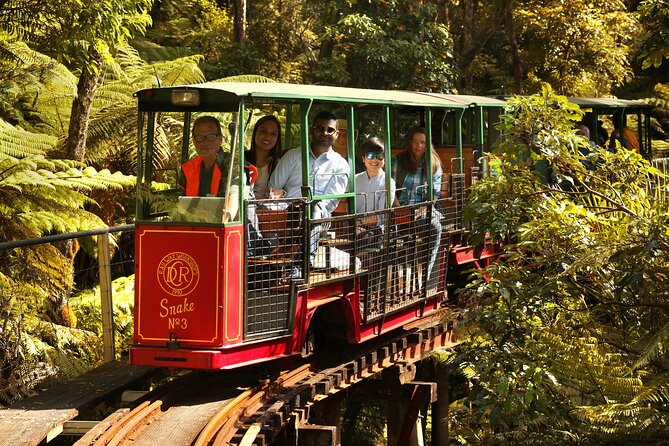
- Ten bridges and three tunnels
- EyeFull Tower and the Hauraki Gulf view
- The railway, pottery, and conservation story
- Commentary makes the short ride worthwhile
- Is $35.37 good value?
- Weather, timing, and practical planning
- Who will enjoy this railway most?
- My verdict on Driving Creek Railway
- FAQ
- How long does the Driving Creek Railway journey take?
- How much does the experience cost?
- Where does the railway tour begin?
- Where does the activity finish?
- What will I see during the railway ride?
- Is the railway suitable for children and groups?
- Can I use a mobile ticket?
- What happens if bad weather cancels the trip?
- Can I cancel for a full refund?
Key points before you go
- Barry Brickell built the railway by hand: Artist, engineer, potter, and conservationist Barry Brickell created the line as both a working railway and a creative project.
- Ten bridges and three tunnels: The ride has enough changes in scenery and track design to keep a short journey interesting.
- EyeFull Tower brings the best view: You’ll look out over the Hauraki Gulf from the railway’s upper lookout.
- The trip supports conservation: Driving Creek operates as a not-for-profit, with bookings helping protect native biodiversity.
- A year-round, family-friendly outing: The railway accepts groups of all sizes and ages, with a maximum of 30 people.
- Allow 1 hour 15 minutes: The ride begins and ends at 380 Driving Creek Road, making it easy to fit into a Coromandel day.
Why Driving Creek Railway is different
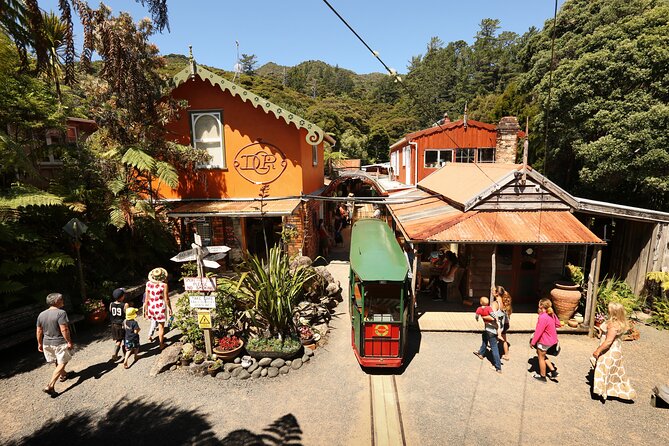
Coromandel has no shortage of scenic stops, but Driving Creek Railway offers something more specific: a working mountain railway shaped by one person’s imagination and persistence. You are not simply sitting on a train while someone points out a few trees. The track itself is the attraction.
Barry Brickell founded the railway, and the project grew from his work as an artist and potter. The route passes through native forest and connects his creative work with practical engineering. The result is part transport, part outdoor story, and part conservation project.
That mixture gives the ride its character. I like attractions that explain why they exist, and this one has a clear reason for every curve, bridge, and climb. You learn how pottery helped create the project and how the railway helped support a growing forest sanctuary.
The railway is described as New Zealand’s only mountain railway. That matters because the trip is not a flat scenic shuttle. The train climbs through the forest toward EyeFull Tower, giving the ride a stronger sense of progress than a simple loop around a park.
A few more New Zealand trips worth weighing up
- Northern Explorer Train Journey from Wellington to Auckland
★ 4.0 · 513 reviews - TranzAlpine Train, Arthur’s Pass and Castle Hill Day Trip
★ 5.0 · 426 reviews - Coastal Pacific Train Journey from Picton to Christchurch
★ 4.5 · 345 reviews
Starting at 380 Driving Creek Road
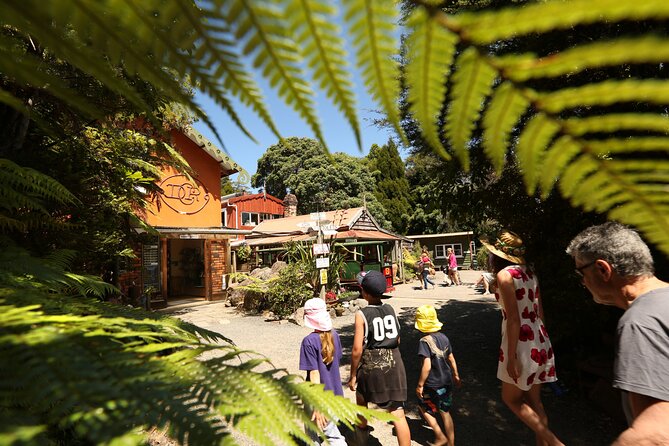
Your visit begins at Driving Creek Railway, 380 Driving Creek Road, Coromandel 3506. The activity ends at the same place, so you do not need to arrange a separate pickup from the lookout or another station.
A mobile ticket is accepted, which keeps the arrival process simple. Confirmation is provided at booking, and the site is near public transportation. The available information does not give detailed parking instructions, so you should check your route and arrival plans before setting off.
The maximum group size is 30 people. That is small enough to keep the trip personal without making it feel like a private tour. It also makes the railway suitable for couples, families, and larger groups who want to ride together.
Driving Creek is close to Coromandel town, but the train ride itself feels removed from ordinary road travel once it enters the forest. That change is part of the appeal. You begin at a practical roadside location, then spend the next hour among trees, tracks, bridges, and views.
The first part of the ride through native forest
The railway’s main pleasure comes from watching the setting change as the train climbs. The route passes through regenerating native forest, an important detail that gives the journey more meaning than a quick scenic ride.
You can expect the guide or train driver to explain how the line was built and how Barry Brickell’s work connected pottery, engineering, and conservation. The commentary is one of the strongest parts of the outing. It gives you a reason to pay attention to the railway itself, rather than treating it as a ride to the viewpoint.
This is also where the train’s handmade character becomes important. The railway was built by an artist and engineer, not designed as a standard tourist attraction from the start. The bends, bridges, and tunnels are part of a long creative project.
I would choose a seat that lets you see both the forest and the track if possible, although no formal seating advice is provided. The line’s design means the view changes often, and the train’s movement through the forest is as interesting as the distant scenery.
Ten bridges and three tunnels
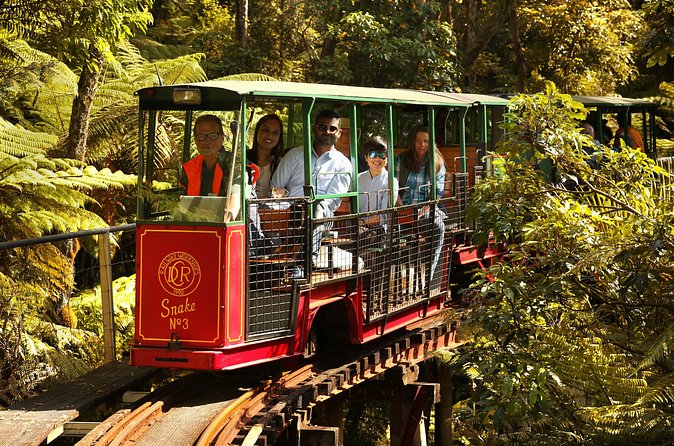
The ride crosses ten bridges and passes through three tunnels. Those numbers may sound modest, but on a 75-minute journey they provide plenty of variation.
The bridges give you quick openings through the forest. The tunnels change the mood again, even though the ride remains gentle and family-friendly. Together, they break up the climb and help younger riders stay interested.
These features also show the effort behind the railway. You are seeing a route that had to be built through uneven ground, not simply laid across an existing flat track. The guide’s commentary helps explain that work and makes the bridges and tunnels feel like part of the story.
The ride is suitable for all group ages and sizes, and most people can participate. Service animals are allowed. The information provided does not list detailed mobility facilities or specific restrictions, so anyone with particular access needs should confirm those details with Driving Creek before booking.
A completely different kind of day out in New Zealand:
- Hobbiton Movie Set: Guided Tour Ticket
★ 4.9 · 8,167 reviews - Waitomo: Glowworm Caves Guided Tour by Boat
★ 4.5 · 4,908 reviews - Rotorua Canopy Tours: 2.5Hour Native Forest Zipline Adventure
★ 5.0 · 4,563 reviews - Hobbiton™ Movie Set Walking Tour from Shires Rest
★ 5.0 · 3,577 reviews
EyeFull Tower and the Hauraki Gulf view
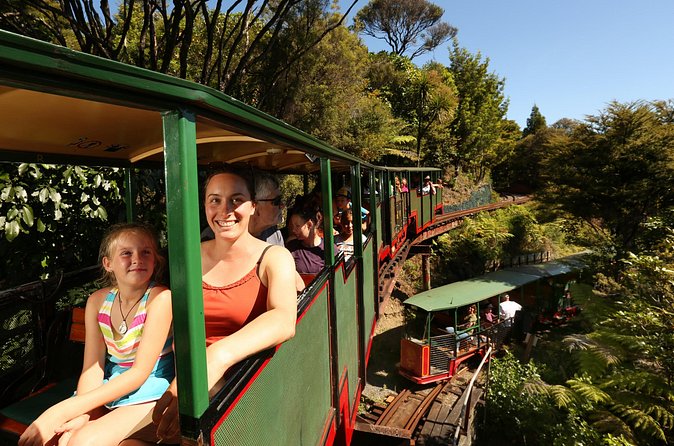
The high point of the journey is EyeFull Tower. From the lookout, you get views across the Hauraki Gulf, providing a clear reward for the climb through the forest.
This is the moment to have your camera ready, but do not rush it. The lookout gives the ride a visual payoff, while the forest section provides the atmosphere and the railway story supplies the context. All three parts work together.
The view is also a good reminder of Coromandel’s geography. You move from a narrow, wooded railway route to an open outlook over the gulf. That contrast makes EyeFull Tower feel like more than a brief stop at the end of a train line.
The supplied details do not specify how long the train stops at the tower. I would treat it as a scenic pause within the 1-hour-15-minute journey, not as a separate hiking visit or long independent lookout stop.
The railway, pottery, and conservation story
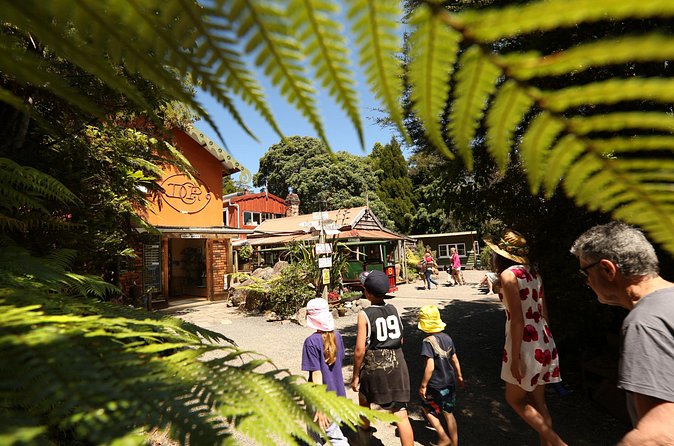
The pottery connection is not a minor footnote. It is central to understanding Driving Creek.
Barry Brickell was a potter as well as an engineer and conservationist. The railway grew from that combination of interests, and the attraction continues to connect creative work with environmental care. Your ticket helps support native biodiversity and the creative legacy of the site.
That gives the $35.37 price more weight. You are paying for a guided rail ride and a lookout, but you are also helping maintain a not-for-profit project. I would not choose the railway only because it supports conservation, since the ride still needs to interest you. But the mission adds value, especially if you prefer attractions with a clear local purpose.
The pottery element also keeps the experience from feeling like a generic forest train. You learn how making, building, and protecting the land all became part of the same project. That is a memorable story to take away from Coromandel.
Commentary makes the short ride worthwhile
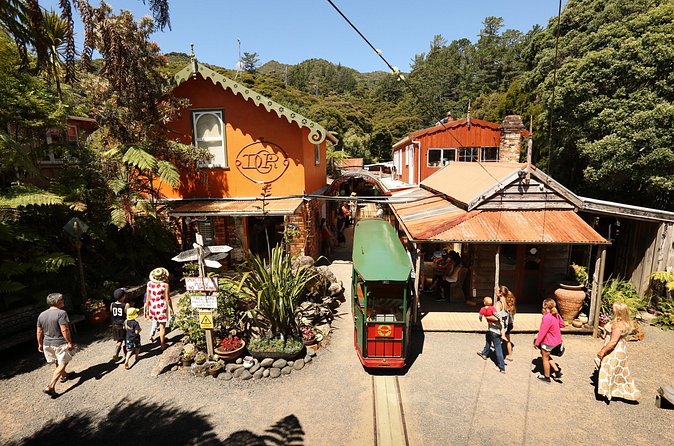
The train driver provides information during the journey, and the commentary focuses on the railway’s history and workings, as well as the pottery connection. This is important because the ride is relatively short.
Without the explanation, you might enjoy the bridges, tunnels, and forest but miss why the railway is unusual. With the commentary, each part of the line becomes easier to understand. You learn that the route was shaped by a person, not simply installed by a large transport company.
The staff are described as friendly and informative, and the driver’s explanation is a repeated strength of the trip. I would pay attention during the opening part of the ride, when the guide sets up the story of Barry Brickell and explains the role of the railway.
Commentary can vary with the driver and the group, so you should not expect a formal lecture. The best approach is to listen in short sections while enjoying the views. The attraction works because the information is tied to what you are seeing.
Is $35.37 good value?
At $35.37 per person, Driving Creek Railway sits in the affordable-to-moderate range for a guided attraction. For that price, you receive about 75 minutes on the railway, commentary, the forest route, ten bridges, three tunnels, and the EyeFull Tower lookout.
I think the value is strongest if you appreciate the story behind the railway. A person looking only for a long train journey may find the ride brief. A person who enjoys local projects, unusual engineering, pottery, and conservation is likely to find the price easier to justify.
The trip also works well as one part of a Coromandel day. Because it begins and ends at the same address, you can combine it with other plans in the area without arranging complicated transport. The available information does not provide departure times, so check the schedule when booking.
There is a cafe, but the menu is limited. I would use it for a light stop rather than count on it for a full meal. That small detail matters if you are planning the railway around lunch.
Weather, timing, and practical planning
Driving Creek operates throughout the year and is described as an all-weather activity. At the same time, the experience requires suitable weather, and poor conditions can cause the operator to cancel. If that happens, you are offered another date or a full refund.
That policy gives you useful protection, but you should still avoid building a tightly packed itinerary around the railway if the forecast looks uncertain. Leave some flexibility in your Coromandel plans.
The journey lasts approximately 1 hour 15 minutes. Add time before and after the ride for arrival, the lookout, and the cafe if you plan to use it. Since the tour returns to the meeting point, it is simpler to schedule than an activity with a separate ending location.
Free cancellation is available up to 24 hours before the start time for a full refund. Cancellations or changes made within 24 hours are not refunded or accepted. Cut-off times follow local time.
Who will enjoy this railway most?
I would recommend Driving Creek Railway to families, couples, small groups, and anyone who likes a strong local story with their scenery. The train is suitable for all group ages and sizes, and the maximum of 30 people keeps the setting from becoming too crowded.
It is also a good fit for visitors who want a quieter alternative to a high-energy outdoor activity. You get forest, bridges, tunnels, and a lookout without needing a long walk or demanding physical challenge. The available details say most people can participate, but they do not provide a complete accessibility guide.
Children may enjoy the tunnels and bridges, while adults are more likely to focus on the railway’s construction and Barry Brickell’s work. That split is useful for family groups because different ages have different things to watch for.
I would be less enthusiastic if you want a long independent hike, a large museum, or a full day of activities at one site. Driving Creek is a focused 75-minute outing. Its strength is its unusual mix of rail, art, forest, and conservation.
My verdict on Driving Creek Railway
You should book Driving Creek Railway if you want more than a standard scenic ride. The best parts are the unusual handmade railway, the clear commentary, the ten bridges and three tunnels, and the Hauraki Gulf view from EyeFull Tower.
I also value the fact that your booking supports native biodiversity and a creative project with local roots. That gives the trip purpose without asking you to sacrifice enjoyment.
Skip it only if your schedule is too tight for a 1-hour-15-minute activity, or if you are looking for a major full-day attraction. For most people spending time in Coromandel, this is a worthwhile stop with a fair price, an easy return route, and a story you are unlikely to find anywhere else.
FAQ
How long does the Driving Creek Railway journey take?
The journey takes approximately 1 hour 15 minutes.
How much does the experience cost?
The listed price is $35.37 per person.
Where does the railway tour begin?
It begins at 380 Driving Creek Road, Coromandel 3506, New Zealand.
Where does the activity finish?
The activity ends back at the meeting point at 380 Driving Creek Road.
What will I see during the railway ride?
You will travel through regenerating native forest, cross ten bridges, pass through three tunnels, and reach EyeFull Tower for views of the Hauraki Gulf.
Is the railway suitable for children and groups?
Yes. It is suitable for all group ages and sizes, and the maximum group size is 30 travelers.
Can I use a mobile ticket?
Yes. The experience includes a mobile ticket.
What happens if bad weather cancels the trip?
You will be offered a different date or a full refund if the activity is canceled because of poor weather.
Can I cancel for a full refund?
Yes. You can cancel at least 24 hours before the experience start time for a full refund. Cancellations and changes within 24 hours are not accepted or refunded.
Just added around New Zealand
- Auckland Museum and Highlight Sightseeing Tour★ 5.0 · 5 reviews
- From Auckland: Hobbiton Movie Set Small Group Tour★ 4.1 · 5 reviews
- Self-Guided Milford Track Day Walk from Lake Te Anau★ 5.0 · 5 reviews
- Tauranga-Hobbiton-Rotorua : Movie Set & Geysers: Private Tour★ 5.0 · 5 reviews
- Private Tour in Wellington★ 5.0 · 5 reviews
- Hawkes Bay – Scenic, luncheon, wine Tour★ 4.0 · 5 reviews
- Milford Sound Earnslaw Burn Helicopter Tour from Queenstown★ 5.0 · 5 reviews
- Queenstown: Remarakbles Helicopter Tour with Alpine Landing★ 4.6 · 5 reviews
Train Experiences, compared.
Northern Explorer Train Journey from Wellington to Auckland
Read our review →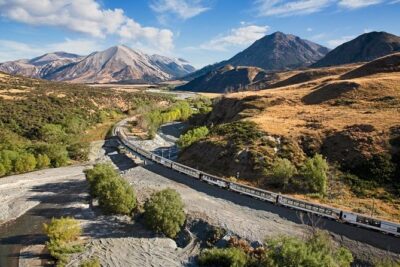
TranzAlpine Train, Arthur’s Pass and Castle Hill Day Trip
Read our review →
Coastal Pacific Train Journey from Picton to Christchurch
Read our review →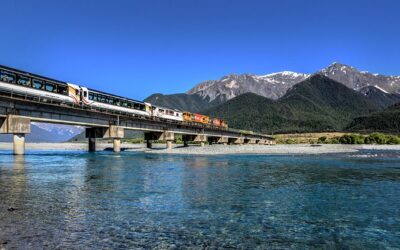
TranzAlpine Train Journey: Christchurch to Greymouth
Read our review →
Arthur’s Pass Discovery and TranzAlpine Train – Small Group Tour
Read our review →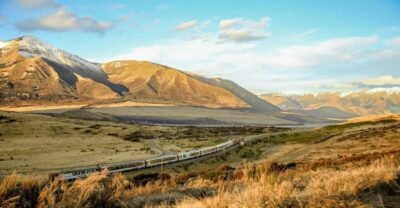
Arthur’s Pass: TranzAlpine Train and Castle Hill Day Tour
Read our review →
Northern Explorer Train Journey from Auckland to Wellington
Read our review →
Arthur’s Pass and TranzAlpine Train Day Tour from Christchurch
Read our review →Browse the lists this tour appears in