
Reviewed · HANMER SPRINGS TOURS
Hanmer Springs Star Tours at Manuka Skies
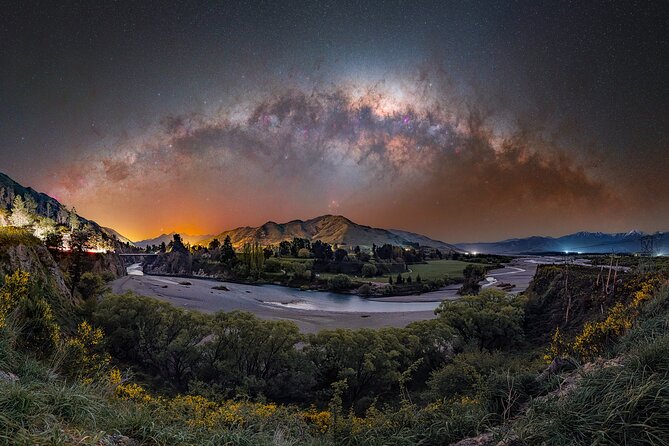
Look up, and Hanmer Springs gets bigger. Manuka Skies takes you into a low-light setting above town, where native forest, a spring-fed stream, and a dark southern sky form the backdrop for a two-hour astronomy outing. I like the mix of simple naked-eye learning and serious telescope viewing, and I like that the small group is limited to 10 people. The main catch is clear: this is a weather-dependent experience, so clouds can cancel the night you planned.
I also appreciate the setting. You are not simply standing beside a road with a telescope. You may hear the stream moving down the mountain and, if you are lucky, the call of a morepork owl. Guide Brent is praised for his passion and clear grasp of the night sky, while the operator, Kara, handles the experience and weather arrangements.
The price is $80.05 per person, which feels fair if you want more than a quick look through one telescope. It is less compelling if you only want to see stars without much explanation, or if your schedule cannot handle a possible weather change.
In This Review
- Key points before you book
- Leaving Hanmer Springs for a darker sky
- Starting with stars you can see for yourself
- Seeing faint objects through the Celestron telescope
- Switching from guided viewing to free roaming
- Leaning back with astro binoculars
- Listening to the forest between telescope turns
- Is $80.05 good value for two hours?
- Weather, cancellations, and the practical fine print
- Who will enjoy Manuka Skies most?
- Should you book Hanmer Springs Star Tours?
- FAQ
- Where does Hanmer Springs Star Tours at Manuka Skies begin?
- How long does the stargazing experience last?
- How much does the tour cost?
- How many people can join the tour?
- Do I need astronomy experience?
- What equipment is used?
- Can I see galaxies and star clusters?
- What happens if bad weather cancels the tour?
- What is the cancellation policy?
Key points before you book
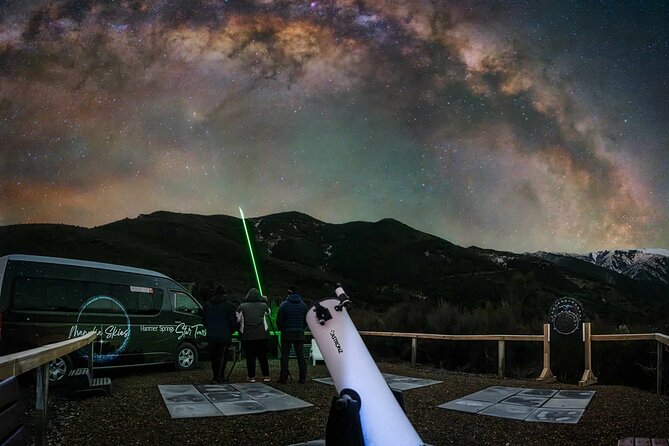
- A genuinely dark setting: Manuka Skies is away from much of Hanmer Springs’ artificial light, giving you a better chance to see stars and faint sky objects.
- A small group of up to 10: The group size should allow more time for questions and telescope turns than a large coach outing.
- Starts with the naked eye: You learn stars and constellations such as the Southern Cross before using optical equipment.
- Several ways to view the sky: The experience includes a guided Celestron telescope, manual telescopes, astro binoculars, lounges, and an interactive star finder.
- Native wildlife is part of the setting: The spring-fed stream and resident morepork owls add a quiet nature element to the astronomy.
- Weather matters: You can cancel for a full refund up to 24 hours before the start, and a poor-weather cancellation brings a new date or full refund.
Leaving Hanmer Springs for a darker sky
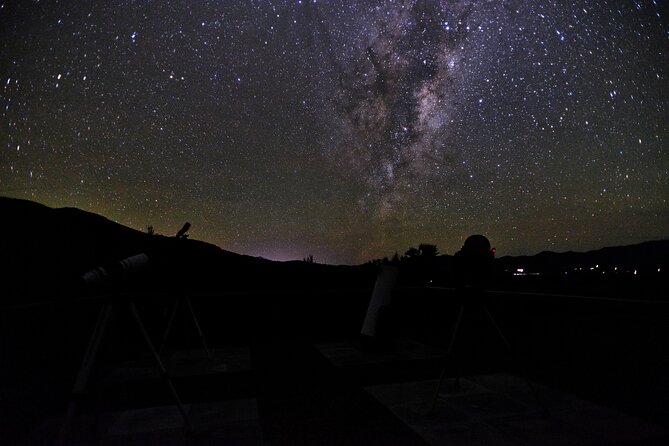
The tour begins in Hanmer Springs, with pickup offered. One useful detail is that the pickup can take you from the centre of town into the surrounding hills, so you do not need to work out your own route to Manuka Skies if that option is arranged for your booking.
That short transfer matters. Stargazing works best when artificial light is kept low, and the move away from the town centre is part of what makes this place useful for astronomy. You are heading to a sanctuary cared for by Manuka Skies, not simply stopping at a viewpoint with a few lights nearby.
The site’s idea of being a kaitiaki, or guardian, also shapes the visit. The aim is to reconnect the sky with the earth through the forest. That sounds lofty, but here it has a practical meaning: the surroundings are part of the experience, not just decoration around the telescope.
Expect a compact evening of about two hours. That is long enough to cover the basics, look through several types of equipment, and pause to enjoy the quiet. It is short enough to fit into a Hanmer Springs stay without taking over the whole night.
A few more New Zealand trips worth weighing up
- Hanmer Springs Thermal Pools & Spa
★ 4.5 · 218 reviews - Amuri Adventure Jet Boating in Hanmer Springs
★ 5.0 · 191 reviews - Hanmer Springs: Thermal Pools Single or Return Entry Ticket
★ 4.7 · 107 reviews
Starting with stars you can see for yourself
The first part uses your unaided eyes. This is a smart way to begin because you learn how to look at the sky before equipment narrows your view.
Your guide points out stars and constellations, including the Southern Cross, and explains how the stars can help you find your way around the southern night sky. If you have little astronomy experience, this gives you a useful framework. Instead of seeing a random field of white points, you begin to recognize patterns.
I like this stage because it does not require any technical skill. You do not need to know telescope parts, star names, or astronomy terms before arriving. You simply look up, listen, and start building a mental map.
The Southern Cross is especially useful for a New Zealand visit. It is one of the best-known southern constellations, and learning to identify it gives you an immediate connection to the sky below the equator. You may also find that the naked-eye section is the calmest part of the evening. The sky can feel very large when you first arrive, and the guide’s explanation helps you get your bearings fast.
This part also gives you a way to keep stargazing after the tour. A telescope can show you an object once, but learning a few constellations helps you continue looking from a garden, beach, or rural road later in your trip.
Seeing faint objects through the Celestron telescope
After the naked-eye introduction, the tour brings out a Celestron electronically guided telescope. This is the main tool for objects that are too faint or distant to make out clearly without optical help.
The examples provided include the Omega Cluster and the Sombrero Galaxy. Those targets show why a proper telescope changes the experience. You may see plenty of stars with your eyes, but a telescope can bring distant clusters and galaxies into view as specific objects.
The electronically guided setup should also help the guide locate targets efficiently. In a two-hour session, that matters. Time spent searching can reduce the number of objects you see, especially if the group is waiting for each turn. A guided scope gives the evening a clearer rhythm.
Still, do not expect a planetarium show or a huge, colourful image like the photographs used in astronomy books. What you see through a telescope is shaped by weather, darkness, the object itself, and the limits of the equipment. The appeal is the direct connection: light from a distant object reaches the telescope, and you are looking at it in real time.
The experience is at its best when you allow the guide to explain what you are seeing rather than treating the telescope as a quick photo opportunity. Brent is singled out for his passion and strong understanding of the sky, so his explanations are likely to be a major part of the value.
Switching from guided viewing to free roaming
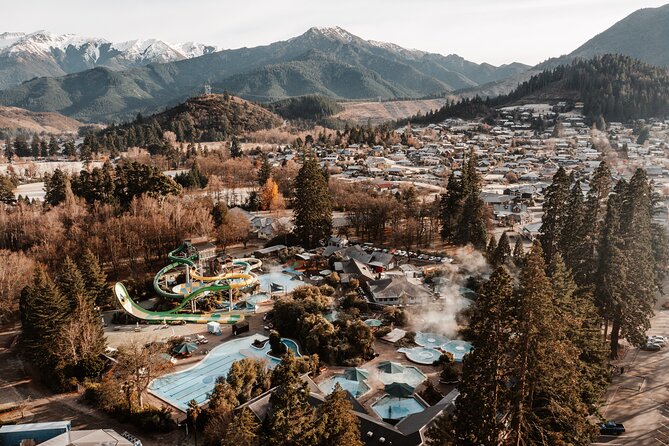
Manuka Skies also has manual telescopes. These offer a different experience from the electronically guided Celestron.
With the guided scope, the guide selects and locates specific deep-sky targets. With a manual telescope, you get more of a free-roaming feel. You may move between areas of the sky and compare what you can find with what the guide has already shown you.
That contrast is useful. The electronic telescope offers precision and access to faint objects. The manual instruments make the process feel less automated. If you enjoy learning how to move around the sky, the second approach may be more satisfying.
The available equipment also means the evening is not built around one viewing station. With a maximum of 10 people, there should be a better chance to rotate between activities, although the exact amount of time at each telescope can vary.
I would ask questions as you go. This is the kind of outing where a good question can turn a short viewing into a memorable lesson. Ask how the guide found an object, why a cluster looks different from a galaxy, or how to identify the Southern Cross later on.
A completely different kind of day out in New Zealand:
- Hobbiton Movie Set: Guided Tour Ticket
★ 4.9 · 8,167 reviews - Waitomo: Glowworm Caves Guided Tour by Boat
★ 4.5 · 4,908 reviews - Rotorua Canopy Tours: 2.5Hour Native Forest Zipline Adventure
★ 5.0 · 4,563 reviews - Hobbiton™ Movie Set Walking Tour from Shires Rest
★ 5.0 · 3,577 reviews
Leaning back with astro binoculars
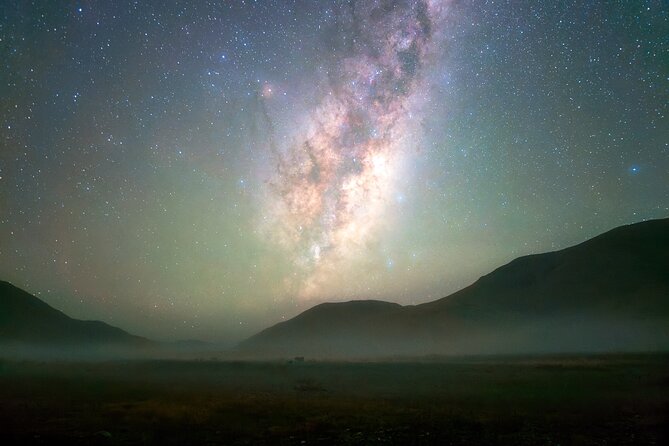
One of the more pleasant touches is the use of astro binoculars on lounges. You can lie back and look upward instead of standing at a telescope the whole time.
That change of position matters more than it may seem. Stargazing involves a lot of looking up, and a lounge gives your neck a break. It also lets you view a wider part of the sky than a narrow telescope eyepiece provides.
The binoculars sit between naked-eye viewing and telescope work. They bring more stars into view while keeping a broad field, so they can help you understand how parts of the sky relate to each other.
An interactive star finder is paired with the binocular setup. You can test your navigation skills and try to identify targets yourself. This adds a small hands-on challenge to the night. You are not only waiting for the guide to point something out. You get a chance to work out where to look.
For families and first-time stargazers, this may be one of the most approachable parts of the tour. For experienced amateur astronomers, the manual instruments and star finder provide more freedom than a purely guided presentation.
Listening to the forest between telescope turns
Manuka Skies is also about sound and setting. A spring-fed stream flows down the mountain, and native morepork owls nest in the area.
You may not see wildlife during a dark-sky visit, and the owl may not call on cue. That is worth understanding before you book. The wildlife element is atmospheric, not a guaranteed animal encounter.
Even so, the setting gives the tour a stronger sense of place. You are in a native forest sanctuary, listening for an owl while studying stars that have guided people across the southern hemisphere for centuries. The sky and forest are treated as connected parts of the visit.
The quiet can be a welcome change after a day around Hanmer Springs. The town is known for its thermal pools and outdoor activities, but this outing asks you to slow down. You might spend part of the night looking through equipment and part of it simply listening to the stream.
That balance is one reason the experience feels different from an indoor astronomy presentation. The setting cannot be reproduced by a screen, though it also means the weather has more control over your plans.
Is $80.05 good value for two hours?

At $80.05 per person, Manuka Skies is not a casual free activity. The price pays for transport if pickup is used, a small group, a guide-led astronomy session, several telescope types, and access to a dark rural site.
I think the price works best for three kinds of people. First, it suits anyone who wants a structured introduction to the southern sky. Second, it suits people who like equipment and want more than one way to view the stars. Third, it suits visitors who value a quiet forest setting as much as the astronomy itself.
The value is weaker if you already have strong astronomy skills and your main goal is independent observing. You may prefer to find a dark spot and use your own binoculars. The price is also harder to justify if clouds are forecast and you have no flexibility to return.
The maximum group size of 10 helps support the cost. This is not an enormous busload moving past one eyepiece. A small group normally gives the guide more room to explain, answer questions, and keep the viewing organized.
The average booking lead time is about 44 days. That suggests you should not leave this until the last evening of a busy Hanmer Springs itinerary, especially if you have limited time in town. Book ahead, but keep enough flexibility in your schedule for weather.
Weather, cancellations, and the practical fine print
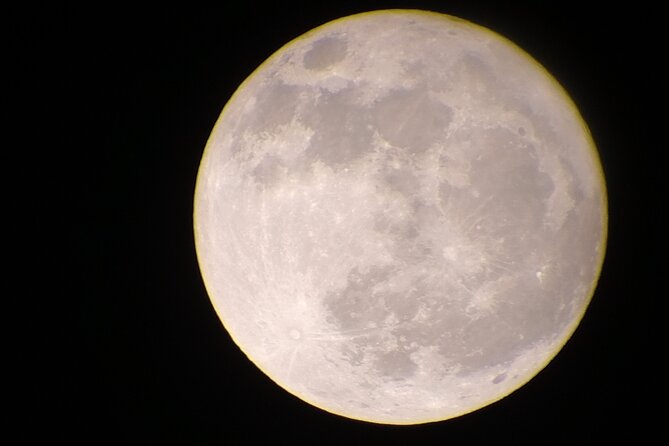
Good weather is required. Clouds can block the stars, and poor conditions can make the trip unsuitable, so the operator may cancel and offer either another date or a full refund.
You can cancel up to 24 hours before the start time for a full refund. If you cancel inside that 24-hour window, the amount paid is not refunded, and changes made during that period are not accepted.
The practical lesson is simple: check the forecast, but do not assume a forecast several days ahead will be final. If the tour is important to you, place it early enough in your Hanmer Springs stay that a new date remains possible.
Confirmation arrives when you book, and mobile tickets are offered. Most people can participate. Specific physical access details are not provided, so contact the operator if you need information about the ground, seating, transport, or movement between viewing areas.
Bring your patience as well as your interest in stars. The experience depends on darkness, clear conditions, and the natural pace of looking through shared equipment. It is not designed to rush you from one attraction to the next.
Who will enjoy Manuka Skies most?
This outing is a strong fit for first-time stargazers. The naked-eye introduction gives you a starting point, and the range of telescopes lets you see how different tools change the view.
It also suits families, couples, and small groups who want a peaceful evening rather than another high-energy activity. The lounges and binoculars add comfort, while the interactive star finder gives people something to do between guided telescope views.
Photography is not the main focus based on the information provided. If your priority is taking your own astrophotographs, ask the operator what is possible before booking. The emphasis here is on looking, learning, and listening.
People with a tight schedule should think carefully. The tour lasts about two hours, and the pickup makes the outing easier, but a weather cancellation may require flexibility. If you have only one night in Hanmer Springs, you are taking a real chance.
I would also recommend it to anyone who wants a stronger connection to the region. The native forest, spring-fed stream, and morepork habitat give the astronomy a local setting. You are not just ticking off a star show. You are spending time in a cared-for sanctuary.
Should you book Hanmer Springs Star Tours?
Book it if you want a small, guided introduction to the southern sky with several types of equipment and a genuine dark-forest setting. The combination of the Southern Cross, deep-sky targets, astro binoculars, lounges, and native wildlife makes the evening varied without making it feel overproduced.
I would be especially inclined to book if you have two or more nights in Hanmer Springs. That gives you a better chance of handling a weather change. At $80.05, the experience offers solid value for people who want instruction and atmosphere together.
Skip it if you need a guaranteed activity on one fixed night, or if you prefer completely independent stargazing. For everyone else, Manuka Skies offers a thoughtful way to spend two quiet hours looking beyond the thermal pools and into the southern heavens.
FAQ
Where does Hanmer Springs Star Tours at Manuka Skies begin?
The meeting point is Hanmer Springs, New Zealand. Pickup is offered, and the tour can take you from the centre of town into the surrounding hills.
How long does the stargazing experience last?
The experience lasts approximately two hours.
How much does the tour cost?
The listed price is $80.05 per person.
How many people can join the tour?
The tour has a maximum of 10 people.
Do I need astronomy experience?
No specific astronomy experience is required. The tour begins with naked-eye viewing and introduces stars and constellations such as the Southern Cross.
What equipment is used?
The experience includes a Celestron electronically guided telescope, manual telescopes, astro binoculars, lounges, and an interactive star finder.
Can I see galaxies and star clusters?
The Celestron telescope is used to view deep-sky objects that cannot be seen with the naked eye, including the Omega Cluster and Sombrero Galaxy.
What happens if bad weather cancels the tour?
You will be offered a different date or a full refund if the experience is canceled because of poor weather.
What is the cancellation policy?
You can cancel at least 24 hours before the start time for a full refund. Cancellations or changes made less than 24 hours before the start time are not accepted for a refund.
Just added around New Zealand
- From Auckland: Hobbiton Movie Set Small Group Tour★ 4.1 · 5 reviews
- Auckland Museum and Highlight Sightseeing Tour★ 5.0 · 5 reviews
- Self-Guided Milford Track Day Walk from Lake Te Anau★ 5.0 · 5 reviews
- Tauranga-Hobbiton-Rotorua : Movie Set & Geysers: Private Tour★ 5.0 · 5 reviews
- Private Tour in Wellington★ 5.0 · 5 reviews
- Hawkes Bay – Scenic, luncheon, wine Tour★ 4.0 · 5 reviews
- Milford Sound Earnslaw Burn Helicopter Tour from Queenstown★ 5.0 · 5 reviews
- Riverside Electric Bike Tour★ 5.0 · 5 reviews
Hanmer Springs Tours, compared.


Amuri Jet Adventures – Hanmer Springs Quad Biking tour
Read our review →
Browse the lists this tour appears in