
Reviewed · WAITOMO GLOWWORM CAVES TOURS
Kawiti Glow Worm Cave Tour & Opua Forest Walk
Glow worms turn darkness into stars. This half-day outing pairs the magical Kawiti Glow Worm Caves with a gentle Opua Forest walk, a Waitangi Bay lookout, and Kawakawa’s famous Hundertwasser Toilets. I especially like the local Maori cave guide, who explains how the caves were found, and the small-group format, capped at 11 people.
The main drawback is crowding. On busy cruise-ship days, the cave entrance can involve delays, close contact, and a less peaceful visit. I also find the Kawakawa stop a little long unless you enjoy public art, need lunch, or want a break.
At $148.94 per person, this is not a cheap sightseeing ride, but you get about four hours of transport, guiding, cave admission, several stops, and a forest walk without arranging separate taxis or tours. It is a useful choice when your Bay of Islands time is short and you want nature rather than a full day of standard highlights.
In This Review
- Key points to know before booking
- A four-hour outing from Waitangi Wharf
- Inside the Kawiti Glow Worm Caves
- The crowding problem at Kawiti
- Kawakawa and the Hundertwasser Toilets
- Waitangi Golf Club lookout
- Walking through Opua Forest
- The guides can make or break the day
- Is $148.94 good value?
- Who should book this tour?
- Should you book the Kawiti and Opua Forest tour?
- FAQ
- Where does the tour begin?
- Where does the tour end?
- How long does the experience last?
- How many people can join the tour?
- Is the Kawiti Glow Worm Cave admission included?
- Can I take photos inside the glow worm caves?
- Is food included?
- Can children take part?
- What happens if the tour is canceled because of weather?
Key points to know before booking
- The cave visit is the main event: Expect a short guided walk underground, glow worms overhead, some steps, and a few low formations that tall visitors need to watch.
- Photography is not allowed inside: You will need to enjoy the glow worms without taking pictures.
- The Opua Forest walk is more than a filler stop: The boardwalk route gives you a calm look at large kauri trees, including trees said to be more than 1,000 years old.
- Crowds depend on the day: The small vehicle does not guarantee a small cave group, especially when cruise buses arrive late or many tours reach the caves together.
- The guides add much of the value: Bill, Derek, Holger, Roger, Robin, and other guides have been praised for local stories, humor, natural history, and Bay of Islands culture.
- The tour begins and ends at Waitangi Wharf: That makes it practical for a shore visit, with the meeting point on Te Karuwha Parade in Paihia.
A four-hour outing from Waitangi Wharf
The tour begins at Waitangi Wharf, a central meeting point in Paihia. You return to the same place at the end, which keeps the day simple if you are staying nearby or visiting from a cruise ship.
You travel in a small vehicle rather than a large sightseeing coach. That matters on the narrow roads around the Bay of Islands, and it allows the guide to speak more directly with the group. Several guides have been singled out for entertaining commentary during the drive, including Bill, Derek, Holger, Roger, and Robin.
The ride to the caves takes about 45 minutes according to the tour accounts. That is a fair amount of road time for a half-day outing, but the journey is part of the experience when your driver is in good form. Derek, in particular, has been praised for filling the drive with local history, plants, and stories rather than simply pointing out the window.
Still, the audio setup may not work perfectly for everyone. Road noise made it difficult for some people seated at the back to hear the microphone. If you have trouble hearing, say so early and sit as close to the guide as practical.
Inside the Kawiti Glow Worm Caves
The cave visit lasts roughly 30 to 45 minutes and includes admission. A local Maori guide leads you through the underground chambers and explains how the caves came to be found. That personal connection gives the visit more character than simply walking into a dark cavern and looking up.
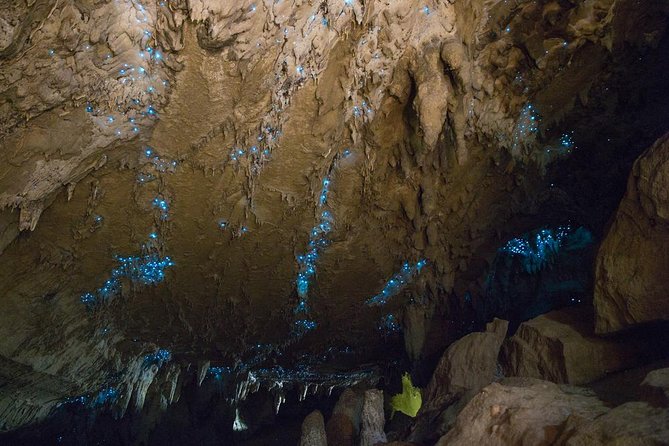
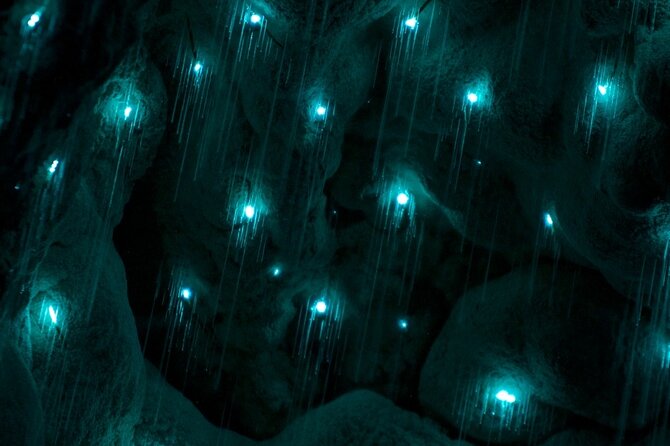
The glow worms are the reason to come. In the darkness, their small points of light can look like a night sky, with some parts of the cave resembling the Milky Way. The most impressive section is described as the MikyWay, where the glowing dots spread across the ceiling like stars in a dark cathedral.
The cave system includes three partial caves. You may see underground formations as well, including stalactites and stalagmites. The glow worms remain the visual highlight, but the rock formations help you understand that this is a natural cave visit, not a purpose-built light show.
There are steps and places where you need to pay attention to your head. Tall people may need to avoid a few low stalagmites or formations. The information says most people can take part, but this is not a completely flat, effortless walk.
One important rule: photography is not permitted inside the caves. That may disappoint you if you like collecting images from every stop, but it also helps preserve the dark atmosphere. Go in expecting to watch rather than photograph. The glow worms are much easier to appreciate when you are not trying to manage a phone camera in the dark.
The crowding problem at Kawiti
The cave is the strongest part of the tour, and it is also the least predictable. A cave visit can feel intimate when the group moves smoothly, but it can lose its charm when several parties arrive together.
On cruise-ship days, you might face waiting time before entering. Large buses arriving late can disrupt the planned booking order, creating delays for smaller groups. Once inside, close spacing can make it harder to hear the cave guide and can reduce the quiet feeling that makes the glow worms special.
This is the tour’s clearest weakness, and you should take it seriously. The operator has acknowledged that cave management controls the group flow and photography rules, so Mullarkey Tours cannot fully control what happens underground.
If your schedule is tight, allow room for delays. If you are visiting on a ship, do not treat the four-hour estimate as permission to book a flight or another activity immediately afterward. The tour returns to Waitangi Wharf, but the cave stop can take longer when several groups arrive at once.
Kawakawa and the Hundertwasser Toilets
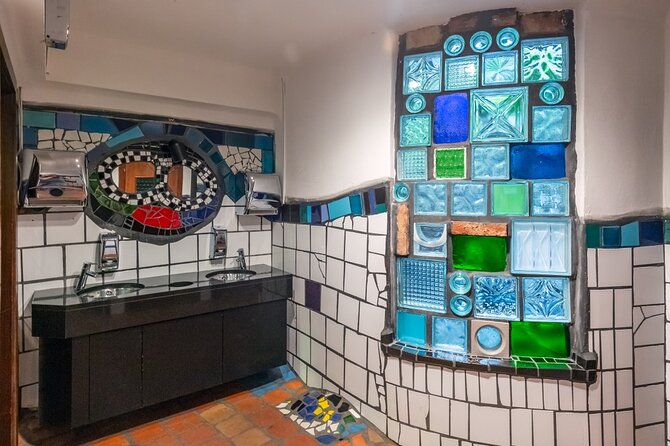
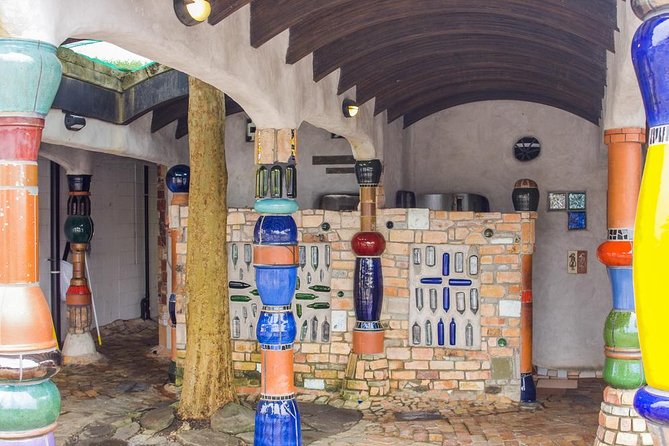
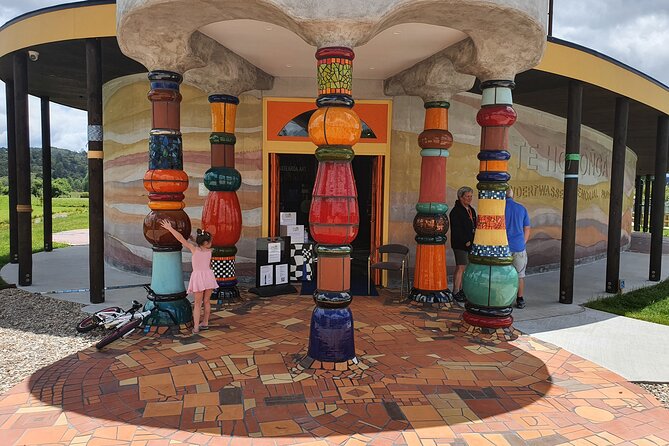
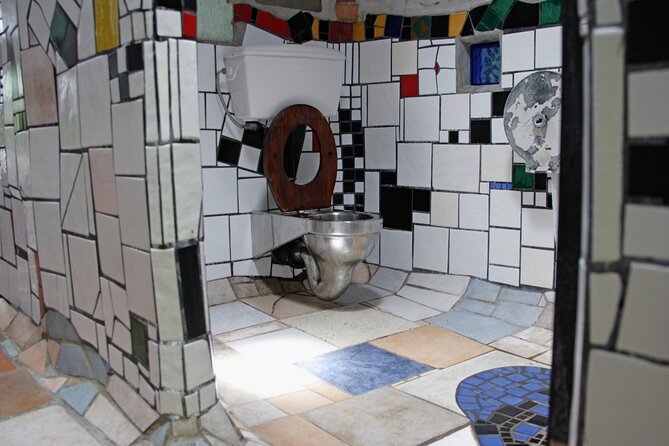
After the caves, the vehicle continues to Kawakawa for a stop at the Hundertwasser Public Toilets. The building was designed by Friedensreich Hundertwasser, an Austrian artist and architect who spent part of his life in New Zealand.
This is one of those stops that sounds odd until you see it. A public toilet block is not usually a sightseeing attraction, but this one is treated as an international work of art. It gives the day a welcome change of pace after the dark cave and the forest.
The planned stop is about 35 minutes, although the break can feel closer to 45 minutes in practice. You have time to see the building, use the facilities, and possibly buy food, since food and drinks are not included in the tour price.
I can see why some people enjoy this quirky pause. It is genuinely different from the usual Bay of Islands viewpoint or beach stop. But if you want every minute devoted to nature, Kawakawa may feel padded. The town itself is small, and there may not be enough to occupy you for the full break beyond the toilets, a snack, and a short look around.
Bring or buy food here if you need it. The tour does not include meals, and the stop serves as the practical food break in addition to its art purpose.
Waitangi Golf Club lookout
The Waitangi Golf Club stop lasts about 30 minutes and provides views across Waitangi Bay. It is mainly a photo stop, but it also adds local context to the day.
The Bay of Islands is not only about caves and forest. Waitangi is central to New Zealand’s national story, and the golf club lookout gives you a broad view of the bay connected with that setting. The stop is not a long museum visit or a formal cultural presentation, so keep your expectations in check. You come here for the outlook and a few pictures, not an extended tour.
This pause also breaks up the driving. After the cave and before the forest, it gives you a chance to stretch, look out over the water, and reset your attention.
Walking through Opua Forest
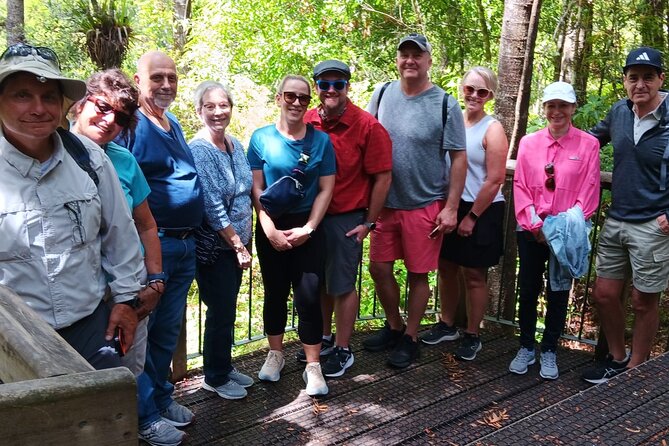
For me, the Opua Forest stop is nearly as appealing as the caves. The walk follows boardwalks and easy forest paths, so you can spend time among native trees without signing up for a strenuous hike.
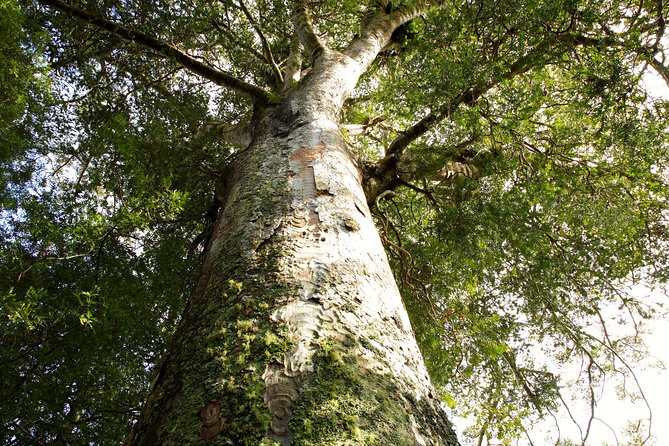
The tour description highlights kauri trees more than 1,000 years old. Other accounts describe giant kauri and silver ferns, along with explanations of native plants and wildlife. You are not simply dropped at a viewpoint and told to take a picture. The guide helps you notice what you are seeing.
The forest has a quiet, unhurried feel that balances the cave’s excitement. Look for the details: old tree trunks, native foliage, ferns, and the way the boardwalk keeps the walking manageable. The route still demands attention in places, so watch your footing and do not assume every section is perfectly level.
The walk takes about 45 minutes. That is long enough to feel like a real forest visit, but short enough for most people who can manage ordinary walking. You will not need to prepare for a major hike, which makes this a good option for a mixed-age group or anyone who wants nature without a demanding climb.
One thing to note is that descriptions of the forest stop vary slightly, with some references to different forest sections. The consistent point is the native forest, large kauri, and guided interpretation. The exact walking route may depend on the day.
The guides can make or break the day
The best part of this tour is often the person in the front seat. Bill has been praised for humor and clear local information. Derek is especially well regarded for explaining local history, culture, plants, and wildlife. Holger has also received strong praise for his natural-history commentary and engaging manner.
Roger has been noted for arranging quick cave access on one outing and for sharing information about the area and the Hundertwasser work. Robin has been described as bringing obvious affection for New Zealand and the Bay of Islands to the drive.
The cave guide is separate from the vehicle guide. Moana, a local Maori guide, has been praised for explaining the glow worms and making the underground visit memorable. That distinction matters because your driver may be excellent, but the cave interpretation comes from the local guide at the site.
Quality can vary. One account describes a new guide whose commentary was hard to hear and not yet polished. A heavy accent and low microphone volume also made it difficult for some people to follow the narration. That does not mean you should expect poor guiding, but it is a reminder that this is a personal, guide-led outing rather than a fixed audio presentation.
Is $148.94 good value?
At $148.94, you are paying for convenience as much as admission. The price includes taxes, fees, GST, transport from Waitangi Wharf, the cave ticket, and guiding across several stops. Food and drinks cost extra.
The value is strongest if you are short on time. Organizing the caves, forest, lookout, and Kawakawa independently would require transport and careful timing. This tour packages them into one outing and returns you to the same wharf.
The value is weaker if you only want to see glow worms. The cave visit is relatively short, while the drive and extra stops make up much of the four-hour schedule. You are paying for a broad half-day experience rather than a long underground tour.
I would also weigh the crowd risk. A smooth small-group day with a strong guide feels worthwhile at this price. A delayed cave visit followed by a long Kawakawa break may feel less satisfying. The high overall rating of 4.7 from 124 ratings and a 90 percent recommendation rate suggest that most people find the package rewarding, but the lower scores point to real issues with waiting, crowd control, and guide audio.
Who should book this tour?
I would recommend it to you if:
- You have only a half-day in the Bay of Islands.
- You want caves, native forest, and viewpoints in one outing.
- You prefer a small vehicle and personal guiding.
- You enjoy unusual stops such as the Hundertwasser Toilets.
- You want a gentle nature walk rather than a strenuous hike.
- You are visiting from a ship and want a central pickup and return point.
I would think twice if you dislike group timing, need a quiet cave visit, or want complete control over your schedule. The tour is also less suited to anyone hoping to photograph the glow worms, since cameras are not allowed inside.
Children must be accompanied by an adult, and the tour says most people can participate. Still, anyone with difficulty on steps or uneven walking should consider the cave and forest conditions before booking.
Free cancellation is available up to 24 hours before the start time. Changes or cancellations inside that window are not accepted for a refund. Poor weather or failure to meet the minimum number of participants can lead to a changed date or a full refund.
Should you book the Kawiti and Opua Forest tour?
I would book this if I wanted a varied, easy-to-manage half-day away from Paihia’s busiest attractions. The glow worms are genuinely memorable, the forest walk gives the outing substance, and a good guide can turn the drive into useful local storytelling.
I would not book it expecting a private cave experience or a tightly timed schedule. On a cruise-ship day, ask about expected crowd levels and leave spare time afterward. If you accept those limits, this is a worthwhile way to see a very different side of the Bay of Islands, with enough variety to justify the price.
FAQ
Where does the tour begin?
It begins at Waitangi Wharf on Te Karuwha Parade, Paihia 0293, New Zealand.
Where does the tour end?
The tour ends back at the same meeting point, Waitangi Wharf.
How long does the experience last?
The full tour lasts approximately four hours.
How many people can join the tour?
The maximum group size is 11 participants.
Is the Kawiti Glow Worm Cave admission included?
Yes. Admission to the Kawiti Glow Worm Caves is included.
Can I take photos inside the glow worm caves?
No. Photography is not permitted inside the caves.
Is food included?
No. Food and drinks are not included. The Kawakawa stop can provide time to get food.
Can children take part?
Yes, but children must be accompanied by an adult.
What happens if the tour is canceled because of weather?
You will be offered a different date or a full refund if poor weather causes the tour to be canceled.
More Walking Tours
- Hobbiton™ Movie Set Walking Tour from Shires Rest
★ 5.0 · 3,577 reviews - Rotorua’s Ultimate Zipline: 6 ziplines, 400 m Tandem, Cliff Walk
★ 5.0 · 2,557 reviews - Waitomo Caves: Ruakuri Glowworm Cave Guided Walking Tour
★ 4.7 · 1,249 reviews - Rotorua: Hell’s Gate Outdoor Mud Spa & Guided Walk
★ 4.7 · 1,140 reviews
More Waitomo Glowworm Caves Tours
- Waitomo: Glowworm Caves Guided Tour by Boat
★ 4.5 · 4,908 reviews - Hobbiton & Waitomo Caves Guided Day Trip from Auckland incl lunch
★ 5.0 · 2,677 reviews - Te Anau: Glowworm Caves Guided Tour
★ 4.6 · 2,611 reviews - From Auckland: Hobbiton & Waitomo Caves Day Trip with Lunch
★ 4.9 · 2,505 reviews
Waitomo Glowworm Caves Tours, compared.
Hobbiton & Waitomo Caves Guided Day Trip from Auckland incl lunch
Read our review →
Hobbiton & Waitomo Caves Day Trip with Lunch
Read our review →
Waitomo Caves: Labyrinth Black Water Rafting Experience
Read our review →
Waitomo Caves: Ruakuri Glowworm Cave Guided Walking Tour
Read our review →
Hobbiton & Waitomo Caves Small-Group Tour W Lunch from Auckland
Read our review →
Browse the lists this tour appears in