
Reviewed · MUSEUMS
Museum of New Zealand Te Papa Tongarewa: Introducing Te Papa Tour
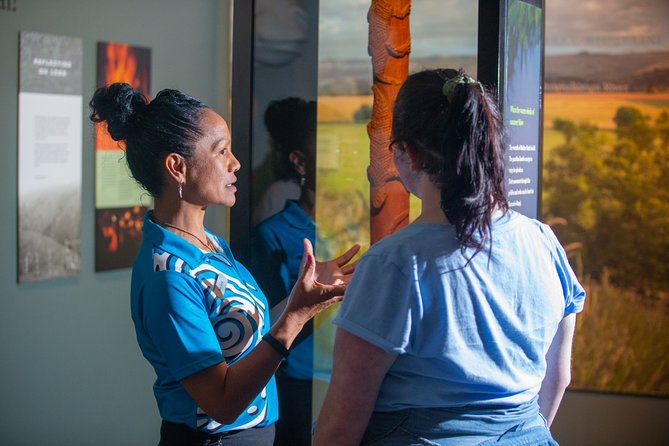
One hour can change your whole museum visit. This guided introduction to Te Papa Tongarewa helps you make sense of New Zealand’s national museum without wandering past its best displays. I like the small-group limit of 15 people and the chance to keep exploring for two days after the tour. The main catch is time: an hour gives you a useful orientation, not a full visit.
I also like the way the tour connects Māori and Pacific cultures, colonial history, art, design, and natural science instead of treating them as separate subjects. Guides such as Anna, Roger, Susan, Basil, Nancy, and Bruce Roberts have been praised for bringing strong personal insight and lively explanations. Still, the price of $46.54 per person deserves thought, especially since the museum itself has free admission and some visitors have found that a free museum tour may also be available.
In This Review
- Key points to know before you go
- Why Te Papa works best with an introduction
- Meeting at 55 Cable Street in Wellington
- The first hour: a fast route through Te Papa
- Māori and Pacific cultures in context
- Art, design, and photography highlights
- Natural science and New Zealand’s unusual wildlife
- The Gallipoli display and New Zealand’s colonial past
- What the two-day entry really adds
- Is $46.54 good value?
- Who will get the most from this tour?
- Practical advice for a smoother visit
- Should you book the Introducing Te Papa Tour?
- FAQ
- How long is the Introducing Te Papa Tour?
- Where does the tour begin?
- Is museum admission included?
- How many people can join the group?
- Can I explore Te Papa after the guided tour?
- What happens if I cancel?
Key points to know before you go
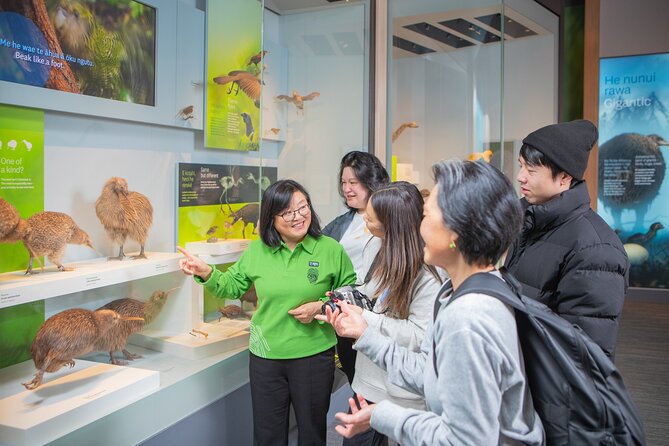
- A 60-minute introduction covers Te Papa’s main themes: Expect selected highlights from Māori and Pacific culture, art, history, photography, design, and natural science.
- Your ticket includes two-day entry: Use the guided hour to choose what deserves a longer look, then return later at your own pace.
- The group is limited to 15 people: This should feel more personal than a large coach tour, though guide volume and pace can affect the experience.
- The Gallipoli display can be especially moving: Its enormous figures and emotional presentation have made a lasting impression on many visitors.
- The tour begins at 55 Cable Street: You meet at Te Papa in central Wellington, and the activity finishes back at the museum.
- Paid temporary exhibitions cost extra: The included admission does not cover every short-term exhibition.
Why Te Papa works best with an introduction
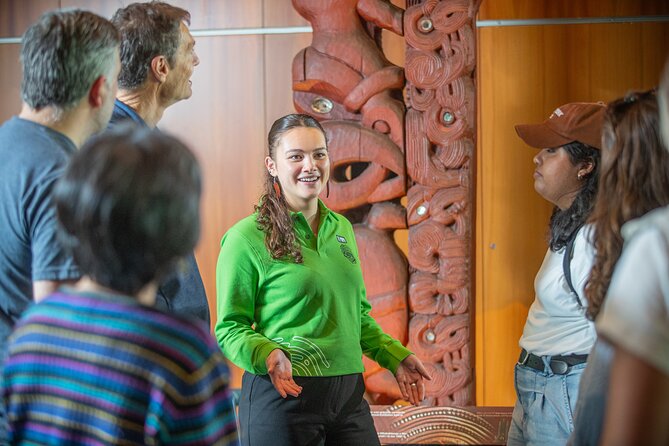
Te Papa Tongarewa is not a small, tidy museum that you can casually finish before lunch. Its collections reach across New Zealand’s art, science, culture, natural world, and social history, with interactive displays mixed in among paintings, photographs, cultural treasures, and large-scale installations.
That range is exciting, but it can also leave you wondering where to begin. The one-hour tour gives you a route through the museum and, more importantly, a set of connections. You may look at a Māori object, a natural science display, and a piece of New Zealand art in quick succession, but the guide helps explain how each fits into the country’s wider story.
I find that especially useful at a national museum. A label can tell you what an object is. A good guide can explain why it matters, what ideas surround it, and what you should notice before moving on. The best guides here appear to do exactly that.
The tour is not designed to give you every detail. It is a first map. Afterward, you know which galleries deserve another hour and which subjects you want to explore on your own.
More Museum Visits in Wellington
- Wellington: Museum of NZ General Admission
★ 4.7 · 156 reviews - Museum of NZ Te Papa Tongarewa: Gallipoli Exhibition Guided Tour
★ 4.5 · 111 reviews - Wellington: Museum of NZ Intro Tour & General Admission
★ 4.8 · 66 reviews
Meeting at 55 Cable Street in Wellington
You make your own way to the Museum of New Zealand Te Papa Tongarewa at 55 Cable Street, on the Wellington waterfront. The museum is near public transportation, and the central location makes it easy to combine with other time in the city.
Pay close attention to the meeting instructions. One poor experience came from waiting outside the museum without finding the guide. The address alone may not tell you precisely where the group gathers, so arrive early and confirm the meeting spot before the start time.
The tour is offered at several times during the day, which gives you some flexibility. Even so, do not cut it close. One person missed the entire tour after arriving ten minutes late and could not catch up with the group. Since the guided portion lasts only an hour, the group cannot easily pause for late arrivals.
Your confirmation arrives when you book. The activity allows service animals, and most people can take part. Hotel pickup and drop-off are not included, so this is a self-arrival museum visit rather than a transport-based tour.
The first hour: a fast route through Te Papa
Once the tour begins, your guide introduces the museum’s main collections and walks you through selected galleries. The pace is purposeful. You are there to see a broad range of Te Papa rather than spend fifteen minutes studying one object.
Expect attention to:
- Māori and Pacific cultures
- New Zealand’s colonial past
- Art and design
- Photography
- Natural sciences
- Interactive displays
- The country’s distinctive plants, animals, and natural environment
The exact route can vary with the guide and the museum’s current exhibitions. That is a benefit, since a good guide can respond to the group’s interests. It also means you should not expect a fixed checklist of every famous display.
Several guides have received strong praise for their delivery. Anna was described as engaging and well informed. Roger was praised for giving a little information about almost everything while keeping the hour enjoyable. Susan provided a particularly personal visit when she was guiding just one person, offering background that would have been easy to miss alone.
Bruce Roberts was singled out for linking subjects that might otherwise seem unrelated. His explanations have covered the colossal squid, the kiwi bird’s reproductive cycle, Pacific migration, Māori encounters with sacred places, World War I, railways, language connections, and New Zealand’s wildlife. That range gives you a sense of what a strong guide can add in sixty minutes.
The downside is that the hour can feel crowded with information. One guide was criticized for speaking too softly and too quickly. If you have hearing concerns, stand close to the guide and let them know at the start. A group of up to 15 is manageable, but your position in the group still matters.
Māori and Pacific cultures in context
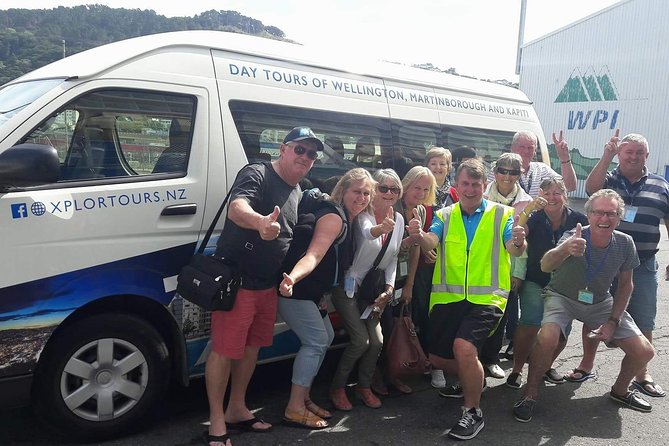
The cultural sections are one of the strongest reasons to take the introduction. Te Papa presents Māori heritage and Pacific cultures as central parts of New Zealand’s identity, not as a side room to visit after the art galleries.
The guided explanations can help you read the physical and spiritual meaning of objects, rather than seeing only their design or age. You may also gain a clearer sense of Māori skill in sailing, survival, carving, and water transport, as well as the movement of Pacific peoples across the region.
This context matters because cultural displays can be easy to misunderstand when seen quickly. A guide can explain the ideas attached to an object, the role of ancestors and sacred places, and the importance of language and community.
I would give this part your full attention, even if your main interest is art or science. It provides a foundation for understanding New Zealand beyond a simple colonial-era story.
A completely different kind of day out in Wellington:
- Wellington: Wētā Workshop Guided Tour Ticket
★ 4.7 · 997 reviews - Wētā Workshop Experiences Tour – Wellington
★ 5.0 · 875 reviews - Wellington: Return Cable Car Ticket
★ 4.6 · 714 reviews - Half Day Tour of Wellington
★ 4.5 · 638 reviews
Art, design, and photography highlights
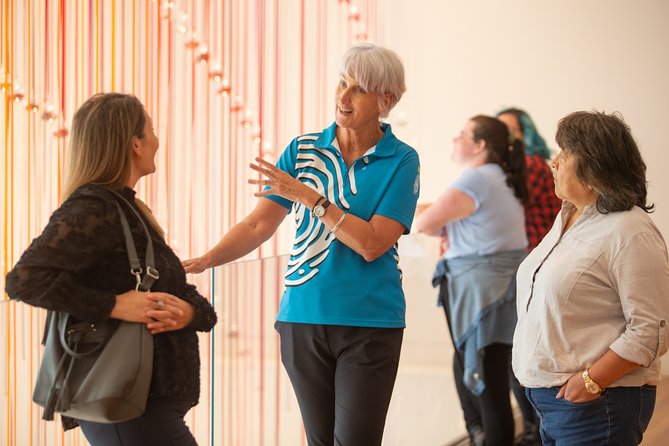
Te Papa also brings together fine art, design, and photography. The one-hour route may include major artworks and visual displays, but the guide cannot give every gallery equal time.
That limitation is worth accepting. The aim is to help you identify what appeals to you, not to replace an afternoon of independent viewing. One person particularly enjoyed the art exhibition and the guide’s explanations of the animals and natural science displays. Another used the introduction to spot an exhibition they would not otherwise have visited.
If you already know you want to spend time with paintings, photography, or design, tell the guide early. Recommendations can be tailored to your interests, and this is one of the practical benefits of taking the tour. You leave with a better idea of where to return rather than spending your extra time guessing.
Natural science and New Zealand’s unusual wildlife

The natural science displays give the tour a different rhythm. Instead of only looking at historical objects, you encounter New Zealand’s distinctive environment and wildlife through exhibits and interactive features.
The colossal squid and kiwi bird have both been used by guides as memorable entry points into natural science. These subjects are useful because they move beyond a quick display label and open up questions about anatomy, reproduction, adaptation, and the pressures faced by wildlife.
The interactive exhibits are another reason this museum works well for families and curious adults. They make the visit more active than reading a standard guidebook, though the one-hour tour may only allow a brief look at each station.
If science is your priority, plan to return after the tour. The introduction can show you the main areas, but you will need extra time to read labels and use the interactive features properly.
The Gallipoli display and New Zealand’s colonial past
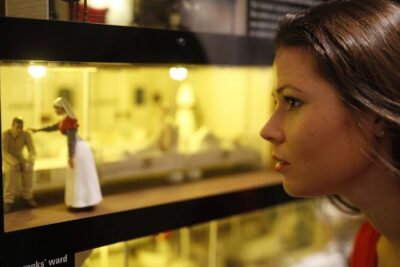
The World War I and Gallipoli display has made a particularly strong impression. Its oversized figures are presented with striking realism, and the subject is treated as an emotional part of New Zealand’s story rather than a simple military timeline.
Australian visitors may find the Gallipoli material especially meaningful, but you do not need a personal family connection to appreciate the presentation. The display links war, national identity, memory, and the experience of people from Oceania on the international stage.
The museum also explores New Zealand’s colonial past and more recent industrial changes. Guides have connected the railway, economic shifts, Māori experiences, and wider social change. A short explanation can make these galleries easier to follow, especially if you are new to New Zealand history.
You may not see every part of this subject during the guided hour. If the war display or colonial history interests you, return during your included admission and give it proper time.
What the two-day entry really adds
The two-day entry is the most practical part of the package. The guided hour gives you a framework, then you can remain in the museum or return the next day to examine the galleries at a slower pace.
That matters because Te Papa is large. Several people found they needed three hours or more, and one person could have continued for another three hours after an already lengthy visit. The free time also helps if you are tired, traveling with children, or trying to fit the museum around other Wellington plans.
Use the tour as a reconnaissance mission:
- Notice which galleries you want to revisit.
- Ask the guide for recommendations based on your interests.
- Return to the most important exhibits when you are not keeping up with a group.
- Leave paid short-term exhibitions out of your budget unless you specifically want them.
The museum shop and on-site cafés give you places to pause. One café was described as tasty and reasonably priced, which is useful if you plan to stay for much of the day.
Is $46.54 good value?
At $46.54 per person, this is not a cheap museum orientation. The value depends on how much you want a guide to shape your first visit.
The museum’s general admission is free, according to the information available with the experience, while this ticket includes a 60-minute guided tour and an international visitor admission fee covering two days. One unhappy customer felt the paid booking was unnecessary because the museum also offered a free tour. That is an important point: before paying, check what free guided options Te Papa offers on your date.
The paid option makes more sense if you want a scheduled small-group experience, a direct introduction to the museum, and the convenience of two-day entry in one booking. It is also useful if you dislike wandering through a large museum without a plan.
The value is weaker if you are happy exploring independently, have plenty of time to read displays, or can confirm that a suitable free museum tour is running. The guide quality also affects the calculation. A thoughtful guide can make the fee feel worthwhile. A rushed or quiet presentation may not.
Who will get the most from this tour?
I would recommend it most strongly to first-time visitors with limited knowledge of New Zealand history or Māori culture. The guide supplies essential context quickly, then leaves you free to choose your own path.
It also suits people who:
- Prefer a planned introduction to a large museum
- Want to connect art, science, culture, and history
- Have one day in Wellington but may return the next day
- Enjoy interactive displays but want help choosing where to focus
- Are interested in Māori and Pacific cultures
- Want background on the Gallipoli presentation and New Zealand’s identity
Independent museum visitors may not need it. If you already have a detailed plan, the hour could feel like a detour. Families may appreciate the structure, though younger children may find the fast pace difficult if the guide covers too much material without a break.
The group size is limited to 15, which is a sensible compromise between personal attention and cost. It is not a private tour, and the experience can vary with the guide’s volume, speed, and ability to manage the group.
Practical advice for a smoother visit
Arrive early at 55 Cable Street and do not assume that waiting outside will bring the guide to you. Confirm the meeting point inside or nearby, based on your booking instructions.
Wear comfortable shoes and leave time after the tour. The guided hour is only the beginning, and the museum’s size makes a second visit worthwhile. If your schedule allows, use the first day for the tour and the second for the galleries that caught your attention.
Ask questions at the start. If you care most about Māori culture, art, natural science, or wartime history, say so. The guide may be able to point you toward displays that fit your interests.
The cancellation terms are simple: cancel at least 24 hours before the local start time for a full refund. Changes or cancellations made inside that window are not refunded.
Should you book the Introducing Te Papa Tour?
Book it if you want a clear, human introduction to a very large museum and plan to use the two-day entry. The best guides can explain Māori and Pacific culture, New Zealand history, art, science, and wildlife in a way that gives the rest of your visit more meaning.
Skip it if you prefer self-guided museum visits or can take a free tour directly through Te Papa. At $46.54, you should confirm what is included and compare it with any free option available on your date.
For most first-time visitors, the strongest plan is simple: take the one-hour introduction, then return to the Gallipoli display, cultural galleries, interactive science exhibits, or art areas that caught your attention. Just arrive early, expect a brisk pace, and remember that Te Papa cannot be properly finished in one hour.
FAQ
How long is the Introducing Te Papa Tour?
The guided portion lasts approximately one hour, or 60 minutes.
Where does the tour begin?
The tour begins at the Museum of New Zealand Te Papa Tongarewa, 55 Cable Street, Te Aro, Wellington 6011, New Zealand.
Is museum admission included?
Yes. The ticket includes the 60-minute guided tour and international visitor admission with two-day entry. Short-term paid exhibitions are not included.
How many people can join the group?
The small-group tour has a maximum of 15 people.
Can I explore Te Papa after the guided tour?
Yes. Your included two-day entry lets you continue exploring after the tour and return to the museum during the two-day admission period.
What happens if I cancel?
You can receive a full refund if you cancel at least 24 hours before the experience’s local start time. Cancellations or changes made less than 24 hours before the start are not refunded.
Just added around Wellington
- Private Tour in Wellington★ 5.0 · 5 reviews
- Wellington: Wētā Workshop Creative Classes Experience Ticket★ 4.7 · 5 reviews
- Exclusive Wellington Sightseeing Private Tour★ 4.0 · 5 reviews
- Wellington Jewish Heritage sightseeing tour with a kosher lunch★ 5.0 · 5 reviews
- Wellington: Lord of the Rings Half-Day Guided Tour inc Weta★ 5.0 · 5 reviews
- Wellington 90 minute Harbour Cruise★ 5.0 · 6 reviews
- Wellington: Wild Skyline Guided Hiking Tour, Transfers + Lunch★ 5.0 · 6 reviews
- Wellington: Lord of the Rings Filming Locations Tour★ 4.0 · 6 reviews
Museums, compared.
Explore gardens & galleries filled with incredible art, Matakana
Read our review →
Skip the Line: Auckland Museum General Admission Ticket
Read our review →
Museum of NZ Te Papa Tongarewa: Gallipoli Exhibition Guided Tour
Read our review →
Māori Cultural Experience & Auckland Museum General Admission
Read our review →
Skip the Line:WWI & WWII Combo Exhibitions at the Omaka Aviation Heritage Centre
Read our review →
Browse the lists this tour appears in