
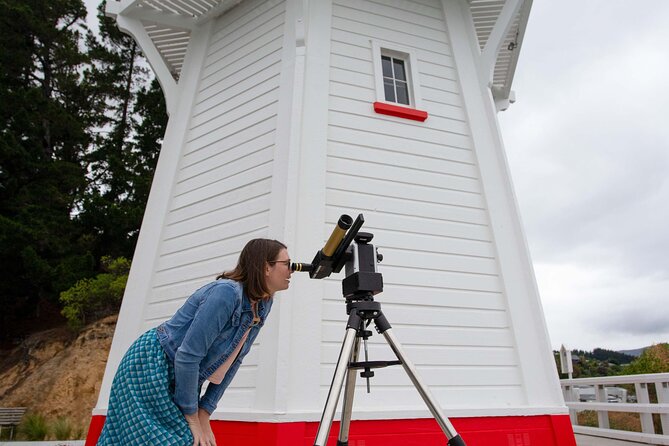
Reviewed · AKAROA TOURS
Solar Explorer in Akaroa – Sun-Viewing Tour with Telescopes
The Sun is closer than you think. At Akaroa Lighthouse, the Solar Explorer turns a daytime stop into a close look at sunspots, flares, and surface activity through a specialist telescope. I like the small eight-person group, which keeps the session personal, and the fact that the tour runs daily when conditions allow. The main catch is simple: clouds can cancel or delay the experience.
I also like the live digital images from the ZWO Seestar S50 and the chance to take your own pictures through a phone adapter. At only 30 minutes, this is easy to fit into an Akaroa day. Just remember that private transport is not included, so you must make your own way to the lighthouse.
- The Sun is the star of the show: See sunspots, solar flares, and surface activity during a guided daytime session.
- A small group keeps it hands-on: The tour accepts a maximum of eight people.
- Live images come with your ticket: Digital photos captured through the ZWO Seestar S50 are shared instantly.
- Your phone can join in: A smartphone adapter lets you take your own solar pictures through the telescope.
- Weather controls the schedule: Poor conditions can lead to a new date or a full refund.
- Akaroa Lighthouse makes a memorable base: The historic site gives this short activity a clear sense of place.
In This Review
- A Daytime Look at Akaroa’s Closest Star
- Meeting the Sun at Akaroa Lighthouse
- What You See Through the Solar Telescope
- The ZWO Seestar S50 Adds a Digital View
- A Short Tour With Real Educational Value
- Weather Is the One Thing You Cannot Control
- Is the NZ$24.20 Price Good Value?
- Who Should Book Solar Explorer?
- Booking and Practical Details
- Should You Book Solar Explorer in Akaroa?
- FAQ
- Where does Solar Explorer begin?
- Where does the tour end?
- How long does the Solar Explorer tour last?
- How much does the tour cost?
- What will I see through the telescope?
- Are photos included?
- What happens if the weather is poor?
A Daytime Look at Akaroa’s Closest Star
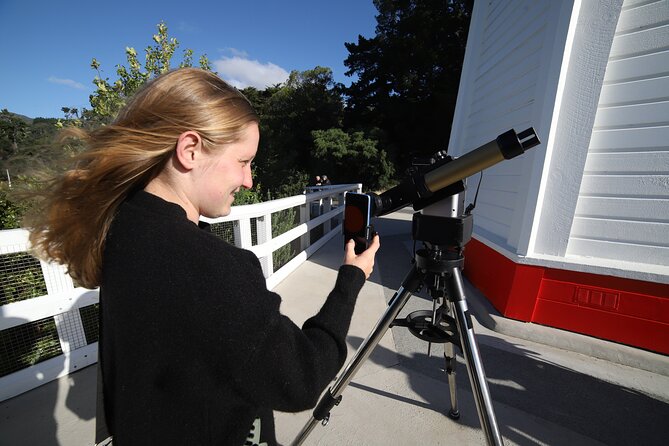
Most astronomy tours wait for darkness. Solar Explorer flips that idea around. You meet during the day at Akaroa Lighthouse and look toward the Sun with equipment designed for safe solar viewing.
That timing makes the activity easy to add to an Akaroa visit. You do not need to give up an evening, stay out late, or plan around a long night excursion. If you are visiting from Christchurch, Akaroa is about a 90-minute scenic drive away, so the tour works well as one part of a wider day trip.
The experience lasts about 30 minutes. That is short enough for families, cruise-day schedules, and anyone who wants a taste of astronomy without committing to a full lecture or extended outing. I see the brief length as a strength, but it also means the session is focused. You should arrive ready to look, listen, and ask questions rather than expect a long observatory visit.
Akaroa Stargazing runs this as New Zealand’s only guided daily tour devoted to the Sun. The wording matters because this is not simply a telescope placed outside for casual viewing. An astronomer guides you through what you are seeing and explains why the Sun looks different from one day to the next.
Meeting the Sun at Akaroa Lighthouse
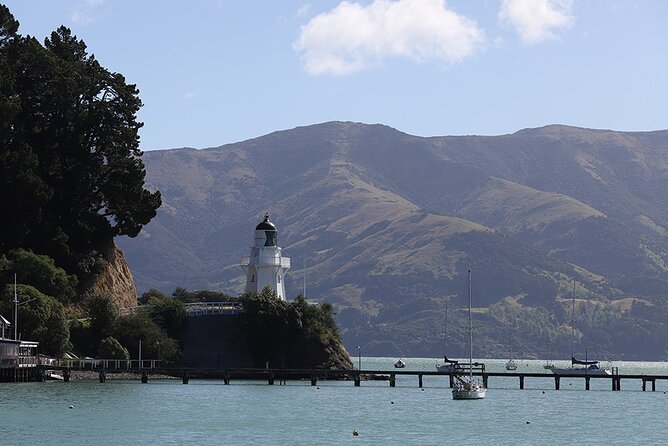
The meeting point is Akaroa Lighthouse, at 145 Beach Road. The activity begins and ends there, making the logistics refreshingly simple once you reach the site.
The lighthouse gives the experience more character than a generic car park or indoor classroom. You are looking at the Sun from one of Akaroa’s recognizable historic spots, not just checking an item off a science activity list. The supplied information does not promise a separate lighthouse tour, so I would treat the building and waterfront setting as the backdrop rather than part of the guided program.
You need to arrange your own transport. Private transportation is not included, though the meeting point is near public transportation. If you are building a full Akaroa day, allow time to reach the lighthouse and find the meeting point before the 30-minute session begins.
The compact group size is one of the best practical details here. With no more than eight people, you should have a better chance to see through the telescope, ask questions, and hear the guide without a crowd gathering around the equipment. That matters with a short tour. Every minute counts.
A few more Akaroa trips worth weighing up
- Akaroa Dolphins ~ Harbour Nature Cruise
★ 5.0 · 2,143 reviews - Akaroa: Dolphin Nature Cruise
★ 4.9 · 440 reviews - Akaroa Harbour Nature Cruise
★ 5.0 · 332 reviews
What You See Through the Solar Telescope
The main attraction is the specialist solar telescope. Proper solar equipment is essential, and this tour is built around observing the Sun safely rather than improvising with ordinary binoculars or a standard telescope.
The guide helps you identify sunspots, solar flares, and other surface activity. Sunspots can give the Sun a mottled, marked appearance, while flares show that our nearest star is active and constantly changing. You do not need a background in astronomy to follow along. The session is designed as an introduction, with explanations intended for all ages.
The experience can change from day to day because the Sun changes from day to day. You might see clear dark spots, bright bursts, or less dramatic activity. That unpredictability is part of the appeal, though it also means nobody can promise a specific view before the telescope is set up.
A guide does more than point at the eyepiece. The supplied feedback highlights Luca’s passion for the solar system and his ability to explain what people were seeing. That personal guidance gives the half-hour more purpose. Without it, a small mark in a telescope could remain just a small mark. With context, you begin to understand that you are looking at activity on a star.
The ZWO Seestar S50 Adds a Digital View
The ZWO Seestar S50 smart telescope gives the tour a modern edge. It captures high-resolution images of the Sun live, and the digital pictures are shared with you instantly.
This is valuable for two reasons. First, you can see a more detailed image than you might manage through the eyepiece alone. Second, you leave with a record of what appeared during your session. Solar viewing is not only about taking a quick look and walking away. The image lets you remember the activity you saw and share it later.
You can also use the smartphone adapter to capture your own photographs directly through the telescope. That makes the activity more interactive, especially for children and adults who enjoy making their own visual record.
I would keep expectations sensible. These are images of the Sun, not a full professional astrophotography workshop. The appeal is that the pictures are created during your visit, from the telescope you are using, and shared without requiring you to bring specialist camera equipment.
The digital element also helps if several people want to remember the same view. Instead of everyone waiting for a perfect eyepiece turn, the live image gives the whole group another way to see the subject.
A Short Tour With Real Educational Value
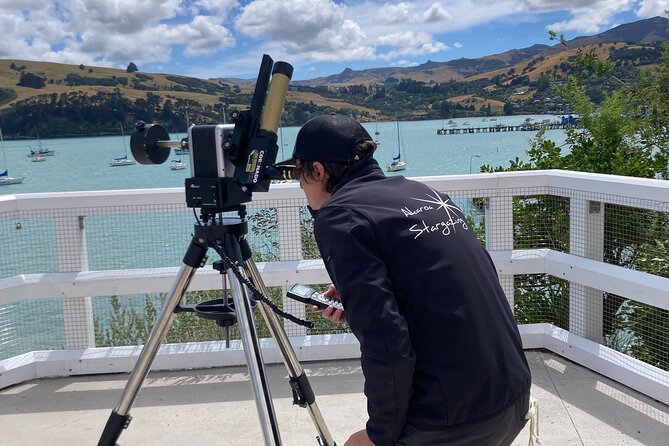
Solar Explorer works best when you want an introduction rather than a technical astronomy course. The guide explains the Sun and the solar system in an approachable way, and the activity is suitable for all ages.
I would especially recommend it for families with curious children. The combination of a real telescope, a moving subject, and a phone-friendly image gives younger visitors something concrete to do. They are not just listening to facts. They can look, compare, ask questions, and see a picture appear on the screen.
Adults who already enjoy space will find enough novelty in the daytime format and solar equipment. One person used the tour as an outing with a space-minded friend, which makes sense. You do not need to choose between a serious astronomy experience and a family activity here. It sits comfortably between the two.
The strongest educational value comes from the guide’s commentary. Solar features can look abstract in a book or on a screen. Seeing sunspots or flares through a telescope gives the information a physical scale, even if you cannot truly grasp the enormous distances involved.
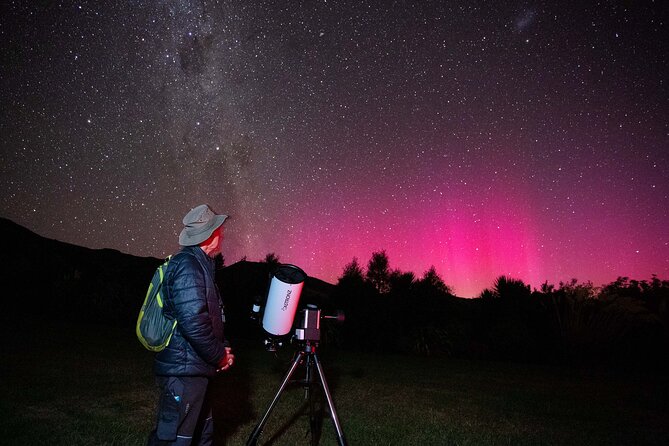
The tour also makes a useful contrast with Akaroa Stargazing’s nighttime activities. If you enjoy this experience, you might want to return for a look at the southern sky after dark. The solar tour is not a replacement for stargazing, but it offers a different way to think about the same subject.
A completely different kind of day out in Akaroa:
- Akaroa Harbour 2-Hour Dolphin Nature Cruise
★ 4.7 · 235 reviews - Akaroa Shore Excursion: Banks Peninsula and Christchurch City Sights Tour
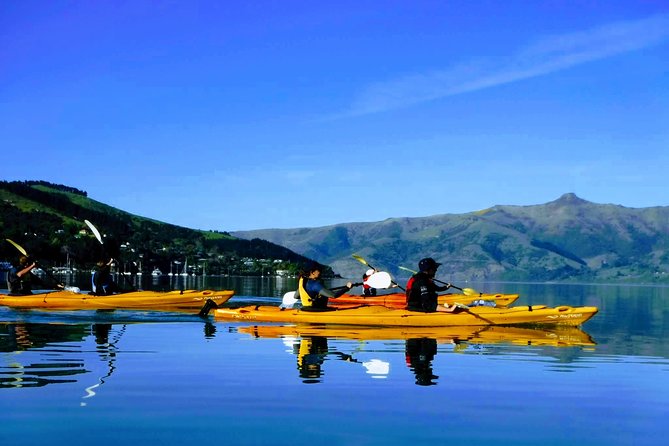
★ 4.0 · 228 reviews - Shore Excursion Guided Sea Kayaking through Akaroa Marine Reserve
★ 5.0 · 160 reviews - Akaroa Shore Excursion: Banks Peninsula, Christchurch City Tour and the International Antarctic Centre
★ 4.0 · 135 reviews
Weather Is the One Thing You Cannot Control
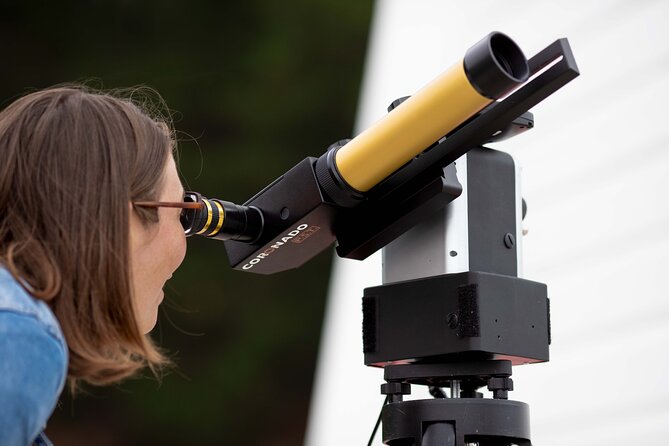
Cloud is the key practical issue. The tour requires good weather, and poor conditions can lead to cancellation, a different date, or a full refund.
This is not a minor concern. The Sun must be visible for the telescope to do its job. A cloudy sky can turn a carefully planned solar session into a frustrating wait, so I would avoid booking it as the one non-negotiable event of a tightly packed Akaroa day.
The good news is that the team appears to handle weather actively. Luca kept people informed when conditions changed and helped move one booking to another time slot. Another arrangement involved discussing plans at the Akaroa Stargazing shop at 2/8 Rue Balguerie while clouds moved across the sky.
That suggests you should keep your phone available around the booking time and stay flexible if the forecast looks uncertain. A delayed session can be worth accepting if it gives you a clearer view. The practical benefit is not a promise that every booking can be moved at any time, but the provider’s stated policy does allow a different date or a full refund when weather cancels the activity.
Is the NZ$24.20 Price Good Value?
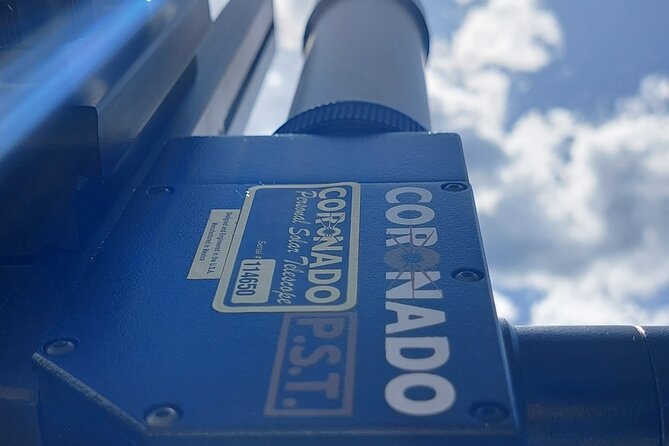
At $24.20 per person, this is one of the easier Akaroa activities to add without putting a large dent in your day-trip budget. The price includes use of the solar telescope, expert guidance, the smartphone adapter, and instant digital images from the ZWO Seestar S50.
I think the value is strongest for people who would otherwise pass through Akaroa without doing anything astronomy-related. You get a dedicated guide, specialist equipment, and a take-home visual record in about 30 minutes. That is a reasonable package for a short, focused activity.
The value is less certain if you are already committed to a packed schedule and have no flexibility for weather. Since private transportation is not included and the tour depends on clear conditions, you should count the cost of reaching the lighthouse and the possibility of adjusting your plans.
Still, the small group helps the price feel fair. You are not paying for a large, passive demonstration. The group limit of eight supports a more personal session, and the phone adapter gives you something active to do.
This is also a good choice when different people in your party have different interests. One person can enjoy the science, another can focus on photography, and children can take turns at the telescope. Few short Akaroa activities offer that mix.
Who Should Book Solar Explorer?
I would choose this tour for:
- Families looking for a short educational activity
- Adults with an interest in astronomy or photography
- Visitors taking a day trip from Christchurch
- People who want a daytime alternative to night stargazing
- Anyone who enjoys guided experiences with a small group
- Visitors happy to adjust plans around cloud cover
I would think twice if you dislike weather-dependent activities or need every part of your schedule to run at a fixed time. The 30-minute duration is convenient, but the actual timing may need some flexibility when clouds move in.
You should also book with the right expectations. This is not a long visit to an observatory, a private astronomy lesson, or a transport-inclusive excursion. It is a compact, guided look at the Sun using serious equipment in a memorable Akaroa setting.
Booking and Practical Details
Confirmation is received at the time of booking, and the ticket is mobile, so you can keep it on your phone. The activity begins and ends at Akaroa Lighthouse, 145 Beach Road, Akaroa 7520.
Most people can participate, and service animals are allowed. The tour is near public transportation, but no private transport is supplied. I would check your route to the lighthouse before the day begins, especially if you are arriving as part of a larger Christchurch or Akaroa schedule.
Free cancellation is available if you cancel at least 24 hours before the start time. Cancellations made less than 24 hours before the start time are not refunded, and late changes are not accepted. The cut-off follows local time.
If bad weather cancels the experience, you can choose another date or receive a full refund. That policy makes the weather risk easier to manage, though it does not remove the need to keep your schedule open.
Should You Book Solar Explorer in Akaroa?
Book it if you want a short, affordable, hands-on astronomy experience with a real guide and specialist equipment. The combination of solar viewing, live digital images, and phone photography gives the 30 minutes more substance than a quick look through a telescope.
I would be especially keen to book on a day when the forecast looks stable and I had enough spare time to accept a delay. Luca’s clear communication and enthusiasm are important advantages, but the sky still has the final say.
Skip it if you need guaranteed timing, do not want to arrange your own transport, or would rather spend your Akaroa visit entirely outdoors without a structured activity. For everyone else, Solar Explorer is an unusual and good-value way to see a familiar object with new eyes. The Sun may be above you all day, but this tour gives you a reason to stop and look properly.
FAQ
Where does Solar Explorer begin?
The tour begins at Akaroa Lighthouse, 145 Beach Road, Akaroa 7520, New Zealand.
Where does the tour end?
The activity ends back at the Akaroa Lighthouse meeting point.
How long does the Solar Explorer tour last?
The tour lasts approximately 30 minutes.
How much does the tour cost?
The listed price is $24.20 per person.
What will I see through the telescope?
You may observe sunspots, solar flares, and other solar surface activity through the specialized solar telescope.
Are photos included?
Yes. The ZWO Seestar S50 captures high-resolution digital images of the Sun live, and these images are shared instantly. A smartphone adapter is also included so you can take your own pictures through the telescope.
What happens if the weather is poor?
Because the activity requires good weather, it may be canceled. In that case, you will be offered a different date or a full refund.
Just added around Akaroa
- Discover Akaroa: Self Guided Audio Tour★ 4.0 · 6 reviews
- Akaroa Self Guided Electric Scooter Tour★ 5.0 · 9 reviews
- Akaroa Nature and History Private Tour – The 7th Generation★ 5.0 · 10 reviews
- Akaroa Shore Excursion: Akaroa Harbour and Sheep Farm Local Tour★ 4.5 · 11 reviews
- Akaroa Shore Excursion: Banks Peninsula, Christchurch City and Giants House Tour★ 3.5 · 14 reviews
- Akaroa: Stargazing Tour with 2 Telescopes & Souvenir Photos★ 5.0 · 17 reviews
- Akaroa Shore Excursion: Akaroa Harbour and Giants House Local Tour★ 4.5 · 19 reviews
- Akaroa Shore Excursion: Banks Peninsula, Christchurch City Tour and Willowbank Wildlife Reserve★ 3.5 · 26 reviews
Akaroa Tours, compared.


Akaroa Shore Excursion: Banks Peninsula and Christchurch City Sights Tour
Read our review →
Shore Excursion Guided Sea Kayaking through Akaroa Marine Reserve
Read our review →
Akaroa Shore Excursion: Banks Peninsula, Christchurch City Tour and the International Antarctic Centre
Read our review →
Pohatu Penguins Scenic Nature 2-Hour or 4-Hour Tour
Read our review →Browse the lists this tour appears in