
Reviewed · TANDEM SKYDIVING
Tandem Skydive 18,000ft from Franz Josef
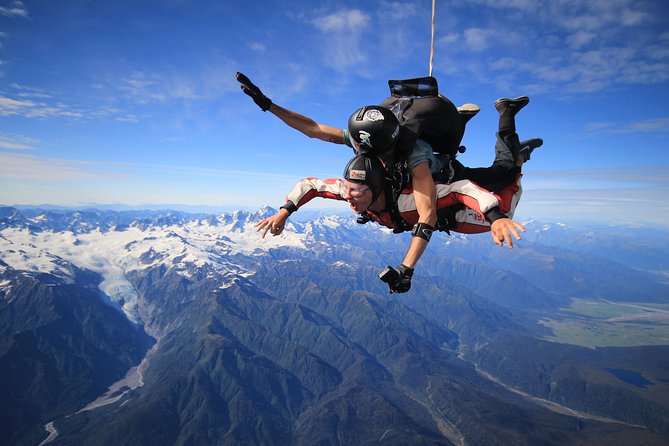
The sky opens over New Zealand’s highest peaks. This 18,000-foot tandem jump from Franz Josef combines about 85 seconds of freefall with views of Aoraki Mount Cook, Fox and Franz Josef Glaciers, rainforest, lakes, and the Tasman Sea. I like the included transfer and full equipment hire, which keep the planning simple. I also like the calm, friendly instruction praised in the feedback, including Peter and JT by name.
The main drawback is weather. A mountain jump can be postponed or cancelled, so you should keep some flexibility in your West Coast plans. At $515.16 per person, it is a major expense, especially if you add photos or video, but the height and scenery make it a serious choice for a once-in-a-lifetime New Zealand thrill.
In This Review
- Key points to know before your Franz Josef jump
- Why an 18,000-foot jump is different
- Starting at 63 Cron Street in Franz Josef
- Getting ready with a tandem instructor
- The flight above glaciers, rivers, and the Tasman Sea
- The 85-second freefall
- What the Franz Josef Glacier stop means
- Price, extras, and the real value
- Weather, cancellations, and planning around the West Coast
- Who will enjoy this most
- Is the Franz Josef 18,000-foot jump worth booking?
- FAQ
- Where does the tandem jump begin?
- How long does the experience last?
- Is transport included?
- How long is the freefall?
- What should I wear?
- What happens if bad weather cancels the jump?
Key points to know before your Franz Josef jump
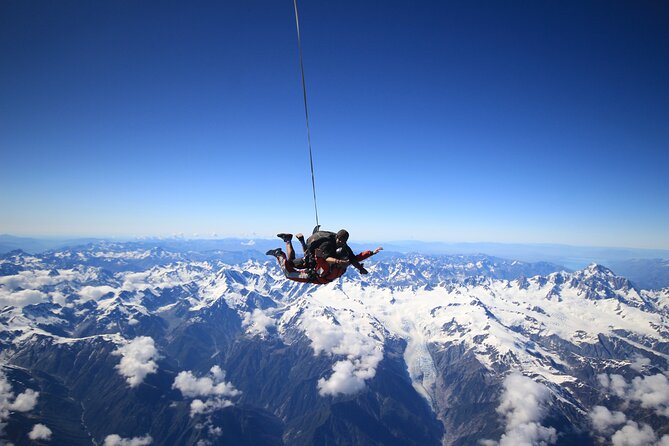
- 18,000 feet gives you about 85 seconds of freefall, the longest and highest option described for this experience in New Zealand.
- Aoraki Mount Cook, Fox Glacier, Franz Josef Glacier, and the Tasman Sea may all form part of the view from the aircraft and canopy.
- Peter and JT are praised by name for professional, friendly, and reassuring instruction.
- The booking office at 63 Cron Street handles the start and finish, with shared transport to the airport included except under COVID restrictions.
- Warm, lightweight clothing and secure lace-up shoes matter, since you spend time outdoors and wear a jumpsuit, helmet, gloves, and goggles.
- Photos, video, T-shirts, and hoodies cost extra, so budget beyond the listed price if you want souvenirs.
Why an 18,000-foot jump is different
Many tandem jumps give you a quick burst of freefall followed by a longer parachute ride. The 18,000-foot option offers around 85 seconds before the parachute opens, giving you more time to feel the speed and take in the view.
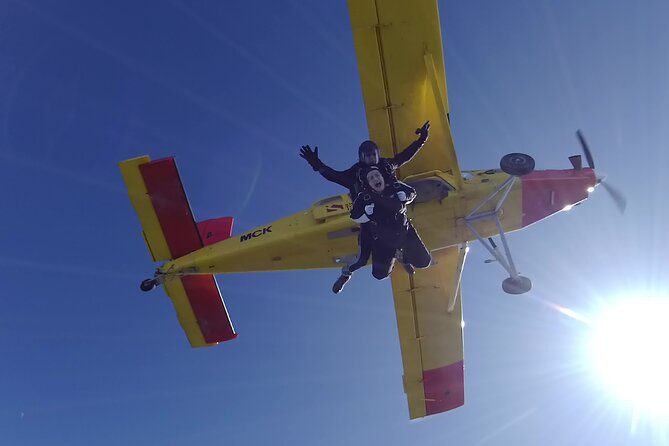
You will leave the aircraft at roughly 200 kilometres per hour, or 120 miles per hour. That number sounds dramatic, and it is, but tandem jumping removes much of the technical work from your side. Your instructor handles the equipment and the jump procedure while you follow the instructions and enjoy the ride.
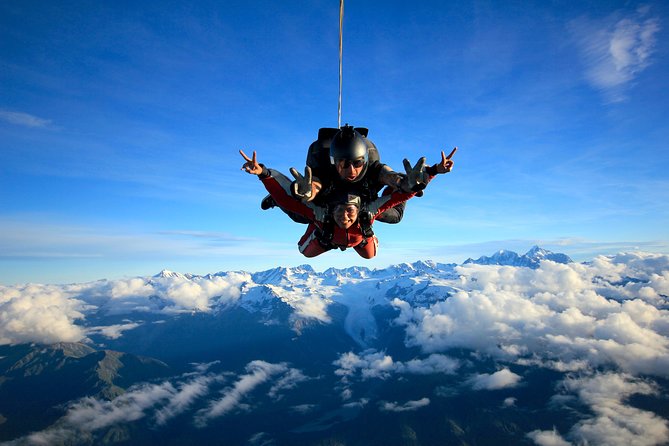
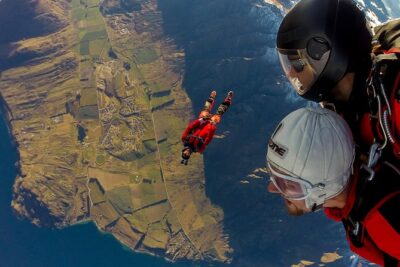
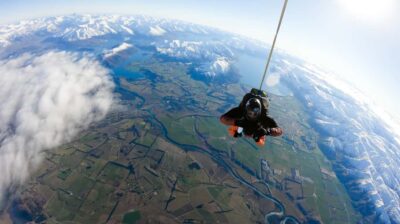
The height also changes the scenery. From above Franz Josef, the view is not limited to one glacier or one valley. You may see Aoraki Mount Cook, the Fox and Franz Josef Glaciers, braided river beds, mirror lakes, rainforest, mountains, and the Tasman Sea. That variety is a big reason to choose this over a shorter jump.
I would choose this option for the setting as much as for the adrenaline. The West Coast is one of New Zealand’s best areas for big natural views, and a plane gives you a perspective that a road or glacier walk cannot match. The trade-off is price. At $515.16, this is not a casual add-on for most holiday budgets.
More skydiving in New Zealand:
- Skydive Auckland
★ 5.0 · 1,516 reviews - NZONE Skydive Queenstown
★ 4.5 · 1,438 reviews - Queenstown: Tandem Skydive Experience
★ 4.8 · 475 reviews
Starting at 63 Cron Street in Franz Josef
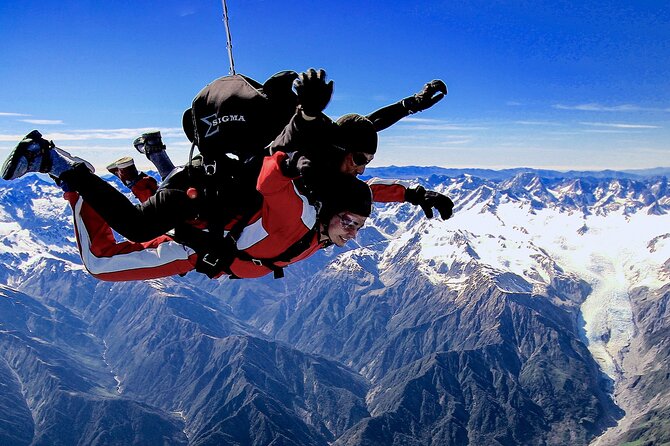
Your day begins at the booking office at 63 Cron Street, Franz Josef, also known as Waiau. The activity lasts about three hours, and it operates multiple times during the day. That range of departure times can help you fit the jump around a glacier walk, scenic drive, or other West Coast plans.
A shared transfer takes you from the booking office to the airport. This is useful because you do not need to arrange separate transport or work out where the aircraft departs. The transfer is included except under COVID restrictions, so check the current arrangements when you book.
The experience finishes back at the same meeting point. That makes the return simple, especially if you have left a vehicle, luggage, or other plans near the centre of Franz Josef.
The three-hour estimate includes more than the time in the air. You need time for check-in, clothing and equipment, instruction, the transfer, the flight, and the return. Do not plan another fixed activity immediately afterward. The operator provides tea and coffee before and after the jump, a small but welcome touch in a cool mountain town.
Getting ready with a tandem instructor
You do not need previous skydiving experience. The instruction is designed for complete beginners, and the tandem setup means you are attached to a seasoned instructor who manages the technical side.
The supplied equipment includes a jumpsuit, helmet, gloves, and goggles. You should arrive in warm, lightweight clothing and secure shoes, preferably shoes with laces. Avoid loose or poorly secured footwear. You will be outdoors, and the West Coast can feel cool even when the day looks pleasant from town.
The physical requirement is moderate fitness. That does not mean you need to be an athlete, but you should be comfortable taking part in an active outdoor experience and following instructions. The information provided does not specify a maximum age or weight limit, so ask the operator directly if either point affects your booking.
The tone of the instruction matters here. Feedback praises the staff as professional, friendly, and willing to answer questions. Peter and JT are singled out by name, with JT especially noted for helping calm a nervous partner. That is useful information if your excitement comes with a fair amount of fear.
One detail from the feedback is that the harness felt secure at four attachment points. That is exactly the sort of practical reassurance many first-timers need. You should still listen carefully to the formal briefing. The staff’s job is to make the process clear, but your job is to follow each instruction when it counts.
The flight above glaciers, rivers, and the Tasman Sea
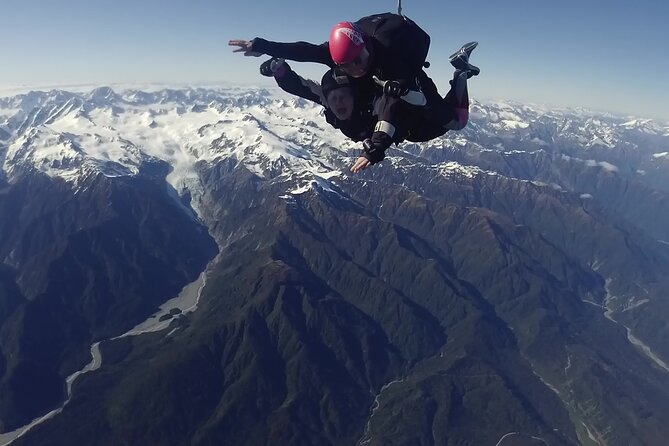
The aircraft ride is part of the experience, not just transport to a jump altitude. As you rise, the view broadens from the Franz Josef area to the wider West Coast. The scenery listed for the route includes glowing glaciers, braided rivers, reflective lakes, rainforest, high mountains, and the Tasman Sea.
Aoraki Mount Cook is the headline view. At 3,724 metres, it is New Zealand’s highest mountain, and seeing it from the air gives you a far better sense of its scale than a quick roadside glimpse. The two major glaciers add bright, icy lines to the mountain valleys, while the braided rivers spread across the lower country in pale channels.
The weather controls how much of this you see. On a clear day, the range of views is the real prize. On a cloudy day, the jump may not operate at all, and even a permitted flight can offer less visibility. That is not a flaw in the operation. It is simply the reality of an aircraft experience in a mountain region.
I recommend placing this activity early enough in your Franz Josef stay to allow one possible rescheduling. The supplier offers another date or a full refund if poor weather cancels the experience, but a replacement date is useful only if you still have time in the area.
A few more New Zealand trips worth weighing up
- Franz Josef Glacier: Helicopter Flight & Alpine Landing
★ 4.8 · 619 reviews - Franz Josef Glacier Heli-Hike
★ 4.5 · 618 reviews - Heli Hike Fox Glacier
★ 5.0 · 563 reviews - Franz Josef: 35min Helicopter Trip over Two Glaciers
★ 4.8 · 451 reviews
The 85-second freefall
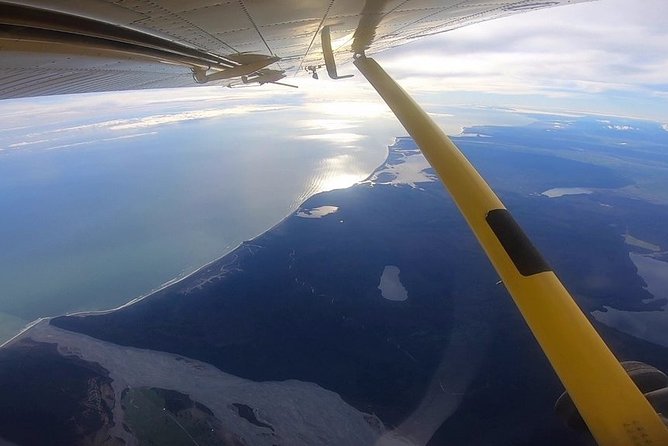
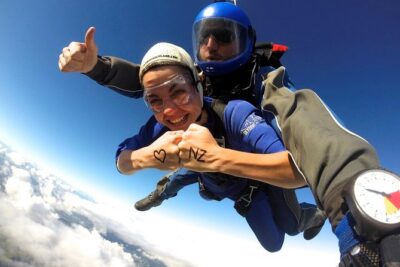
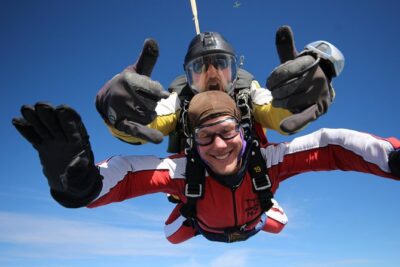
The main event is the 85-second freefall from 18,000 feet. At about 200 kph, the first sensation is likely to be speed, noise, and open air. Your instructor is attached to you and controls the jump, allowing you to concentrate on the experience rather than equipment or technique.
For many people, the first few seconds are more intense than expected. The freefall is not a quiet sightseeing flight. You will need to stay focused on the instructor’s directions, especially at the beginning. Once you settle into the position, you can look outward and take in the mountains below.
The 18,000-foot height is worth choosing if you want the longest freefall offered here. It is less compelling if you mainly want a short thrill and a few aerial photographs. The extra altitude increases the price, so think about your priority before booking: more time in freefall, or a lower-cost introduction to tandem jumping.
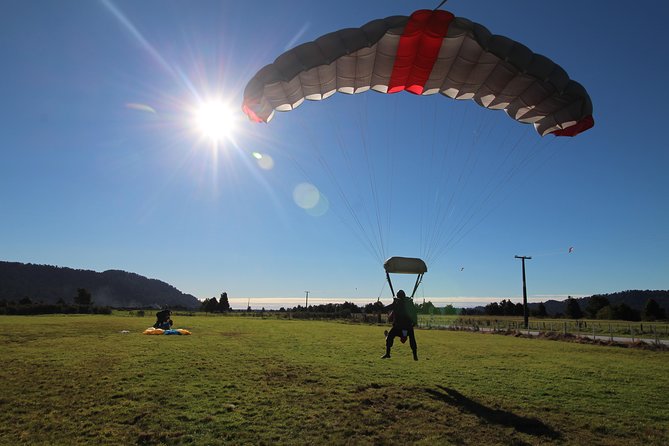
After the freefall, the parachute opens and the pace changes. You float toward the ground with more time to look at the glaciers, valleys, and coastline. That quieter portion helps balance the sheer rush of the opening part.
What the Franz Josef Glacier stop means
The itinerary identifies Franz Josef Glacier as the stop, but this is not a walking tour on the ice. The glacier is the setting and a major part of the aerial view. You will return to the booking office in Franz Josef after the flight rather than continue through a series of ground-based sightseeing stops.
That simplicity is useful. You are paying for an aerial adventure, not a full-day sightseeing circuit. The experience keeps its attention on the flight, the jump, and the mountain views.
The limitation is that you do not receive a guided glacier walk or extended time at several viewpoints as part of this booking. If you want to stand on the ice, explore trails, or visit both glacier valleys on foot, you will need to arrange those separately.
I like the pairing of a Franz Josef base with a high-altitude jump. The town is practical for this kind of activity, and returning to the same meeting point avoids the need to coordinate a complicated end point.
Price, extras, and the real value
The listed price is $515.16 per person. That includes the jump, the shared transfer from the booking office to the airport, the skydive equipment, helmet, gloves, goggles, and jumpsuit. Instruction is also included, as are tea and coffee before and after.
That is a substantial package, but it does not include the optional photo and video products. T-shirts and hoodies are also available for purchase. If recording the experience is important to you, confirm the current media prices before you commit, since the final cost can rise quickly.
I see the price as reasonable for a special-occasion activity rather than everyday entertainment. You are paying for the aircraft, specialist equipment, instructor, staff, transfer, and access to an 18,000-foot jump over one of New Zealand’s most dramatic mountain areas.
The value is strongest if you want the highest and longest option. If you are unsure about the height, nervous about the freefall, or working with a tight budget, a lower-cost activity in Franz Josef may suit you better. There is no point paying for extra altitude if the main appeal for you is simply seeing the glaciers from above.
The booking pattern also matters. This experience is booked an average of 38 days in advance, suggesting that you should not leave it until the last moment during a busy West Coast trip. Multiple daily departures help, but availability can still matter more than the clock.
Weather, cancellations, and planning around the West Coast
Weather is the largest practical risk. The activity requires favourable conditions, and the operator can cancel if the weather is poor. In that case, you receive the choice of another date or a full refund.
I would not place this on the final morning of a tightly planned New Zealand itinerary. Give yourself room to move the booking if clouds or wind interfere. A flexible schedule is especially useful in Franz Josef, where weather can change your plans for many outdoor activities.
You can cancel for a full refund if you do so at least 24 hours before the start time. Cancellations made less than 24 hours ahead are not refunded, and late changes are not accepted. The cut-off uses local time.
The experience also requires a minimum number of participants. If that minimum is not reached, you are offered another date or a full refund. The maximum group size is 70 people. That is a fairly large possible group, though your own tandem jump remains an instructor-led experience.
Who will enjoy this most
I would recommend this for an adult or older teenager who wants a major adrenaline experience and can spare three hours in Franz Josef. It suits first-timers because the instruction and tandem arrangement remove the need for previous training.
It also suits photographers and scenery lovers who want more than a generic aircraft ride. The chance to see Aoraki Mount Cook, two famous glaciers, rivers, lakes, rainforest, and the Tasman Sea in one experience gives the jump a strong sense of place.
You should think carefully if you dislike heights, have limited physical fitness, or need a fixed schedule. The staff can help with nerves, and the feedback points to calm, reassuring instructors, but a friendly briefing cannot change the basic fact that you leave a plane from 18,000 feet.
I would also check the conditions of your booking before relying on the activity as the central event of a short holiday. Weather cancellations are outside anyone’s control, and an alternative date is only useful if your itinerary allows it.
Is the Franz Josef 18,000-foot jump worth booking?
Book it if you want the highest New Zealand skydive described here, around 85 seconds of freefall, and broad views over Aoraki Mount Cook, the glaciers, and the West Coast. The included gear, instruction, shared transfer, and return to Franz Josef make the day easy to arrange.
Skip it if the $515.16 price strains your budget, if you have no spare day for weather changes, or if you would rather spend your money on a ground-based glacier activity. For everyone else, this is a bold but well-supported way to see Franz Josef from a completely different angle. Just bring warm clothes, secure shoes, and a flexible plan.
FAQ
Where does the tandem jump begin?
The experience begins at 63 Cron Street, Franz Josef, also known as Waiau, New Zealand.
How long does the experience last?
The total duration is approximately three hours, including the transfer, preparation, flight, jump, and return to the meeting point.
Is transport included?
A round-trip shared transfer from the booking office to the airport is included, except under COVID restrictions. The activity finishes back at the meeting point.
How long is the freefall?
The 18,000-foot tandem jump includes about 85 seconds of freefall at roughly 200 kilometres per hour, or 120 miles per hour.
What should I wear?
Wear warm, lightweight clothing and secure shoes, preferably shoes with laces. A helmet, gloves, goggles, and jumpsuit are supplied.
What happens if bad weather cancels the jump?
You will be offered an alternative date or a full refund. The experience is subject to favourable weather conditions.
Just added around New Zealand
- From Auckland: Hobbiton Movie Set Small Group Tour★ 4.1 · 5 reviews
- Auckland Museum and Highlight Sightseeing Tour★ 5.0 · 5 reviews
- Tauranga-Hobbiton-Rotorua : Movie Set & Geysers: Private Tour★ 5.0 · 5 reviews
- Private Tour in Wellington★ 5.0 · 5 reviews
- Self-Guided Milford Track Day Walk from Lake Te Anau★ 5.0 · 5 reviews
- Hawkes Bay – Scenic, luncheon, wine Tour★ 4.0 · 5 reviews
- Milford Sound Earnslaw Burn Helicopter Tour from Queenstown★ 5.0 · 5 reviews
- Queenstown: Remarakbles Helicopter Tour with Alpine Landing★ 4.6 · 5 reviews
Tandem Skydiving, compared.
15,000ft Tandem Skydive in Tauranga – Bay of Plenty
Read our review →
Browse the lists this tour appears in