
Reviewed · WANAKA TOURS
Wanaka: 4-Hour Intermediate Waterfall Cable Climb
This is not a gentle walk beside water. Wildwire Wanaka takes you 320 meters up the face of cascading waterfalls using iron rungs, pegs, ladders, cables, and suspension bridges. I like the small groups, with no more than five people per guide, and I like that the route ends beside a 60-meter waterfall with lunch and time for a swim.
The mountain and farmland views around Wanaka are superb, and the guides have earned strong praise for keeping people calm and safe. The catch is simple: this is continuous climbing, not a hike broken up by long flat stretches. If heights unsettle you badly, or if you cannot manage full body movement, this is not the right afternoon outing.
- 320 meters of vertical climbing: You work your way up a waterfall route built with cables, rungs, pegs, ladders, and bridges.
- Small groups of up to five per guide: That gives the guide room to explain the system and help you through tricky sections.
- A 60-meter waterfall lunch stop: The summit includes food, mountain views, and the option of a quick cold swim.
- An intermediate-level challenge: No climbing background is needed, but you need moderate fitness and comfort with exposed heights.
- A 45-minute descent: The adventure does not end at the top. You still need to walk back down to the starting point.
- A $224 price with useful inclusions: The fee covers your guide, lunch, safety gear, briefing, and practice climb.
In This Review
- What the Wanaka via ferrata actually involves
- Meeting the guide at Twin Falls
- The briefing and practice climb
- Climbing 320 meters beside waterfalls
- Suspension bridges and the best photo stops
- Reaching the 60-meter waterfall for lunch
- The 45-minute descent
- How hard is the intermediate route?
- Guides, safety, and group size
- Is $224 good value?
- What to bring and what to leave behind
- Who should book this climb?
- FAQ
- Where does the waterfall cable climb begin?
- How long does the experience last?
- How high do you climb?
- Do I need previous climbing experience?
- How many people are in each group?
- Is lunch included?
- Can I swim during the activity?
- What should I bring?
- Who cannot take part?
- Can I cancel the booking?
- Should you book Wildwire Wanaka?
What the Wanaka via ferrata actually involves
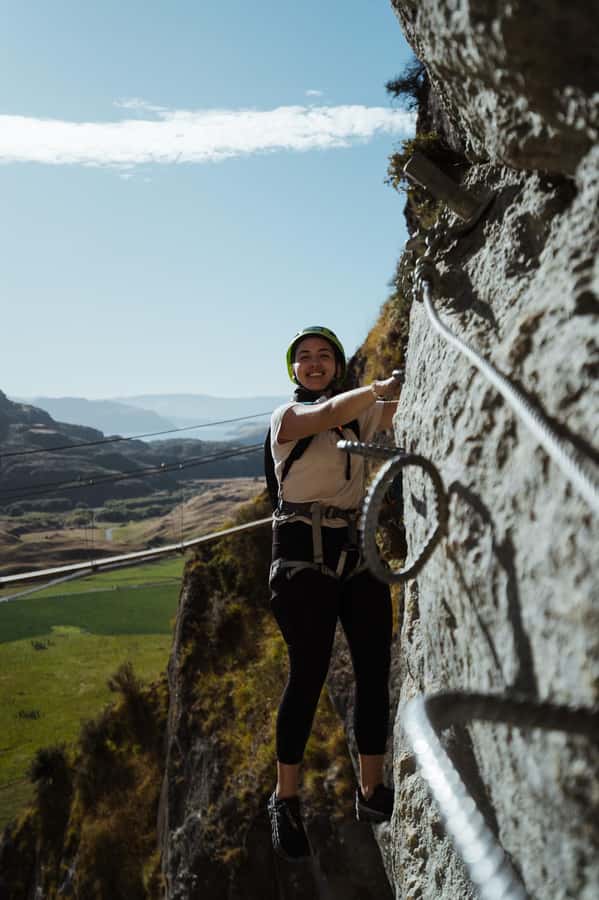
A via ferrata is a protected climbing route. You remain attached to a fixed safety cable as you move across rock and waterfall terrain, using metal footholds and handholds installed into the cliff.
This Wildwire route is unusual because water is part of the setting rather than something you simply admire from a lookout. You climb beside cascading falls, cross blue pools, and pass over suspension bridges. The route gives you access to cliffs that would otherwise require proper rock-climbing skills.
You do not need prior climbing experience. The guide begins with instruction and a practice route at the base, which is important because the main challenge is not just pulling yourself upward. You need to learn how to use the climbing system, move your attachments, place your feet, and stay aware of the cable.
That is also why full body mobility matters. You are responsible for hooking yourself into the system throughout the climb, so you need to be able to reach and operate the equipment while standing, stepping, and climbing on uneven rock.
Meeting the guide at Twin Falls
The meeting point is at Twin Falls Waterfall, about 20 minutes west of Wanaka along Wanaka-Mount Aspiring Road. Follow the road beside the lake toward Treble Cone Ski Field and Mount Aspiring National Park.
The turnoff is easy to miss if you are not watching carefully. After a cattle stop, pull out immediately to the left, in front of two waterfalls. Look for the locked farm gate and the Wildwire sign. If you reach the ski field road or a gravel road, you have gone too far.
You meet at the gate, not in Wanaka town, so plan your own drive carefully. The location is part of the appeal, but it also means this is not a central walking-distance activity. The instructions specifically point you toward the waterfalls, which helps, though I would allow a little extra time rather than arrive in a rush.
A few more Wanaka trips worth weighing up
- Wildwire Wanaka- Level 2 (4 Hours)
★ 5.0 · 467 reviews - Bike the Wanaka and Hawea Trails
★ 5.0 · 346 reviews - Lake Wanaka Happy Hour Cruise
★ 4.6 · 313 reviews
The briefing and practice climb
The experience starts with a safety briefing. You receive a helmet and harness, then try a short training route at the foot of the waterfall.
This practice section is more than a formality. It lets you learn the rhythm of the equipment before the cliff becomes steep and exposed. The guide can see how comfortable you are, correct your technique, and explain how to move from one section of cable to the next.
The small group format matters here. With no more than five people per guide, you are not lost in a large line of climbers. Guides have been praised for patience and encouragement, including Ryan, who helped people through the harder sections, and Sarah, who was singled out for professional care with an older couple.
The most important skill is calm, steady movement. You do not need to be an athlete, but you should be prepared to pay attention. Ann-Sophie from Germany gave particularly useful advice: if you fear heights but can stay calm, the activity may still suit you. If height causes panic that you cannot control, choose another way to see Wanaka.
Climbing 320 meters beside waterfalls
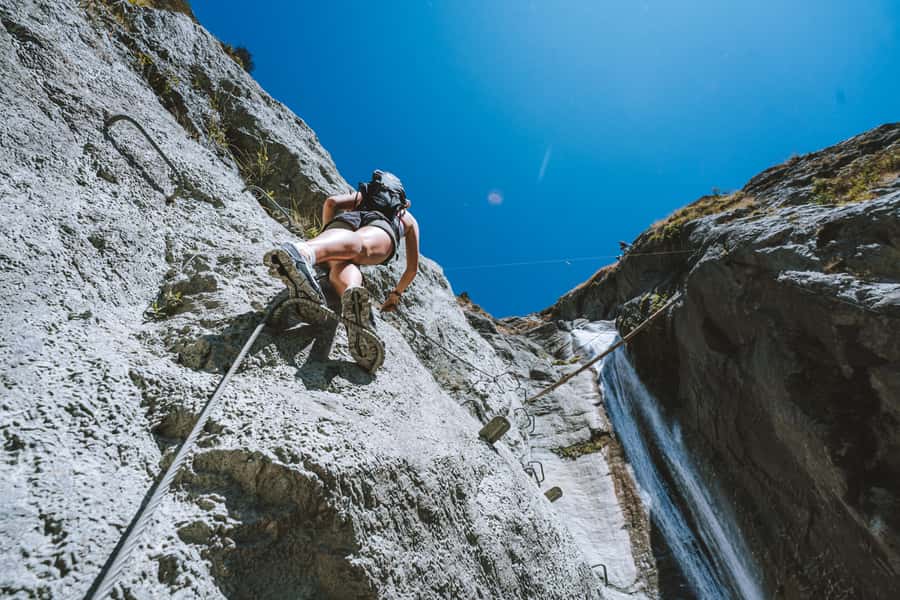
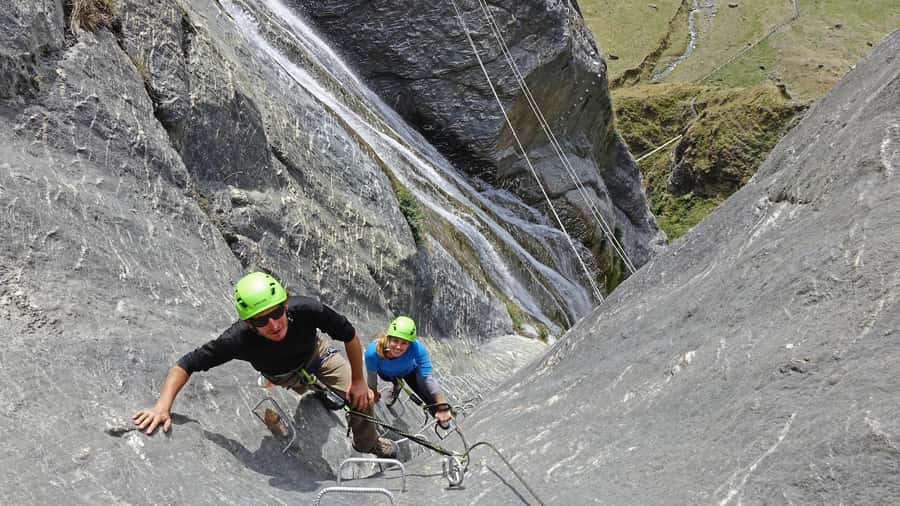
Once the practice section is complete, the route begins in earnest. You climb vertical cliffs beside flowing water, using iron rungs, pegs, ladders, and the fixed cable.
The setting changes as you gain height. At lower sections, you are close to pools and falling water. Higher up, the views open toward Wanaka’s farmland, mountains, and lakes. The reward is not saved for one final viewpoint. You keep getting new angles as the route rises.
The climb is called intermediate, and that label should be taken seriously. The route is protected, but the protection does not make it flat or easy. You still lift your body onto rungs, reach between holds, and negotiate exposed sections. One useful criticism from Cheryl was that she expected more walking between levels instead of almost continuous rung climbing. That is a fair warning for anyone imagining a scenic hike with a few climbing moments.
The activity suits you best if you enjoy a physical challenge with a fear element. The climbing itself may not be the hardest part for everyone. The exposure can be. Kristen described the physical side as manageable but said the height took some adjustment. That distinction is helpful: your legs and arms may cope before your nerves do.
Suspension bridges and the best photo stops
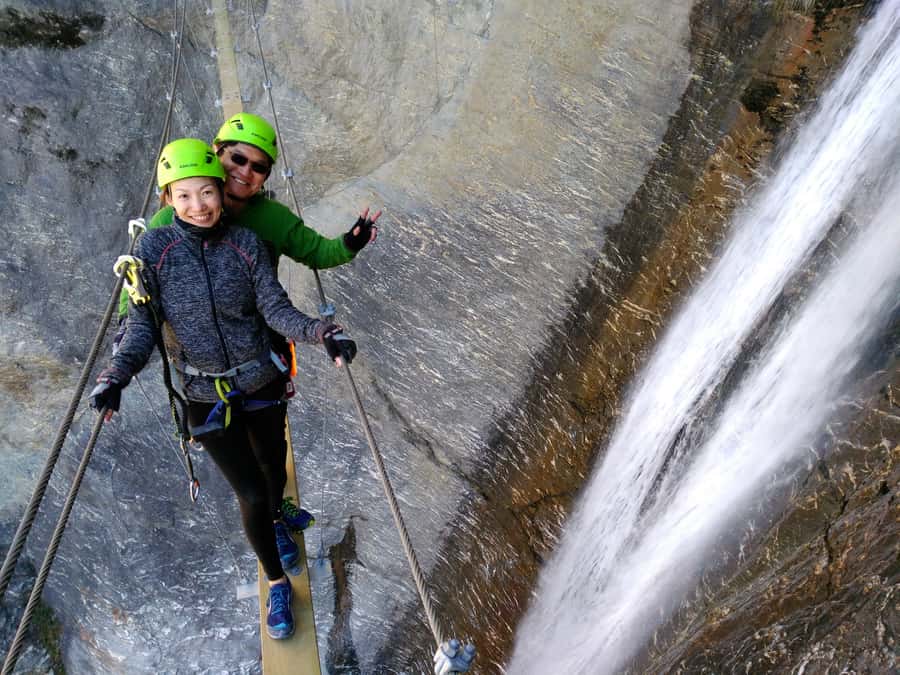
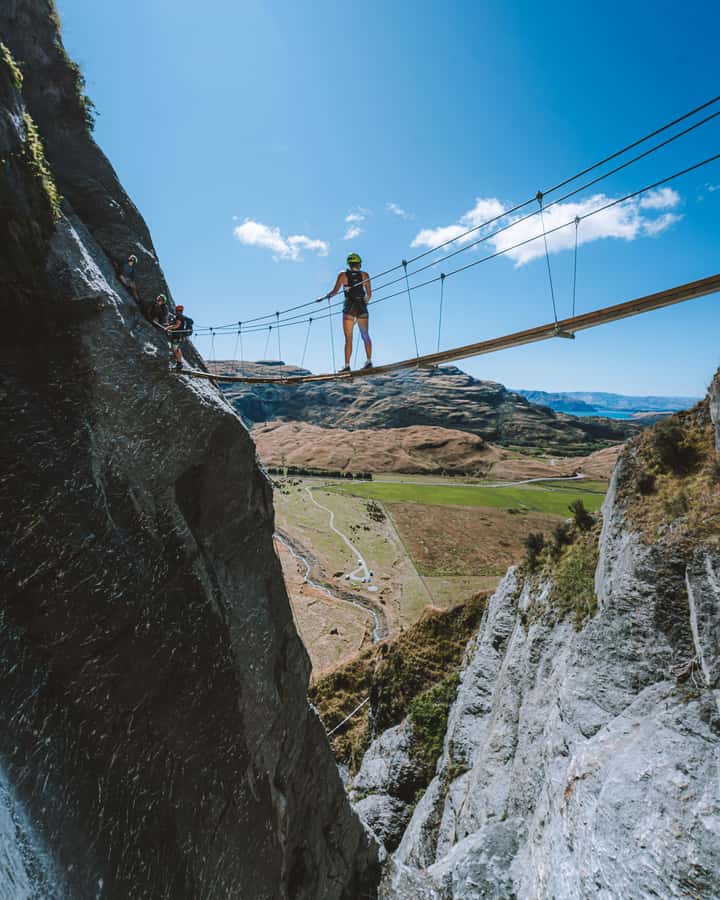
The suspension bridges are among the most memorable features. You cross above pools and near the falling water, with the cable system keeping you protected as you move.
A bridge beside a large cascading waterfall provides the classic photo opportunity. It is also the sort of place where you may want to pause and simply look around, assuming the group and guide are ready to stop. The combination of spray, rock, open air, and mountain scenery makes this feel very different from a standard zip line or marked walking trail.
The route includes cliff sections where you hang from cables and move across the rock face. That gives the experience its sense of adventure, but it also means you should not treat your camera as the main event. A phone or camera can be brought at your own risk. A GoPro attached to your person is recommended, and one group found it useful to keep a phone in a waterproof bag clipped to a pack.
There is storage at the base for items you do not need. Use it. Loose valuables, bulky bags, and anything you would worry about dropping are better left behind.
A completely different kind of day out in Wanaka:
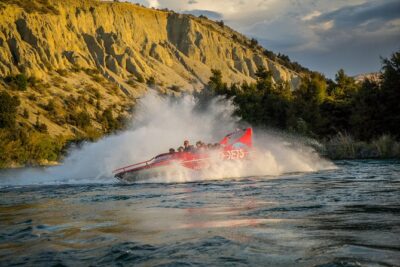
- Small Group Jet Boat Adventure on the Clutha River from Wanaka
★ 5.0 · 302 reviews - Wanaka: Water Taxi & Mou Waho Island Tour
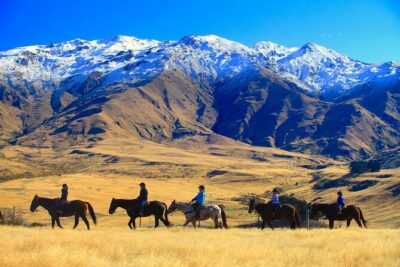
★ 4.8 · 299 reviews - Cardrona High Country Pub Trail Horse Trek (Intermediate level+)
★ 5.0 · 269 reviews - Jet Boat and Wilderness Walk Tour from Wanaka
★ 5.0 · 259 reviews
Reaching the 60-meter waterfall for lunch
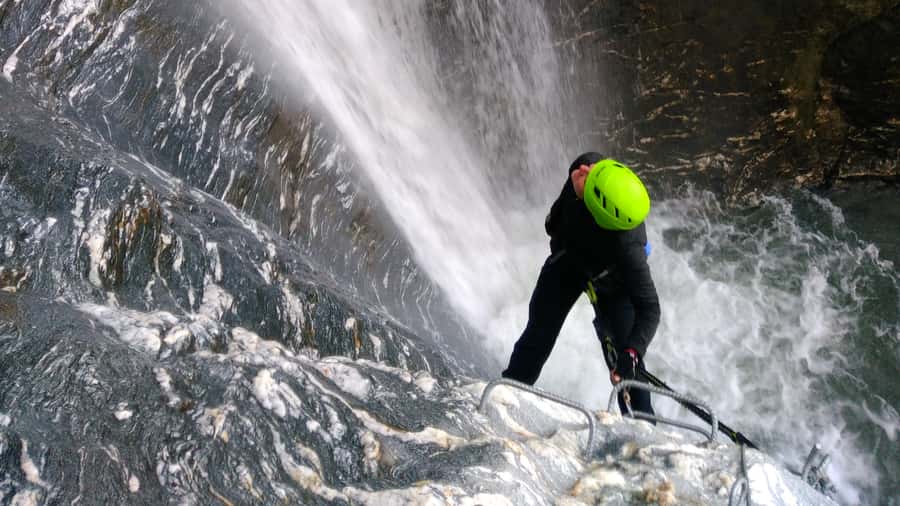
At the top, you reach the base of a 60-meter waterfall. This is the natural rest point and one of the strongest parts of the itinerary.
Lunch is included, so you do not need to carry a full meal up the route. You can sit beside the waterfall, eat, and take in the views across the mountains and farmland surrounding Wanaka. A quick swim is also possible if you bring swimwear and are ready for cold water.
The lunch stop gives the four-hour outing a useful pause. Without it, the climb and descent could feel like one long physical task. Instead, you get a clear moment to settle down, enjoy the setting, and let the achievement sink in.
The cold dip is optional, not a required part of the climb. If you are wet from spray or tired from the ascent, sitting back may be the wiser choice. Bring weather-appropriate outdoor clothing even in good weather. Waterfall conditions can feel very different from sunny Wanaka town.
The 45-minute descent
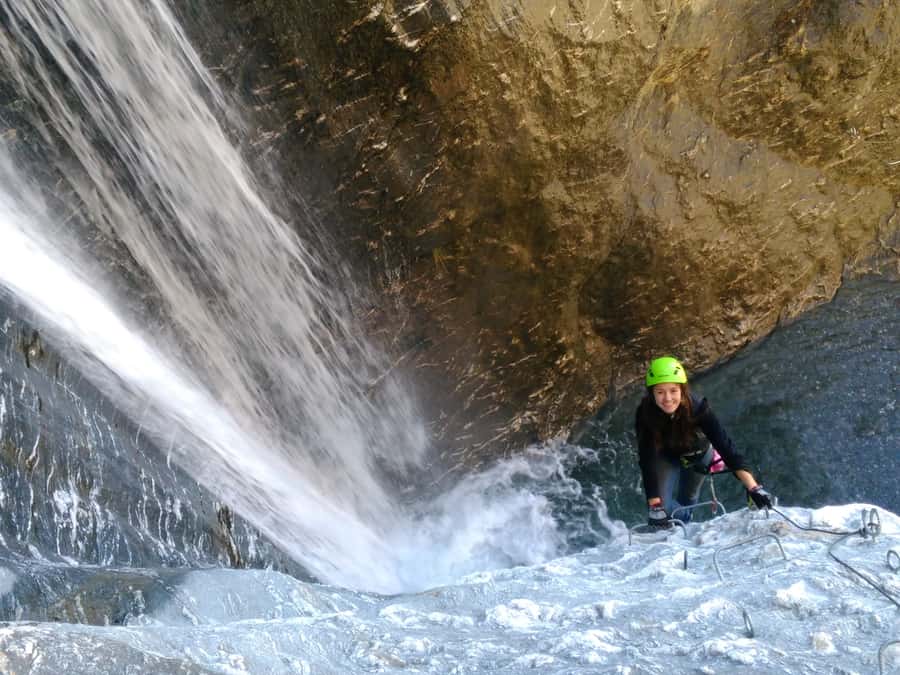
After lunch and the optional swim, you begin the descent. It takes about 45 minutes to return to the starting point.
Going down may sound easier, but it uses your body differently. You need to watch your footing, manage the cable system, and stay focused after the excitement of reaching the top. The descent also gives you another chance to see the route from a different angle, though the program does not describe it as a separate hiking section.
The total activity lasts four hours. That includes the briefing, practice climb, ascent, lunch break, and descent. Set aside the full block rather than assuming you will be finished early.
How hard is the intermediate route?
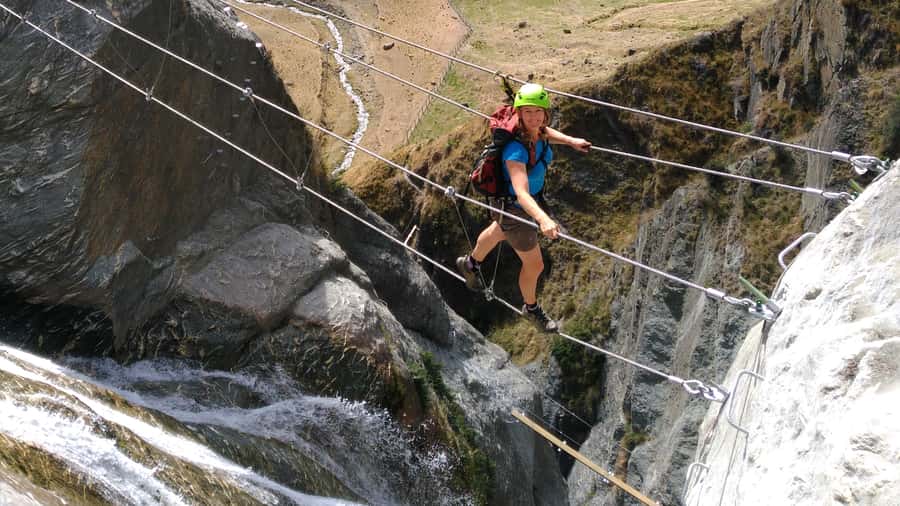
You need a moderate level of fitness. The activity combines hiking, rock climbing, and walking, but the supplied guidance does not require previous climbing experience.
You should be comfortable with:
- Repeatedly climbing rungs and ladders
- Moving across uneven rock
- Crossing suspension bridges
- Operating your own attachment to the safety cable
- Being exposed above waterfalls and pools
- Continuing for several hours before descending
You must have full body mobility. Children under 10 are not permitted, nor are pregnant women or anyone under 40 kilograms.
Age alone does not seem to be the deciding factor. Ricky from the United Kingdom described the experience as manageable for an older couple, while several families brought teenagers. Danielle’s group included ages 13, 17, and 45, and the guide took time to explain the route to the youngest climber.
That said, the climb is not automatically suitable for every teenager or fit adult. Your attitude toward heights matters as much as your general strength. If you tend to freeze when you look down, tell the guide during the briefing.
Guides, safety, and group size
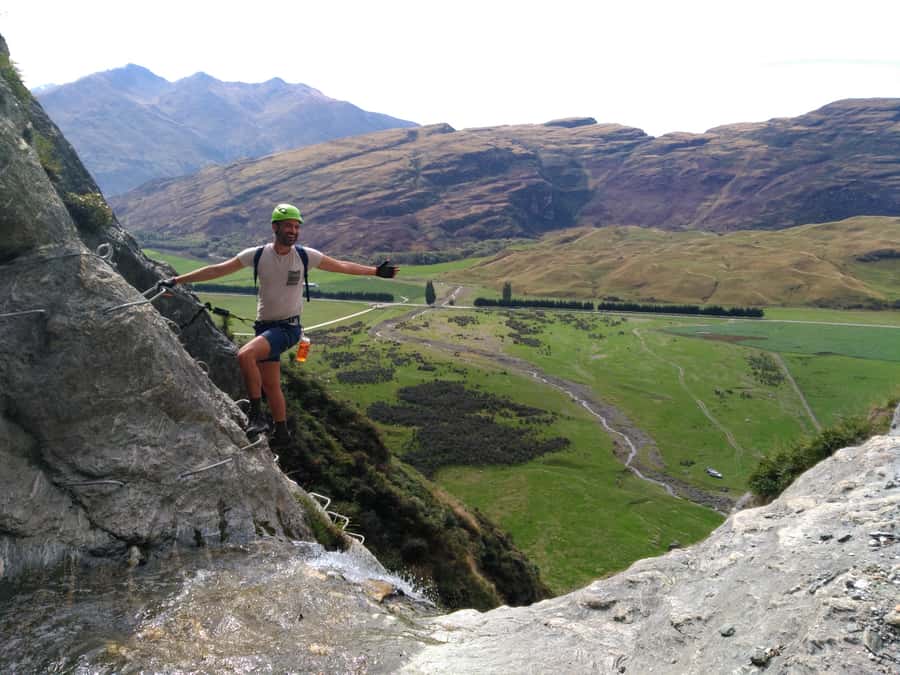
The guides are central to the experience. Names praised in recent feedback include Ollie, Tongi, Blair, Sarah, Dolce, Connor, Ryan, Brandon, and Nolan. The consistent themes are patience, encouragement, friendly instruction, and a strong focus on safety.
You are not simply released onto the cliff with a harness. The activity includes equipment instruction and a practice climb before the main route. The small group cap also helps the guide watch how each person is coping.
Still, this is an active safety system, not a passive ride. You remain responsible for clipping yourself into the cable as you move. That makes it essential to listen carefully, avoid rushing, and ask for help when you need it.
The experience has a perfect 5 rating from 66 reviews, and 95 percent of participants gave the provider’s transport a perfect score. Those figures support the strong impression of good organization, but they do not remove the need for honest self-assessment.
Is $224 good value?
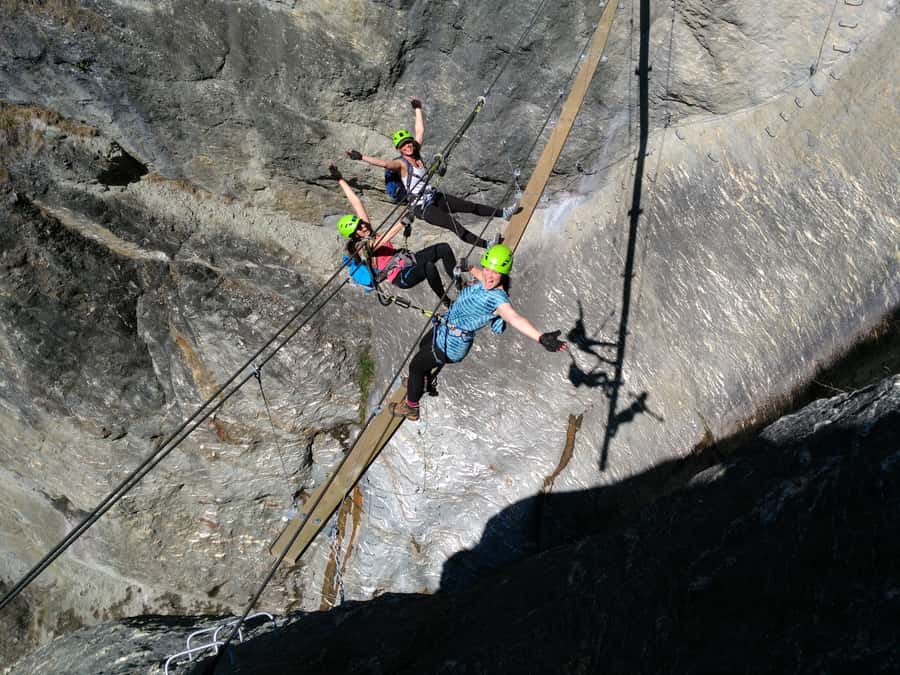
At $224 per person, this is an expensive half-day activity. It makes more sense when you look at what the price includes: an expert English-speaking guide, climbing safety equipment, a full safety briefing, an introductory climb, lunch, and four hours on a purpose-built waterfall route.
You are paying for access as much as for instruction. The cables, rungs, bridges, and ladders let you climb terrain that is not available on an ordinary public walk. You also get a small group rather than a crowded operation.
The value is strongest if this will be a highlight of your South Island visit. It combines a physical challenge, dramatic water, views over Wanaka, and a clear sense of achievement. If you mainly want a relaxed waterfall outing, the cost and effort will feel harder to justify.
Free cancellation up to 24 hours before the experience and a reserve-now, pay-later option reduce some booking risk. Starting times vary, so you need to check availability for your preferred date.
What to bring and what to leave behind
Wear comfortable shoes and hiking shoes with clothing suited to outdoor conditions. Bring swimwear if you want the waterfall dip, plus a water bottle, which is not included.
Sunscreen is a smart addition. Danielle specifically advised using it, and the route includes exposed climbing as well as waterfall shade. Bring only what you can secure comfortably.
A camera is welcome, but it is your responsibility. A GoPro attached to your body is the safer choice. The guides may take photos and email them afterward, which lets you concentrate more on the climb instead of trying to document every rung.
Who should book this climb?
I would recommend it to you if you want a hands-on adventure rather than a viewpoint, cruise, or easy walk. It is especially well suited to people who like testing their nerve, enjoy small groups, and want a memorable activity near Wanaka.
It can work for beginners because the guides teach the system from the start. Families with children aged 10 and older may enjoy it, provided everyone has the required mobility, fitness, and comfort with heights.
I would hesitate if you want long scenic breaks between physical sections. Cheryl’s comment about continuous rung climbing is the key practical warning. I would also skip it if heights cause panic, if you dislike being responsible for your own safety attachment, or if a four-hour physical outing sounds tiring rather than exciting.
FAQ
Where does the waterfall cable climb begin?
It begins at Twin Falls Waterfall, at a locked farm gate with the Wildwire sign. From Wanaka, follow Wanaka-Mount Aspiring Road west for about 20 minutes toward Treble Cone Ski Field and Mount Aspiring National Park.
How long does the experience last?
The activity lasts four hours, including the briefing, practice climb, ascent, lunch stop, and descent.
How high do you climb?
The route climbs 320 meters of vertical cliffs. At the top, you reach the base of a 60-meter waterfall.
Do I need previous climbing experience?
No. Previous climbing experience is not required. The guide provides a safety briefing, equipment, and an introductory practice climb before you start the main route.
How many people are in each group?
There are no more than five people per guide. This small group size allows the guide to provide close instruction and assistance.
Is lunch included?
Yes. Lunch is included and is served at the top near the 60-meter waterfall.
Can I swim during the activity?
Yes. You can take a quick swim at the waterfall after reaching the top. Bring swimwear if you want to use this option.
What should I bring?
Bring a water bottle, comfortable or hiking shoes, swimwear, and clothing suitable for outdoor weather. A camera may be brought at your own risk.
Who cannot take part?
The activity is not suitable for children under 10, pregnant women, or people under 40 kilograms. Participants also need full body mobility and moderate fitness.
Can I cancel the booking?
You can cancel up to 24 hours in advance for a full refund. A reserve-now, pay-later option is also available.
Should you book Wildwire Wanaka?
Book it if you want one of Wanaka’s most unusual active experiences and are ready for sustained climbing, exposed bridges, and a proper physical challenge. The small groups, patient guides, included lunch, and remarkable waterfall setting make the $224 fee easier to justify.
Skip it if you are hoping for a gentle waterfall walk or if you cannot stay calm at height. For the right person, this is not just sightseeing. It is a four-hour achievement with wet rock, cold water, big views, and plenty to talk about afterward.
Just added around Wanaka
- Riverside Electric Bike Tour★ 5.0 · 5 reviews
- Go Jets Wanaka Clutha River Jet Boat Experience★ 5.0 · 5 reviews
- From Wanaka Bike the Lake Dunstan Trail with Shuttle Return★ 5.0 · 5 reviews
- Wanaka: Lake Wanaka Guided Kayak Tour★ 5.0 · 5 reviews
- Wanaka: Waterfall Climb and Canyon Tour★ 5.0 · 6 reviews
- Wanaka High Country Walk★ 5.0 · 6 reviews
- Wanaka: Scenic Hot Air Balloon Flight★ 4.7 · 6 reviews
- Kayak Rental Adventure – The Mission★ 5.0 · 6 reviews
Wanaka Tours, compared.
Small Group Jet Boat Adventure on the Clutha River from Wanaka
Read our review →
Cardrona High Country Pub Trail Horse Trek (Intermediate level+)
Read our review →
Browse the lists this tour appears in