
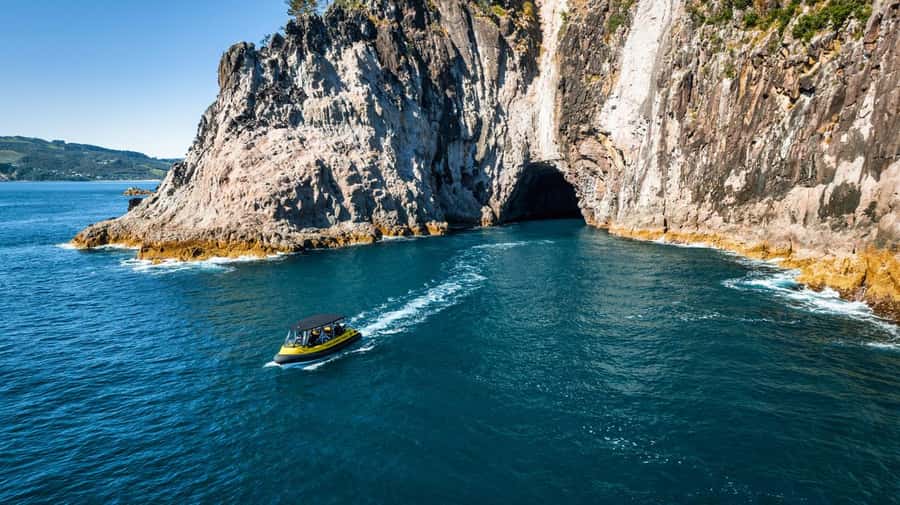
Reviewed · CATHEDRAL COVE TOURS
Whitianga: 2-Hour Cathedral Cove and Volcanic Coast Cruise
Cathedral Cove looks even better from the water. This two-hour cruise from Whitianga follows 12 kilometers of rugged volcanic coastline, passing sea caves, blowholes, beaches, islands, and towering rock formations before reaching the famous cove. I especially like the close-up route and the lively guiding from skippers such as Sam and Justin. The main thing to consider is the weather: wind and swell can shorten or cancel the trip, and wildlife sightings are never guaranteed.
The boat is purpose-built for sightseeing, with cushioned seats and a sunshade, while its compact size lets it approach the coast more closely than larger vessels. I also like that the guide gives both sides of the boat a fair chance at the views and pauses for photographs. Bring a jacket, though, even on a sunny day. Speed across open water can feel cool.
In This Review
- Key points about this Whitianga cruise
- Leaving Whitianga Wharf for Mercury Bay
- Lonely Bay, Cooks Beach, and Hahei from the water
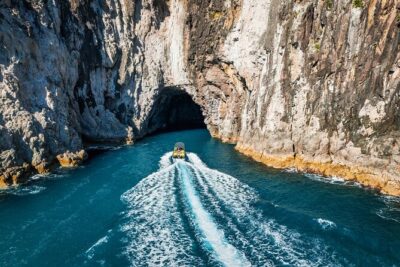
- The volcanic cliffs, pinnacles, and sea caves
- Cathedral Cove and Te Whanganui a Hei Marine Reserve
- Why the commentary matters
- Wildlife sightings around Mercury Bay
- The boat, seating, and comfort
- Is $83 good value for two hours?
- Who will enjoy this cruise most?
- Practical tips for a better departure
- Should you book the Cathedral Cove cruise?
- FAQ
- Where does the Cathedral Cove cruise depart from?
- How early should I arrive?
- How long is the cruise?
- Is Cathedral Cove viewed from the boat?
- What places and features can I see?
- Are food and drinks included?
- Can I cancel for a refund?
Key points about this Whitianga cruise
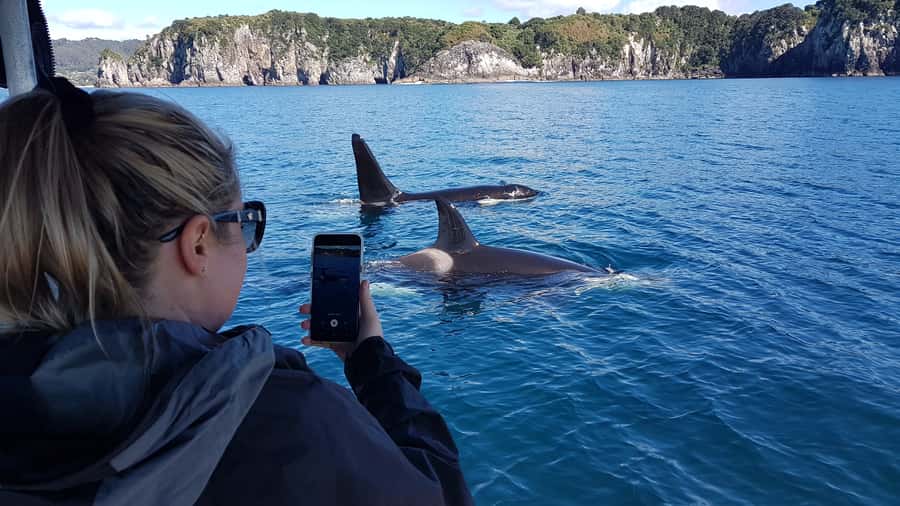
- Cathedral Cove from sea level: See the famous Te Whanganui a Hei Marine Reserve without spending hours reaching it on foot.
- 12 kilometers of volcanic coast: The route includes Hahei, Lonely Bay, Cooks Beach, islands, caves, pinnacles, and blowholes.
- A comfortable sightseeing boat: Cushioned seats and a sunshade make the two-hour trip easier on your back and more pleasant in strong sun.
- Guides who do more than steer: Sam, Justin, and other skippers are praised for clear commentary, local stories, safety briefings, and careful boat handling.
- Wildlife is a bonus, not a promise: Dolphins, whales, orcas, penguins, and fish have all been seen, but the coastline itself is the dependable attraction.
- Good value for a short outing: At $83 per person, the cruise works out to $41.50 per hour and covers a large stretch of coast without a long day commitment.
Leaving Whitianga Wharf for Mercury Bay
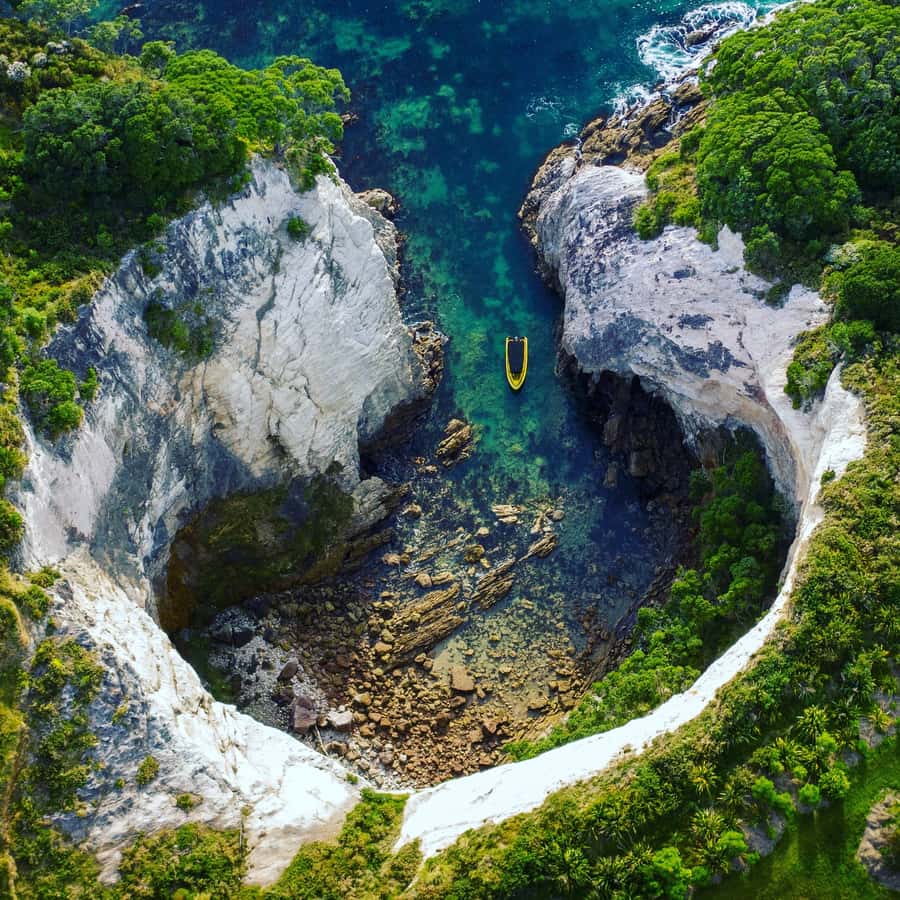
Your trip begins at Whitianga Wharf on the Esplanade, at 14 Esplanade. Arrive 15 minutes early. The yellow and black boat is usually easy to spot at the jetty, but if the skipper is away, wait at the ramp until the crew returns and seats everyone.
That small bit of patience matters. This is not a walk-up ferry service where you simply wander aboard. The crew needs to organize seating and give the safety briefing before departure.
From the wharf, the boat heads into Mercury Bay. The first reward is the change in viewpoint. Beaches and cliffs that look familiar from the road take on a different shape from sea level. You can see the layers, cavities, and overhangs that are easy to miss from land.
The boat has a sunshade and cushioned seats, and the ride is generally smooth in calm conditions. It is also able to move at a lively pace, which adds some fun on the open stretches. That speed is useful because the cruise covers a good portion of the coast in only two hours, but it also means you should hold onto hats and keep a jacket close.
More Boat Tours in the Coromandel
- Glass Bottom Boat Whitianga Cathedral Cove Cruise
★ 5.0 · 937 reviews - 2 Hour Cathedral Cove and Volcanic Coast Cruise with Shade Canopy
★ 5.0 · 393 reviews - Whitianga: Sailing Trip to Cathedral Cove
★ 4.8 · 190 reviews
Lonely Bay, Cooks Beach, and Hahei from the water
The route takes in several of Mercury Bay’s beaches, including Lonely Bay, Cooks Beach, and Hahei. You do not get a long beach stop as part of this experience. Instead, the boat brings you close enough to appreciate the shape of each bay and the way the beaches fit against the volcanic headlands.
Lonely Bay feels especially scenic because the coast around it is less about a broad settlement and more about cliffs, bush, water, and rock. From the boat, you can study the headlands without having to find a parking spot or walk a long coastal track.
Cooks Beach gives you another angle on the bay’s broad curves, while Hahei is closely tied to the Cathedral Cove area. The guide’s commentary helps turn these places from attractive scenery into a connected story about geology, local life, and the natural forces that shaped the coast.
This is where the live guiding earns its keep. Sam has been praised for clear explanations, humor, and a strong grasp of local stories. Justin has also been singled out for making sure people had time to ask questions and take photographs. The quality of a boat trip often depends on the skipper’s ability to point out what you are seeing before it slips behind you, and that is a real strength here.
The volcanic cliffs, pinnacles, and sea caves
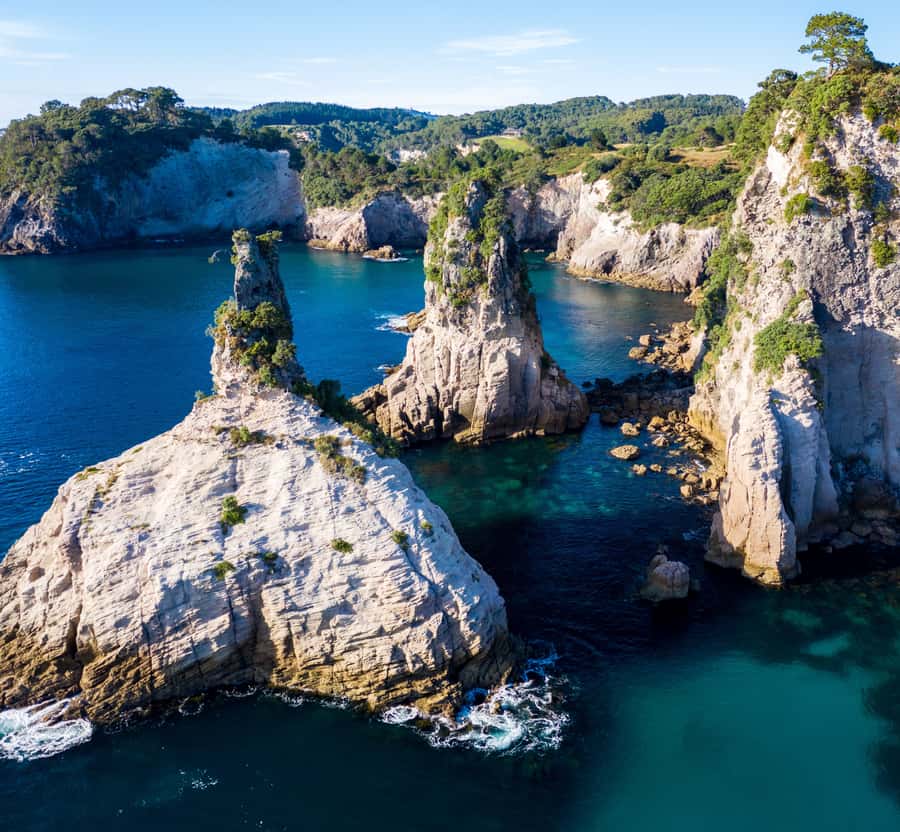
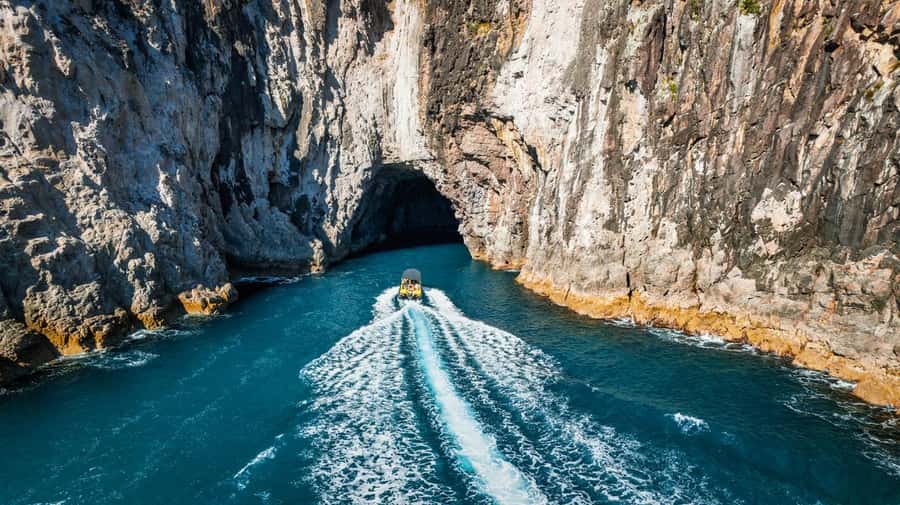
The coast is the star of the trip, not just the final stop at Cathedral Cove. Ancient volcanic activity left behind hard rock, softer layers, narrow gaps, and dramatic formations. The boat gets close to giant blowholes, pinnacles, and large sea caves, allowing you to see the coast’s rough texture at eye level.
Some of the most interesting moments come when the guide explains how the rock formed. You might hear about ancient lava flows, changing shorelines, and the forces that opened the caves. One particularly memorable feature is Orua Sea Cave, where the guide may discuss the meeting point of the Asian and Pacific tectonic plates above it.
That kind of explanation gives the scenery a useful sense of scale. You are not simply looking at a dark opening in a cliff. You are seeing the result of pressure, erosion, volcanic activity, and time. The boat’s handling also matters here. The skipper can turn the vessel so both sides get a view, then hold position long enough for photographs.
The cave sections depend on sea conditions. Calm water allows the boat to get closer and gives you a clearer look into the openings. Wind and swell may limit how close the captain can safely go. Do not judge the experience only by how many caves you enter. On a rough day, safety and a good view from farther out are the sensible priorities.
Cathedral Cove and Te Whanganui a Hei Marine Reserve
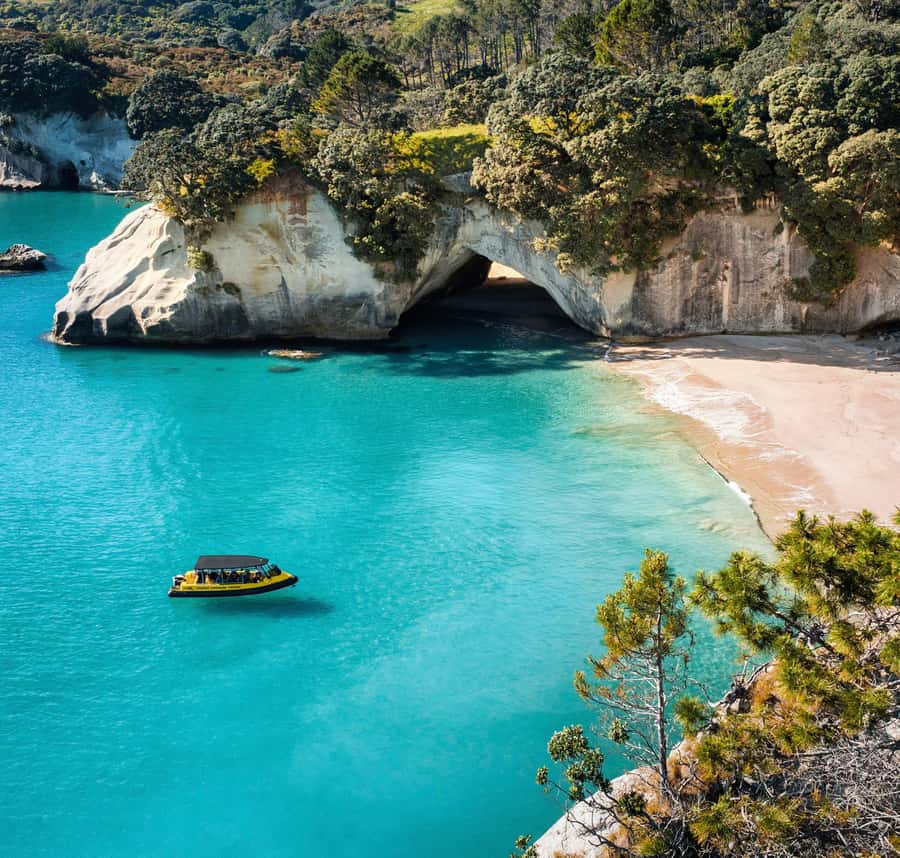
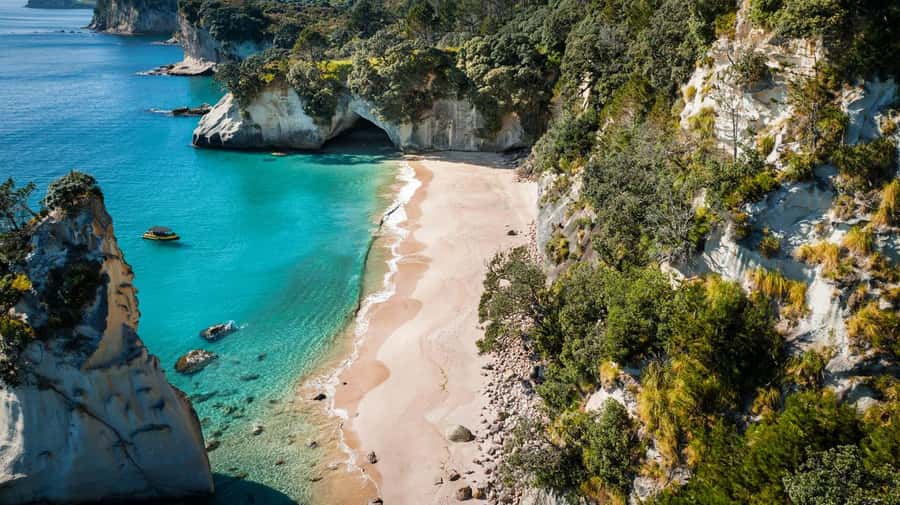
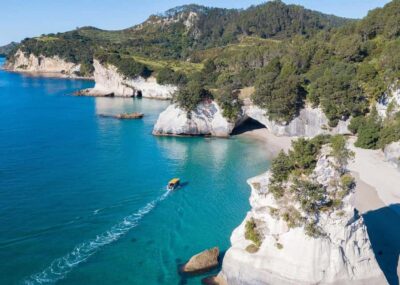
Cathedral Cove is the headline attraction, and it deserves its reputation. The enormous archway frames the water and shore in a way that makes it instantly recognizable. Seeing it from a boat gives you a broad view of the rock structure, the beach, and the surrounding marine reserve all at once.
The cove is known in Māori as Te Whanganui a Hei. It has deep Māori significance and is part of the Te Whanganui a Hei Marine Reserve, where marine life and underwater habitats receive protection. The area attracts more than 150,000 visitors a year and was used as a filming location for The Chronicles of Narnia.
The practical advantage of this cruise is simple: you see Cathedral Cove without making it the entire day’s project. The experience is focused on viewing from the water, not landing at the beach or walking through the arch. That makes it a good choice if you want a scenic overview, have limited time, or prefer to avoid a longer land-based outing.
The trade-off is just as clear. If your dream is to stand on the sand beneath the arch, this cruise will not replace a shore visit. It gives you a different experience, one based on changing coastal views and boat access rather than time on land.
The guide usually allows a proper pause here and aims to give everyone a photograph. Several passengers appreciated the way the boat was turned so both sides could see. If you have a camera, this is the point to have it ready before the boat arrives, then put it away for a moment and simply look. Cathedral Cove is more impressive when you take in the full setting rather than chase one perfect image.
More Cathedral Cove trips:
- Cathedral Cove Kayak Tour
★ 5.0 · 887 reviews - One Hour Cathedral Cove Boat Tour in Hahei
★ 5.0 · 340 reviews - Cathedral Cove & Coromandel Peninsula Small-Group Day Tours
★ 5.0 · 248 reviews - Cathedral Cove Coast and Cave Activity
★ 5.0 · 244 reviews
Why the commentary matters
A scenic cruise can become repetitive if you hear only place names. This one is strongest when the skipper combines safety, local history, geology, and wildlife into a running conversation.
Sam has been praised repeatedly for enthusiasm, humor, and clear delivery. Justin receives similar credit for explaining the rock formations, sharing personal stories from the area, and answering questions. The guide is also responsible for watching the water and the boat, so the best commentary is conversational rather than a nonstop lecture.
You may learn about coastal geology, flora and fauna, Māori heritage, local houses, and the marine reserve. The explanations help families, too. One family with children aged four and six enjoyed seeing snapper and other fish beside the boat, along with the coastal sights. Younger children may be more interested in the speed, caves, and wildlife than in every geological detail, but there is enough variety to keep the trip moving.
The commentary also adds value when conditions change. On one outing, strong wind cut the cruise short by about 30 minutes, and part of the fee was refunded. On another occasion, poor weather led to a full cancellation and refund. A good skipper cannot control the forecast, but clear communication and sensible decisions make a disrupted trip easier to accept.
Wildlife sightings around Mercury Bay
Keep an eye on the water throughout the cruise. Dolphins, whales, and orcas are possible, along with smaller marine life closer to shore.
Sightings have included pilot whales, dolphins, blue penguins, snapper, and blue maomao. That is an impressive range, but you should treat wildlife as a bonus rather than the main reason to book. The operator cannot promise a particular animal on a particular departure.
Fish may be easiest to spot when the boat is close to clear, calm water near the rocks. Bring binoculars if you have them, though a camera with a zoom lens can be more useful for distant wildlife. Sunglasses and sunscreen protect you from glare, while a warm layer helps when you are watching the horizon for long periods.
If wildlife is your top priority, keep your expectations flexible. You could see dolphins and pilot whales, or you could see none at all and still have an excellent geological and scenic outing. The coast does not depend on luck.
The boat, seating, and comfort
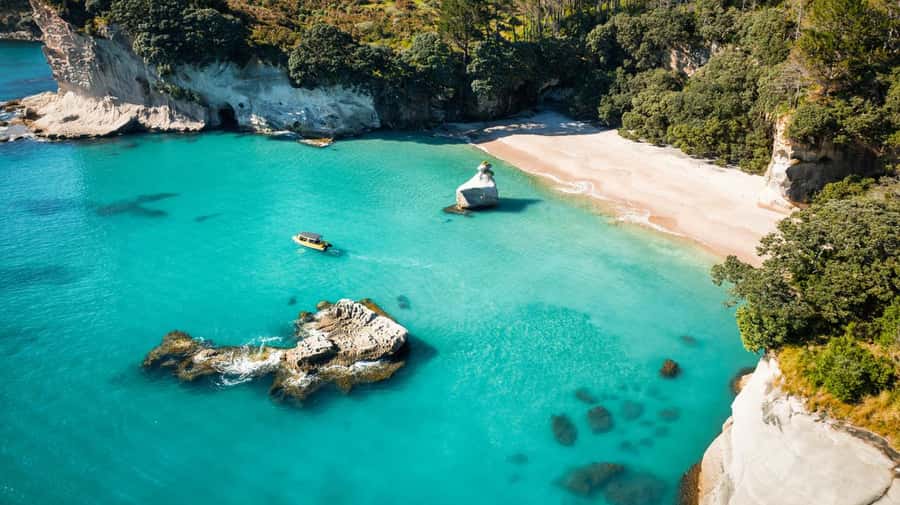
The boat strikes a useful middle ground. It is intimate enough to feel connected to the coast but not so cramped that every photograph becomes a negotiation with the person beside you. The cushioned seats and sunshade are welcome features, especially during a two-hour trip.
Comfort is good rather than luxurious. One person wished the seats were softer and the handrails heated, which tells you what to expect: a practical sightseeing boat, not a high-end yacht. You should wear comfortable shoes and bring a jacket. The sunshade protects you from direct heat, but it does not remove the need for sunscreen or a hat.
Boat handling is one of the most praised parts of the experience. Skippers have turned the boat to give both sides a fair view, moved smoothly near rock formations, and allowed time for photographs. On a calm day, the vessel can get close to shore and into the best viewing positions.
Conditions make a major difference. A calm day can produce a smooth ride and allow closer viewing. Windy weather may make the boat feel less comfortable and may shorten the route. If you are prone to motion sickness, the open-air setting may help, but the supplied information does not promise a particular seating position or motion-sickness provision.
Is $83 good value for two hours?
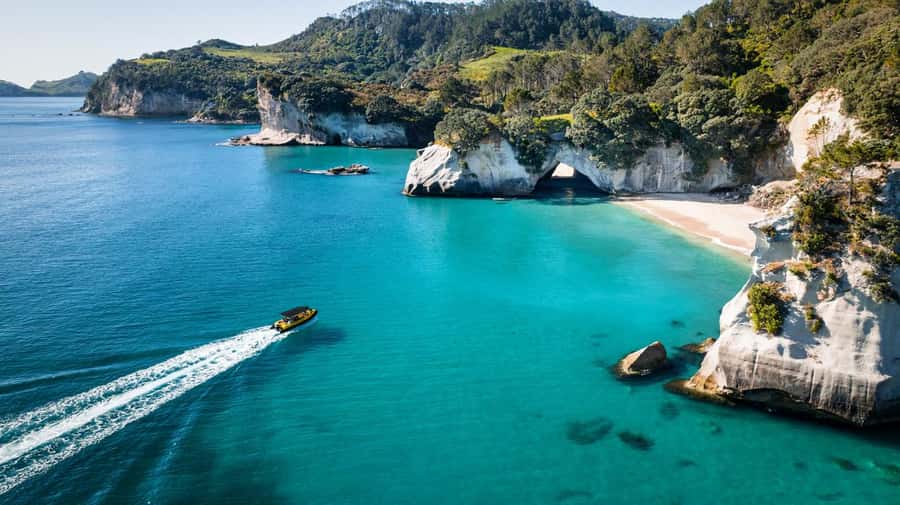
At $83 per person, this is not the cheapest way to see the Coromandel Peninsula. It is, however, a focused way to cover 12 kilometers of coastline in a short time, with a skipper who explains what you are seeing and handles the boat close to the coast.
The value is strongest if you have only part of a day in Whitianga, want to see Cathedral Cove from the water, or prefer scenery without arranging several separate stops. You are paying for access, boat handling, local commentary, and the chance to view caves and formations that are difficult to appreciate from land.
The price includes the two-hour scenic cruise and Cathedral Cove viewing. Food and drinks are not included, and there is no hotel pickup or drop-off. Eat before you arrive or bring refreshments with you.
I consider the price fair for a well-run departure in good conditions. It becomes especially good value when the boat can approach the cliffs, the guide gives both sides time for photographs, and wildlife adds an unexpected bonus. It feels less worthwhile if you want a beach landing, a full-day marine safari, or a guaranteed whale or dolphin sighting.
Who will enjoy this cruise most?
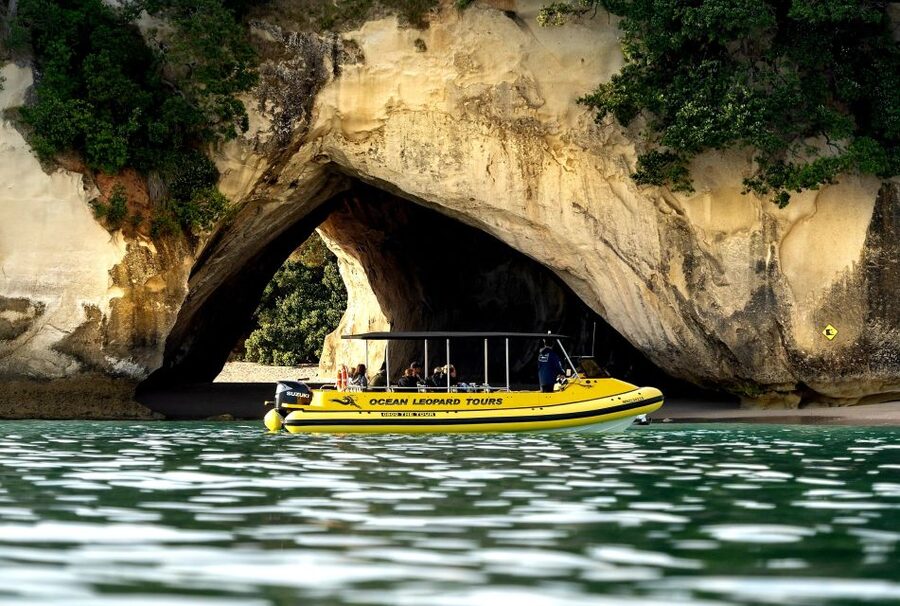
I would recommend it to first-time visitors who want a clear introduction to Mercury Bay. It also suits couples, families, photographers, and anyone who prefers seeing famous scenery without committing to a long walk or a full day on the water.
The cruise works well for families because it combines speed, caves, beaches, fish, and stories. Children may not follow every explanation about tectonic plates, but they will have plenty to look at. Adults get more from the geology, Māori context, and careful route planning.
It is also a good choice for repeat visitors. One passenger who had already explored much of the Coromandel considered this one of the best ways to see the area, because the water reveals a side of the coast that roads and walking tracks cannot.
I would think twice if you dislike boats, need a guaranteed land-based activity, or are visiting during a period of unsettled weather. The company appears willing to cancel or shorten a trip when conditions are unsafe, but that can alter your plans.
Practical tips for a better departure
Arrive at least 15 minutes early at Whitianga Wharf. Wear comfortable shoes, sunglasses, sunscreen, and a sunhat, then add a warm jacket even if the forecast looks pleasant.
Bring a camera and, if useful, binoculars. Keep your camera protected when the boat is moving quickly, and be ready for photographs before reaching Cathedral Cove or the caves.
Do not count on buying lunch or drinks aboard. Food and beverages are not included, so bring refreshments or eat beforehand.
Check the weather before you go. Calm conditions may provide the smoothest ride and the closest coastal views. If the forecast turns poor, the cruise can be shortened or cancelled, with full refunds available for cancellations made at least 24 hours ahead. The operator has also refunded part of the cost when weather forced a shorter outing.
Should you book the Cathedral Cove cruise?
Yes, if you want a comfortable two-hour introduction to the volcanic coast around Whitianga. The strongest reasons are the boat’s close coastal access, the entertaining commentary from skippers such as Sam and Justin, and the chance to see Cathedral Cove, sea caves, blowholes, and wildlife in one compact trip.
Book it with sensible expectations. You are viewing Cathedral Cove from the water, not walking onto its beach, and dolphins or whales may not appear. If that suits your plans, $83 buys a well-paced outing with strong scenery, useful local stories, and very little wasted time.
FAQ
Where does the Cathedral Cove cruise depart from?
All tours depart from Whitianga Wharf at 14 Esplanade, Whitianga 3510, New Zealand.
How early should I arrive?
Arrive 15 minutes before departure. The yellow and black tour boat is usually parked at the jetty. If the skipper is not present, wait at the ramp until the crew returns.
How long is the cruise?
The cruise lasts two hours, although weather conditions can sometimes shorten the outing.
Is Cathedral Cove viewed from the boat?
Yes. Cathedral Cove viewing is included as part of the scenic cruise. The supplied details do not include a beach landing.
What places and features can I see?
The route covers about 12 kilometers of volcanic coastline, including Cathedral Cove, Hahei, Lonely Bay, Cooks Beach, nearby islands, sea caves, pinnacles, and giant blowholes.
Are food and drinks included?
No. Food and drinks are not included, so bring refreshments or eat before departure.
Can I cancel for a refund?
You can cancel up to 24 hours in advance for a full refund. The experience also offers a reserve-now-and-pay-later option.
More 2-Hour Experiences in New Zealand
- Milford Sound: 2-Hour Small Boat Scenic Cruise
★ 4.8 · 2,561 reviews - 2-Hour Milford Sound Scenic Cruise
★ 5.0 · 1,520 reviews - Queenstown: 2-Hour Zipline Tour with 4-Lines
★ 4.7 · 462 reviews - America’s Cup 2-Hour Sailing Experience Waitemata Harbour
★ 4.8 · 370 reviews
Just added around New Zealand
- From Auckland: Hobbiton Movie Set Small Group Tour★ 4.1 · 5 reviews
- Auckland Museum and Highlight Sightseeing Tour★ 5.0 · 5 reviews
- Self-Guided Milford Track Day Walk from Lake Te Anau★ 5.0 · 5 reviews
- Tauranga-Hobbiton-Rotorua : Movie Set & Geysers: Private Tour★ 5.0 · 5 reviews
- Private Tour in Wellington★ 5.0 · 5 reviews
- Hawkes Bay – Scenic, luncheon, wine Tour★ 4.0 · 5 reviews
- Milford Sound Earnslaw Burn Helicopter Tour from Queenstown★ 5.0 · 5 reviews
- Queenstown: Remarakbles Helicopter Tour with Alpine Landing★ 4.6 · 5 reviews
Cathedral Cove Tours, compared.
Glass Bottom Boat Whitianga Cathedral Cove Cruise
Read our review →
2 Hour Cathedral Cove and Volcanic Coast Cruise with Shade Canopy
Read our review →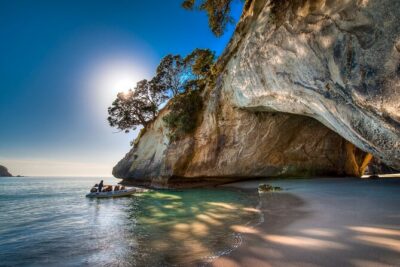
Cathedral Cove & Coromandel Peninsula Small-Group Day Tours
Read our review →
Browse the lists this tour appears in