
Reviewed · CANOES & KAYAKS
Akaroa: Akaroa Marine Reserve Sea Kayaking Tour
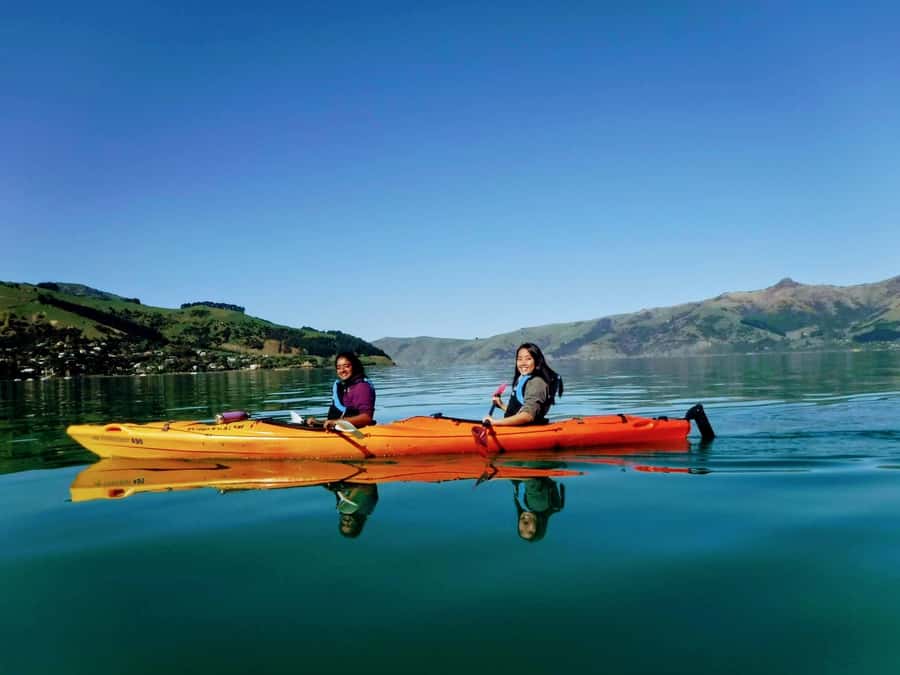
Wildlife can appear between your paddles. Akaroa’s 2.5-hour sea-kayaking trip takes you across the turquoise waters of a sea-flooded volcanic crater, with chances to spot Hector dolphins, fur seals, penguins, and coastal birds. I like the small groups of up to eight and the way local guides add useful detail about geology and wildlife rather than simply pointing you toward the horizon.
I also like the stable kayaks and calm, friendly instruction, which help first-timers settle in quickly. The main consideration is physical effort: one recent outing became quite wavy when the wind rose, and several people noted that you need some arm strength. Wildlife is never guaranteed, even though sightings are often possible during the kayaking season.
In This Review
- Key points at a glance
- Why Akaroa Harbour makes this paddle special
- Meeting the guide and getting onto the water
- The first paddle across the volcanic crater
- Inlets, bays, caves, and coastal details
- The wildlife question: exciting, but never promised
- Wind, waves, and the effort involved
- The guides are a major part of the value
- What $80 gets you
- Who will enjoy this tour most
- Booking details worth knowing
- Should you book the Akaroa kayak tour?
- FAQ
- How long is the Akaroa sea-kayaking tour?
- How much does the tour cost?
- Where is the meeting point?
- What equipment is included?
- Is instruction provided?
- How large is each group?
- Which languages are available?
- Can I see dolphins or penguins?
Key points at a glance
- Paddle inside an extinct volcano: Akaroa Harbour occupies a sea-flooded volcanic crater, giving the trip an unusual setting from the first stroke.
- Small groups feel personal: One guide leads a maximum of eight people, allowing plenty of attention and conversation.
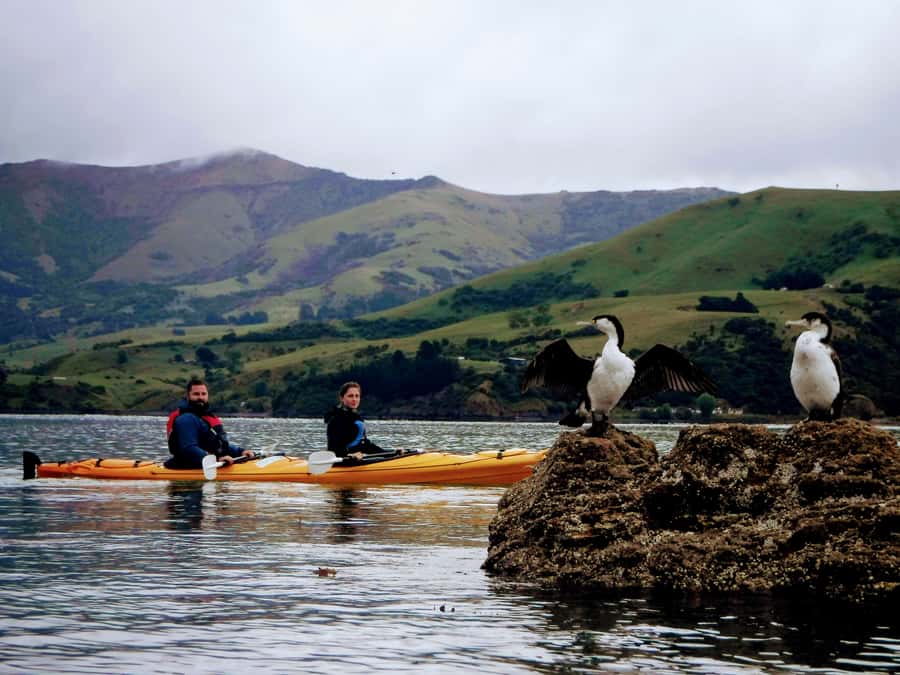
- Wildlife is a real possibility: Hector dolphins, fur seals, white-flippered penguins, and birdlife may appear, but sightings depend on nature.
- Guides earn the strongest praise: Alex, Max, Lucia, William, Thomas, and others are described as friendly, reassuring, and full of local information.
- Expect a proper workout: The kayaks are stable and suitable for different ability levels, but wind and waves can make the return leg harder.
- Good value at $80: You receive equipment, instruction, safety guidance, a guide, and photos during a 150-minute outing.
Why Akaroa Harbour makes this paddle special
Akaroa is about 80 minutes from Christchurch, yet the setting feels far removed from city streets. The harbour fills an extinct volcanic crater, so your outing is shaped by steep coastal forms, sheltered inlets, bays, caves, and open water.
That geology gives the trip more substance than a simple kayak rental. You are not only paddling for exercise. Your guide explains the volcanic features and points out places where the rock and water create natural passages worth exploring.
The water is described as turquoise, and the wide views are a major part of the appeal. From a kayak, you sit close to the surface rather than looking down from a road or viewing platform. That low position makes the harbour feel larger, quieter, and more immediate.
I especially like the mix of scenery and movement. You can take in the broad views, then turn toward a cave or inlet and focus on the next few paddle strokes. The route offers enough variety to keep the 150 minutes from feeling like a single, repetitive loop.
More Kayak Tours in Akaroa
- Shore Excursion Guided Sea Kayaking through Akaroa Marine Reserve
★ 5.0 · 160 reviews - Sunrise wildlife sea kayaking in Akaroa marine reserve
★ 5.0 · 123 reviews - Akaroa: 4WD Safari and Guided Sea-Kayaking Experience
★ 4.8 · 120 reviews
Meeting the guide and getting onto the water
The meeting point is opposite the bowling club in Akaroa. Look for the picnic benches on the grass. That is a simple location, but bring only what you need because large bags and luggage are not allowed.
The tour includes a safety briefing, full paddling instruction, and all kayaking equipment. You are provided with a safe, stable, comfortable sea kayak, which matters if you are new to the activity or feel nervous around open water.
A family group with one apprehensive parent found the initial support reassuring, with the guides helping everyone get settled without making anyone feel awkward. That is a useful sign for beginners. You do not need to arrive as an experienced paddler, and the tour is described as suitable for all abilities.
The kayaks may be doubles rather than singles. One person specifically would have preferred a single kayak, so this is worth considering if you strongly want to paddle alone. A double can be easier for beginners, but it also means matching your rhythm with another person.
Guides speak English, Spanish, and French. The small-group limit of eight people gives the guide a reasonable chance to keep track of the group and respond to individual concerns.
The first paddle across the volcanic crater
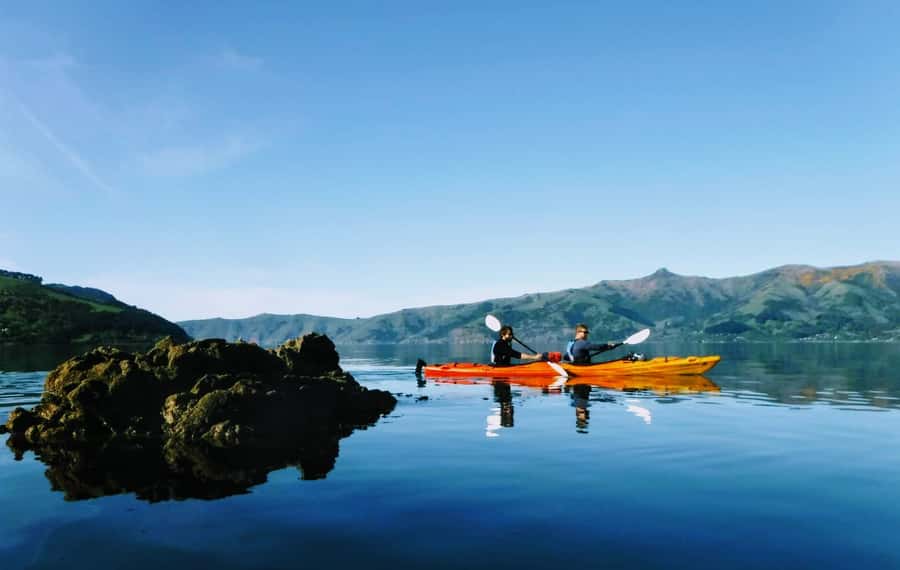
The outing begins with an introduction to the equipment and basic technique. You learn how to handle the kayak, understand the safety points, and get moving with the group.
The first section is less about racing ahead and more about finding a comfortable rhythm. If you have not kayaked before, your arms and shoulders may need time to adjust. The kayaks are stable, but stability does not remove the need to paddle.
This is where a good guide makes a difference. Max was praised for keeping the group together while sharing local information, and Jake was noted for giving clear, thorough instructions and helping each person get properly situated. Those details matter more than flashy commentary. A calm start helps you enjoy the scenery instead of worrying about every movement of the boat.
You should expect fresh air, steady exercise, and periods of quiet water. The trip is active, but it is not presented as an extreme adventure. The pace allows time for the guide to talk about birds, sea life, and the geology around you.
Inlets, bays, caves, and coastal details
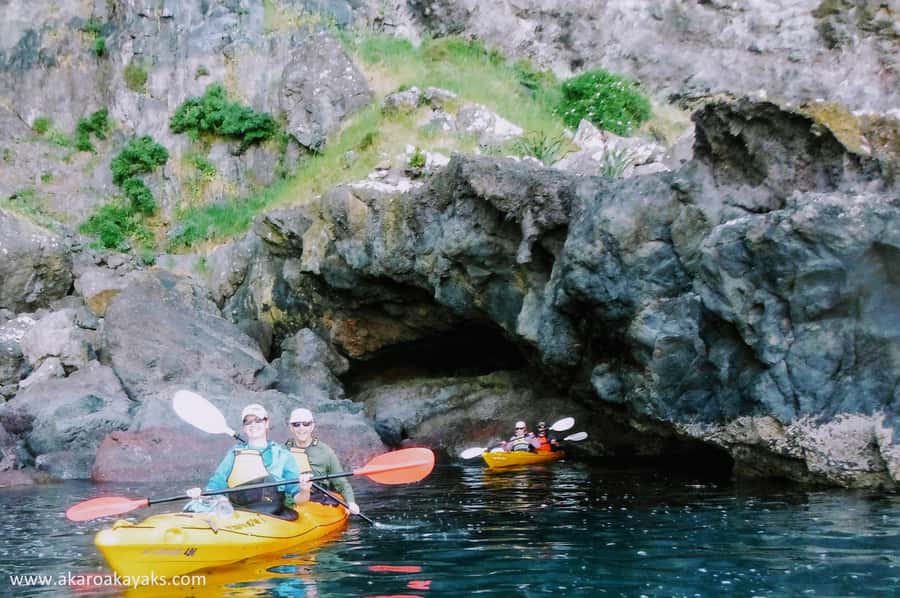
Once the group is underway, the route takes you through serene inlets and bays around Akaroa Harbour. The exact conditions affect how much of the route you can cover, but the setting offers plenty to look at even when wildlife stays out of sight.
Caves and rock features give the paddle a sense of exploration. You may have opportunities to look into caves or pass close to unusual coastal formations. The experience is not a long, demanding expedition, so these smaller features help pack variety into the 2.5-hour schedule.
Your guide may pause to explain the natural environment and identify birds or other sea life. William was praised for discussing both wildlife and geological features while keeping people safe and confident. That balance is important. You want information, but you also need the guide watching the water and the group.
The route also rewards simple observation. Look across the harbour for the wide views, then scan the water near the kayaks. Wildlife can appear suddenly, and a low kayak gives you a good position for noticing movement close to the surface.
A completely different kind of day out in Akaroa:
- Akaroa Dolphins ~ Harbour Nature Cruise
★ 5.0 · 2,143 reviews - Akaroa: Dolphin Nature Cruise
★ 4.9 · 440 reviews - Akaroa Harbour Nature Cruise
★ 5.0 · 332 reviews - Akaroa Harbour 2-Hour Dolphin Nature Cruise
★ 4.7 · 235 reviews
The wildlife question: exciting, but never promised
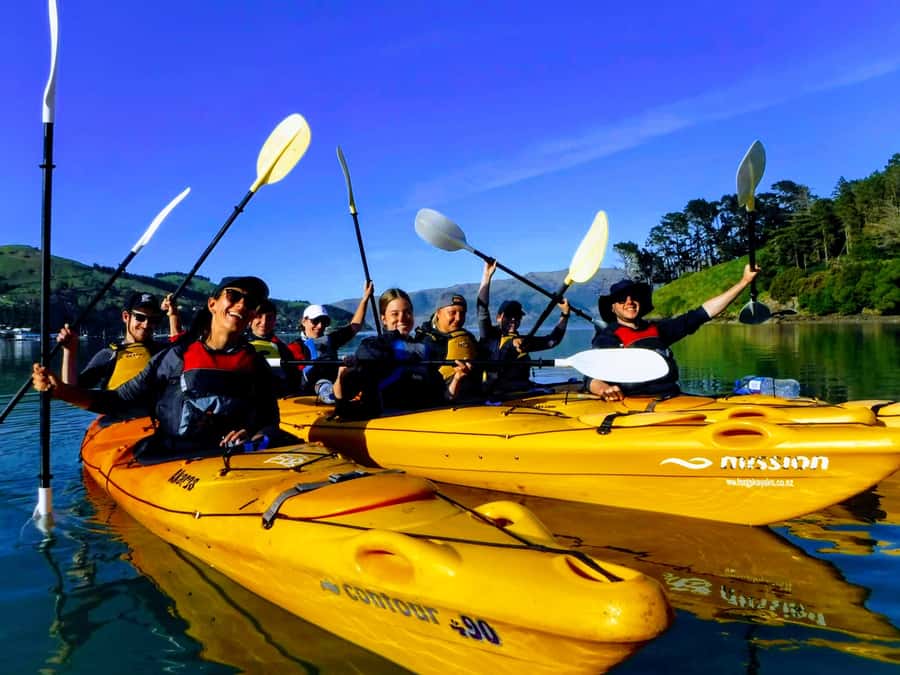
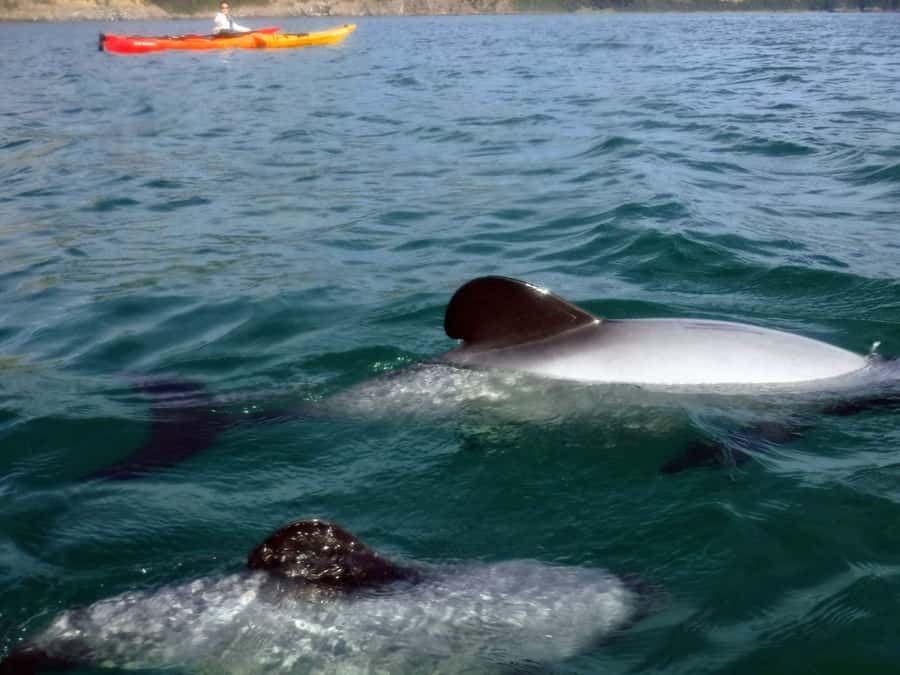
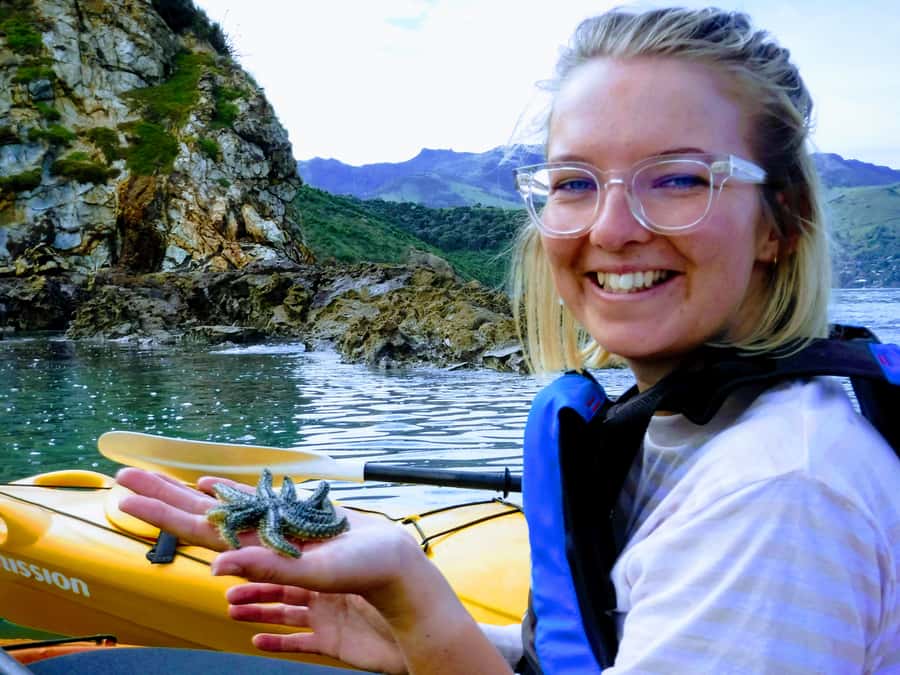
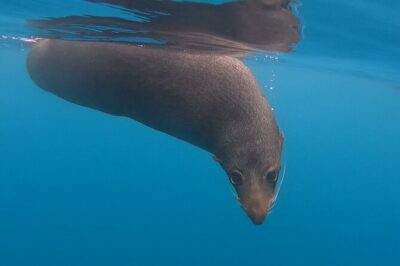
The headline wildlife possibility is the Hector dolphin, a rare marine mammal native to New Zealand. You may also see fur seals, white-flippered penguins, a broad range of birdlife, and other sea creatures.
Sightings are described as frequent during the sea-kayaking season, but that still does not make them certain. One outing had no wildlife sightings at all and was still considered worthwhile because the volcanic crater, caves, and guide made the trip enjoyable.
On another trip, dolphins swam around the kayaks for an extended period, with one appearing between the boats. That is the kind of close encounter that can turn a pleasant paddle into a lasting memory. A separate outing included natural seals and penguins.
I would book this for the setting first and wildlife second. That mindset protects you from disappointment. The harbour, geology, exercise, and guide commentary are part of the experience every time. Dolphins and penguins are a welcome bonus controlled by the animals, not the operator.
The guide also helps you understand what you see. Instead of a quick sighting with no context, you can learn why Hector dolphins are special and how the marine reserve supports local life.
Wind, waves, and the effort involved
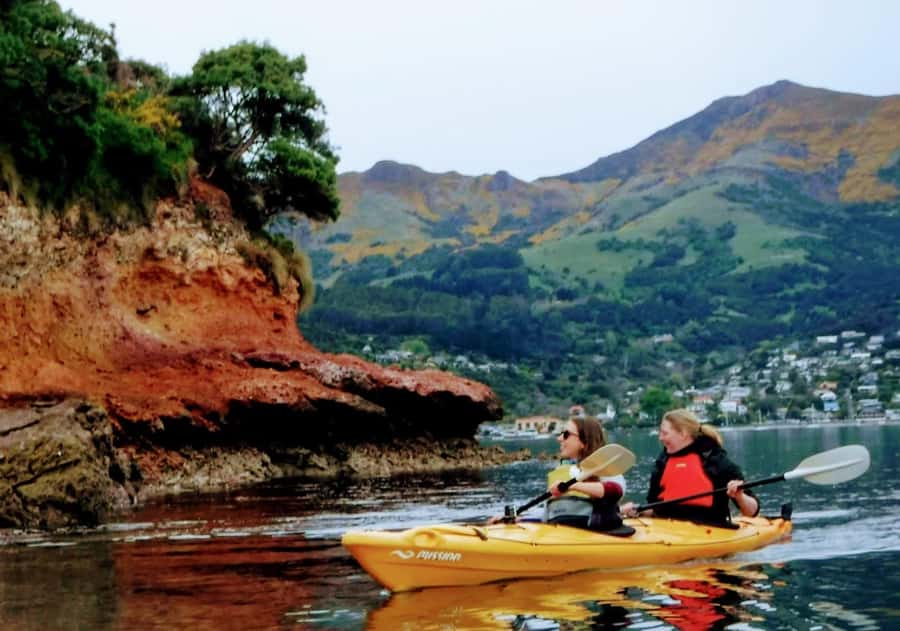
The tour is suitable for a range of abilities, but it is still a physical activity. You should bring drinking water in a reusable bottle, sunscreen, a sun hat, and a light wind or rain jacket.
Several comments describe the trip as relaxing with some paddling work. Another person called it a good workout with spectacular views. Both descriptions can be true. On calm water, the rhythm may feel gentle. If the wind rises, the return journey can bring more waves and require extra effort.
One April outing became quite exciting when the wind came up on the way back. The guide, Adam, was praised for being encouraging. That is a useful reminder to judge the tour by more than the best-case weather.
You do not need to be an athlete, but you should be comfortable with a moderate amount of arm work. If you have physical concerns, ask about them before setting out. The stable equipment and guide support help, but they cannot remove wind, waves, or the need to paddle.
Wear clothing suited to changing coastal conditions. A windbreaker or light rain jacket is more useful than carrying extra layers in a large bag, which is not allowed. Keep valuables and luggage elsewhere.
The guides are a major part of the value
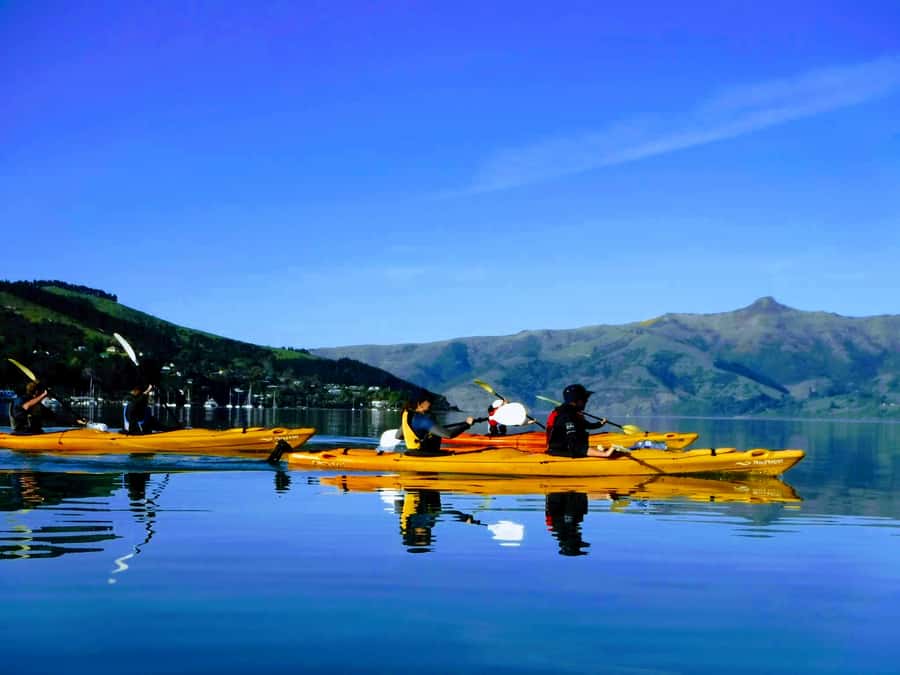
The strongest pattern across the feedback is the quality of the guiding. People repeatedly describe the staff as friendly, attentive, amusing, informative, and encouraging.
That praise includes Alex, who explained local wildlife while exploring the bay; Max, who combined local knowledge with an easy manner; Lucia, who led both a dolphin-rich trip and another relaxed, informative outing; William, who helped nervous paddlers feel secure; and Thomas, whose conversation and interest in the group made the time feel personal.
Guide quality matters especially on a short outdoor tour. You have only 150 minutes, so a good leader needs to manage safety, maintain a sensible pace, share information, and keep the group together. Jake was specifically praised for clear instruction and close attention to safety.
The small group helps. One guide for a maximum of eight people is a far better setup for questions and reassurance than a large line of kayaks spread across the harbour. The experience still depends on the guide assigned that day, but the structure gives the tour a personal feel.
What $80 gets you
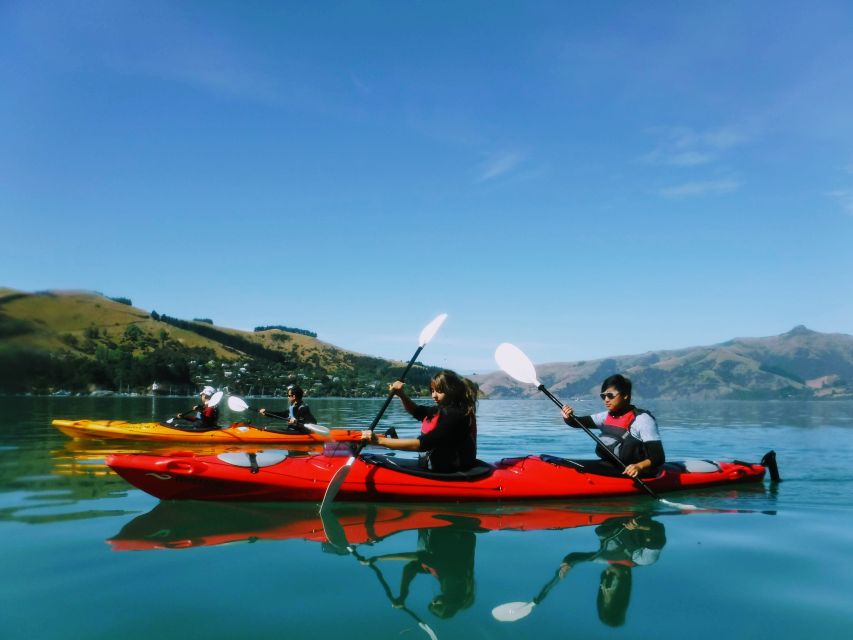
At $80 per person, this is not the cheapest way to see Akaroa Harbour. You are paying for more than time on the water, though. The fee includes the kayak, all kayaking gear, instruction, a safety briefing, a guide, and photos.
The 150-minute duration also gives the price reasonable weight. You are getting a substantial half-day activity without committing an entire day to a single outing. For visitors based in Christchurch, the location is particularly useful because Akaroa is about 80 minutes away, making this a practical addition to a wider Banks Peninsula visit.
I consider the price fair if you value guidance and nature interpretation. Renting equipment alone might suit experienced paddlers who want independence, but it would not provide the same safety support, local information, or organised wildlife search.
The tour also follows a low-impact approach within the marine reserve. That matters in a fragile setting. The aim is to enjoy the harbour while leaving minimal impact, rather than treating the reserve as an amusement park.
Photos are included, which adds a small but useful benefit. You can focus on paddling and scenery instead of trying to keep your phone dry and ready.
Who will enjoy this tour most
I would recommend it to first-time kayakers, couples, families with older children who can manage the physical effort, and active visitors looking for a close view of Akaroa Harbour.
It also suits people who prefer a small, guided outing instead of a large group activity. The mix of scenery, wildlife possibility, geology, and exercise gives you several reasons to enjoy the time on the water.
You may want to reconsider if you dislike shared kayaks, want complete control over the route, or are hoping for a guaranteed dolphin encounter. The double-kayak setup may not suit everyone, and wildlife remains unpredictable.
The activity can also be more demanding than the calm photos suggest. Bring water, sunscreen, a hat, and a light jacket. If the wind changes, the paddle back may require noticeably more effort.
Booking details worth knowing
You can cancel up to 24 hours before the tour for a full refund, and you can reserve now while paying later. Starting times vary, so check availability for the day you want.
Meet at the picnic benches on the grass opposite the bowling club. Do not arrive with large bags or luggage, since these are not allowed on the activity.
The tour is offered in English, Spanish, and French. Photos and equipment are included, so your main preparation is practical: wear suitable clothing, bring reusable drinking water, and protect yourself from the sun.
Should you book the Akaroa kayak tour?
Yes, if you want an active way to see Akaroa Harbour and can accept that nature sets the schedule. The combination of volcanic-crater scenery, caves, small groups, and warm guiding gives the tour real value at $80.
Book it especially if you are near Christchurch, enjoy light adventure, or want a more personal outing than a large boat cruise. Set your expectations around the water and geology first, then treat dolphins, seals, penguins, and birds as possible rewards.
I would skip it only if you need a guaranteed wildlife sighting, cannot manage steady paddling, or strongly prefer a single kayak. For most visitors who want fresh air, exercise, and a close look at one of Akaroa’s most unusual settings, this is a very good use of 150 minutes.
FAQ
How long is the Akaroa sea-kayaking tour?
The tour lasts 150 minutes, or 2.5 hours.
How much does the tour cost?
The price is $80 per person.
Where is the meeting point?
Meet at the picnic benches on the grass opposite the bowling club in Akaroa.
What equipment is included?
The tour includes a safe, stable, comfortable sea kayak and all kayaking gear.
Is instruction provided?
Yes. The experience includes full instruction and a safety briefing before paddling.
How large is each group?
One guide leads a maximum of eight people.
Which languages are available?
The live guide service is available in English, Spanish, and French.
Can I see dolphins or penguins?
You may see Hector dolphins, white-flippered penguins, fur seals, birdlife, and other sea creatures. Sightings are possible and described as frequent during the kayaking season, but they are not guaranteed.
Just added around Akaroa
- Solar Explorer in Akaroa – Sun-Viewing Tour with Telescopes★ 5.0 · 5 reviews
- Discover Akaroa: Self Guided Audio Tour★ 4.0 · 6 reviews
- Akaroa Self Guided Electric Scooter Tour★ 5.0 · 9 reviews
- Akaroa Nature and History Private Tour – The 7th Generation★ 5.0 · 10 reviews
- Akaroa Shore Excursion: Akaroa Harbour and Sheep Farm Local Tour★ 4.5 · 11 reviews
- Akaroa Shore Excursion: Banks Peninsula, Christchurch City and Giants House Tour★ 3.5 · 14 reviews
- Akaroa: Stargazing Tour with 2 Telescopes & Souvenir Photos★ 5.0 · 17 reviews
- Akaroa Shore Excursion: Akaroa Harbour and Giants House Local Tour★ 4.5 · 19 reviews
Canoes & Kayaks, compared.

Small-Group Kayak Adventure from Franz Josef Glacier
Read our review →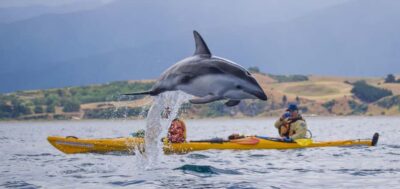
Dart River Canoe and Jet Boat Experience from Queenstown
Read our review →Browse the lists this tour appears in