
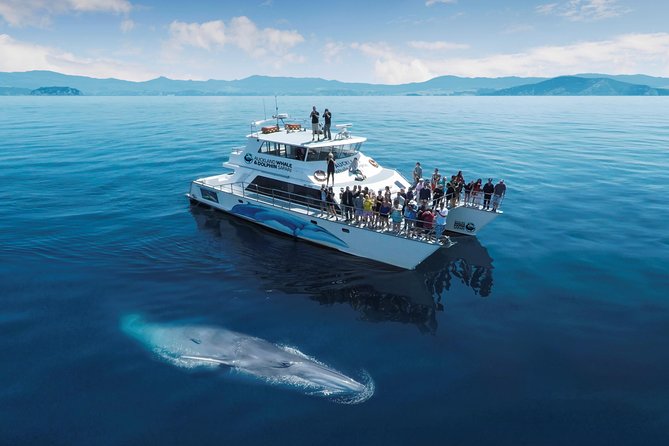
Reviewed · WHALE WATCHING
Auckland Dolphin and Whale Watching Eco-Safari Cruise
Wildlife is the real itinerary here. This 4.5-hour cruise from Auckland’s Viaduct Harbour takes you into the Hauraki Gulf Marine Park, where you might see dolphins, Bryde’s whales, seals, blue penguins, sharks, and rare seabirds. I like the marine-science focus and the fact that every ticket supports marine mammal conservation. I also like the wide views of Auckland’s islands from a purpose-built catamaran.
The main catch is simple: wild animals set the schedule. Dolphins are often found, but whales can be elusive, and a few trips see very little marine life. The boat can also feel crowded when close to its maximum of 99 passengers, especially if rain sends everyone indoors.
In This Review
- Key points to know before you book
- Leaving Viaduct Harbour for the Hauraki Gulf
- Auckland Harbour Bridge and Waitemata Harbour
- Rangitoto Island and the volcanic edge of Auckland
- Motuihe and Motutapu: island scenery between sightings
- Searching the Hauraki Gulf Marine Park
- What a successful wildlife encounter looks like
- The science and conservation angle
- Comfort, crowds, and the best place to sit
- Is the $135.91 price good value?
- Who will enjoy this cruise most?
- Should you book the Auckland Dolphin and Whale Watching Eco-Safari Cruise?
- FAQ
- Where does the Auckland Dolphin and Whale Watching Eco-Safari Cruise depart?
- How long does the cruise last?
- What animals might I see?
- What happens if I see no marine mammals?
- Is food included?
- What should I wear and bring?
- Can I cancel for a refund?
Key points to know before you book
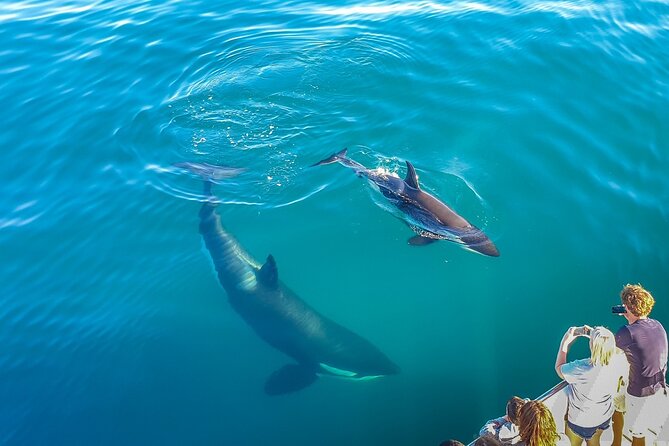
- Expect a serious wildlife search: The crew actively looks for up to six types of whales, dolphins, seals, penguins, sharks, and seabirds.
- The marine scientists add real value: You learn about local research, whale tracking, conservation, and the ecology of the Hauraki Gulf.
- Dolphins are the most dependable highlight: Pods may swim beside the catamaran or play at its bow for long stretches, though no sighting is guaranteed.
- The route is scenic even without whales: Rangitoto, Motuihe, Motutapu, Tiritiri Matangi, North Head, and Auckland Harbour Bridge provide plenty to watch between wildlife encounters.
- Prepare for wind and spray: Wear warm layers, weatherproof clothing, sunscreen, secure hats, and flat-soled shoes.
- The repeat-trip promise has limits: If you see no marine mammals, you can take the cruise again at no extra charge, but that is most useful if you can remain in Auckland.
Leaving Viaduct Harbour for the Hauraki Gulf
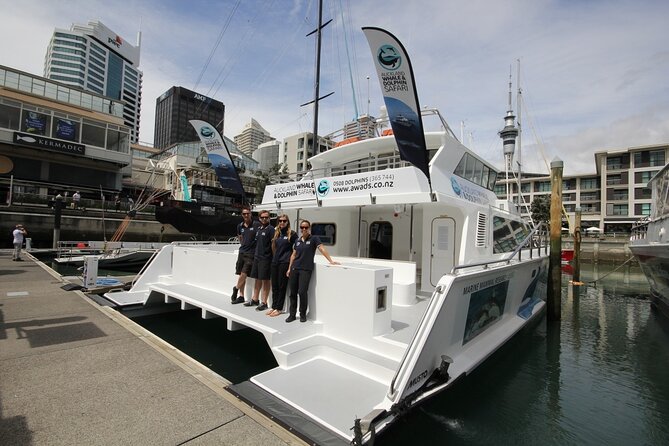
You meet the crew near the New Zealand Maritime Museum at Eastern Viaduct, in central Auckland. This is a convenient departure point if you are staying downtown, but it is not a hotel pickup service, so you need to make your own way to the harbour.
Check-in closes 15 minutes before departure. Treat that deadline seriously. A late arrival can mean losing your allocated seat, even if the boat has not yet left.
The cruise uses a custom-built 65-foot, or 20-meter, catamaran. That matters because wildlife watching works best when you can move between viewing areas. The vessel has inside and outside seating, toilets, and snacks and drinks available for purchase.
The open decks give you the best chance to photograph animals, but they also expose you to wind, sun, rain, and spray. Bring a jacket even on a pleasant Auckland morning. The temperature can drop quickly once the boat is moving, and the water may be choppy.
More Boat Tours in Auckland
- Auckland: Whale and Dolphin Watching Half-Day Eco Cruise
★ 4.5 · 1,072 reviews - Auckland Harbour Sailboat Cruise Including Three Course Dinner
★ 4.5 · 476 reviews - America’s Cup 2-Hour Sailing Experience Waitemata Harbour
★ 4.8 · 370 reviews
Auckland Harbour Bridge and Waitemata Harbour
The first part of the trip offers a different view of Auckland. From the water, the city skyline, harbour bridge, and Viaduct Harbour become part of the experience rather than just the departure setting.
The route passes through Waitemata Harbour before moving toward the islands and open waters of the Hauraki Gulf. This early section is useful for getting comfortable on the boat and listening to the first commentary.
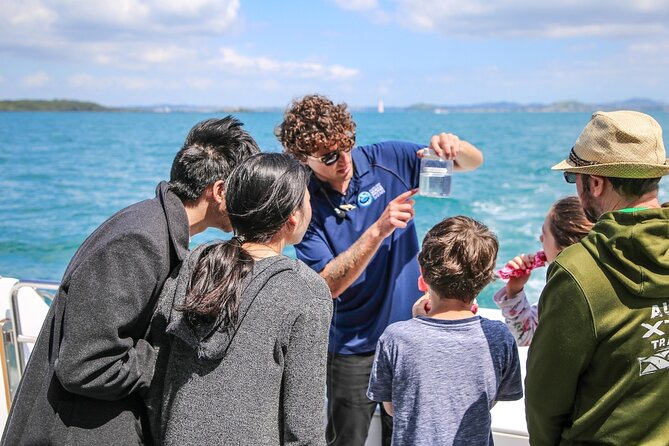
The guides explain the marine park and the work carried out with local marine scientists. I value this part because it gives the wildlife search a purpose. You are not simply chasing a photograph. You are learning how observations contribute to ongoing research and why the crew keeps a respectful distance from the animals.
One practical issue is sound. On a full boat, some announcements may be difficult to hear from the back or lower seating areas. If the commentary matters to you, try to stay near the main speaker or guide when possible.
Rangitoto Island and the volcanic edge of Auckland
Rangitoto is one of the most recognizable islands in the Hauraki Gulf. Its volcanic form makes a strong backdrop as the catamaran heads farther from the city.
This is a scenic pass, not a stop for a hike. You remain aboard, watching the island and surrounding water while the crew searches for movement on the surface.
The island views help keep the cruise worthwhile when wildlife is slow to appear. You get a broad sense of how Auckland is arranged around its harbour and islands, and you can photograph the shoreline without needing a separate sightseeing boat.
Still, keep your expectations in check. The itinerary names several islands, but this is a wildlife cruise, not an island-hopping tour. You do not get off to explore Rangitoto or the other islands.
Motuihe and Motutapu: island scenery between sightings
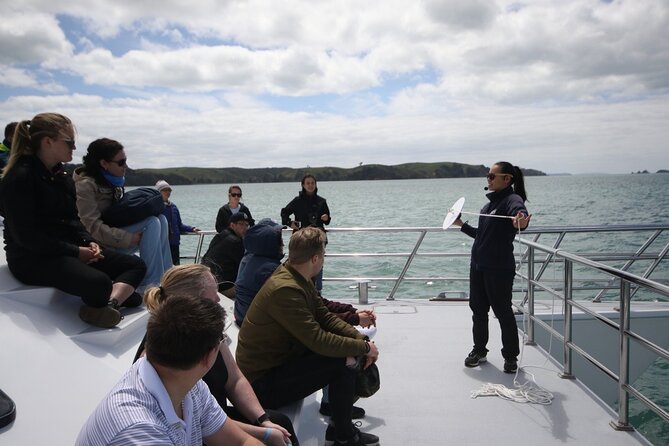
Motuihe Island and Motutapu Island sit within the wider Hauraki Gulf setting. The catamaran passes through waters framed by these islands, giving you changing views as the crew works toward areas where marine mammals may be active.
These stretches can feel quiet, especially if the sea is rough or animals are below the surface. That is part of the tradeoff with a four-and-a-half-hour search. The crew may alter the route and spend extra time looking, but the experience includes stretches of open water with no guaranteed action.
On a successful day, patience pays off. The cruise may stop progressing while the boat watches a pod, or it may reposition to give you a better angle. Staff ask passengers to share viewing space and rotate at the rail. That is fair, but you should expect a little jostling when dolphins appear close to the boat.
At near capacity, people can lose their preferred seat if they step away. If you want a clear view, claim a sensible spot early, then be prepared to share it.
More Wildlife Tours in Auckland
- Auckland (Tawharanui): Wild Kiwi Bird Spotting Encounter
★ 4.9 · 78 reviews - Nocturnal Wonders Tawharanui Kiwi Spotting and Stargazing Tour
★ 5.0 · 23 reviews - From Auckland: Waitomo Caves and Kiwi House Group Tour
★ 4.8 · 20 reviews - Private tour from Auckland – Waitomo Glowworm Caves, Zealong Tea & Kiwi Bird
★ 5.0 · 20 reviews
Searching the Hauraki Gulf Marine Park
The Hauraki Gulf Marine Park is the heart of the trip. It includes five marine reserves and supports about 23 marine species, making it a strong setting for a dedicated wildlife cruise.
The crew may look for bottlenose dolphins, Bryde’s whales, seals, blue penguins, and several types of seabirds. Australasian gannets, petrels, shearwaters, and white-fronted terns may appear above the water. The birds give you something to watch even when whales and dolphins are not nearby.
Bryde’s whales are native to New Zealand waters and are among the species the crew tracks. The tour also describes up to six whale types, but that does not mean you will see six kinds on one outing. Whale encounters depend on season, weather, food, animal movement, and plain luck.
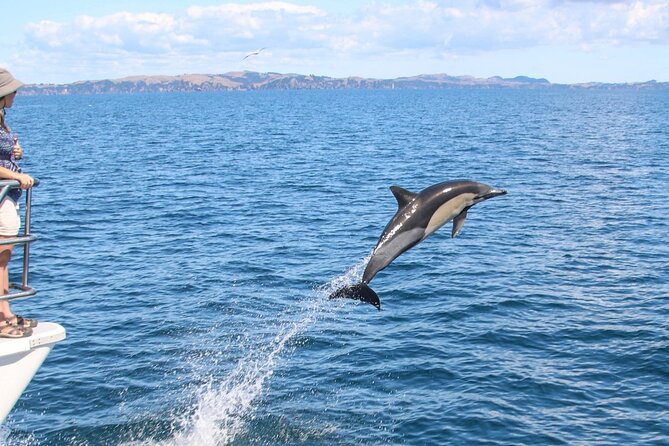
The dolphin sightings can be spectacular. Pods may include adults and calves, and they sometimes stay near the boat for many minutes. Some encounters last around half an hour, with dolphins appearing repeatedly beside or ahead of the catamaran.
The crew’s approach is refreshingly restrained. They try to give animals room and allow them to choose whether to approach. That may mean you do not get the close, dramatic photograph you hoped for, but it is the right way to handle wildlife.
What a successful wildlife encounter looks like
Dolphins are often the star of the cruise. You might see several pods, watch them travel beside the boat, or catch them playing near the bow. The front deck can offer the best viewing when the sea is calm, but it is also the most exposed spot when the catamaran is underway.
Whales are a bigger gamble. Some outings produce two whale sightings along with multiple dolphin pods. Others find no whales at all, or only a brief glimpse of dolphins. The crew may continue searching and return a little late if conditions allow, but there is no way to promise a particular species.
Seals and blue penguins can be harder to spot. Keep your camera ready, but also bring binoculars if you have them. A penguin may appear only briefly, and seabirds can be easier to identify with magnification.
Rare sightings can include sharks, including hammerhead sharks, and large feeding gatherings where dolphins and seabirds work together around baitfish. These events are never standard features, but they show why the wider search is worthwhile.
The science and conservation angle
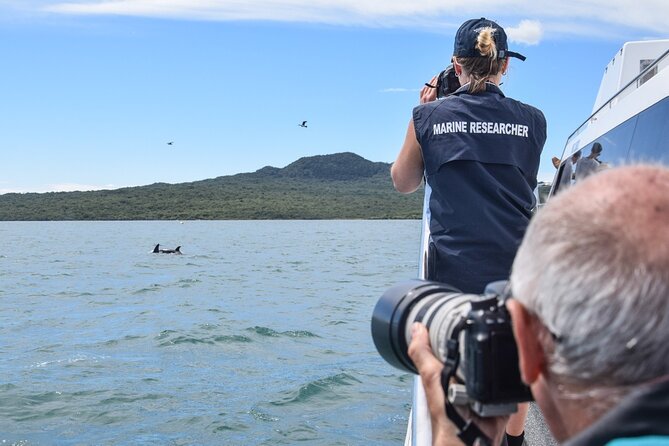
This cruise is more than a sightseeing ride with a wildlife theme. Marine research scientists interact with passengers and explain the data collection and partnerships behind the work.
I consider that a meaningful part of the price. You are supporting a company that connects tourism with marine mammal conservation, and each ticket contributes directly to that effort. The commentary can help you understand why the crew tracks certain whales, how marine reserves protect wildlife, and why boat operators must avoid stressing animals.
The science also changes your expectations. A responsible operator cannot force a whale to surface or chase dolphins for the perfect photograph. If you value conservation and want your cruise to support research, this is a strong choice in Auckland.
That said, science does not make a no-sighting day feel short. Four and a half hours is a long time on the water if the animals stay hidden. Book this as a full marine experience, not as a guaranteed whale photograph.
Comfort, crowds, and the best place to sit
The catamaran is generally described as stable and comfortable, with seating inside and outside. Calm mornings can make the ride especially pleasant. Rougher days are possible, and one outing had notably choppy seas.
If you are prone to seasickness, the duration and open-water route deserve careful thought. The supplied details do not promise seasickness treatment or special seating, so bring whatever personal precautions you normally use.
The maximum group size is 99 people. That gives the boat a lively, social feel, but it can also make the viewing rails crowded. In rain, covered areas may fill quickly. You might find the boat comfortable while seated, yet cramped when everyone moves toward one side for a dolphin pod.
The crew encourages people to take turns at the rail. Most passengers cooperate, but you should not expect private viewing space. Families and photographers should be ready to share.
Wear sturdy, flat-soled shoes. A sun hat with a chin strap is a smart choice because an unsecured hat can quickly become harbour litter. Sunglasses, sunscreen, a camera, and binoculars are also worth packing.
Is the $135.91 price good value?
At $135.91 per person, this is not a casual harbour cruise. You are paying for about 4.5 hours on the water, an experienced crew, marine-science commentary, wildlife searching, and the chance to see animals in their natural environment.
The value is strongest when you care about both wildlife and learning. A day with dolphins, whales, penguins, and seabirds can make the price feel entirely justified. Even a dolphin-rich outing with island scenery and strong commentary offers a substantial half-day activity.
The value is weaker if your only goal is a guaranteed whale sighting. No operator can control wild whales, and some outings produce only a few dolphins or no marine mammals. The repeat-trip policy helps: if you see no marine mammals, you can return another day at no extra charge.
That promise is less useful for someone visiting from overseas on a tight schedule. If you are from the United States or another distant country, you may not be able to use a second trip. It is still a fair gesture, but you should book only if you can accept the possibility of an attractive boat ride with limited wildlife.
Food and drinks are not included, though you can buy snacks and beverages aboard. Hotel transportation is also not included.
Who will enjoy this cruise most?
I would recommend it to you if you enjoy being on the water, care about conservation, and can stay patient when nature does not perform on cue.
It suits families, photographers, bird-watchers, marine-life fans, and anyone wanting a different view of Auckland. Children may especially enjoy dolphins and penguins, but the long duration and changeable weather require some stamina.
It is less suitable if you need a fixed, tightly timed attraction or if you dislike wind, spray, boat movement, or waiting. People looking for a short Auckland Harbour cruise should choose something simpler.
The experience also works well early in an Auckland visit. If the wildlife day is postponed because of poor weather, you have a better chance of fitting it in later. The operator may offer another date or a full refund if weather cancels the trip, and free cancellation is available up to 24 hours before departure.
Should you book the Auckland Dolphin and Whale Watching Eco-Safari Cruise?
Book it if you want a wildlife search with a conservation purpose, not a staged animal show. The strongest features are the passionate crew, marine research commentary, frequent dolphin possibilities, and the beautiful island route through the Hauraki Gulf.
Go in with flexible expectations. You may see dolphins swimming beside the bow, whales surfacing in the distance, penguins, seals, sharks, and feeding seabirds. You may also spend much of the 4.5 hours watching open water and islands.
For the best chance of enjoying it, dress warmly, arrive early, pack sunscreen and binoculars, and accept the need to share viewing space. If that sounds like your kind of day, the price is reasonable for a serious Auckland marine outing.
FAQ
Where does the Auckland Dolphin and Whale Watching Eco-Safari Cruise depart?
The cruise begins at Eastern Viaduct in Auckland Central, near the New Zealand Maritime Museum at Viaduct Harbour.
How long does the cruise last?
The experience lasts approximately 4 hours and 30 minutes.
What animals might I see?
Possible sightings include whales, dolphins, seals, blue penguins, sharks, Australasian gannets, petrels, shearwaters, and white-fronted terns. Wildlife sightings are not guaranteed.
What happens if I see no marine mammals?
If you do not see any marine mammals, you can take the cruise again on another day at no extra charge.
Is food included?
Food and drinks are not included in the ticket price, but snacks and beverages are available to purchase aboard the boat.
What should I wear and bring?
Wear warm layers, weatherproof clothing, and flat-soled shoes. A secure sun hat, sunscreen, sunglasses, a camera, and binoculars are also recommended.
Can I cancel for a refund?
You can cancel up to 24 hours before the experience for a full refund. If poor weather causes the operator to cancel, you will be offered another date or a full refund.
More Dolphin Tours
- Auckland: Bay of Islands Day Tour with Dolphin Cruise
★ 5.0 · 11 reviews - Akaroa Dolphins ~ Harbour Nature Cruise
★ 5.0 · 2,143 reviews - Paihia/Russell: Hole in the Rock, Dolphins & Island Cruise
★ 4.6 · 821 reviews - Akaroa: Dolphin Nature Cruise
★ 4.9 · 440 reviews
More Whale Watching Trips
- Auckland: Tikapa Moana Whales, Dolphins and Islands Cruise
★ 3.9 · 292 reviews - Auckland: Tikapa Moana Dolphin, Whale and Island Cruise
★ 4.0 · 17 reviews - Kaikoura: Whale Watching Cruise
★ 4.6 · 3,089 reviews - Whale Watching in Kaikoura by Boat
★ 4.5 · 2,906 reviews
Just added around Auckland
- Auckland Museum and Highlight Sightseeing Tour★ 5.0 · 5 reviews
- 7 – Day North to South Island Grand Tour – Auckland to Queenstown★ 5.0 · 5 reviews
- Kumeu Winery Boutique Tour with Gourmet Lunch from Auckland★ 4.0 · 5 reviews
- Private 2 Hour Surf Lesson★ 5.0 · 5 reviews
- Private 3 Days Tour From Auckland: Hobbiton, Hamilton, Rotorua & Waitomo Caves★ 5.0 · 5 reviews
- Auckland City Hotel to Cruise Ship Transfer by SUV★ 4.0 · 5 reviews
- Auckland Highlights Full Day Guided Tour★ 4.5 · 5 reviews
- Private Tour – Waiheke Island Luxury Experience★ 5.0 · 5 reviews
Whale Watching, compared.

Whale and Dolphin Watching Half-Day Eco Cruise
Read our review →
Tikapa Moana Whales, Dolphins and Islands Cruise
Read our review →
Kaikōura Whale Watching Scenic Flight (40 Minutes)
Read our review →
Browse the lists this tour appears in