
Reviewed · NEW ZEALAND
Explore the legacy of artist, ecologist, architect, visionary
Art can reshape a whole city. In Whangarei, Friedensreich Hundertwasser’s ideas fill an unusual art centre with curved walls, colorful tiles, living plants, and a golden cupola. I like the all-day access, which lets you take your time, and the chance to see the world’s first dedicated Māori public art gallery in the same building. The main consideration is value: at $18.62 per person, some people may find the indoor collection smaller than expected.
You can explore independently or arrange an extra one-hour interactive guided tour. I also like the Afforested Roof, where trees, plants, and wide views over the Hātea River give the visit a strong outdoor finish. Plan for one to three hours, though the ticket remains valid all day if you want to break up your visit with lunch around the Town Basin.
In This Review
- Key points to know before you go
- Why Hundertwasser belongs in Whangarei
- Entering the colorful Hundertwasser Art Centre
- Wairau Māori Art Gallery and a second artistic voice
- The Afforested Roof and Whangarei views
- How long should you spend here?
- Is $18.62 good value?
- The MuseumShop and restaurant
- Self-guided visit or the extra guided tour?
- Practical details for your Whangarei day
- Who will enjoy this most?
- Should you book the Hundertwasser Art Centre?
- FAQ
- Where is the Hundertwasser Art Centre?
- How much does admission cost?
- How long does the visit take?
- Is the ticket valid all day?
- Is a guided tour included?
- What galleries are included?
- Can I see views from the building?
- Can I cancel for a refund?
Key points to know before you go
- The largest Hundertwasser collection outside Vienna: See artworks, architectural models, and examples of his ecological thinking in New Zealand.
- Two art experiences in one: The centre also houses Wairau Māori Art Gallery, with changing exhibitions by contemporary Māori artists.
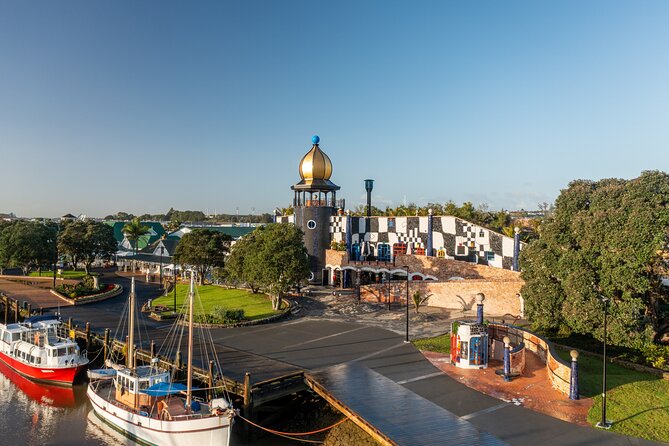
- The roof is part of the attraction: The Afforested Roof offers 360-degree views of Whangarei, topped by a striking golden cupola.
- Self-guided or guided: Admission covers independent exploring, while the interactive one-hour tour costs extra.
- A good Town Basin stop: The centre sits near the river, restaurants, public transport, and a walkable waterfront area.
- Allow time for the details: Bright tiles, curved forms, artful railings, and planted areas reward a slower look.
Why Hundertwasser belongs in Whangarei
Friedensreich Hundertwasser was more than a painter. He worked as an architect, ecologist, and campaigner for a closer relationship between people and nature. His work is easy to recognize: uneven lines, strong colors, playful shapes, flowing forms, and a dislike of sterile modern buildings.
Whangarei has the largest collection of his work outside Vienna. That makes this more than a small art stop added to a day in town. It is a focused look at an artist whose ideas found a meaningful home in New Zealand.
The attraction is especially useful if you know little about Hundertwasser. You can see paintings and applied art, then connect them with architectural models and real building features. His concern for trees, planted roofs, and human-scale design is not left on a wall label. The building itself puts those ideas to work.
The centre also makes a useful point about art in public life. You do not simply enter a plain museum box and look at objects under lights. The structure asks you to notice its roof, stairs, railings, tiles, curves, and relationship with the riverfront. For some people, the architecture will be the main event.
Other North Island trips people book alongside this one:
- Hobbiton™ Movie Set Walking Tour from Shires Rest
★ 5.0 · 3,577 reviews - Gannet Safaris Overland tour to Cape Kidnappers Gannet Colony
★ 5.0 · 942 reviews - Cathedral Cove Kayak Tour
★ 5.0 · 887 reviews
Entering the colorful Hundertwasser Art Centre
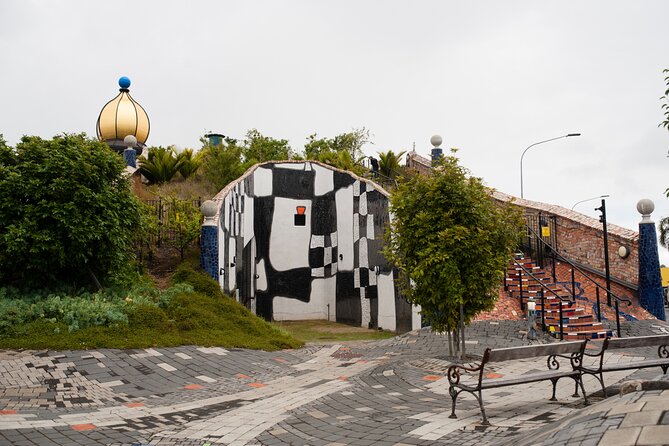
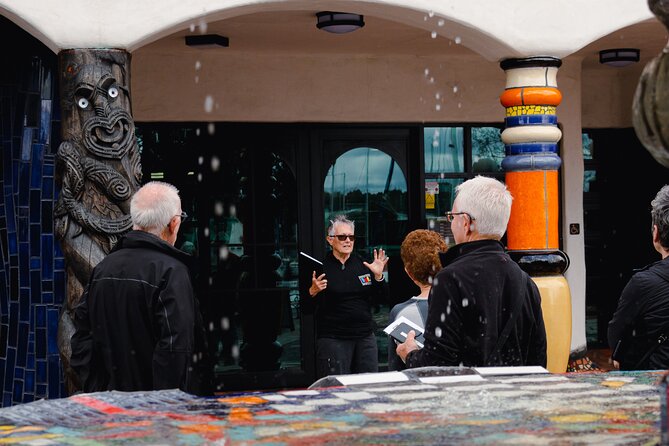
The exterior gives you an immediate preview. Look for the playful geometry, bright tiles, irregular brickwork, curved details, and artful railings. The building has the kind of personality that makes a quick walk past impossible. Even if you decide not to buy admission, the outside is worth a careful look.
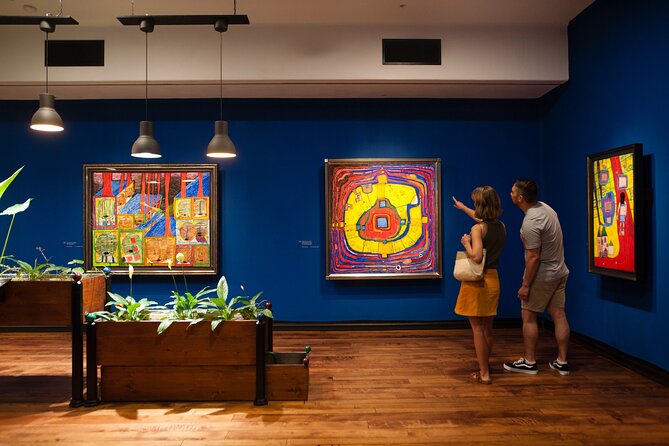
Inside, the exhibition Hundertwasser in New Zealand 1973 to 2000 provides the main introduction. It presents the artist’s connection with New Zealand and gives you a chance to see the largest grouping of his work outside Vienna.
Expect a mixture of art and explanatory material rather than a huge museum collection. The centre includes artworks, architectural models, and living examples of ecological practices. A small film theatre runs documentaries on a loop, giving you another way to understand his work.
The film is useful for context, though I would not make it the sole reason for your visit. If you have limited time, see the building, exhibition, and roof first. Then watch the documentary if the subject catches your interest.
The interior architecture may divide opinion. Some people find the outside more exciting than the rooms within, and you should keep that possibility in mind. The appeal here comes from the full combination of art, ideas, and building design, not from a large number of galleries.
Wairau Māori Art Gallery and a second artistic voice
Wairau Māori Art Gallery is a major part of the admission. It is described as the world’s first dedicated Māori public art gallery, and its changing exhibitions focus on contemporary Māori artists, indigenous themes, and the story of Aotearoa New Zealand.
This gives the visit useful breadth. Hundertwasser’s work asks how people can live more closely with nature, while the Māori gallery presents contemporary artistic responses to identity, place, culture, and New Zealand’s past and present.
Because the exhibitions change, the exact art on view will depend on your visit. That is a good reason to return if you are staying in the area or passing through Whangarei again. It also means you should treat the centre as more than a single-artist museum.
The two galleries do not offer the same experience. Hundertwasser’s work is playful, colorful, and strongly tied to architecture and ecology. Wairau Māori Art Gallery gives you a current platform for Māori artists. Together, they create a more rounded cultural visit than the Hundertwasser collection could provide alone.
The Afforested Roof and Whangarei views
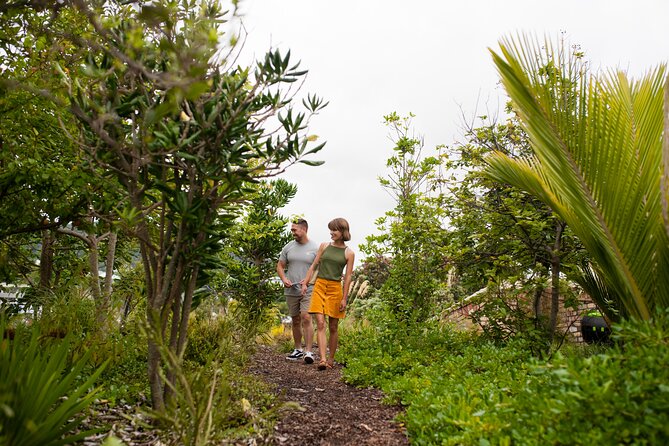
Save time for the roof. The award-winning Afforested Roof is one of the centre’s most distinctive features, with planted areas and a golden cupola above the building.
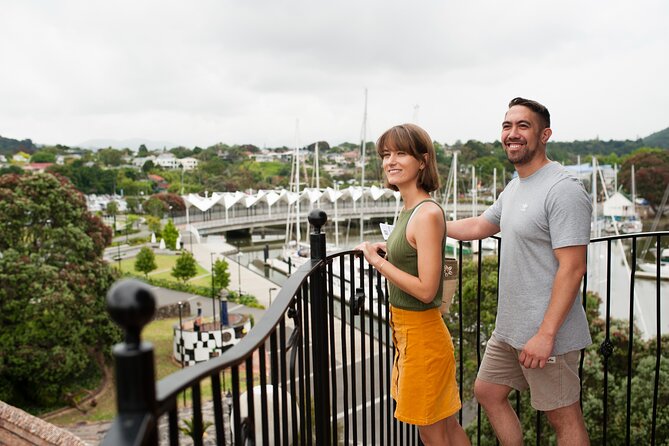
From the top, you get sweeping 360-degree views across Whangarei, including the Hātea River and the city. This changes the pace of the visit. After looking closely at paintings, models, tiles, and architectural details, you can step outside and see the town from above.
The roof also explains Hundertwasser’s ecological ideas in a direct way. A planted roof is not just decoration here. It is part of the building’s message about making room for nature in places designed for people.
Give yourself enough time to walk around and look back at the building from above. The roof is likely to be especially rewarding on a clear day, but the attraction does not provide a weather guarantee, so views may vary with conditions.
For many visitors, this is the feature that makes the admission feel worthwhile. You are paying for access to art, architecture, a Māori gallery, and a city viewpoint rather than for a conventional indoor collection alone.
A completely different kind of day out in North Island:
- Kaituna Cascades – Grade 5 Wairoa River near Tauranga
★ 5.0 · 437 reviews - One Hour Cathedral Cove Boat Tour in Hahei
★ 5.0 · 340 reviews - 15,000ft Tandem Skydive in Tauranga – Bay of Plenty
★ 5.0 · 305 reviews - Timber Trail – Ongarue to Pureora Shuttle 2 Day Ride
★ 5.0 · 186 reviews
How long should you spend here?
The suggested visit takes about one to three hours, but your ticket provides access for the full day. That flexible arrangement is one of the strongest practical features.
If you mainly want to see the architecture, roof, and key displays, one hour may be enough. Add time if you plan to watch a documentary, study the exhibition, visit Wairau Māori Art Gallery, and browse the MuseumShop.
A relaxed visit of two to three hours makes more sense for most people. You can take in the building without rushing, pause at the roof, and spend proper time with both galleries.
The all-day access matters because the centre is in the Town Basin area. You can visit in the morning, have lunch nearby, walk beside the river, and return later if you want another look. It is a better arrangement than a timed entry that forces you to complete everything in one pass.
If you arrange the optional interactive guided tour, set aside one hour for that portion. The guided experience is not included in the admission price, so check the extra cost and availability when planning.
Is $18.62 good value?
At $18.62 per person, the price is reasonable if you want the complete experience. Your admission includes full-day access to the Hundertwasser exhibition, the Wairau Māori Art Gallery, the film theatre, and the Afforested Roof.
The value is strongest for people interested in architecture, environmental ideas, contemporary Māori art, or unusual city attractions. Families and teenagers may also enjoy the bold colors, odd shapes, and playful building details more than a formal art museum.
The calculation is less favorable if you only want to look at the exterior. The outside is striking, and one direct criticism of the experience is that the indoor display can feel limited for the price. If your interest is only in Hundertwasser’s architecture, you may decide that a walk around the building is enough.
I would look at the ticket as a small cultural day pass rather than a quick gallery ticket. The combination of two art spaces and the roof makes the price easier to justify. The MuseumShop and on-site restaurant are extra, but they can extend the stop if you want a longer Town Basin outing.
The MuseumShop and restaurant
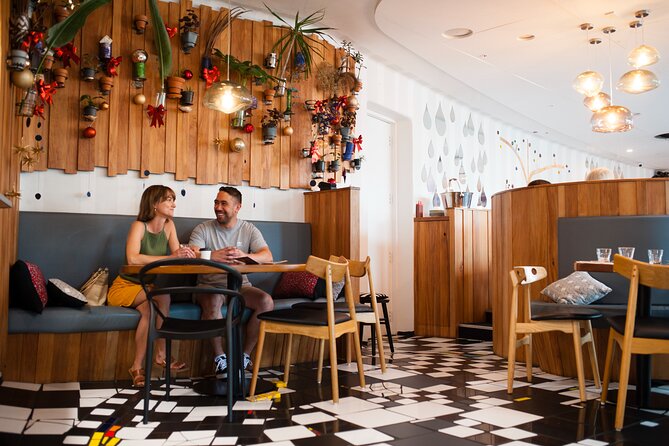
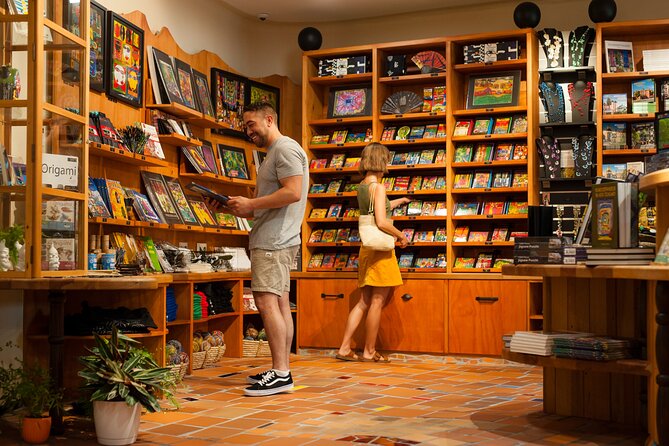
The MuseumShop has a broad selection of Hundertwasser applied art, unusual objects, gifts, and items connected with Wairau Māori Art Gallery. You do not need to buy anything, but it is a useful place to see how Hundertwasser’s designs work on everyday objects.
The shop may appeal to you if you want a small reminder of the building rather than a standard postcard. It also gives younger visitors a final part of the experience after the galleries.
There is a restaurant on site. The available information highlights sashimi and chowder, along with river and city views, though menus and service can change. If you want to eat there, treat it as a convenient addition rather than a guaranteed part of the admission.
The Town Basin location gives you other food choices nearby as well. A walkable riverside setting and several restaurants make it easy to build the art centre into a longer Whangarei afternoon.
Self-guided visit or the extra guided tour?
The self-guided option is the simplest choice. You can move at your own speed, skip parts that do not interest you, and return to favorite areas during the same day.
I would choose this option if you already know Hundertwasser’s work or prefer quiet time with art. It also makes sense if you are fitting the centre around a meal, a river walk, or other Whangarei plans.
The one-hour interactive guided tour may be worthwhile if you want help connecting the paintings, architecture, New Zealand period, and ecological ideas. It could also help first-time visitors make sense of details that are easy to overlook.
Because the guided tour is an additional purchase, ask about arrangements before you arrive. The standard admission does not include it. No guide names are provided, so you should not book this expecting a particular guide.
Practical details for your Whangarei day
You receive a mobile ticket, which is handy if you are moving around North Island without a printed itinerary. Confirmation is provided at booking.
The centre is near public transportation and sits in the Town Basin area. Service animals are allowed, and the experience information says most people can participate. Specific details about every access route or seating area are not provided, so contact the provider if you need particular assistance.
Free cancellation is available when you cancel at least 24 hours before the local start time. Cancellations made less than 24 hours ahead, and changes made inside that period, are not accepted for a refund.
The best planning tip is simple: do not schedule the attraction as a rushed photo stop. Allow at least an hour, and ideally two or more if both art galleries matter to you.
Who will enjoy this most?
I would recommend the centre to you if you like:
- Architecture that refuses to be plain
- Art connected to environmental ideas
- Contemporary Māori art and indigenous themes
- Small museums with a strong building identity
- City viewpoints and walkable waterfront areas
- Flexible visits that do not require a fixed time slot
It is also a good choice for families, since the strong colors and unusual shapes are approachable. Teenagers may find the building easier to connect with than a traditional gallery, especially if they enjoy design, unusual spaces, or environmental subjects.
I would be more cautious if you expect a large collection of paintings or a long, heavily narrated museum experience. The indoor spaces may feel modest, and the looping documentary may not provide the clear story you want. The attraction works best when you treat the building, roof, ideas, and two galleries as one visit.
Should you book the Hundertwasser Art Centre?
Yes, if you want Whangarei’s most distinctive cultural stop and plan to spend time in the Town Basin. The colorful exterior, ecological roof, Māori gallery, and river views give the experience more range than a single small exhibition.
Book it especially if you are curious about how art can shape a building and how Hundertwasser’s ideas about nature appear in real design. The $18.62 price is fair when you use the full-day access and see both galleries.
Skip the paid entry only if your main goal is a quick look at the architecture from outside. For everyone else, plan two hours, include the Afforested Roof, and leave room for a riverside walk or meal afterward.
FAQ
Where is the Hundertwasser Art Centre?
It is in Whangarei on New Zealand’s North Island, in the Town Basin area beside the Hātea River.
How much does admission cost?
Admission is listed at $18.62 per person.
How long does the visit take?
The visit takes approximately one to three hours, although admission provides access for the full day.
Is the ticket valid all day?
Yes. Admission includes full-day access to the centre’s multiple spaces.
Is a guided tour included?
No. You can explore independently, while the optional one-hour interactive guided tour costs extra.
What galleries are included?
Admission includes the Hundertwasser in New Zealand 1973 to 2000 exhibition and Wairau Māori Art Gallery, which presents changing exhibitions by contemporary Māori artists.
Can I see views from the building?
Yes. The Afforested Roof has a golden cupola and sweeping 360-degree views of Whangarei, the Hātea River, and the city.
Can I cancel for a refund?
Yes, if you cancel at least 24 hours before the experience’s start time. Cancellations or changes made less than 24 hours in advance are not accepted for a refund.
Just added around North Island
- Glowworm Kayak Adventure on the Waikato River★ 5.0 · 5 reviews
- Bullswool Heritage Farm General Entry Ticket★ 5.0 · 6 reviews
- Wool Sheep Farm Experience with Handmade Wool Hat in New Zealand★ 5.0 · 9 reviews
- Private tour to Cape Kidnappers Gannet Colony★ 5.0 · 10 reviews
- Cathedral Cove Dive & Snorkel- Marine Reserve specialised trips★ 5.0 · 11 reviews
- Leigh: Goat Island Clear Kayak Rental★ 4.0 · 16 reviews
- Fine Wine Tour in Napier, New Zealand★ 5.0 · 17 reviews
- River Valley Stables – Burn The Breeze, Half Day Horse Ride For Riders★ 5.0 · 19 reviews