
Reviewed · SHORE EXCURSIONS
Puketi Rainforest Guided Walks .This is not a Shore Excursion product .
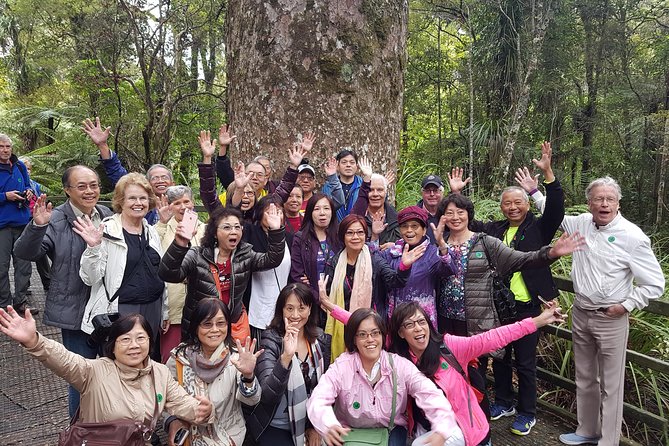
Ancient kauri make every step count. Starting in Okaihau near the Bay of Islands, this small-group walk takes you into Puketi Rainforest for towering trees, waterfalls, native birds, and stories about Māori culture and European settlement. I like the maximum group size of six, which gives the guide room to stop, explain, and adjust the pace. I also like the choice of half-day, full-day, and nighttime walks, including tea, lunch, and a headlamp when those options apply.
The main catch is the physical effort. This is not a flat stroll under some pretty trees. The paths include steep sections, and the full-day route requires a higher level of fitness. At $83.78 per person, the price makes the most sense if you want a close, guided look at forest ecology rather than a quick photo stop.
In This Review
- Key points to know before you book
- Entering Puketi Rainforest from Okaihau
- Walking under the giant kauri trees
- Waterfalls, the Puketi River, and a moderately hard trail
- What the half-day walk gives you
- The full-day route and lunch stop
- Choosing the nighttime forest walk
- The guide can make or break the walk
- Group size, fitness, and what to pack
- Is $83.78 good value?
- Who should book this Puketi walk?
- Should you book it?
- FAQ
- Where does the Puketi Rainforest walk start?
- How long does the experience last?
- Is the walk physically difficult?
- What food and drinks are included?
- Is a night walk available?
- How many people can join the walk?
Key points to know before you book
- Two of New Zealand’s largest kauri: The walk brings you close to enormous trees found only on New Zealand’s North Island.
- Small groups of up to six: You get more time for questions and a better chance to hear stories clearly.
- Three styles of walk: Pick a roughly three-hour outing, a longer day walk with lunch, or a nighttime hike.
- Steep and wet conditions are possible: Good walking shoes are essential, and ponchos are provided when rain arrives.
- Rare wildlife is part of the appeal: You may hear or spot native birds, bats, and, on the night walk, possibly a kiwi.
- Tea and lunch depend on your choice: Morning or afternoon tea comes with day options, while lunch is included on the full-day walk.
Entering Puketi Rainforest from Okaihau
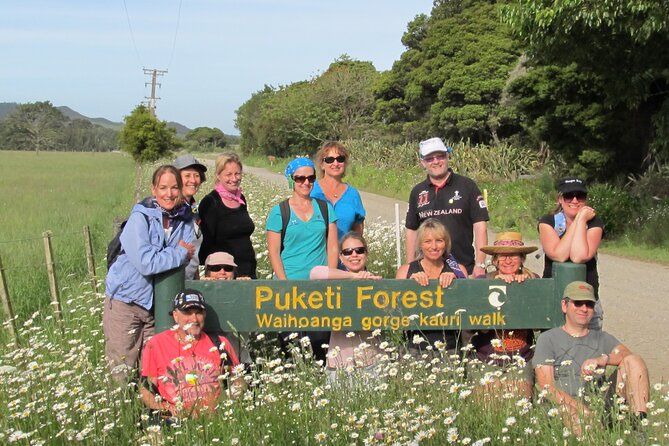
Your meeting point is at 476 Puketi Road in Ōkaihau, about the practical starting point for the forest experience. You arrange your own way there because hotel pickup and drop-off are not included. The activity finishes back at the same meeting point, so plan your transport with both ends in mind.
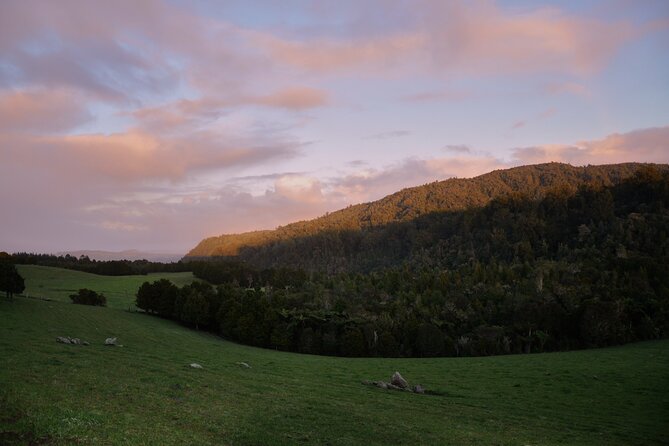
The setting changes quickly from ordinary rural road to native forest. Puketi is a protected subtropical preserve, and its importance comes from the sheer variety packed into a relatively small area. The forest has 370 recorded plant species, giving your guide plenty to point out beyond the large trees that first catch your eye.
This is where the small group matters. With only six people, you can stop beside a plant or tree without holding up a coachload of people. You can also ask why a particular tree grows where it does, how the forest changes with age, or what conservation work is taking place.
The guide also adds human context. You hear Māori names for native trees, local legends, and stories from the period of European settlement. That mix gives the walk more shape than a simple exercise route. You are not only looking at green foliage. You are learning how people have understood, used, and protected this forest over time.
More shore excursions:
- Tauranga Shore Excursion: Rotorua Highlights
★ 4.5 · 427 reviews - Bay of Islands Glow Worm Caves & Scenic Shore Excursion
★ 4.5 · 317 reviews - 6.5 hour Small-Group Rotorua Naturally Shore Excursion – Tauranga
★ 4.5 · 283 reviews
Walking under the giant kauri trees
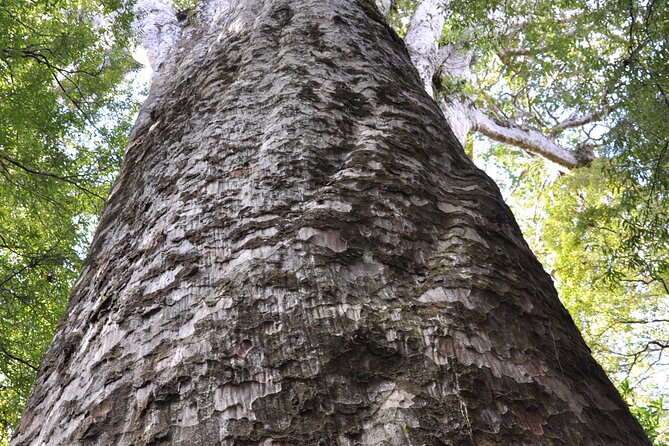
The kauri are the main event, and rightly so. These trees are among the largest in the world, second only to one other tree species, and they are native to New Zealand’s North Island. The walk uses well-marked paths and includes a boardwalk, allowing you to see the trees without simply charging through sensitive forest floor.
Two of the country’s largest kauri are highlighted along the route. Their scale is difficult to judge in a photograph, so having a guide explain their age, growth, and place in the forest makes the sight more meaningful. You may also look across valleys filled with ancient trees whose ancestors reach back to the Jurassic period.
Do not expect a raised platform high in the canopy. This is a ground-level forest walk, with a boardwalk in places and ordinary footpaths elsewhere. One disappointed customer felt promotional images suggested a higher platform experience, so keep your expectations clear: you are paying for a guided walk through a remarkable rainforest, not a treetop walkway.
The forest changes as you move through it. Your guide explains the difference between younger growth, mature trees, and established forest. That lesson is useful because rainforest can look like one wall of green when you first enter. With a trained eye, you begin to notice layers, age, light, and regeneration.
Waterfalls, the Puketi River, and a moderately hard trail
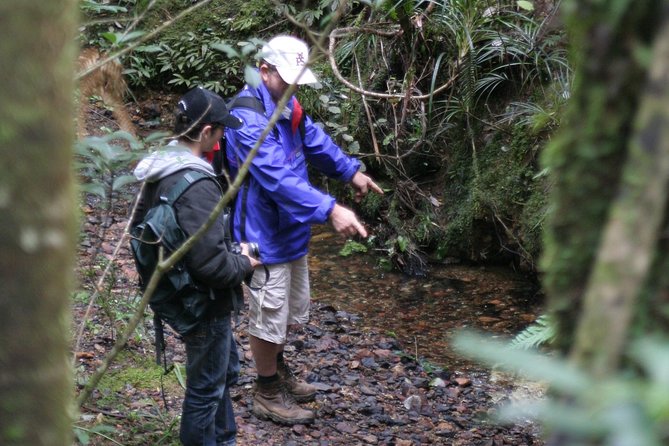
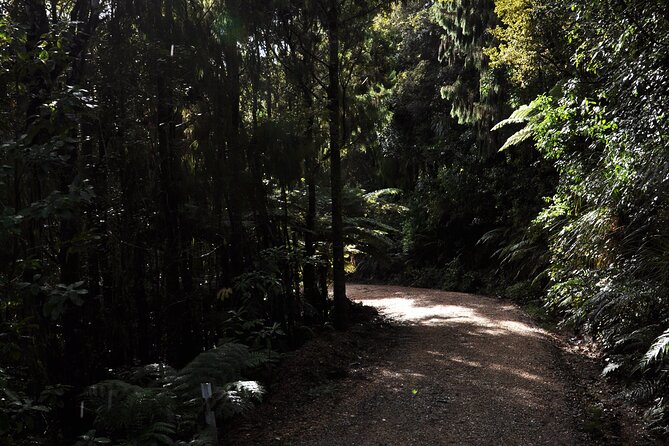
The route follows the Puketi River and passes cascading waterfalls. After rain, the water can be especially forceful, and wet weather may make the forest feel more dramatic. It can also make the track more demanding, so sensible footwear is more important than stylish footwear here.
The path rises and falls over steep sections. The half-day walk calls for medium fitness, while the full-day option requires a stronger level of fitness. You should be comfortable walking for several hours on uneven ground and managing uphill and downhill stretches.
This is a good match for someone who likes walking with a purpose. The effort is rewarded with changing views, larger trees, water, and the chance to pause for an explanation instead of simply following a marked loop. It is less suitable if you want a gentle stroll or if steep ground causes trouble.
Rain does not automatically ruin the experience. One outing took place in pouring rain, and ponchos were provided. Wet weather can make the forest feel more alive, with fuller waterfalls and a stronger sense of being inside a subtropical preserve. Still, rain can affect footing, visibility, and comfort, so bring the recommended day pack, hat, sunscreen, and good walking shoes.
What the half-day walk gives you
The half-day option lasts about three hours, though the supplied timing also refers to a five-hour nature trail itinerary. Confirm the exact length of your selected departure when booking, especially if your day has other plans. The shorter walk is the sensible choice if you want a strong taste of Puketi without committing most of the day.
You follow the forest paths, stop at notable kauri, and listen for native birds. The guide introduces subtropical plants and explains the forest’s ecology. You may hear about the reintroduced kokako, a rare native bird, and learn why protecting habitat matters for species that cannot thrive in ordinary farmland or developed areas.
Morning tea or afternoon tea is included with the day walk, depending on the departure you choose. Bottled water is also included. Food is a pleasant break, but do not mistake it for a full meal. If you need specific dietary arrangements, provide those details at booking, especially for the full-day option.
The shorter walk can feel like good value for people who care about interpretation and nature. It feels less convincing if you only want to see kauri and waterfalls, since independent forest walks may cost less. The guide is the part that changes the experience from a walk into a lesson in plants, birds, conservation, and local stories.
A few more North Island trips worth weighing up
- Hobbiton Movie Set: Guided Tour Ticket
★ 4.9 · 8,167 reviews - Waitomo: Glowworm Caves Guided Tour by Boat
★ 4.5 · 4,908 reviews - Hobbiton & Waitomo Caves Guided Day Trip from Auckland incl lunch
★ 5.0 · 2,677 reviews - Te Anau: Glowworm Caves Guided Tour
★ 4.6 · 2,611 reviews
The full-day route and lunch stop
The longer walk is aimed at fit hikers. It lasts about six hours according to the tour details, while one itinerary reference gives a five-hour trail duration. Treat the timing as approximate and ask for the exact schedule before you commit. A longer outing means more time in the forest, but also more time exposed to uneven ground and changing weather.
Lunch is included with the full-day option, along with tea and bottled water. That makes the longer choice easier to manage, though you should still carry a day pack. The full-day walk is the better fit if you want a slower pace, more time for questions, and a fuller look at how the forest changes from younger growth to mature and established areas.
The extra hours may also improve your chances of noticing wildlife, though no bird or kiwi sighting can be promised. The kokako is rare, and forest wildlife follows its own schedule. A good guide helps you understand what to listen for and where to look, which is more useful than expecting a guaranteed animal encounter.
The tradeoff is simple. You get more forest and more interpretation, but you need more stamina. I would choose this option only if you already enjoy long walks and are comfortable with steep sections.
Choosing the nighttime forest walk
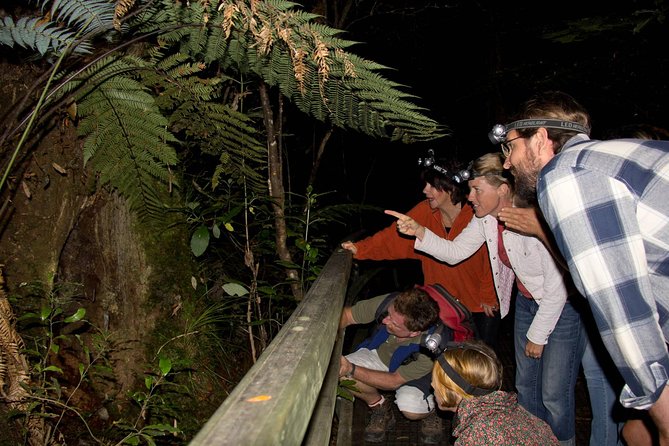
The night walk changes the focus completely. You use a provided headlamp and move through the forest after dark, listening for bird calls that begin after sunset. Bats may fly overhead while feeding on insects, and the guide may help you look for New Zealand’s famous nocturnal kiwi.
The night route offers a different kind of attention. In daylight, you tend to look at trunks, leaves, and distant views. After dark, sound becomes more important. You may notice calls, movement, and the feeling of the forest waking up in another way.
Kiwi sightings are not guaranteed, and the same applies to bats and other wildlife. That uncertainty is part of any genuine night nature walk. You should choose this option because you like patient observation, not because you expect a wildlife show on demand.
Departure times vary for the night walk, so confirm the time when you book. The headlamp is provided, but wear practical clothing and shoes suitable for a forest path. The supplied information does not promise meals with the night walk, so check exactly what your chosen option includes.
The guide can make or break the walk
The strongest part of this experience is the guide. Ian is praised for his enthusiasm and his strong interest in environmental protection. His approach appears to go well beyond naming trees. He explains the forest’s inhabitants, the work required to protect them, and the way the ecosystem has developed.
That enthusiasm matters in a place where many plants can look alike at first glance. A guide who enjoys the subject can turn a quiet patch of forest into a lesson about native species, introduced threats, bird recovery, and the links between trees, water, and wildlife.
Ian is also noted for making the outing enjoyable as well as informative. Another guide is described as friendly and accommodating, and that personal quality is valuable on a physically demanding route. A good guide can help you judge the pace, explain a steep section, and make room for questions without making the walk feel like a classroom.
The experience is not designed as a silent self-guided hike. If you prefer to walk alone and set your own pace, the close commentary may feel too much. If you want to understand what you are seeing, the guide is the central reason to book.
Group size, fitness, and what to pack
Groups are limited to six people. That is unusually personal compared with a large coach outing and helps explain part of the price. It also means the pace and mood can depend on the other people in your group, although a small party is usually easier to manage.
The minimum age is five, but age alone does not tell you if the route is suitable. The half-day walk calls for moderate fitness, and the full-day walk needs a higher level. Children should be able to manage uneven paths and steep sections without being carried for long periods.
Bring:
- Good walking shoes
- Sunscreen
- A hat
- A day pack
Ponchos were provided during one very wet outing, which is reassuring, but you should still dress for changeable conditions. The tour provides bottled water, and food depends on the option you select.
There is no stated hotel transfer, so you need to reach Ōkaihau independently. Build in enough time to arrive at 476 Puketi Road, and remember that the tour ends at the same meeting point.
Is $83.78 good value?
At $83.78 per person, this is not the cheapest way to enter a forest. One fair criticism is that you are paying a substantial amount for a walking experience without a canopy platform or major built attraction.
The value improves if you want a small group, an informed guide, tea, and, on the full-day option, lunch. You are also paying for local interpretation: Māori stories, colonial history, plant knowledge, bird awareness, and an explanation of conservation work. Those details are difficult to gain from simply following a trail sign.
The rating is 4.8 from 20 ratings, with 90 percent recommending the experience. That fits the pattern of the strongest praise: the guide, the forest itself, and the personal feel of the outing. The lower opinion comes from the cost compared with other New Zealand activities, not from a claim that Puketi is uninteresting.
I would compare the price with what you want from the day. If you want a quick view of giant kauri, look for a simpler walk. If you want to understand the forest and spend several hours with a guide who can interpret what you are seeing, the cost is easier to defend.
Who should book this Puketi walk?
I would recommend it to fit hikers, keen bird watchers, nature-minded families with children aged five or older, and anyone staying near the Bay of Islands who wants something quieter than a large coach tour. The full-day option suits people who enjoy a proper walk and do not mind giving the forest most of the day.
The half-day choice is better if you want a manageable introduction or need time for another activity. The night walk is for people who enjoy listening, waiting, and accepting that wildlife sightings are never certain.
I would hesitate to recommend it to anyone seeking a flat, easy path, a guaranteed kiwi sighting, or a dramatic treetop structure. The route is a real forest hike, and the scenery is the reward rather than a collection of built attractions.
Free cancellation is available up to 24 hours before the start time. Changes or cancellations made inside that window are not accepted for a refund, and the activity requires a minimum number of participants. Those rules are worth noting before you build the walk into a tight schedule.
Should you book it?
Book this experience if you want a close look at Puketi’s living forest, not just a photo beside a big tree. The limited group size, strong guide feedback, waterfalls, native species, and choice of day or night routes give it real substance.
Choose the half-day walk for a focused introduction, the full-day walk for a serious hike with lunch, and the nighttime route for a quieter wildlife search. At $83.78, it is best value when you care about the stories and ecology as much as the scenery.
FAQ
Where does the Puketi Rainforest walk start?
The walk starts at 476 Puketi Road, Ōkaihau 0475, New Zealand. You arrange your own transport because hotel pickup and drop-off are not included.
How long does the experience last?
The half-day walk takes about three hours. The full-day option is described as about six hours, while an itinerary reference gives a duration of roughly five hours. Confirm the exact timing for your selected option when booking.
Is the walk physically difficult?
The half-day route requires a moderate level of fitness and includes steep sections. The full-day walk requires a higher level of fitness. Good walking shoes are recommended.
What food and drinks are included?
Bottled water is included. Morning or afternoon tea is included with the day tour options, and lunch is included if you choose the full-day walk. Dietary requirements should be provided when booking the full-day option.
Is a night walk available?
Yes. The nighttime option includes a provided headlamp. You may listen for nighttime bird calls, watch for bats, and look for kiwi, although wildlife sightings are not guaranteed. Night departure times vary and should be confirmed when booking.
How many people can join the walk?
The group is limited to a maximum of six people. The minimum age is five years.
Just added around North Island
- Glowworm Kayak Adventure on the Waikato River★ 5.0 · 5 reviews
- Bullswool Heritage Farm General Entry Ticket★ 5.0 · 6 reviews
- Wool Sheep Farm Experience with Handmade Wool Hat in New Zealand★ 5.0 · 9 reviews
- Private tour to Cape Kidnappers Gannet Colony★ 5.0 · 10 reviews
- Cathedral Cove Dive & Snorkel- Marine Reserve specialised trips★ 5.0 · 11 reviews
- Leigh: Goat Island Clear Kayak Rental★ 4.0 · 16 reviews
- Fine Wine Tour in Napier, New Zealand★ 5.0 · 17 reviews
- River Valley Stables – Burn The Breeze, Half Day Horse Ride For Riders★ 5.0 · 19 reviews
Shore Excursions, compared.
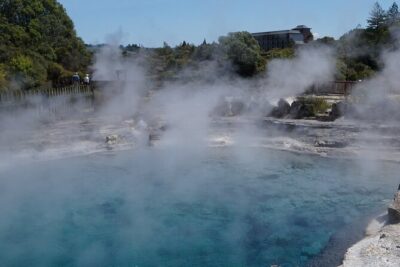
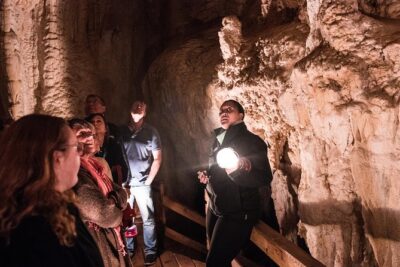
Bay of Islands Glow Worm Caves & Scenic Shore Excursion
Read our review →
6.5 hour Small-Group Rotorua Naturally Shore Excursion – Tauranga
Read our review →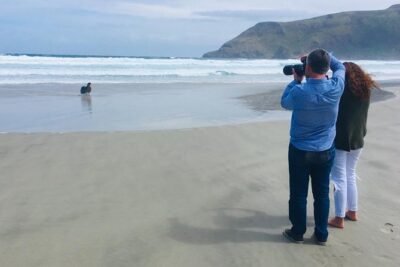
Dunedin Shore Excursion: Small-Group Tour of Dunedin and the Otago Peninsula
Read our review →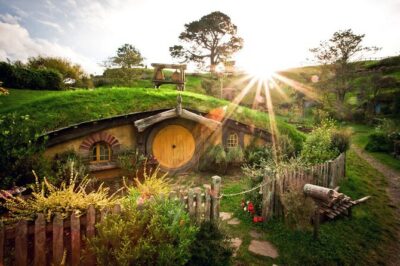
Hobbiton Movie Set Shore Excursion from Tauranga (6 Hours)
Read our review →
Akaroa Shore Excursion: Banks Peninsula and Christchurch City Sights Tour
Read our review →
Lyttelton Shore Excursion: Christchurch City Sights
Read our review →
Shore Excursion: V8 Trike, Peninsula and City Tour
Read our review →Browse the lists this tour appears in