
Reviewed · TANDEM SKYDIVING
Skydive Mt. Cook – 45+ Seconds of Freefall from 13,000ft
The best view may come with a parachute.
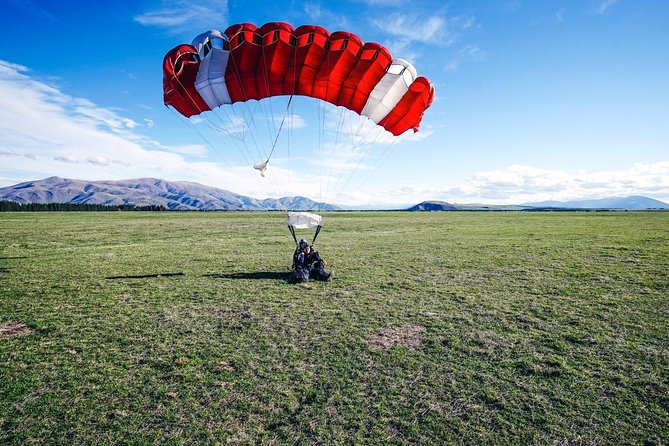
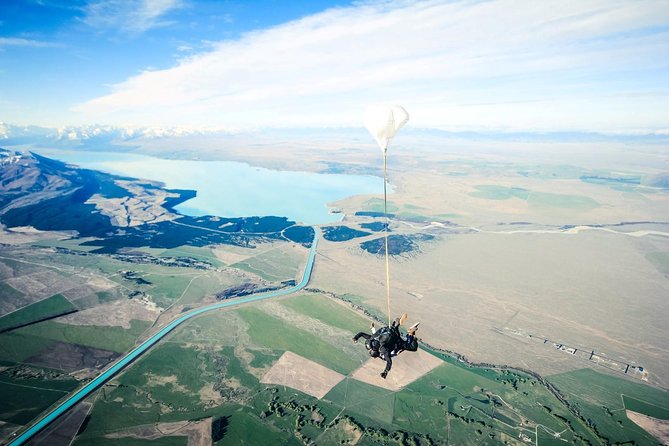
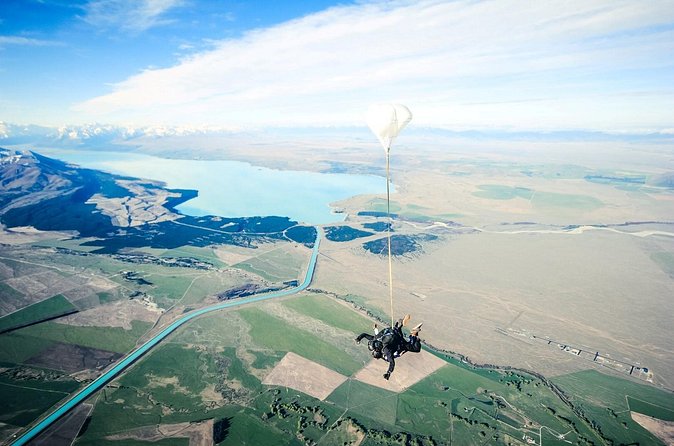
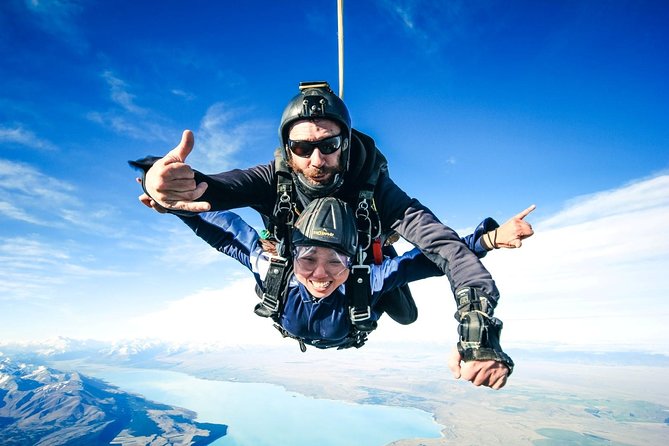
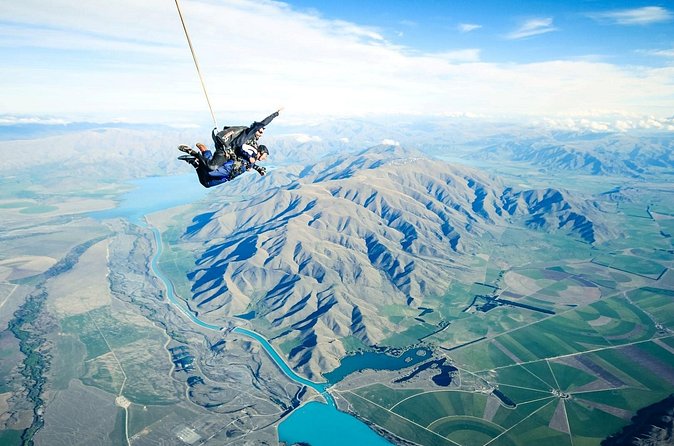
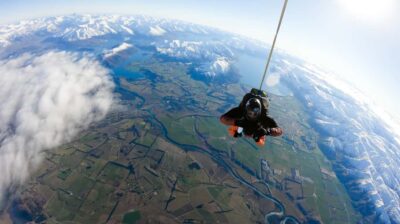
This tandem freefall from 13,000 feet gives you more than 45 seconds in the air above Pukaki, with snow-capped mountains, glaciers, lakes, and Aoraki/Mt Cook National Park spread below. I especially like the setting and the small group limit of nine people, which should make the experience feel more personal than a large commercial operation. The main drawback is the weather rule: poor conditions can delay or cancel your jump, and your booking is otherwise non-refundable.
You meet at Pukaki Airport in the small settlement of Pukaki, near Twizel, and return to the same point at the end. The entire outing takes about two hours, but the actual time in freefall is short. You are paying for the setting, the safety process, the aircraft operation, and the rare chance to see the central South Island from above.
In This Review
- Key Points Before You Book
- Why Pukaki Is Such a Good Launch Point
- What the Two-Hour Visit Actually Involves
- The Climb to 13,000 Feet
- The View Over Aoraki/Mt Cook National Park
- Safety and the Team’s Approach
- Price: Is $266.23 Good Value?
- Who Will Get the Most From This Experience?
- Practical Ways to Plan Your Day
- The Best Reason to Book, and the Best Reason to Skip It
- Should You Book Skydive Mt Cook?
- FAQ
- Where does the experience begin and end?
- How long does the activity take?
- How high is the jump?
- How much does the experience cost?
- Is there a weight limit?
- Are there extra charges for higher weights?
- What happens if bad weather cancels the activity?
Key Points Before You Book
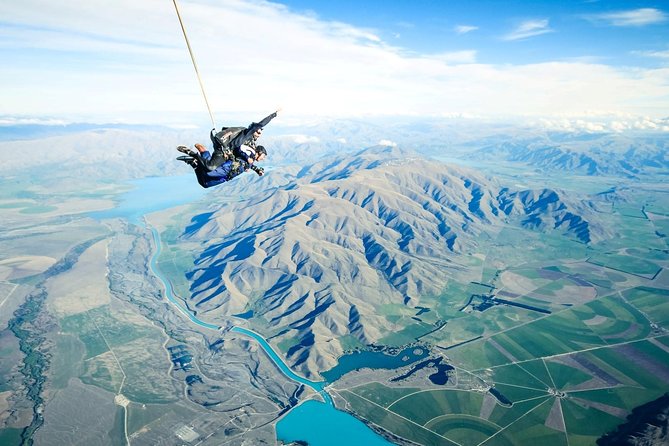
- 13,000 feet means more than 45 seconds of freefall, giving you time to take in the mountains before the parachute opens.
- Aoraki/Mt Cook National Park forms the backdrop, with glaciers, lakes, and snow-covered peaks visible from the air.
- The group is capped at nine people, a useful detail if you prefer a smaller operation.
- Safety comes before the schedule, so flights may be delayed or postponed when conditions are not suitable.
- Weight rules matter: people from 100 to 115 kilograms need an assessment and harness fitting, with an added fee.
- The booking costs $266.23 per person, and the price is strongest for people who value scenery as much as the jump itself.
Why Pukaki Is Such a Good Launch Point
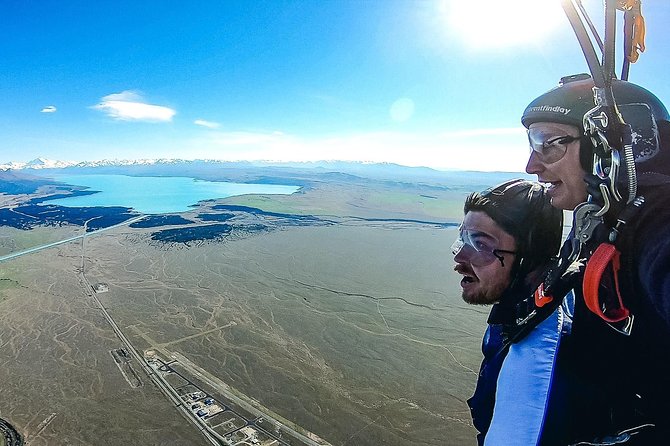
Pukaki is not a city attraction dressed up as an adventure. It is an airfield in the open country of the South Island, close to Twizel and within reach of Aoraki/Mt Cook National Park. That location gives the jump its character.
From the ground, the area is known for wide views, clear lakes, and large mountain walls. From the aircraft, those features become part of one broad picture. You are not simply looking down at roads and rooftops. You are looking across a part of New Zealand where snow, ice, water, and bare alpine rock dominate the view.
The meeting point is Skydive Mount Cook, 2 Swallow Drive, Pukaki Airport, Pukaki, Twizel 7999. The activity finishes there too, which makes the practical side easy. You do not need to arrange a separate return transfer after the jump.
That said, Pukaki Airport is a purpose-built meeting point, not a sightseeing stop with a full range of facilities. Plan your day around the activity rather than expecting a long list of things to do at the airfield itself.
More skydiving:
- Skydive Mt. Cook – 70+ Seconds of Freefall from 16,500ft
★ 5.0 · 5 reviews - Skydive Mt. Cook – 20+ Seconds of Freefall from 10,000ft
★ 5.0 · 5 reviews - Skydive Auckland
★ 5.0 · 1,516 reviews
What the Two-Hour Visit Actually Involves
The stated duration is about two hours. That includes the arrival process, preparation, waiting time, aircraft operation, and return to the airfield. The freefall itself lasts more than 45 seconds from 13,000 feet, but the whole visit is much longer because tandem jumping requires careful preparation.
I would keep the rest of your schedule flexible. Even with a planned start time, weather can affect operations. The team puts safety ahead of keeping to the timetable, so a delay is not a sign that the operation is poorly organized. In this part of New Zealand, cloud and wind can change the plan.
The group limit is nine people. That does not mean every person will be attached to the same instructor or take off at exactly the same moment, but it does keep the total operation relatively small. A smaller group can make check-in and preparation less hectic, especially if you are nervous.
You should also expect the experience to return to the same airport. That is useful if you are driving through the Mackenzie Basin and want to continue your trip afterward. Still, do not schedule a major timed activity immediately after this one. Weather delays are possible, and the operation will not rush a flight simply to protect your afternoon plans.
The Climb to 13,000 Feet
The central selling point is the altitude. From 13,000 feet, the jump offers more than a quick drop from a low aircraft. You receive over 45 seconds of freefall, enough time for the first shock to settle and for the view to become part of the experience.
At first, your attention will probably be on the aircraft, the height, and the fact that you are about to leave it. Then the visual scale begins to make sense. Snow-covered mountains, glaciers, and lakes sit below and around you, with Aoraki/Mt Cook National Park providing the main setting.
This is where the price begins to make sense. You are not choosing between a basic amusement ride and a luxury one. You are choosing between a standard tandem jump in an ordinary setting and a jump over one of New Zealand’s most famous alpine regions.
The altitude also creates a clear tradeoff. A longer freefall is exciting, but it can feel intense if you are already uneasy about heights. The team’s approach, as described by the available feedback, is to take nervous jumpers seriously and help them feel calm throughout the process. That human side matters. Technical safety is essential, but a calm instructor can make the difference between enjoying the view and spending the entire jump fighting panic.
The View Over Aoraki/Mt Cook National Park
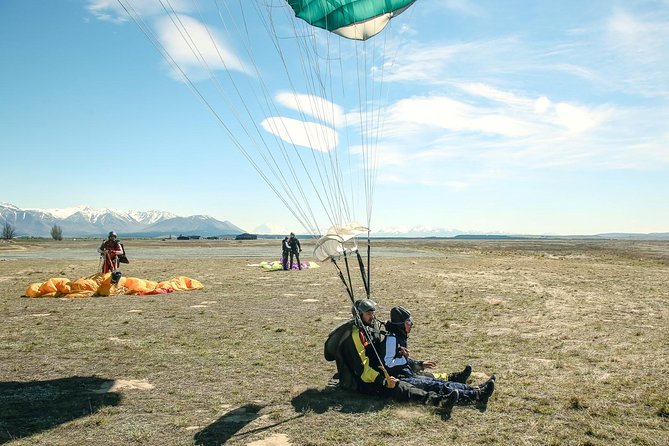
The scenery is the reason to choose this particular jump. Aoraki/Mt Cook National Park is not presented as a distant backdrop. It is the visual focus of the flight, joined by glaciers, lakes, and the high peaks of the Southern Alps.
Mountain weather can make the view change from one flight to the next. On a clear day, you might see a broad sweep of snow-capped summits and glacial valleys. If cloud moves in, the view may be more limited. That uncertainty is part of the reason weather decisions matter so much here.
I like that the experience is tied to a real place rather than a generic thrill. The jump gives you a different way to understand the South Island. On the ground, the mountains can feel enormous and distant. From above, the lakes show their shape, the valleys connect, and the scale of the national park becomes easier to grasp.
You should keep expectations sensible. The description promises the key elements of the region, but it cannot guarantee a perfect view on your particular flight. If you are booking mainly for a clear sight of Aoraki/Mt Cook, allow spare time in your wider itinerary in case the weather forces a change.
A few more Mount Cook trips worth weighing up
- Mount Cook: Scenic Helicopter Flight with Alpine Landing
★ 4.8 · 442 reviews - Mt Cook Small Group Scenic Day Tour from Queenstown
★ 5.0 · 407 reviews - Mt Cook & Tasman Glacier lookout Small Group Tour from Queenstown
★ 5.0 · 296 reviews - Mount Cook: Ski Plane and Helicopter Glacier Combo Flight
★ 4.6 · 271 reviews
Safety and the Team’s Approach
The strongest praise for this experience concerns the staff. The team is described as a very good group of people who take safety seriously, even when that means delaying or postponing a flight. They also work to settle nervous jumpers from the start of the process through to the jump itself.
That balance is exactly what I want from a tandem operation. You do not need false bravado or pressure. You need clear safety decisions and people who understand that excitement and fear often arrive together.
A delay can be frustrating, particularly if you have driven a long way to Pukaki. Still, a weather-related delay is the responsible choice. You should treat the scheduled time as a target rather than a guarantee, especially if mountain conditions are unsettled.
The team’s calm manner is also valuable for first-timers. Most people booking this activity will not have previous experience with a tandem freefall. You are relying on the instructor for the equipment, the jump procedure, and the parachute operation. A group that communicates well can make the whole process feel manageable.
Price: Is $266.23 Good Value?
At $266.23 per person, this is a substantial purchase, but the value depends on what you want from the day. If you are looking for the cheapest possible tandem jump, the price may give you pause. If you want a jump in a major alpine setting, the cost is easier to justify.
The package includes the central experience: the aircraft ascent, more than 45 seconds of freefall from 13,000 feet, and the return under the parachute to the airfield. The location adds much of the value. You are paying for access to the sky above Pukaki and the mountain country around Aoraki/Mt Cook, not just for the sensation of falling.
I would consider it good value for a major New Zealand trip, a special birthday, or a once-only South Island splurge. It is less compelling if you are already uncomfortable with the cost or if the scenery is secondary to the jump itself.
There are extra charges for some participants. Anyone weighing 100 kilograms or more pays a surcharge: $40 for 100 to 110 kilograms, and $60 for 111 to 115 kilograms. People in the 100 to 115 kilogram range may be able to jump, but the tandem master must assess them and check the harness fit on the day.
That rule is worth taking seriously. Do not assume that paying for the booking guarantees participation if you are near the limit. Ask about your situation before committing, and understand that the final decision depends on the assessment and equipment fit.
Who Will Get the Most From This Experience?
This activity suits you if you want a major view to go with a major thrill. It is especially appealing if you are driving through the South Island and already plan to visit the Mackenzie Basin or Aoraki/Mt Cook area.
It also suits first-time jumpers who want a careful, supportive team. The available feedback places unusual emphasis on safety and on helping nervous people feel at ease. That is a strong sign for anyone who wants the experience but is not naturally fearless.
You may want to think twice if you dislike uncertain schedules. Weather can affect the flight, and the cancellation terms are strict. The experience is non-refundable and cannot be changed for any reason once booked. If poor weather cancels the activity, you will be offered another date or a full refund, but other changes or cancellations do not qualify for a refund.
The activity is suitable for most participants, and service animals are allowed. It is also near public transportation, though the meeting point is at Pukaki Airport rather than in a central town. The available information does not promise hotel pickup, so you should plan to reach the airport on your own.
Practical Ways to Plan Your Day
Book this as the main event of the day. The advertised duration is about two hours, but weather can affect the schedule, and a mountain flight should not be squeezed between fixed tours or transport connections.
If your trip has a fixed route, leave room to move the jump to another date if the weather does not cooperate. This is particularly important if you have only one brief window near Pukaki.
Think about your weight before booking. The 100 kilogram threshold triggers a surcharge, and the upper range requires both assessment and a harness fitting. If you are close to 115 kilograms, contact the operator before paying rather than relying on a same-day decision.
You receive confirmation at the time of booking, and the ticket is mobile, so you do not need a printed voucher. Keep your phone accessible, but remember that the most important part of the plan is still the weather and the team’s go-ahead.
The operation has a maximum of nine participants. That limit is helpful for people who prefer a smaller group, though it does not remove the need to wait while the team handles each person safely.
The Best Reason to Book, and the Best Reason to Skip It
The best reason to book is the combination of 13,000-foot altitude and South Island mountain scenery. Many adventure activities offer excitement. Fewer put you above glaciers, lakes, snow-capped peaks, and Aoraki/Mt Cook National Park in one view.
The best reason to skip it is the strict booking policy and weather uncertainty. You need to accept that the appointment may move, and you need to be comfortable losing the payment if you cancel for another reason. The $266.23 price also makes this a choice to plan carefully, not a casual add-on.
Should You Book Skydive Mt Cook?
You should book this experience if you want a high-impact South Island memory and are willing to build flexibility into your schedule. The setting is the star, while the small group and safety-first team make the operation more appealing for first-timers and nervous jumpers.
I would pass if you need a guaranteed timetable, dislike heights, or cannot accept the non-refundable terms. For everyone else, this is a strong choice for seeing the Aoraki/Mt Cook region from a viewpoint no road or trail can provide. Just leave your afternoon open, check the weight rules, and let the mountain weather have the final word.
FAQ
Where does the experience begin and end?
It begins and ends at Skydive Mount Cook, 2 Swallow Drive, Pukaki Airport, Pukaki, Twizel 7999, New Zealand.
How long does the activity take?
The full activity lasts approximately two hours.
How high is the jump?
The jump takes place from 13,000 feet and includes more than 45 seconds of freefall.
How much does the experience cost?
The listed price is $266.23 per person.
Is there a weight limit?
Yes. People weighing between 100 and 115 kilograms may be able to jump after assessment by a tandem master and a harness fitting on the day.
Are there extra charges for higher weights?
Yes. The surcharge is $40 for people weighing 100 to 110 kilograms and $60 for people weighing 111 to 115 kilograms.
What happens if bad weather cancels the activity?
You will be offered a different date or a full refund if poor weather causes the cancellation. The booking is otherwise non-refundable and cannot be changed for any reason.
Just added around Mount Cook
- Skydive Mt. Cook – 70+ Seconds of Freefall from 16,500ft★ 5.0 · 5 reviews
- Skydive Mt. Cook – 20+ Seconds of Freefall from 10,000ft★ 5.0 · 5 reviews
- Mount Cook Scenic 35 Minute Helicopter Flight★ 5.0 · 6 reviews
- Mt Cook: 55-Minute Scenic Flight in Helicopter or Ski Plane★ 4.1 · 6 reviews
- Mount Cook: 50-Minute Aoraki Scenic Helicopter Flight★ 4.7 · 10 reviews
- Mt Cook & Lake Tekapo 2-Day Small Group Tour from Queenstown★ 5.0 · 15 reviews
- Mt Cook to Christchurch One-Way Small Group Tour via Lake Tekapo★ 5.0 · 16 reviews
- Mount Cook Alpine Explorer Helicopter Flight with Alpine Landing★ 4.0 · 22 reviews
Tandem Skydiving, compared.
15,000ft Tandem Skydive in Tauranga – Bay of Plenty
Read our review →
Browse the lists this tour appears in