
Reviewed · 2-HOUR EXPERIENCES
Wanaka: 2-Hour Beginner Waterfall Cable Climb
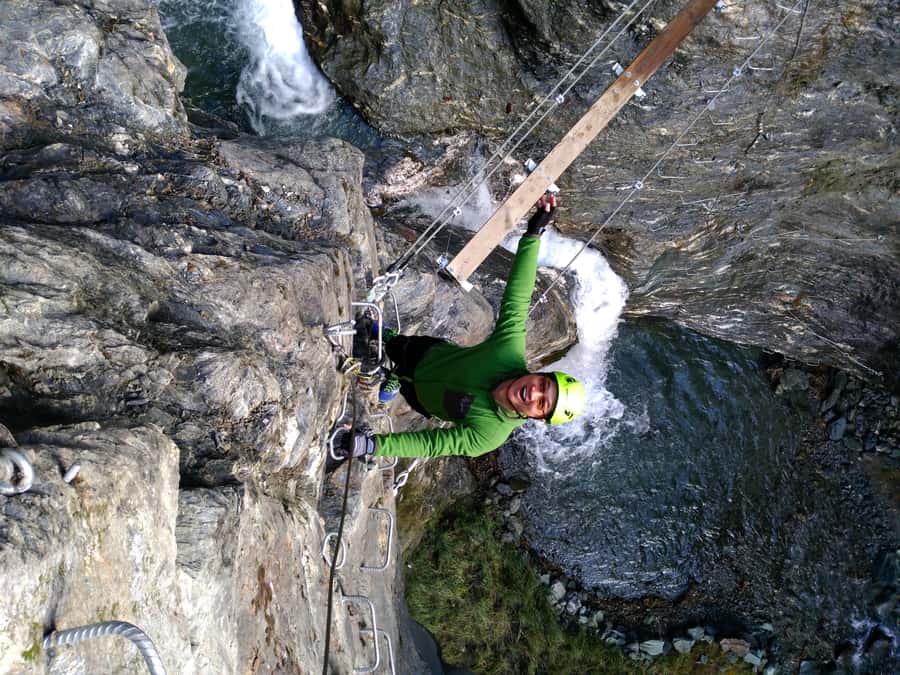
Climb a waterfall, not a staircase. This beginner via ferrata near Wanaka combines iron rungs, cables, ladders, and suspension bridges with the rush of moving beside falling water. I like the careful practice climb and the small groups, which make a nerve-rattling activity feel manageable. I also like the chance to look across Lake Wanaka and the surrounding mountains from a working farm, rather than from a standard sightseeing platform. The main drawback is simple: you need a moderate level of fitness, full body mobility, and a reasonable head for heights.
The route is short enough to fit neatly into a busy Wanaka day, yet it feels like a real outing rather than a quick amusement. Guides such as Rocky, Luke, Maddie, Sarah, Jasmine, and Connor have earned warm praise for calm instruction and encouragement. Still, remember that the advertised two-hour climb sits inside a three-hour experience, and some of that time involves gearing up, training, walking, and descending.
In This Review
- Key points to know before you book
- Why this waterfall climb feels different from ordinary climbing
- The drive from Wanaka to Twin Falls
- Gearing up and learning the safety system
- The walk to the cliffs and the first waterfall sections
- Suspension bridges, ladders, and the view from above
- The return route and the possible level-two decision
- How hard is the beginner route?
- Is $118 good value?
- What to pack and what to leave behind
- Who will get the most from this experience?
- Should you book the Twin Falls climb?
- FAQ
- Where does the waterfall cable climb take place?
- How do I find the meeting point?
- How long does the experience last?
- Do I need climbing experience?
- What is included in the price?
- What should I bring?
- What are the age, height, and weight requirements?
Key points to know before you book
- Twin Falls is only about 20 minutes from Wanaka: You drive west beside the lake toward Treble Cone and Mt. Aspiring National Park.
- The route uses fixed climbing aids: Steel cables, carabiners, iron rungs, pegs, ladders, and suspension bridges let beginners move across rock.
- You get a real practice climb first: The safety briefing and introductory route are not a rushed formality.
- Groups stay small: The usual arrangement is no more than five people per guide.
- Level one may leave you wanting more: Some participants choose to continue to a harder second level after finishing the beginner route.
- Plan for height, water, and weather: Wear hiking shoes, bring a water bottle and daypack, and avoid open-toed footwear.
Why this waterfall climb feels different from ordinary climbing
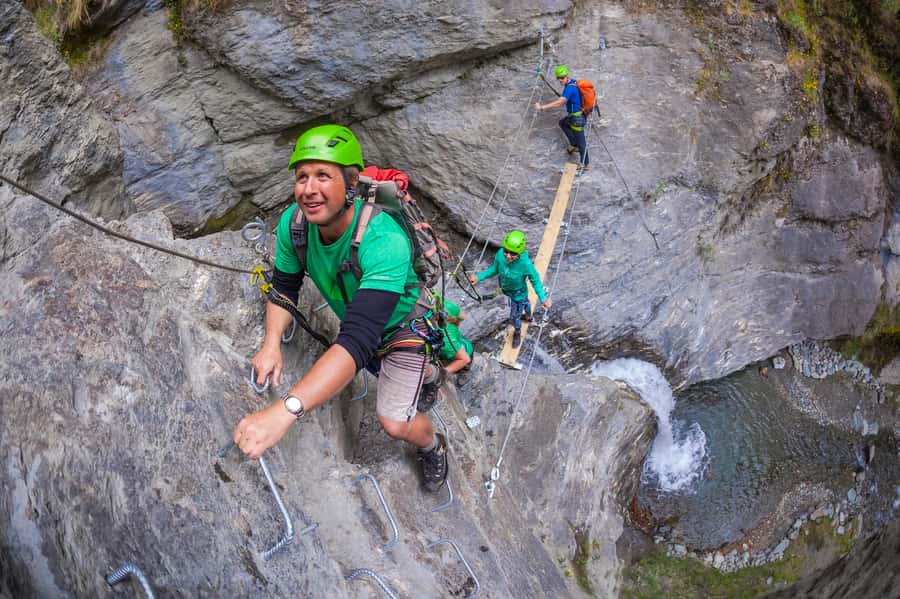
Via ferrata means iron way, and that is a good description of this activity. You are not free climbing bare rock. Instead, you clip your safety system to a fixed cable and use metal rungs, pegs, ladders, and bridges to move along a prepared route.
That setup opens up steep rock that would otherwise require more technical climbing skills. You still need to pull, step, balance, and make decisions with your feet, but you are not expected to arrive knowing how to build anchors or belay another person.
The setting gives this outing its character. Twin Falls is on a working farm, and the route takes you into the waterfall area, past smaller falls and pools, and up the cliffs above the water. You get the physical effort of a climb with the changing scenery of a hike.
I especially like the contrast between the close-up and wide-angle views. One moment you are concentrating on the next rung beside the rushing water. Soon after, you can look over farmland toward the mountain ranges and Lake Wanaka. That change in scale keeps the activity from feeling like a simple obstacle course.
A few more Wanaka trips worth weighing up
- Stevensons Island 2-Hour Cruise and Nature Walk
★ 4.6 · 160 reviews - Wildwire Wanaka- Level 1 (2 Hours)
★ 5.0 · 112 reviews - Milford Sound: 2-Hour Small Boat Scenic Cruise
★ 4.8 · 2,561 reviews
The drive from Wanaka to Twin Falls
From central Wanaka, follow Wanaka-Mt Aspiring Road west along the lake. Continue toward Treble Cone Ski Field and Mt. Aspiring National Park, then watch for a cattle stop after roughly 20 minutes.
The meeting point is easy to miss if you are driving too quickly. Pull left immediately after the cattle stop, in front of two large waterfalls. Look for the locked farm gate and the Wildwire sign. You meet the team at this gate, not in central Wanaka.
Arrive about 15 minutes early. That gives you time to find the gate, park, and get ready without starting the activity flustered. The setting is rural, so do not expect a busy attraction entrance with a large reception building.
The location also explains why a car is important. The supplied directions are written for self-driving, and no transport from Wanaka is included in the activity details. I would save the directions before leaving town and allow extra time for the approach, especially if you are unfamiliar with local roads.
Gearing up and learning the safety system
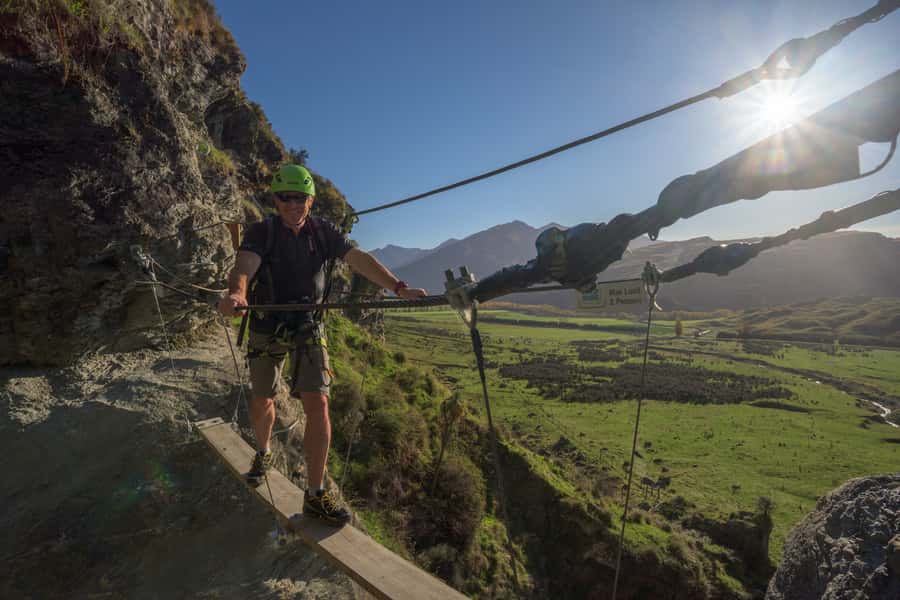
At the waterfall, you meet your English-speaking guide and receive a helmet, harness, and climbing equipment. The guide explains how the system works before you approach the main route.
The introductory training climb is one of the strongest parts of the experience. You first use a practice section to learn how to move your carabiners along the cable, place your feet on the rungs, and handle the basic rhythm of climbing.
This matters because the equipment can feel awkward for the first few minutes. A good practice session lets you focus on technique before height and moving water enter the picture. The guides also use this time to check that you understand the instructions and feel ready to continue.
Small groups help here. With no more than five people per guide, you should receive direct help rather than waiting in a long line while someone else works through a difficult section. Several guide names have been praised for steady support, including Rocky, Luke, Maddie, Tristan, Jasper, Jasmine, Georgia, Liam, Sarah, and Connor. Guide assignments can change, but the repeated pattern is clear: patient explanations are a major part of the experience.
If you are nervous about heights, say so early. You do not need climbing experience, and the training is designed for first-timers, but being honest with the guide gives them a better chance to support you.
The walk to the cliffs and the first waterfall sections
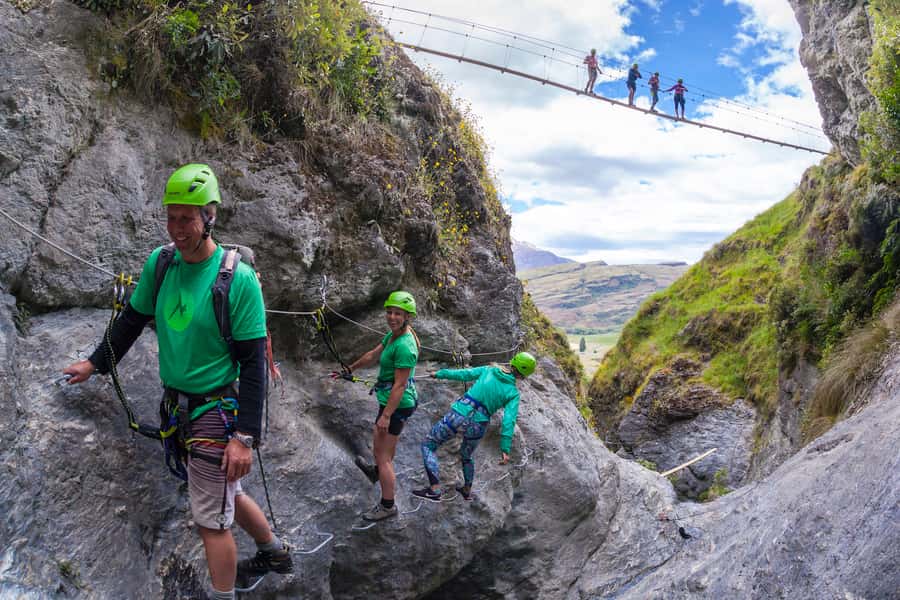
After the practice climb, you take a short walk to the cliffs. This transition is useful because it gives you time to settle into the harness and get used to the idea of the route ahead.
The beginner course includes both vertical and horizontal rock sections. You are not simply going straight up. The fixed cable guides you along the cliff, around rock features, and near pools and smaller waterfalls.
The water is part of the atmosphere, but this is not presented as a swimming activity. You should expect to move close to wet rock and flowing water while staying clipped to the route. The most memorable parts are likely to be the places where the climbing line carries you into the heart of the waterfall area, with pools below and falling water nearby.
That setting also creates the main practical concern. Weather-appropriate clothing matters. Conditions around a waterfall can feel damp or cool, while the climb itself can make you warm. Dress in layers that allow your arms and legs to move freely.
Good hiking shoes are required in practice, not just recommended for comfort. Open-toed shoes are not allowed. Your footwear needs to give you confidence on rock, ladders, and the approach walk.
A completely different kind of day out in Wanaka:
- Wildwire Wanaka- Level 2 (4 Hours)
★ 5.0 · 467 reviews - Bike the Wanaka and Hawea Trails
★ 5.0 · 346 reviews - Lake Wanaka Happy Hour Cruise
★ 4.6 · 313 reviews - Small Group Jet Boat Adventure on the Clutha River from Wanaka
★ 5.0 · 302 reviews
Suspension bridges, ladders, and the view from above
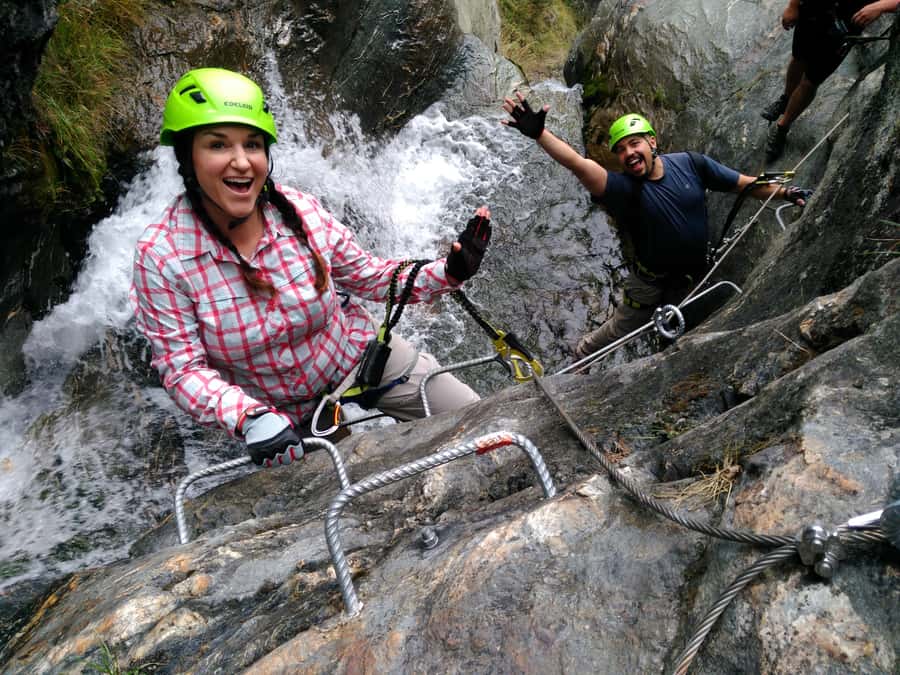
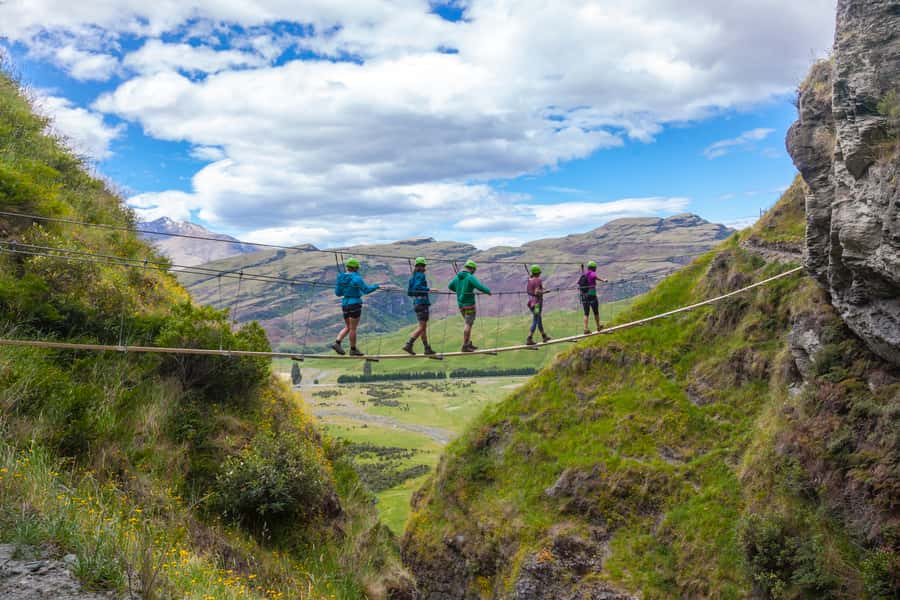
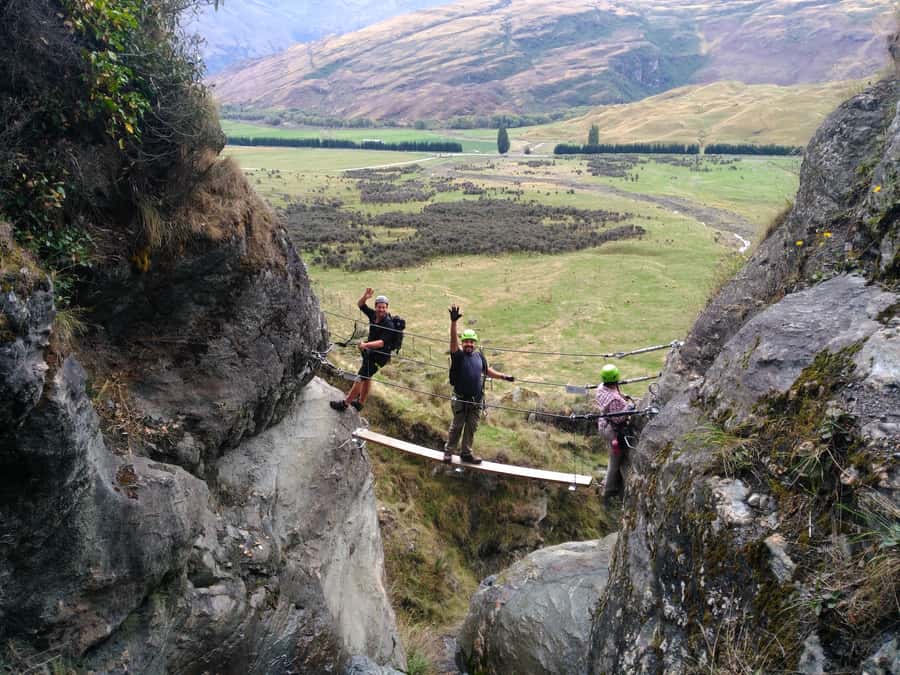
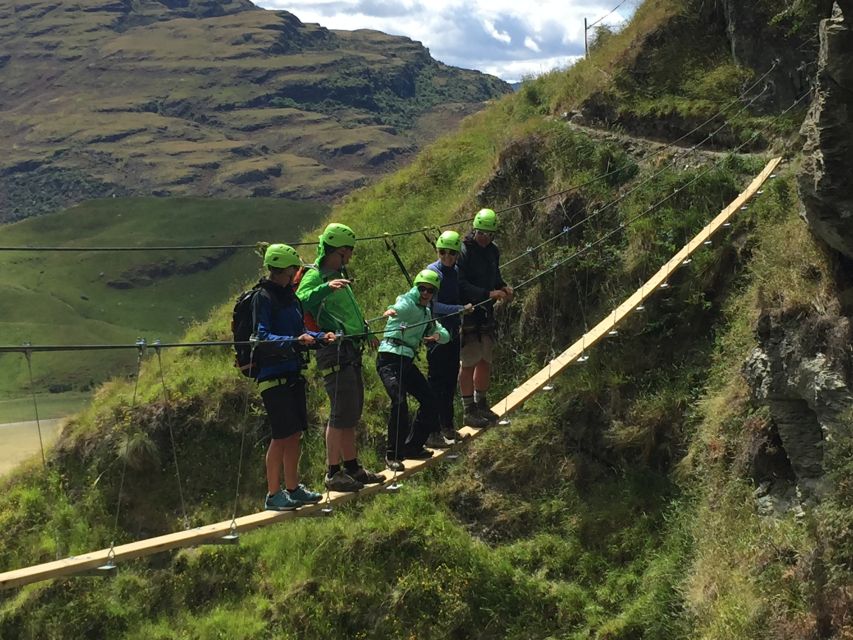
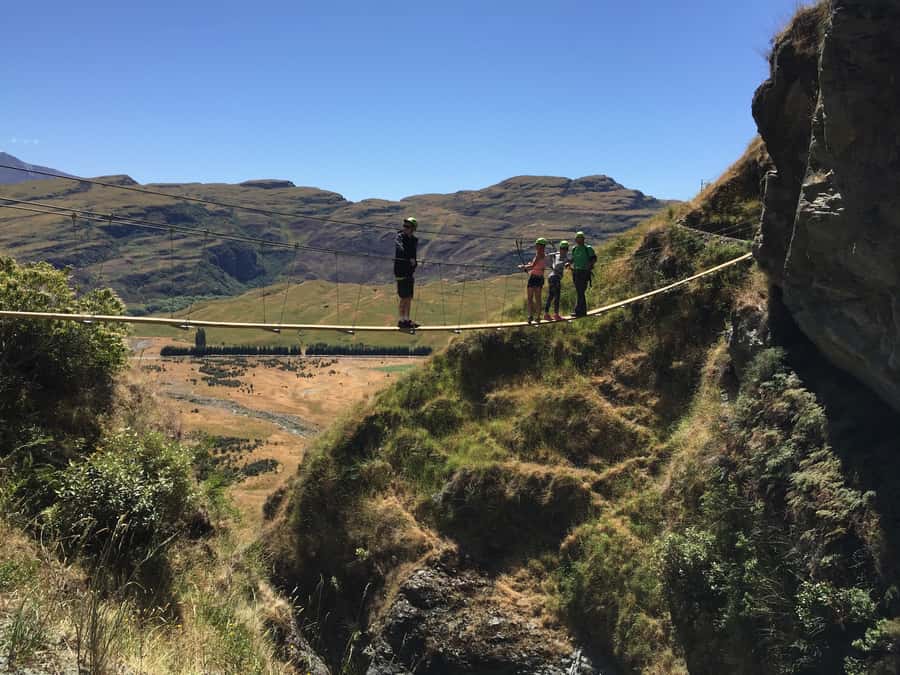
The suspension bridges are among the most unusual features of the route. They add movement under your feet, so the challenge is not only height. You also need to cross carefully while staying attached to the safety cable.
For some people, the bridges will be more exciting than the rock climbing. For others, they may be the point where the height becomes most obvious. You can expect the guide to explain how to cross and to remain available as you work through the section.
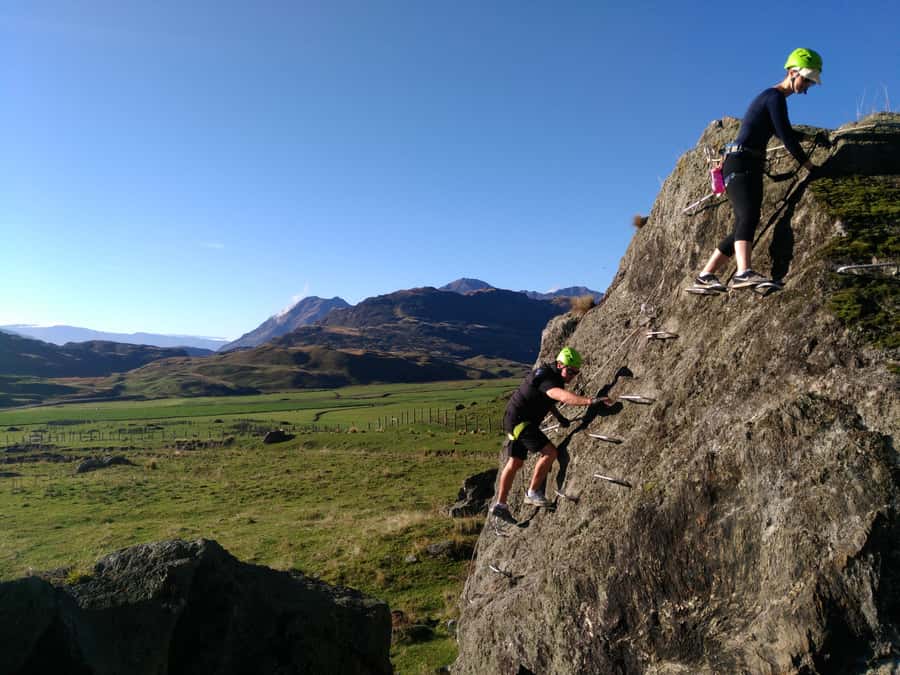
The ladders and iron pegs make the route possible for beginners, but they do not remove the physical work. You need to lift your legs, reach for handholds, and keep moving for about an hour on the main beginner trail. The challenge is real, yet it is broken into small actions rather than one long technical climb.
Height can feel different for different people. One person may find the route comfortably adventurous, while another may need frequent encouragement. The activity is not suitable for people with mobility impairments, and full body mobility is required.
The route ends at a high point with broad views over farmland, mountains, and Lake Wanaka. This pause gives the climb a proper payoff. You can catch your breath, eat a small snack, drink some water, and take in the view without having to rush straight into the descent.
The return route and the possible level-two decision
After the beginner route, the standard descent takes about 15 minutes back to the base of the waterfall. Unlike the ascent, the return is described as a walking route, so you are not expected to reverse every climbing move.
The descent is welcome after the effort of the route, but it does not mean the activity is effortless. Your legs and hands may feel tired, and careful footing still matters. Keep your daypack light and bring only what you need.
At the top of level one, some participants are offered the chance to continue to level two. This is not part of the stated beginner package, so you should treat it as an optional add-on rather than a guaranteed feature. Several people who made the choice found the second level more challenging but manageable, and some wished they had allowed enough time for it.
If you are unsure, level one gives you a useful test. You can see how your body handles the harness, exposure, rungs, and bridges before deciding. Do not feel pressured to continue. The beginner route is a complete activity on its own, and the guide can walk back down with anyone who chooses not to add another section.
The option is especially useful for mixed groups. A confident climber can sometimes continue while another person returns, subject to the guide’s arrangements and available time. Ask about the current setup before you start if your group has different comfort levels.
How hard is the beginner route?
You do not need prior climbing experience. The practice climb and guide support are built for newcomers, and the equipment provides a clear system to follow.
You do need moderate fitness. The activity combines hiking, walking, rock climbing, ladder work, and suspension bridge crossings. It is not a passive sightseeing tour with occasional steps.
The feedback from older participants is useful here. People in their 60s with regular walking habits and some yoga experience described the route as comfortable, while still calling it outside their usual comfort zone. That suggests you do not need to be an athlete, but you should be able to move steadily over uneven ground and climb for about an hour.
The minimum age is 10, with a minimum weight of 40 kilograms. Participants must also be at least 120 centimeters tall and weigh no more than 120 kilograms. Children under 10, people below the height or weight minimums, people with mobility impairments, and people over the stated maximum weight should not book.
A fear of heights is not an automatic dealbreaker. Several nervous beginners felt safe after the instruction and guide support. But you should not book this expecting a mild walk. You will be high on a cliff, and the height is part of the experience.
Is $118 good value?
At $118 per person, this is not a cheap add-on, but the price covers more than a short climb. You receive an expert guide, safety equipment, a briefing, a practice route, small snacks, and water. The small guide-to-participant ratio also matters because close support is central to making the activity work for beginners.
The advertised duration is three hours, while the actual climbing introduction is described as about 1.5 hours, with roughly one hour on the beginner waterfall route. The rest includes preparation, the practice climb, walking to the cliffs, the scenic pause, and the descent.
I see the value in the setting and the access. You are not paying only for exercise. You are getting a guided route into a waterfall area and onto cliffs that would not be suitable for an untrained visitor to tackle alone.
The price becomes easier to justify if you want one memorable active outing near Wanaka. It may feel less attractive if you are looking for a low-cost family walk or a quick photo stop. The optional level-two upgrade can also change the final cost, so ask about the current price before agreeing to continue.
Free cancellation up to 24 hours before the start and the reserve-now, pay-later option make booking less risky when weather or plans are uncertain. Still, check the conditions before you go, since the climb takes place outdoors and clothing needs to match the day.
What to pack and what to leave behind
Bring a water bottle, even though small drinks are included. The supplied information specifically lists water as something to bring and notes that a water bottle is not included.
Wear weather-appropriate clothing, hiking shoes, and a small daypack. Choose clothing that allows full movement and can handle a cool or damp setting. Avoid anything loose that could interfere with the harness.
You can leave items you do not need at the base of the waterfall. I would keep valuables to a minimum, since you will be focused on the route and your equipment.
A camera is allowed at your own risk. If you use a GoPro, attach it securely to yourself, or ask the guide about a helmet with a slide attachment. Do not carry a loose camera in a way that occupies your hands. You need both hands available for the cable system and rock.
Who will get the most from this experience?
I would recommend it to first-time climbers who want a controlled introduction to height and rock movement. It suits couples, families with children aged 10 and over who meet the physical requirements, and active visitors looking for something beyond Wanaka’s usual lake and mountain views.
It also works well for a group with mixed climbing experience because level one is approachable and level two may be available afterward. The route provides a clear stopping point, so you can make a decision based on how you feel rather than guessing in advance.
I would be cautious if you dislike exposure, struggle with uneven ground, or want a relaxed nature outing. The guides can calm nerves, but they cannot remove the height or the physical demands.
Should you book the Twin Falls climb?
Book it if you want a distinctive Wanaka adventure and are willing to work for the view. The careful training, small groups, fixed safety cable, and supportive guides make level one a sensible introduction to via ferrata.
I would choose this over a standard climbing wall if you value scenery and a strong sense of place. The waterfall, pools, farm, lake, and mountains give the activity something that an indoor session cannot match.
Skip it if you cannot meet the mobility, height, weight, or fitness requirements, or if suspension bridges and cliff exposure sound miserable rather than exciting. For everyone else, $118 buys a well-supported three-hour outing with a genuine feeling of achievement, and level two may be waiting if the beginner route leaves you hungry for more.
FAQ
Where does the waterfall cable climb take place?
It takes place at Twin Falls Waterfall, about 20 minutes west of Wanaka on a working farm.
How do I find the meeting point?
Drive west from Wanaka on Wanaka-Mt Aspiring Road toward Treble Cone Ski Field and Mt. Aspiring National Park. After about 20 minutes, pass a cattle stop, then pull immediately left in front of two large waterfalls. Meet at the locked farm gate with the activity provider’s sign.
How long does the experience last?
The full experience lasts three hours. The introduction to via ferrata takes about 1.5 hours, including preparation and the practice climb, while the beginner route itself takes about one hour, followed by a 15-minute descent.
Do I need climbing experience?
No. The guides provide a safety briefing, climbing equipment, and an introductory training climb before you reach the waterfall route.
What is included in the price?
The experience includes an expert English-speaking guide, climbing safety equipment, the safety briefing, introductory training, small snacks, and water.
What should I bring?
Bring a water bottle, weather-appropriate clothing, a daypack, and hiking shoes. Open-toed shoes are not allowed.
What are the age, height, and weight requirements?
Participants must be at least 10 years old, at least 120 centimeters tall, and at least 40 kilograms. The maximum weight is 120 kilograms. Full body mobility and a moderate level of fitness are required.
Just added around Wanaka
- Riverside Electric Bike Tour★ 5.0 · 5 reviews
- Go Jets Wanaka Clutha River Jet Boat Experience★ 5.0 · 5 reviews
- From Wanaka Bike the Lake Dunstan Trail with Shuttle Return★ 5.0 · 5 reviews
- Wanaka: Lake Wanaka Guided Kayak Tour★ 5.0 · 5 reviews
- Wanaka: Waterfall Climb and Canyon Tour★ 5.0 · 6 reviews
- Wanaka High Country Walk★ 5.0 · 6 reviews
- Wanaka: Scenic Hot Air Balloon Flight★ 4.7 · 6 reviews
- Kayak Rental Adventure – The Mission★ 5.0 · 6 reviews
2-Hour Experiences, compared.
Milford Sound: 2-Hour Small Boat Scenic Cruise
Read our review →
2-Hour Cathedral Cove and Volcanic Coast Cruise
Read our review →
2 Hour Cathedral Cove and Volcanic Coast Cruise with Shade Canopy
Read our review →
America’s Cup 2-Hour Sailing Experience Waitemata Harbour
Read our review →
Small Group Daytime 2-Hour Eco Wildlife Tour at Zealandia
Read our review →Browse the lists this tour appears in