
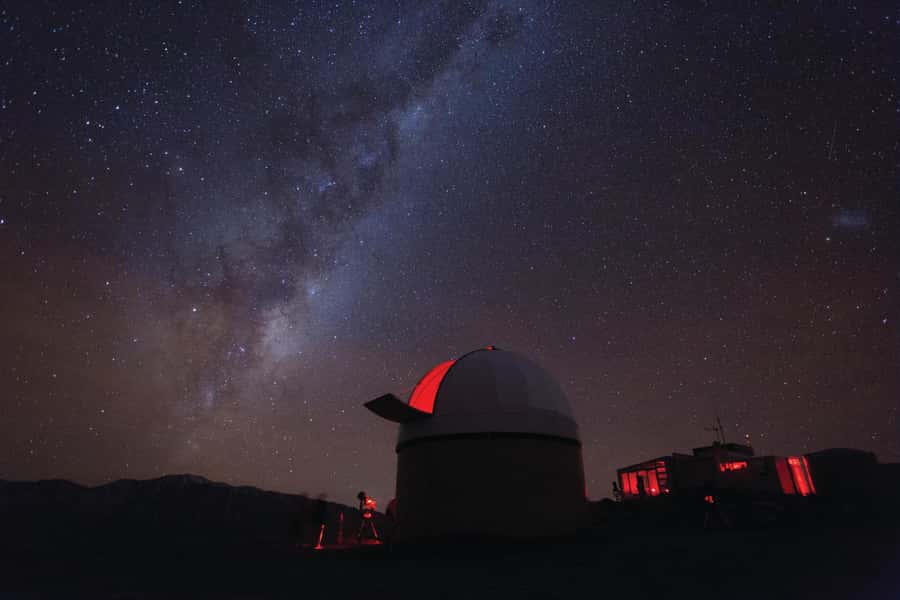
Reviewed · LAKE TEKAPO STARGAZING
Lake Tekapo: Mountaintop Stargazing at Mount John Summit
The night sky does the talking. Mount John’s summit gives you a rare chance to stargaze above Lake Tekapo, inside the Aoraki Mackenzie International Dark Sky Reserve. I like the setting and the strong astronomy guidance, especially the way guides first teach you to read the sky without equipment. The main drawback is simple: clouds, wind, or a bright moon can reduce what you see.
I also like that the tour keeps the logistics easy. A bus carries you from the Dark Sky Project base to the 1,029-meter summit, and extreme cold weather jackets are supplied. At $130 per person, it is not a cheap evening out, and one review questioned the value at a higher NZD209 price, but the summit access and research-centre setting make this more than a standard field-side stargazing session.
In This Review
- Mount John stargazing at a glance
- Why the summit location matters
- Checking in at the Dark Sky Project base
- The ride up Mount John
- Learning the Southern Sky without a telescope
- Telescopes and the limits of magnification
- Moon phase, clouds, and your odds of a great night
- Cold-weather planning for a 105-minute outdoor evening
- The guides make the difference
- Is $130 a fair price?
- Who should book this experience?
- Practical booking advice for Tekapo
- Should you book Mount John Stargazing?
- FAQ
- How long does the Mount John stargazing experience last?
- Where do I meet for the tour?
- Is transport to Mount John included?
- What languages are available?
- What should I bring?
- Can the tour be cancelled because of weather?
Mount John stargazing at a glance
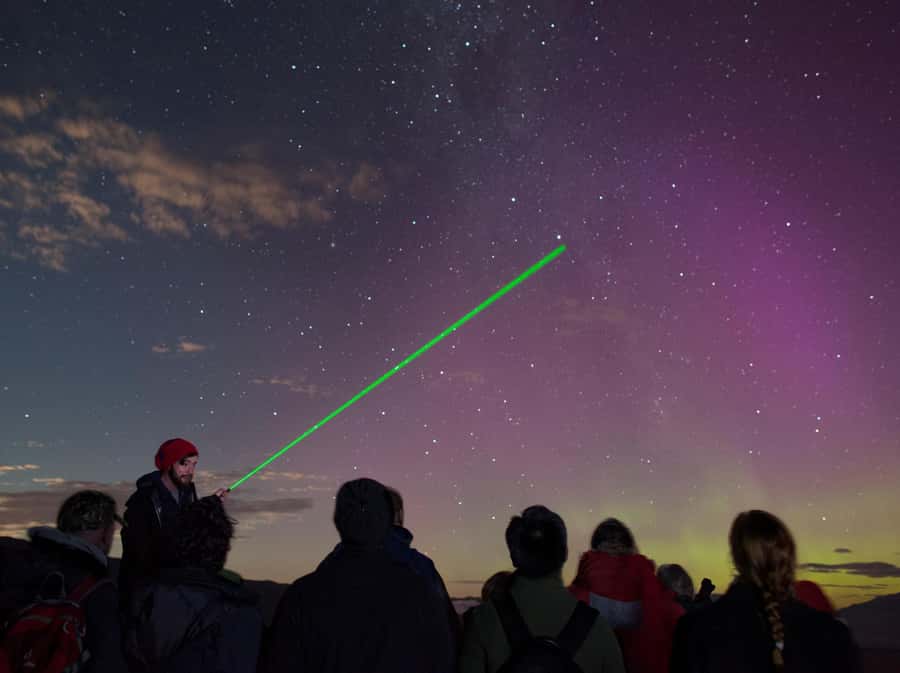
- Summit access at 1,029 meters: You stargaze at the top of Mount John, surrounded by the University of Canterbury research centre.
- 105 minutes under the Southern Sky: The evening combines naked-eye astronomy, laser pointing, and telescope viewing.
- Transport included: A return ride takes you from the Dark Sky Project base on the Takapō lakefront to the summit.
- Warm jackets supplied: Extreme cold weather clothing is provided, but you still need proper outdoor layers.
- Three guide languages: Tours are offered in English, Japanese, and Chinese.
- Best for clear, moon-aware nights: Weather controls the experience, and a bright moon can wash out the Milky Way.
Why the summit location matters
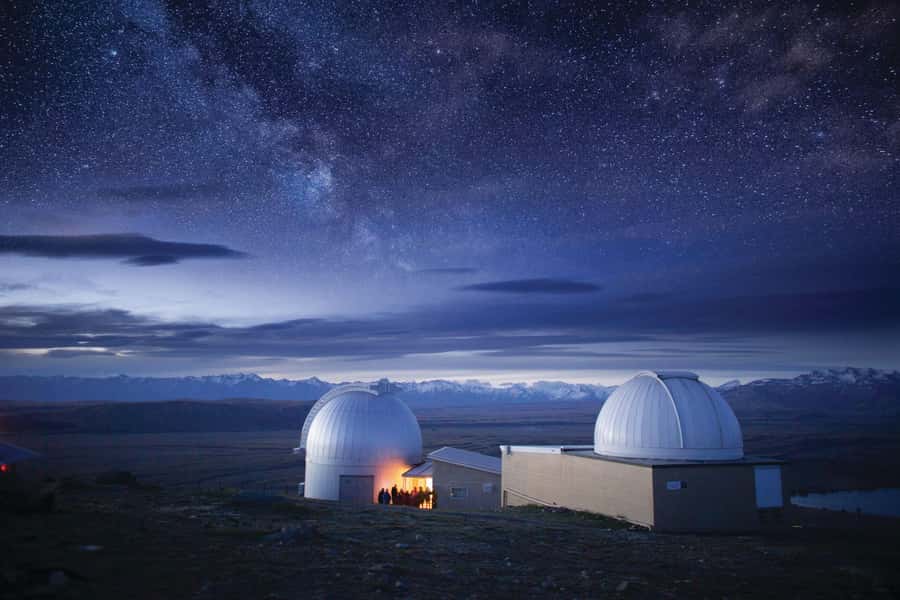
Tekapo is known for unusually dark skies, but the setting becomes even more special when you climb Mount John. You are not simply looking upward from town. You are taken to the summit, away from much of the light around the lake, and placed beside a working university research centre.
That location gives the evening a sense of purpose. The guides are not just naming a few bright stars for a quick photo. They explain how to find objects in the Southern Hemisphere and help you build basic sky-reading skills that you can use later from the lakeshore or your own garden.
The summit is 1,029 meters high, so conditions can feel much colder than they do in Tekapo village. The supplied extreme cold weather jacket is useful, but it is not a replacement for warm trousers, sturdy shoes, socks, and several layers underneath.
I would treat the summit as an exposed outdoor site, not a heated observatory visit. You may spend much of the 105 minutes standing outside, looking upward, waiting for your eyes to adjust, or moving between viewing points and telescopes.
More Lake Tekapo stargazing:
- Lake Tekapo: Alpine Stargazing Experience with a Guide
★ 4.5 · 626 reviews - Lake Tekapo: Stargazing Experience
★ 4.9 · 607 reviews - Chameleon Stargazing Shared Tour
★ 5.0 · 181 reviews
Checking in at the Dark Sky Project base
You need to check in at least 20 minutes before departure at the Dark Sky Project base on the Takapō lakefront. Allow enough time to find the base, park nearby, and collect the jacket without rushing.
The base is also the point where the return transport begins. Hotel pickup and drop-off are not included, so you need to make your own way to the lakefront. This is a small but important detail if you are staying outside central Tekapo or planning a late-night drive afterward.
At check-in, you receive the cold-weather jacket and instructions for the trip. A lanyard torch has also been used on the experience, which helps when moving around in the dark. Flash photography is not allowed, so do not rely on a phone flash to find your way or take pictures.
If your chosen departure is after midnight, check the booking date carefully. After-midnight times can easily be mistaken for the previous evening, particularly when you are arranging accommodation and transport.
The ride up Mount John
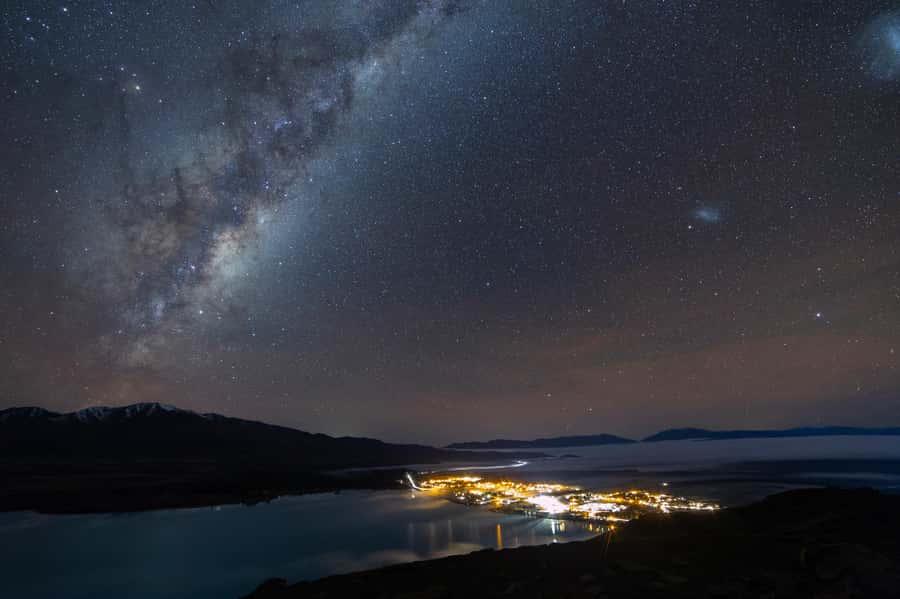
The trip to the summit is part of the appeal. You leave the lakefront and travel uphill to the stargazing site, rather than spending the entire evening at the Dark Sky Project base.
One guide jokingly described the bus as the only nightclub in Tekapo. That gives you a sense of the mood: the ride is not treated as dead time. It forms a light, friendly transition from the town below to the quiet summit above.
The transport also removes one practical worry. You do not need to drive an unfamiliar mountain route in the dark or work out how to reach the research centre yourself. Once you arrive, the focus shifts to the sky.
The final walk is short but not effortless. You need to feel comfortable walking about 100 meters on a gravel incline and climbing a couple of steps in darkness. This is why the experience is not suitable for people with mobility impairments, and why sensible footwear matters.
Learning the Southern Sky without a telescope
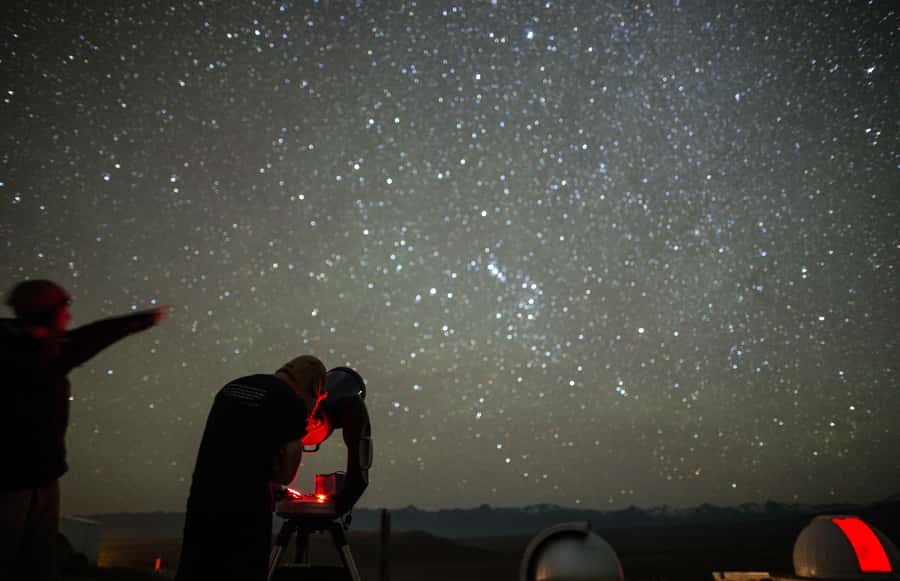
The first part of the session uses your own eyes. Guides use handheld lasers to point out stars, constellations, and other features above you. This is one of the strongest parts of the experience because it helps you understand the sky rather than simply look through a machine.
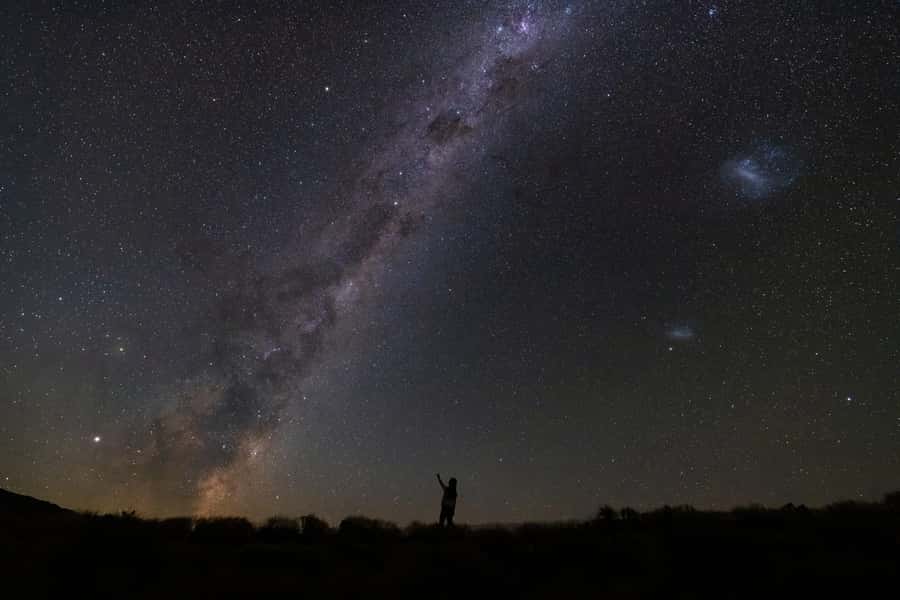
The Southern Hemisphere offers sights that many visitors from the north have never seen. Guides can explain how to locate the southern celestial pole and identify bright stars such as Alpha Centauri. You might also see planets, depending on the date and conditions. One clear evening included Jupiter and several star groups, while another visitor saw Mercury through a telescope.
The exact view changes every night. That is worth keeping in mind when you compare your experience with photographs or expectations. The moon, planets, cloud cover, season, and viewing conditions all affect what appears above Mount John.
The laser-guided explanation is also useful for beginners. You do not need to arrive with a working knowledge of astronomy. The guides build the lesson from simple points in the sky, making it easier for you to follow along even if you usually struggle to identify more than the Big Dipper.
A few more Lake Tekapo trips worth weighing up
- Tekapo Shuttle: Mt Cook Day Tour via Pukaki & Tasman Lake
★ 4.8 · 307 reviews - Mount John Observatory Stargazing Experience, Tekapo
★ 4.5 · 160 reviews - Lake Tekapo: Single Day Multiple Entry Pass for Hot Pools
★ 4.2 · 129 reviews - Tekapo Star Gazing Tour – Soak in the Stars
★ 4.5 · 109 reviews
Telescopes and the limits of magnification
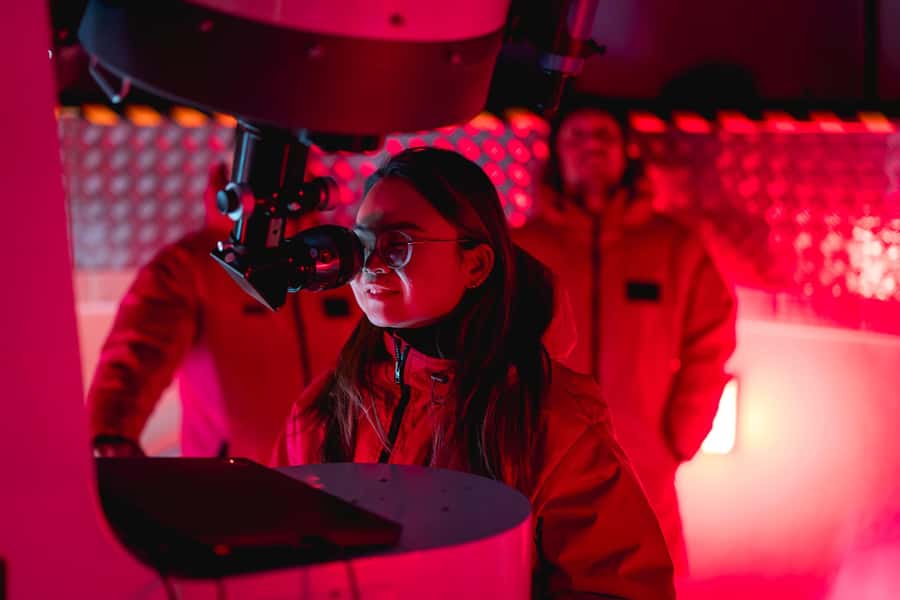
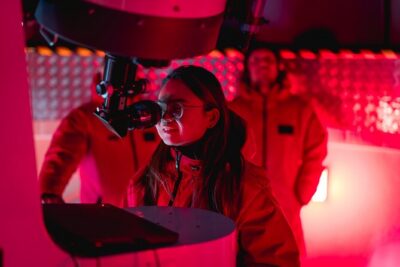
After the naked-eye session, you look at selected objects through high-powered telescopes. This is where the experience can become thrilling, especially if the timing is right and a planet or other bright object is visible.
Clear nights have produced views of Mercury, Jupiter, Alpha Centauri, and other star groups. The telescope gives you a closer look than your eyes alone, but you should set realistic expectations. You are not guaranteed a dramatic, oversized image of Saturn, Venus, or the moon.
One visitor found the telescope view less impressive than expected, describing the stars as only slightly larger than they appeared with the naked eye. That is a fair caution. Astronomy is not always about a giant cinematic image. Some objects are faint, small, or simply not above the horizon during your visit.
The guide’s explanation matters as much as the eyepiece view. A telescope can show you a point of light, but the story behind that object helps you understand what you are seeing. If you want a guaranteed view of one specific planet, ask about the likely sky conditions and visible objects before booking, if that information is available.
Moon phase, clouds, and your odds of a great night
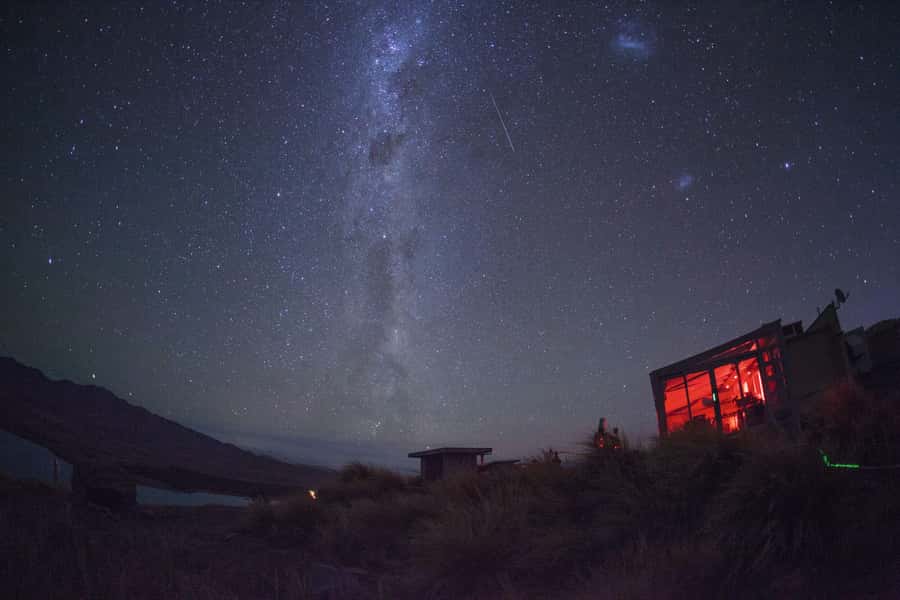
This is a weather-dependent activity, and that is not a minor footnote. Bad weather can cancel the summit visit. In that case, an indoor alternative is offered or you receive a full refund.
If your schedule allows flexibility, keep an eye on the forecast and be willing to reschedule. One guest moved the booking after poor weather and found the next evening much better, with less wind and no clouds. That choice made a clear difference.
The moon deserves equal attention. A bright moon can be beautiful through a telescope, but its light can make the Milky Way harder to see. For the darkest possible sky, aim for a night close to the new moon. A waxing or full moon may still create a worthwhile evening, but the sky will not look the same.
This is a good reason not to judge the tour only by the calendar date. The best evening is the one with clear skies, manageable wind, and a moon phase that suits what you want to see. If your priority is the Milky Way, ask about moon conditions before you settle on a time.
Cold-weather planning for a 105-minute outdoor evening
Tekapo can feel cold at any time of year, and Mount John is colder still. The provider supplies an extreme cold weather jacket, which has helped keep people comfortable during clear nights. That is a real benefit, especially for visitors who did not pack specialist winter gear.
You should still bring weather-appropriate clothing. Wear warm layers, long trousers, and shoes that work on gravel. Gloves and a hat are sensible additions, although the supplied information does not promise that these are provided.
Cold changes how long you can comfortably look through a telescope or listen to a guide. Dress well and you can concentrate on the stars instead of counting the minutes until the bus returns. The jacket removes one worry, but it does not turn the summit into an indoor venue.
The dark also affects movement. You need to climb a couple of steps and walk on a gravel incline with limited light. Take your time, follow instructions, and avoid using a phone flash, which is prohibited and can spoil other people’s night vision.
The guides make the difference
The experience depends heavily on the guide. The strongest praise has gone to guides who combine clear explanations with genuine enthusiasm. Oscar, named by one visitor, was described as full of knowledge and energy. Other guides have been praised for answering questions well and for making the session engaging rather than dry.
That enthusiasm matters because the subject can become technical quickly. A good guide helps you connect the names, distances, and star patterns to what you can actually see above you. The best moments are not just facts delivered into the darkness. They are the points when you suddenly recognize the southern celestial pole or pick out a star group without help.
The guides also handle the uncertainty of the night. They cannot control cloud, wind, or which planets are visible, but they can explain what is happening and make the most of the conditions. That is a major part of the price.
Tours are available in English, Japanese, and Chinese. You must speak the language of the tour for health and safety reasons. If you cannot communicate in the selected language, you will not be allowed to join.
Is $130 a fair price?
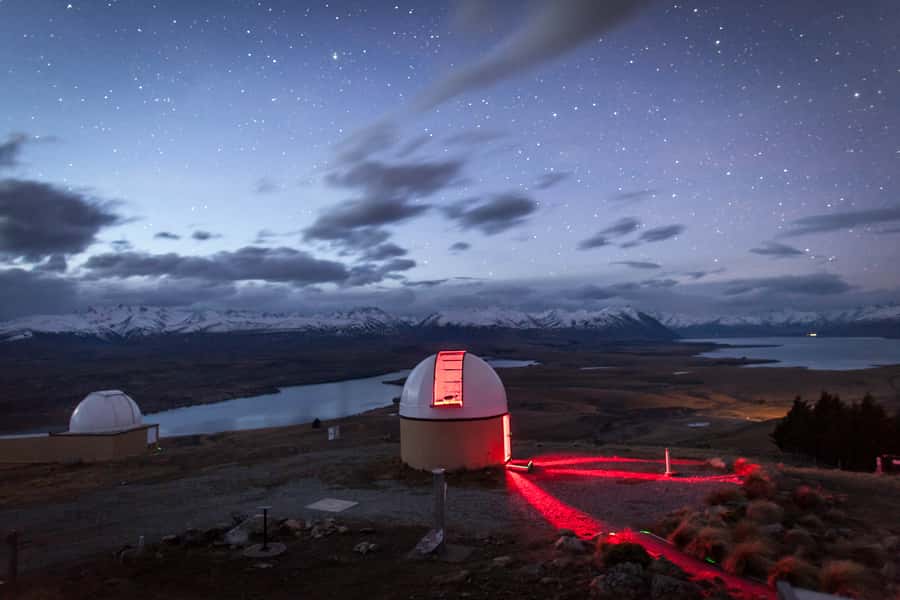
At the listed $130 per person, this is a premium evening activity. You are paying for the guide, the return summit transport, cold-weather jacket, telescopes, and access to a location you cannot treat like an ordinary public lookout.
The value is strongest if you care about astronomy, want help understanding the Southern Sky, or place a high value on reaching the Mount John summit after dark. The university research-centre setting adds interest, and the guided instruction gives the outing more substance than simply parking somewhere and looking up.
The value is weaker if you mainly want a quick look at a giant planet through a telescope. The sky may not cooperate, the moon may brighten the scene, and the object you hope to see may not be visible. One review considered a price of NZD209 too high for the telescope experience provided, so check the current price carefully before paying. The supplied rate here is $130, but tour prices can change.
I would compare this activity with the cost of other evening attractions in Tekapo, not with a free walk beside the lake. The summit access, transport, and guide-led lesson are the main reasons to pay.
Who should book this experience?
I would recommend it to adults, older children, couples, families with children aged 10 and above, and anyone making astronomy a key part of a South Island trip. It is especially suitable for first-time stargazers because you receive help finding objects instead of being left to work out the sky alone.
It also suits visitors who want something beyond daytime scenery. Lake Tekapo is famous for its bright daytime setting, but the night sky gives the area a completely different character. This outing lets you experience that change in a structured way.
It is less suitable for very young children, anyone uneasy on gravel or steps in the dark, and people who need guaranteed conditions. It is also a poor fit if you dislike standing outdoors in cold weather.
Photographers should arrive with modest expectations. Flash photography is not allowed, and the short time available may not produce the kind of long-exposure images you hope to take. The experience is mainly about seeing and understanding the sky in real time.
Practical booking advice for Tekapo
Book with the forecast in mind if you can. A clear night with low wind will usually serve you better than a fixed booking on a cloudy evening, and the provider may cancel the summit trip in bad weather.
If the first night looks poor, ask about rescheduling. Free cancellation is available up to 24 hours before departure, and a reserve-now, pay-later option can help if your South Island plans are still moving around.
Remember the age limit and language rule before booking. Children must be at least 10, and you need to speak the selected tour language for safety reasons.
Arrive 20 minutes early at the lakefront base. Bring warm clothing, do not bring food or drinks expecting them to be supplied, and check your date carefully for departures after midnight.
Should you book Mount John Stargazing?
Book it if the Southern Sky is high on your list. The location is special, the guides add real value, and the chance to learn the sky with lasers before using telescopes makes the experience useful for beginners and astronomy fans alike.
I would book it during a flexible part of your Tekapo stay, ideally near a new moon and with enough time to reschedule if the weather turns bad. The supplied jacket and transport make the evening easier, but you still need to dress for a cold mountain summit.
Skip it if you need a guaranteed view of one particular planet or if the current price feels too high for a weather-dependent outing. For most people who want a thoughtful, well-run night under the Southern Hemisphere stars, Mount John is one of Tekapo’s strongest after-dark choices.
FAQ
How long does the Mount John stargazing experience last?
The experience lasts 105 minutes, or 1 hour and 45 minutes.
Where do I meet for the tour?
Check in at least 20 minutes before departure at the Dark Sky Project base on the Takapō, also known as Tekapo, lakefront.
Is transport to Mount John included?
Yes. Return transport from the Dark Sky Project base to the Mount John summit is included. Hotel pickup and drop-off are not included.
What languages are available?
The tour is offered in English, Japanese, and Chinese. You need to speak the selected tour language for health and safety reasons.
What should I bring?
Bring weather-appropriate clothing. Warm layers are recommended year-round because the summit can be extremely cold. An extreme cold weather jacket is provided.
Can the tour be cancelled because of weather?
Yes. The summit experience is weather dependent. If bad weather prevents the outdoor tour, an indoor alternative is offered or a full refund is provided.
Just added around Lake Tekapo
- Lake Tekapo to Mt Cook One-Way Small Group Tour★ 4.0 · 5 reviews
- Lake Tekapo Fishing Tour★ 4.8 · 10 reviews
- Mt Cook Day Tour From Tekapo (Small Group, Carbon Neutral)★ 4.5 · 11 reviews
- Lake Tekapo: Ultimate Stargazing Experience★ 4.3 · 12 reviews
- Lake Tekapo Scenic 4WD Cass Valley Wilderness Tour★ 4.9 · 13 reviews
- Lake Tekapo: Glaciers, Mountains, and Landscapes Scenic Tour★ 4.9 · 15 reviews
- Christchurch: Mt Cook & Tekapo Small-Group Tour (incl Lunch)★ 4.6 · 19 reviews
- Lake Tekapo Scenic Wilderness Cass Valley Tour★ 4.5 · 19 reviews
Lake Tekapo Stargazing, compared.
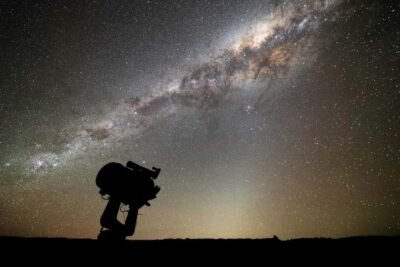
Lake Tekapo: Alpine Stargazing Experience with a Guide
Read our review →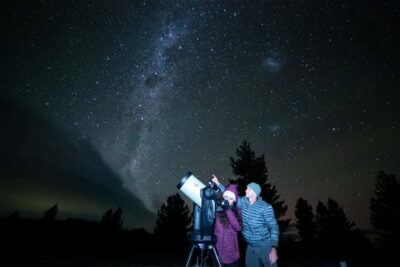
Mount Cook, Lake Tekapo and Tasman Glacier Tour from Christchurch
Read our review →
Mount Cook & Lake Tekapo Day Tour from Christchurch with Lunch
Read our review →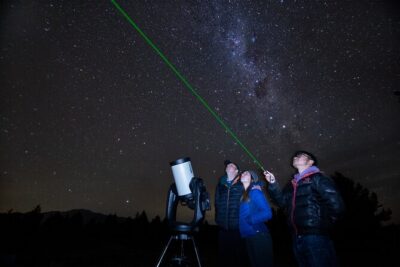
Mount John Observatory Stargazing Experience, Tekapo
Read our review →
Queenstown to Christchurch One-Way Tour via Mt Cook & Lake Tekapo
Read our review →Browse the lists this tour appears in