
Reviewed · TICKETS
Oamaru: Penguins Evening Viewing Ticket
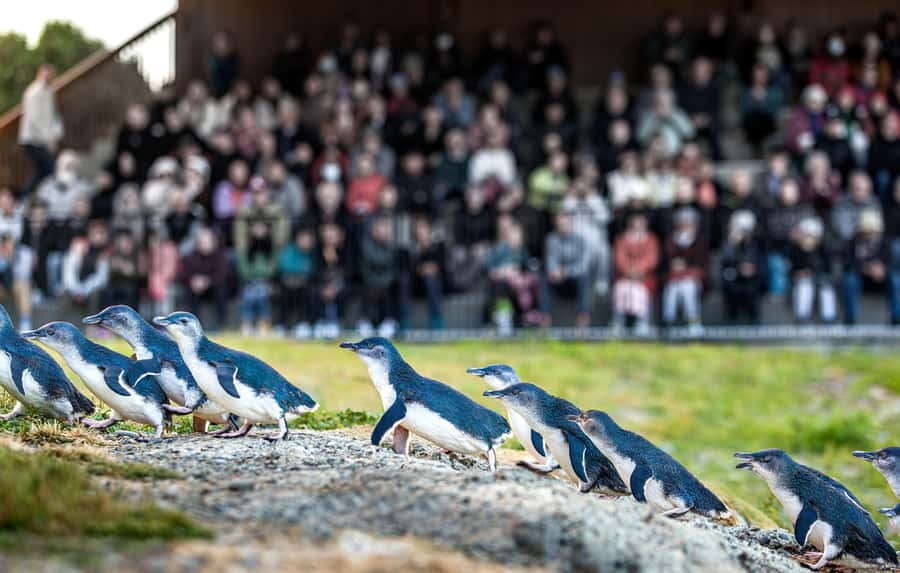
The penguins come home after dark. At Ōamaru Blue Penguin Colony, you watch the world’s smallest penguins leave the sea, cross the beach, and hurry toward their nesting boxes. I like the close viewing distance, often no more than 15 metres, and the calm, practical commentary from the local guides. The main drawback is the cold: you sit outside for a long time, and winter numbers can be much lower than summer arrivals.
I also like that your $28 ticket supports conservation and research, rather than paying only for a wildlife show. You may see New Zealand fur seals and Otago shags near the wharf, too. Just accept the strict no-camera rule, stay quiet when the penguins arrive, and bring far more warm clothing than you think you need.
In This Review
- Key points for planning your penguin evening
- Watching Ōamaru’s smallest residents come ashore
- The 90-minute visit, from check-in to nesting boxes
- What the guides add to the experience
- Standard seating or premium seating?
- Summer brings crowds, winter brings fewer penguins
- Cold air, quiet seats, and the no-camera rule
- Seals, shags, and the wider waterfront setting
- Value at $28 per person
- Who will enjoy this most?
- Practical details before you book
- Should you book the Ōamaru penguin viewing?
- FAQ
- How long does the Oamaru penguin viewing last?
- How far away are the penguins?
- Can I take photos or videos?
- What should I wear?
- How many penguins will I see?
- Is the experience wheelchair accessible?
Key points for planning your penguin evening
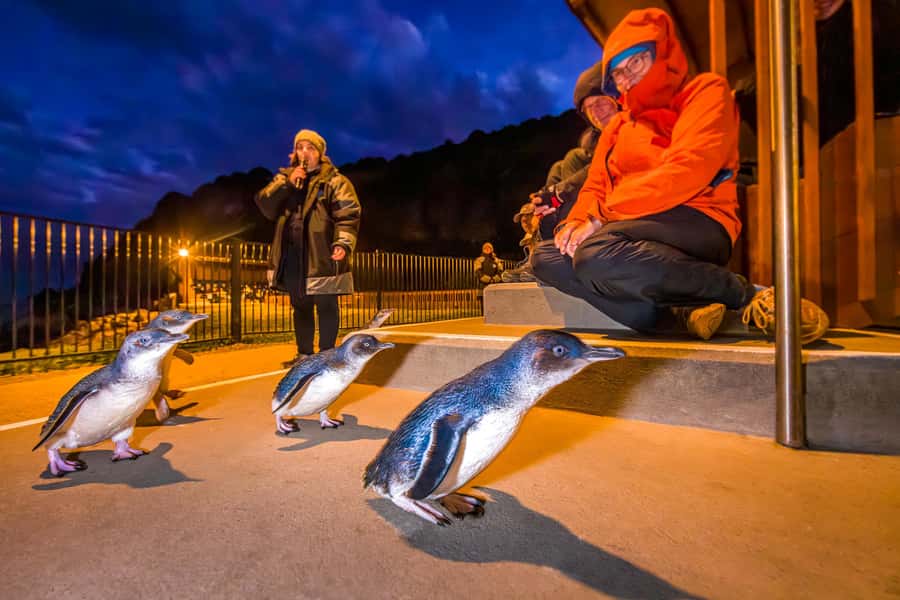
- Penguins arrive after sunset: Summer viewing can finish as late as 9 PM, while winter arrivals may begin around 5:30 PM.
- Close general viewing: The standard seating area is about 10 to 15 metres from the route used by the penguins.
- Numbers vary sharply: More than 200 birds may arrive in summer, while winter counts can fall below 30.
- Premium seating may be worth it: You get a better angle and, according to the experience details, may walk through the nesting area afterward.
- No phones or cameras: Photography and video are strictly forbidden because flashes and artificial light can harm or disturb the penguins.
- Wildlife beyond penguins: Keep watch for New Zealand fur seals and Otago shags around the nearby wharf.
Watching Ōamaru’s smallest residents come ashore
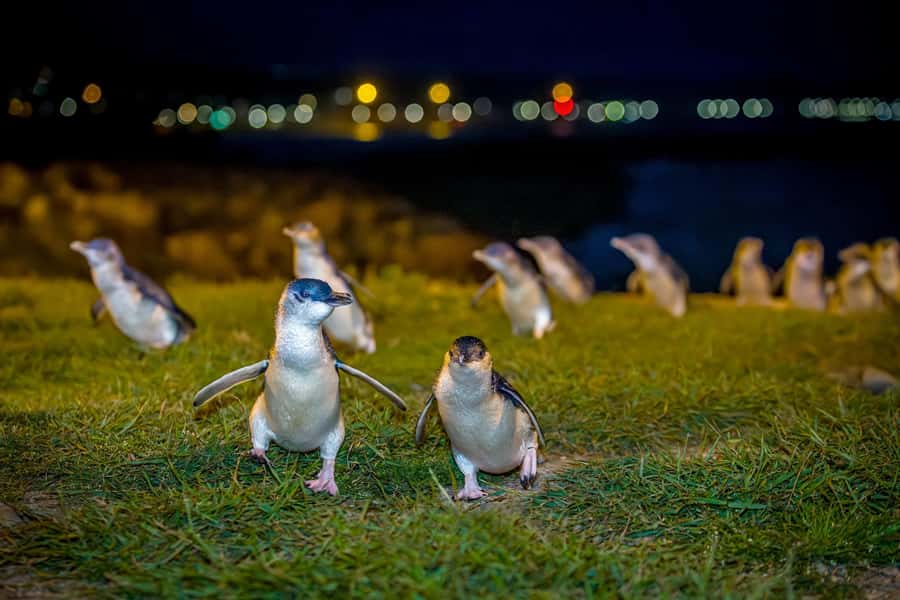
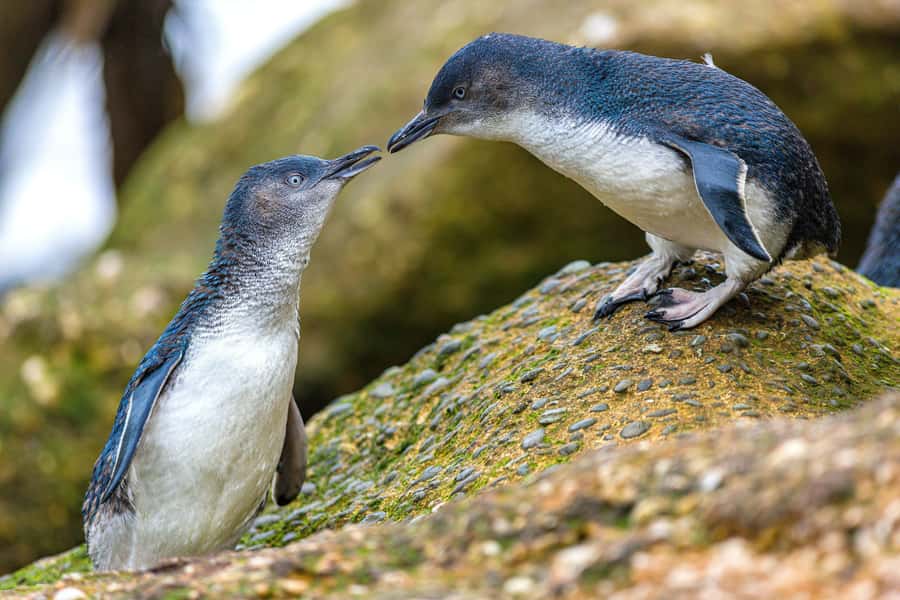
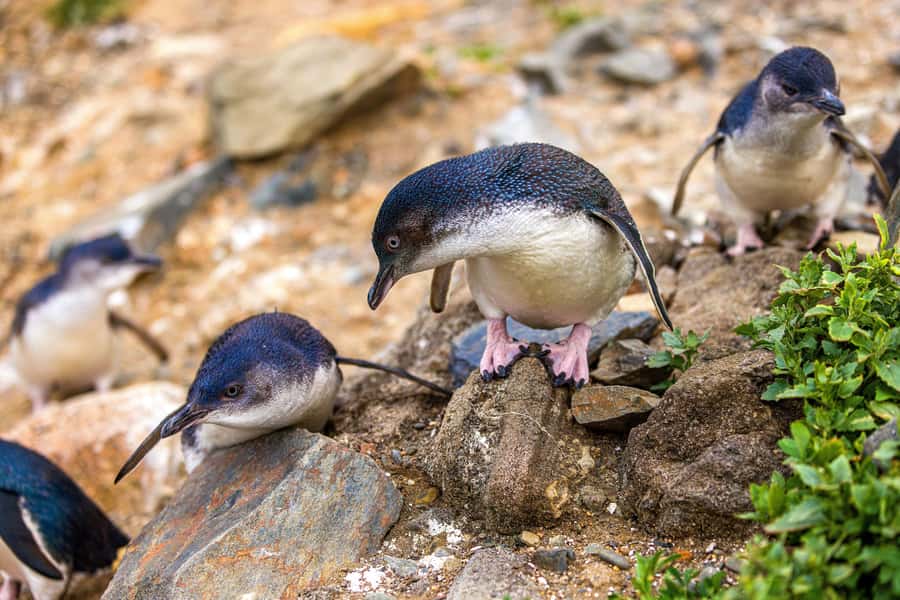
The main event is simple and wonderful. After a day fishing at sea, little blue penguins gather offshore before making their way back to land. They come up the beach, scramble over a stony ramp, and cross toward the colony.
These are not tall, grand-looking birds. They are tiny, blue-backed penguins, and that is part of the charm. Their return is less like a formal parade and more like a determined nighttime commute. A group may pause, bunch together, or stop when a seal is resting near the route. Once one brave penguin moves ahead, the others often follow.
You watch from a controlled viewing area rather than walking along the beach. General admission places you around 10 to 15 metres from the birds as they come up the beach and pass toward their nesting boxes. That distance gives you a real view without putting you in their path.
The penguins can be surprisingly hard to spot at first. They are small, the light is fading, and they move quickly. Patience matters. A single bird may seem easy to miss, but a larger group creates the memorable sight: dozens of tiny heads appearing, bodies waddling across the rocks, and birds hurrying into the colony.
A few more Dunedin trips worth weighing up
- Guided Evening Penguin Viewing Otago Peninsula, Dunedin, New Zealand
★ 5.0 · 471 reviews - Te Puia: Te Pō Indigenous Evening Experience – Haka + Dinner
★ 4.7 · 350 reviews - Tauranga: Evening Glowworm Kayak Tour
★ 5.0 · 311 reviews
The 90-minute visit, from check-in to nesting boxes
Arrive at the Oamaru Blue Penguin Colony on Waterfront Road about 10 minutes before your scheduled time. At check-in, a member of the team directs you to your seating area. The visit lasts about 90 minutes, though the exact start time changes with the season and the penguins’ habits.
The wait is part of the experience. You are not watching penguins in a glass enclosure or a carefully timed animal presentation. You are waiting for wild birds to return from the sea. That means arrival numbers and timing vary, and the evening does not unfold on a perfectly fixed schedule.
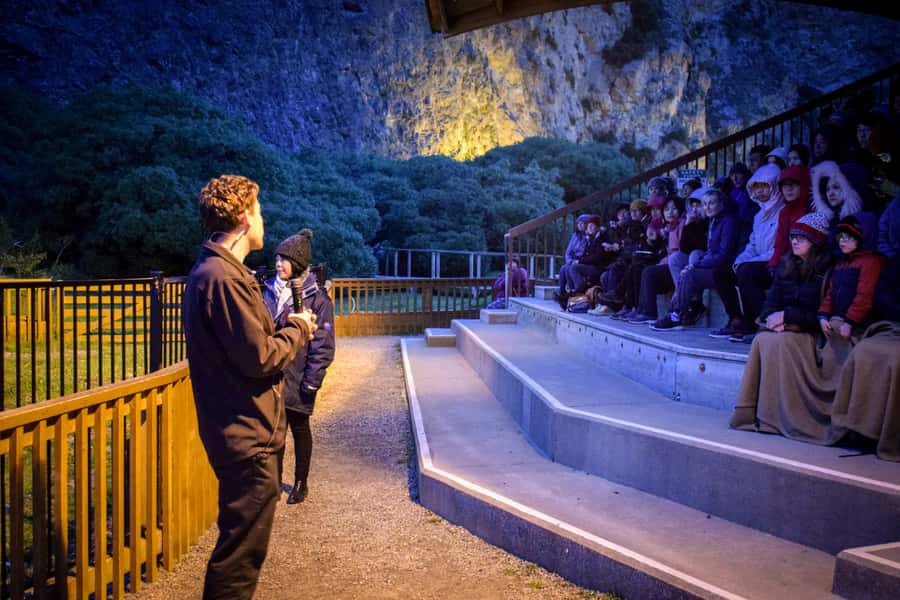
Before the penguins appear, the guides explain what you are likely to see. Commentary covers the penguins’ biology and ecology, their breeding habits, and the colony’s work to protect them. The talks also explain why keeping the birds’ route quiet and dark matters.
When the penguins begin to appear, the commentary becomes quieter. You are expected to remain seated and silent while the birds make their way past. This can feel strict if you are used to taking photos at wildlife sites, but it gives the penguins space to behave naturally.
Once the main viewing ends, you may have a chance to see the colony area more closely, depending on your seating and the evening’s arrangements. Premium ticket holders have described walking through the nesting area on the way out, seeing and hearing penguins near their boxes. That extra look is a strong reason to consider paying for premium seating if it is available to you.
What the guides add to the experience
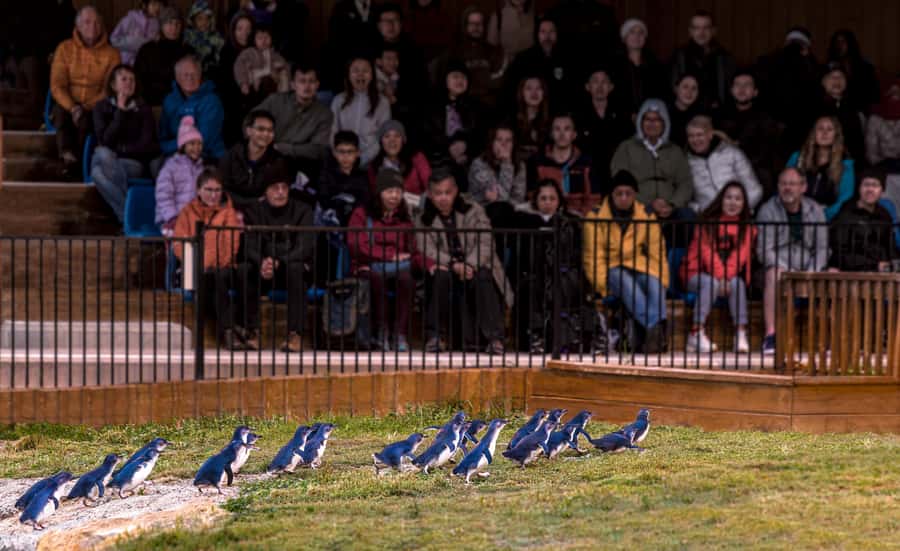
The guides are more than crowd managers, although crowd control is clearly part of their job. They explain what the penguins are doing and why the rules matter. The English and Chinese language options make the commentary more accessible, and several descriptions of the experience praise the clarity of the bilingual presentation.
I especially value the conservation context. You learn about the colony’s protection work, the nesting boxes, and the research supported by admission income. The ticket is not simply a charge to watch cute animals. It helps fund the system that allows the colony to operate and protect the birds.
Guides also respond to individual needs. One visitor who is deaf received a written version of the guide’s script, which made the talk easier to follow. That is a small but useful sign of care, especially in a group setting.
The quality of the sound system can vary. One person found the microphone unclear and wanted more facts, while most descriptions praise the information and presentation. Sitting near the centre may help with both the view and the sound, though seating is assigned by the team.
Standard seating or premium seating?
The $28 price is for general admission. That is the sensible choice if you want the core experience at a moderate cost and are happy to watch from the standard viewing area. You can still see penguins arrive, and their route may bring them surprisingly close.
Premium seating costs extra, but it may improve the evening in two ways. First, you get a stronger angle on the returning birds. Second, premium access has been associated with walking through the nesting area after the main viewing, where you can see penguins near their boxes.
There is one important catch: premium is not automatically a perfect view of every stage. One account found the angle less useful for seeing penguins climb the rocks, even though the birds were closer and the walk through the colony was excellent. If your priority is watching the initial climb from the beach, standard central seating may suit you better.
If the option appears when you book, compare the price with your priorities. I would lean toward premium for a serious wildlife enthusiast, a photographer who must accept that no photography is allowed, or anyone who wants the closer colony walk. For a family watching its budget, general admission still delivers the main sight.
A completely different kind of day out in Dunedin:
- Dunedin: Wildlife and Penguin Tour
★ 4.6 · 239 reviews - Dunedin: Speight’s Brewery Guided Tour with Tasting
★ 4.8 · 170 reviews - Dunedin: Scenic Railway Tour Through the Taieri Gorge
★ 4.7 · 73 reviews - Dunedin: Otago Peninsula with Guided Penguin Reserve Tour
★ 4.7 · 66 reviews
Summer brings crowds, winter brings fewer penguins
The season changes the character of the evening. In summer, more than 200 penguins may arrive, and some evenings produce 300 or even 400 birds. The latest finish can be around 9 PM, so plan your dinner and onward travel carefully.
Winter arrivals can begin as early as 5:30 PM, but counts may drop below 30. A small group can still be a fine wildlife encounter, but you should not book expecting a huge procession in every season. Penguin numbers depend on natural conditions, not on the ticket schedule.
Spring and autumn can offer a useful middle ground, though the number still varies. Reports of around 160, 241, 300, and more than 400 birds show how much one night can differ from another. The experience description itself gives the clearest expectation: over 200 in summer and under 30 in winter are both possible.
The penguins do not arrive on demand. If you need a guaranteed number, this is the wrong kind of attraction. If you can accept waiting for wild animals and enjoy the suspense, the uncertainty is part of the appeal.
Cold air, quiet seats, and the no-camera rule
Oamaru can become very cold after sunset, even when the afternoon feels mild. You sit still for much of the 90 minutes, so you lose body heat faster than you might while walking.
Bring warm layers, a jacket, long pants, enclosed shoes, and a woolly hat. A scarf is also a smart addition. Rain is possible, and a wet evening can feel especially long when you are seated. The viewing area offers shelter from rain, but that does not make it warm.
Small children may struggle with the combination of cold, waiting, and silence. If you are bringing young children, think honestly about whether they can sit still and follow the rules for the full period. Older children and adults who enjoy animals should find the wait easier, especially when the first group appears.
Photography and video are forbidden throughout the viewing. Keep your phone away in the seating area. Flash and phone light can harm or disturb the penguins, and a raised phone can block the view of someone behind you.
This rule frustrates some people, but I think it improves the experience. You are forced to watch carefully instead of staring at a screen. Remember the odd details instead: the way a penguin pauses before crossing, the sudden rush of a group, or the sound of birds calling near the nesting boxes.
Seals, shags, and the wider waterfront setting
Penguins are the reason to come, but the colony can offer other wildlife. New Zealand fur seals may rest near the entrance or on nearby rocks. A seal lying across the penguins’ route can create a strange little standoff, with the birds stopping and watching until one decides it is safe to pass.
Otago shags may be visible on a nearby wharf. These extra sightings are not guaranteed, so treat them as a bonus rather than part of the promised program.
The waterfront setting also helps explain why this is a working wildlife site. You are close to a real coastal environment where seabirds, seals, and penguins share space. The colony’s nesting boxes and managed viewing areas give the birds protection while allowing people to observe them.
That balance is not perfect for everyone. The experience is organized and can feel touristic, especially during busy summer evenings. Still, the restrictions, guided seating, and conservation funding give the visit a clear purpose beyond entertainment.
Value at $28 per person
At $28, general admission is reasonably priced for a 90-minute wildlife experience with a live guide. The strongest value comes from the combination of close viewing, expert commentary, and direct support for conservation and research.
You are not paying for a museum ticket with guaranteed exhibits. You are paying for access to a protected viewing area and for the work required to monitor and safeguard a wild penguin colony. The number of birds may be high, low, or somewhere in between, but the money still supports the place and its research work.
The value is less clear if you only want a quick glimpse. One visitor felt the penguins could also be seen from the street and questioned the cost apart from the conservation contribution. That is a fair concern. The organized viewing adds comfort, information, distance control, and a better chance of seeing the birds return together, but it does not change the fact that wildlife remains unpredictable.
For me, the price makes sense if you care about responsible wildlife viewing and want to learn what happens beyond the cute waddling. It is less convincing if you dislike sitting outdoors at night or expect a constant stream of animals.
Who will enjoy this most?
I would recommend the evening viewing to adults, couples, older children, and anyone with a real interest in seabirds and conservation. It suits a South Island road trip particularly well because the 90-minute format can fit into an evening stop in Oamaru.
It is also a good choice for people who prefer observation to hands-on animal encounters. You do not touch the penguins, feed them, or enter their route during the main viewing. You watch them behave on their own terms.
The experience can work for wheelchair users, as it is wheelchair accessible. If mobility is important to your group, mention your needs to the team at check-in so you can be directed to the most suitable seating.
I would think twice before booking for very young children who tire quickly or cannot remain quiet. I would also avoid it if you are unwilling to follow the no-photo rule. The penguins come first here, and the staff enforce that point.
Practical details before you book
The meeting point is the Oamaru Blue Penguin Colony, Waterfront Road, South Hill, Oamaru 9400. Arrive 10 minutes early for check-in and allow extra time to see the small exhibition area before heading to the viewing seats.
The tour is conducted in English and Chinese, with live commentary from local guides. Food and drinks are not included, so eat beforehand or plan something afterward. The changing arrival time matters: summer viewing can finish late, while winter sessions may begin much earlier.
You can cancel up to 24 hours before the experience for a full refund, and the booking can be reserved with payment later. Those policies help if your South Island driving plans are still shifting.
Do not bring a camera for use during the viewing. Even if you leave it in your bag, do not use your phone in the seating area. Pack warm clothing first, then think about the rest of your evening plans.
Should you book the Ōamaru penguin viewing?
Book it if you want a close, well-managed look at wild little blue penguins returning from the sea, and you are happy to trade photographs for a quieter, more respectful encounter. The $28 general ticket offers solid value, especially because it helps fund conservation and research.
Choose premium seating if the colony walk and closer position matter more than keeping costs down, but remember that its angle may not show every part of the penguins’ climb. If you visit in winter, lower your expectations for numbers. If you visit in summer, prepare for a late finish and a busier setting.
My clearest advice is simple: arrive early, sit near the centre if you can, wear a woolly hat, and obey the silence and phone rules. Do that, and watching these tiny birds hurry home can become one of the most memorable evenings on the South Island.
FAQ
How long does the Oamaru penguin viewing last?
The experience lasts 90 minutes. Start times vary by availability and season.
How far away are the penguins?
The general admission viewing area is approximately 10 to 15 metres from the route where the penguins come up the beach and enter the nesting area.
Can I take photos or videos?
No. Photography and video are strictly prohibited, including phone use in the seating area. Flash and artificial light can disturb or harm the penguins’ eyes.
What should I wear?
Bring warm clothing, including a jacket, long pants, enclosed footwear, and ideally a warm hat. Evenings can be very cold, particularly when you are sitting still.
How many penguins will I see?
The number varies naturally. The colony may receive more than 200 penguins in summer, while winter arrivals can fall below 30.
Is the experience wheelchair accessible?
Yes, the experience is wheelchair accessible.
Just added around Dunedin
- Private Dunedin City Highlights and Otago Peninsula Day Tour★ 4.3 · 7 reviews
- Dunedin: 3 Hour Artisan Food Walking Tour★ 4.4 · 7 reviews
- Dunedin: Peninsula with Lanarch Castle gardens & Olveston★ 5.0 · 8 reviews
- Dunedin City & Coastal Views 3-Hour Small-Group Tour★ 4.9 · 23 reviews
- From Dunedin: City, Otago Peninsula & Albatross Guided Tour★ 4.7 · 35 reviews
- Dunedin: Larnach Castle & Gardens Admission Ticket★ 4.6 · 36 reviews
- Dunedin: Monarch – One Hour Wildlife Cruise★ 4.5 · 48 reviews
- Dunedin City & Otago Peninsula Scenery Day Tour★ 4.7 · 49 reviews
Tickets, compared.

Waiheke Island: Ferry & Hop-On Hop-Off Explorer Bus Tickets
Read our review →


Browse the lists this tour appears in