
Reviewed · WILDLIFE & NATURE TOURS
Guided Evening Penguin Viewing Otago Peninsula, Dunedin, New Zealand
Small penguins make a big evening. This 90-minute outing near Dunedin takes you to the Otago Peninsula’s largest little blue penguin colony, where you can watch up to 200 birds return from the sea and hurry toward their nests. I like the close viewing platform, where penguins pass only a few metres away, and I like the guides’ mix of conservation information and local history. The main catch is simple: it can be bitterly cold, wet, and windy after dark, even when Dunedin feels mild.
I also appreciate that you can take photographs without flash and that the penguins are not handled or brought close for display. The experience is built around watching wild birds follow their own route home. Still, the number of penguins varies sharply by season, and the evening includes a 300-metre walk over gravel and a boardwalk with more than 60 built-in steps.
In This Review
- Key points before you book
- Why the Otago Peninsula is worth an evening
- The opening talk: history, penguin life, and what to expect
- The 300-metre walk to the viewing platform
- Watching the little blue penguins come ashore
- Photography without flash
- Cold, wind, rain, and the practical side of the evening
- Getting there from Dunedin
- Is $34.13 good value?
- Who will enjoy this most?
- My recommendation for the evening penguin viewing
- FAQ
- How long does the penguin viewing experience last?
- Where does the tour begin and end?
- Is transport from Dunedin included?
- How many penguins will I see?
- Can I take photographs?
- How close will the penguins be?
- Is the walk suitable for everyone?
- What should I wear if the weather is wet?
- What happens if bad weather cancels the tour?
- Can I cancel my booking?
Key points before you book
- Up to 200 little blue penguins in summer: From February through August, the usual nightly count is lower, often between 10 and 80 birds.
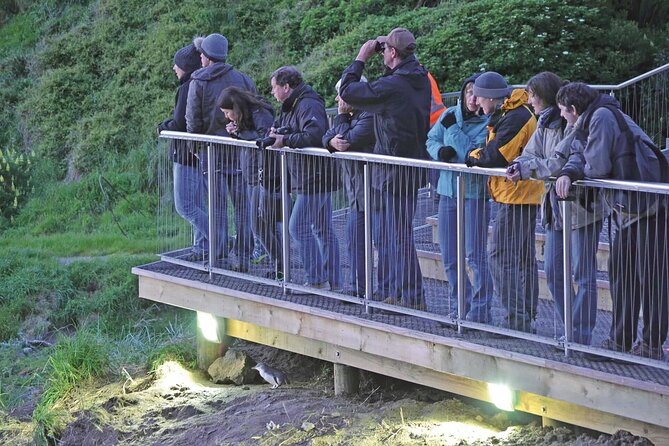
- Penguins pass a few metres away: The open viewing platform lets you shift position and see the birds from different angles.
- About 30 minutes of introductory talk: You learn about the penguins, their habitat, and the human history of this important headland before walking out.
- No transport is included: You must drive yourself to Blue Penguins Pukekura at 1245 Harington Point Road.
- Bring serious cold-weather gear: The platform is exposed to wind, and umbrellas are not allowed. Wear a rain jacket instead.
- A conservation-led experience: The guides explain the colony and control movement on the platform so everyone gets a fair view without disturbing the birds.
Why the Otago Peninsula is worth an evening
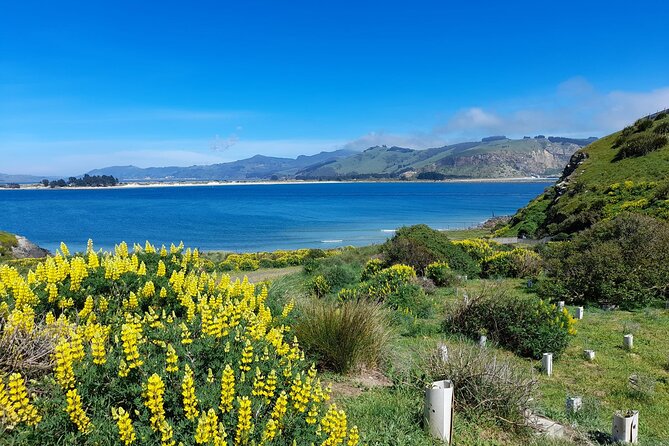
The Otago Peninsula is one of Dunedin’s great wildlife areas. This tour takes you to a headland with a long human story, occupied by Māori well before European arrival. That context comes first, before the focus shifts to the birds returning from the water.
The setting matters because this is not a quick stop beside a roadside sign. You are watching a natural routine at the end of the day. The penguins spend daylight hours at sea, then return in small groups, often called rafts, before making their way toward nesting areas.
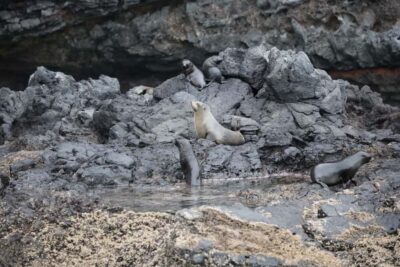
You might also see other wildlife near the shore. Fur seals, sea lions, and albatross are all possible, although the penguins are the reason to book. A few sightings described sea lions rough-housing near the surf while the penguins came ashore, a reminder that the coast belongs to more than one species.
The experience has earned a 4.9 rating from 471 reviews, with 99 percent recommending it. Those numbers fit the strongest parts of the outing: close views, clear explanations, and staff who take care to move people around so nobody is stuck behind a taller person or viewing from the wrong angle.
More Wildlife Tours in Dunedin
- Dunedin: Wildlife and Penguin Tour
★ 4.6 · 239 reviews - Dunedin: Otago Peninsula with Guided Penguin Reserve Tour
★ 4.7 · 66 reviews - Dunedin: Monarch – One Hour Wildlife Cruise
★ 4.5 · 48 reviews
The opening talk: history, penguin life, and what to expect
The evening begins with an introduction lasting about 30 minutes. That is a sizeable part of a 90-minute tour, but it gives the wildlife viewing more meaning. You learn how the penguins live, what they do during the day, and how the reserve operates.
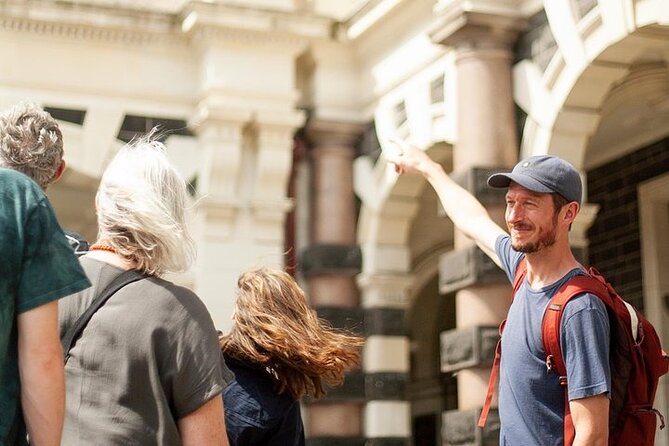
The talk also covers the human history of the headland. This is a useful touch because it puts the reserve into its wider setting instead of treating the penguin colony as an isolated attraction. Guides such as Leon and Shane have been singled out for their engaging style, while other staff members have been praised for explaining the penguins’ life cycle in a clear, easy-to-follow way.
I would pay attention during this part, even if you are eager to get outside. The talk explains why patience is necessary. You are not being promised a timed parade. You are waiting for wild animals to choose when and where to come ashore.
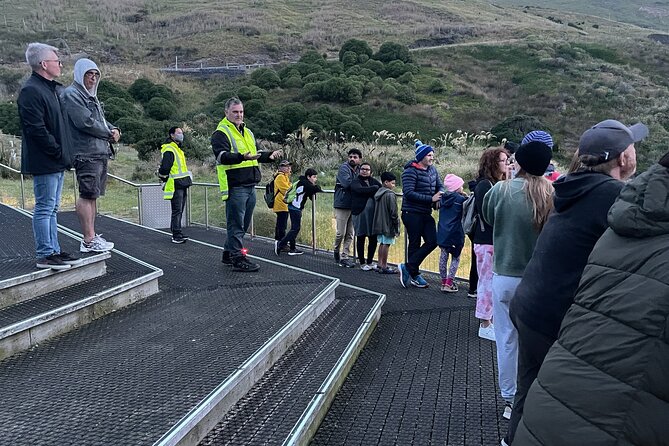
The guides also explain the viewing procedure. Groups may be rotated around the platform as different rafts arrive. This is important in a larger group, especially when as many as 75 people can join the activity. Rather than leaving everyone in one fixed position, staff work to give each person a chance to see the birds from more than one angle.
One small limitation is that the presentation can feel long if you mainly want photographs. The information is useful, but the schedule can run late, and driving back along unfamiliar peninsula roads in the dark requires care. If you are concerned about night driving, allow extra time and do not rush away afterward.
The 300-metre walk to the viewing platform
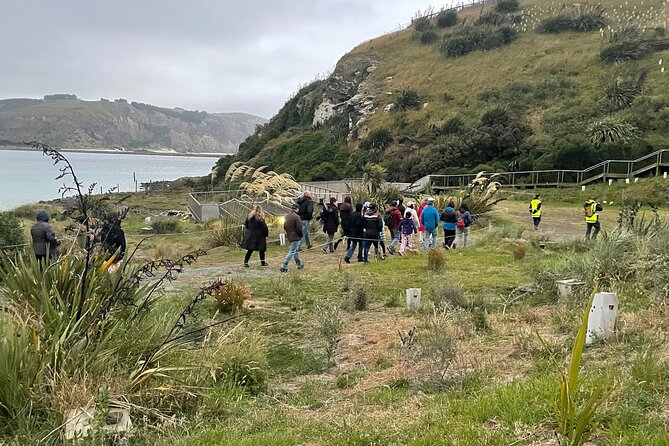
After the introduction, you walk about 300 metres along a gravel path and boardwalk. The route includes more than 60 built-in steps, so this is not a flat stroll from a visitor centre to a lookout.
You need to walk unaided to take part. The path may suit most people who are comfortable on uneven ground and steps, but it is worth thinking about your mobility before booking. The evening takes place outdoors, and the combination of darkness, gravel, steps, and wet weather can make the walk feel more demanding than the distance suggests.
The walk is part of the appeal. You are moving into the penguins’ coastal setting rather than watching from a sealed room. It also means you should wear practical shoes with a good grip. The supplied information does not promise a fully accessible route, so anyone needing step-free access should contact the operator before reserving.
At the platform, the staff settle the group into position and explain how the viewing will work. You are not placed beside the birds or allowed to approach them. The design gives the penguins a clear route while keeping people in a controlled viewing area.
Watching the little blue penguins come ashore
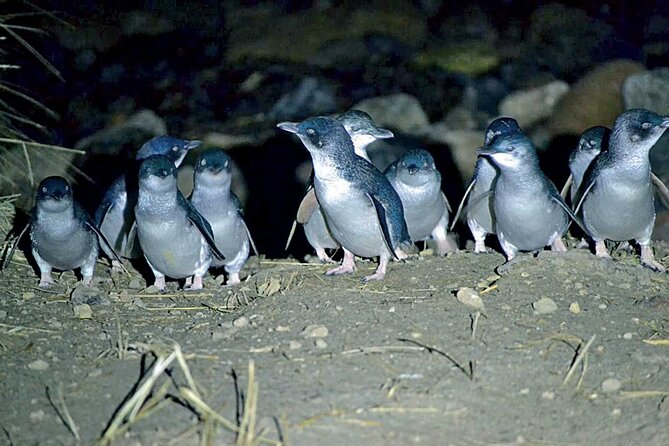
The best moment comes at dusk, when the first birds appear from the water. Little blue penguins are the world’s smallest penguin species, and their size can surprise you. From a distance, you may first notice a quick movement at the waterline. Then a group waddles, scurries, or hurries across the beach and under the viewing deck.
The penguins can pass only a few metres away. That close distance is the heart of the experience, but the birds remain wild. Some nights bring only a modest number. In the non-breeding months from February through August, the expected count is between 10 and 80 penguins. Summer can bring more, with up to 200 returning to the colony.
November is highlighted as a good time for seeing chicks. The breeding season can also bring nights with more than 100 birds, and some evenings produce hundreds. That makes the timing of your visit important. If you want the strongest odds of a large procession and the chance to see chicks, plan for the warmer part of the breeding season. If you visit in winter, set your expectations lower, though even a smaller arrival can be memorable at this range.
The group may arrive in several waves. This gives you repeated chances to watch the behaviour, but you need to stay patient between arrivals. One night might feel busy with penguins moving past in steady groups. Another might be quieter, with longer pauses.
Staff rotate people around the open platform as the penguins come in. You may be able to look from the beach side, then shift to another position for a different angle. This is much better than standing in a single packed row, and it helps photographers avoid taking the same view all evening.
A completely different kind of day out in Dunedin:
- Dunedin: Speight’s Brewery Guided Tour with Tasting
★ 4.8 · 170 reviews - Dunedin: Scenic Railway Tour Through the Taieri Gorge
★ 4.7 · 73 reviews - Dunedin City & Otago Peninsula Scenery Day Tour
★ 4.7 · 49 reviews - Dunedin: Larnach Castle & Gardens Admission Ticket
★ 4.6 · 36 reviews
Photography without flash
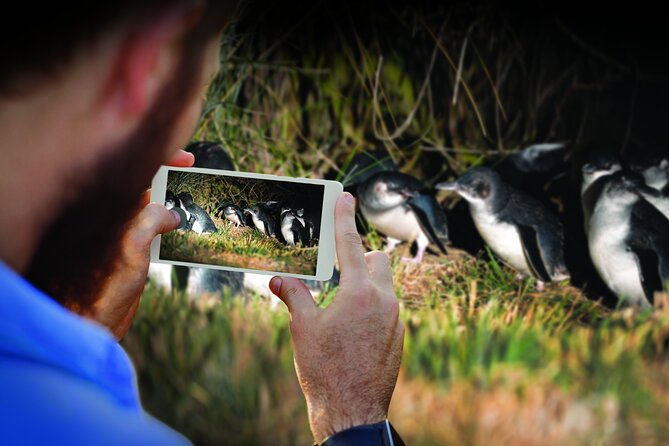
Photography is allowed, which is a real advantage for anyone who wants a record of the evening. The rule is firm and sensible: no flash. A flash can disturb wildlife, especially in a dark setting where the sudden light is harsh.
You should bring a camera or phone that performs reasonably well in low light, but do not let the screen or the hunt for a perfect photograph take over. The penguins move quickly, and the most natural moments can be brief. You may get better results by watching the route first, then taking a few quiet photographs as the birds pass.
The open platform allows some movement, so you can change your angle without crowding the penguins. Staff help manage that movement. This also keeps the viewing fair for people who are more interested in watching than photographing.
If you are choosing between this and a wildlife display where photographs are prohibited, the photography policy gives this experience extra value. Just remember that it is still an evening wildlife outing, not a controlled studio session. Some images will be dark or blurred, and that is part of photographing fast-moving birds after sunset.
Cold, wind, rain, and the practical side of the evening
The weather is the biggest factor in comfort. The viewing area is exposed, and several visitors have found it much colder and windier than central Dunedin. Even a pleasant afternoon can turn into a raw evening on the Otago Peninsula.
Dress in layers, then add a windproof outer layer. A warm hat and gloves are sensible, and a rain jacket is essential if rain is possible. Umbrellas are not allowed, so do not rely on one. The restriction keeps the platform clear and prevents umbrellas from blocking views or moving around in the wind.
Hot drinks such as coffee and hot chocolate may be available while you wait. They can take the edge off a wet evening, but they should not replace proper clothing. It is also wise to eat before the tour because the outing runs late and the viewing period is outdoors.
Toilets can be an issue after the centre closes. One account specifically noted concern about using a toilet after leaving the centre, so plan accordingly before walking to the platform. This is a small point, but it matters when you are standing outside for more than an hour in cold weather.
The tour may be canceled in poor weather. If that happens, you are offered another date or a full refund. You can also cancel for a full refund up to 24 hours before the start time. Changes or cancellations made less than 24 hours before the start are not accepted for a refund.
Getting there from Dunedin
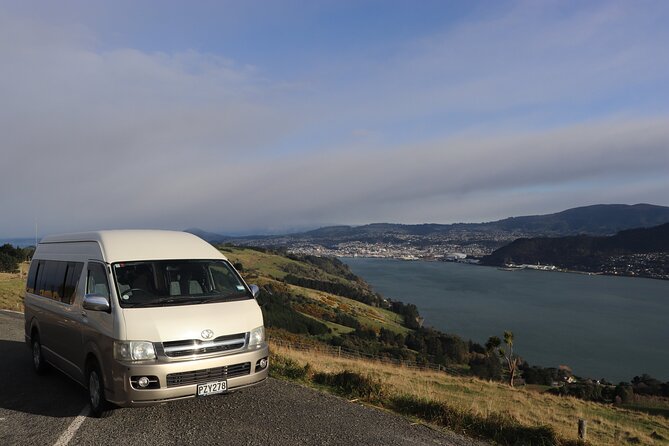
This option is for people with their own transport. No pickup or drop-off is provided. You drive to Blue Penguins Pukekura, 1245 Harington Point Road, Harington Point 9077, and the activity ends back at that meeting point.
The road out to the peninsula is part of the planning. At night, an unfamiliar New Zealand road can feel intimidating, especially after a cold evening when you are eager to get back. Drive slowly, allow time, and avoid building a tight schedule around the tour’s end.
There is also a practical parking concern. The parking area may not have strong lighting or a clear exit sign, so take note of where you leave your vehicle before walking to the centre. A phone torch can be useful for finding your way back, provided you use it discreetly around the viewing area.
If you do not have a car, this is not the right booking option. The operator offers another version with transport, but that is a separate product. Check carefully before paying, since the meeting-point tour assumes you can reach the reserve independently.
Is $34.13 good value?
At $34.13 per person, this is a reasonably priced wildlife outing, especially when you consider the guide-led introduction, reserve access, and close viewing platform. All fees and taxes are included.
The value improves on a night when a large raft arrives. Seeing more than 100 penguins, or hundreds during the breeding season, makes the price feel modest. Yet the tour should not be judged only by the final count. The guides explain the colony, tell you what to watch for, and help the group view the birds without chasing or crowding them.
There is also a conservation angle. The reserve is funded through people who visit, so your ticket helps support the site and its work with the penguin colony. That does not guarantee a particular number of birds, but it gives the experience a purpose beyond entertainment.
The risk is weather and wildlife unpredictability. You may pay the same amount on a cold evening when only a small number of penguins appear. The operator offers a 30 percent refund if fewer than five penguins are seen through this booking channel. That is not as generous as the 50 percent refund available when booking directly through the operator, so price-sensitive visitors may want to compare the two options.
Who will enjoy this most?
I would recommend this to nature lovers, bird watchers, families with older children, and anyone who wants a genuine wildlife encounter rather than a staged animal show. The guides’ enthusiasm adds a lot, especially if you enjoy learning about behaviour and conservation.
It also suits photographers, since non-flash photography is permitted and the penguins come close. You will need patience, warm clothing, and a willingness to accept that nature does not keep a perfect timetable.
I would be more cautious if you dislike cold outdoor settings, have difficulty walking over gravel or steps, or do not want to drive after dark. The tour is short in distance but not effortless in conditions that are wet, windy, or cold.
My recommendation for the evening penguin viewing
I would book this experience if you have a car, can manage the 300-metre walk and 60-plus steps, and are prepared for an exposed evening. Its best qualities are clear: expert-led interpretation, unusually close views, responsible wildlife watching, and the chance to see a whole colony return from the sea.
For the best chance of large numbers and chicks, choose the breeding season, particularly around November. For a quieter visit, February through August can still work, but expect anything from 10 to 80 birds rather than a guaranteed procession.
Bring warm, windproof layers, a rain jacket, sturdy shoes, and a little patience. If you can accept those conditions, watching tiny penguins hurry home beneath your platform is well worth the late drive back to Dunedin.
FAQ
How long does the penguin viewing experience last?
The experience lasts approximately 1 hour and 30 minutes, including the introduction and the walk to the viewing platform.
Where does the tour begin and end?
It begins and ends at Blue Penguins Pukekura, 1245 Harington Point Road, Harington Point 9077, New Zealand.
Is transport from Dunedin included?
No. This option does not include transport, so you need to drive yourself to the reserve. A separate option with transport is available from the operator.
How many penguins will I see?
The number varies by season and by night. From February through August, the expected number is between 10 and 80 penguins. In summer, you may see up to 200, with more possible during the breeding season.
Can I take photographs?
Yes. Photography is allowed, but flash photography is not permitted.
How close will the penguins be?
The penguins pass only a few metres from the open viewing platform. You can move around the platform to view them from different angles, under staff direction.
Is the walk suitable for everyone?
You must be able to walk unaided. The route includes about 300 metres of gravel path and boardwalk, with more than 60 built-in steps.
What should I wear if the weather is wet?
Wear warm, windproof clothing and bring a rain jacket. Umbrellas are not allowed. The viewing area can be much colder and windier than central Dunedin.
What happens if bad weather cancels the tour?
You will be offered another date or a full refund if the experience is canceled because of poor weather.
Can I cancel my booking?
You can cancel up to 24 hours before the start time for a full refund. Cancellations or changes made less than 24 hours before the experience are not accepted for a refund.
Just added around Dunedin
- Private Dunedin City Highlights and Otago Peninsula Day Tour★ 4.3 · 7 reviews
- Dunedin: 3 Hour Artisan Food Walking Tour★ 4.4 · 7 reviews
- Dunedin: Peninsula with Lanarch Castle gardens & Olveston★ 5.0 · 8 reviews
- Dunedin City & Coastal Views 3-Hour Small-Group Tour★ 4.9 · 23 reviews
- From Dunedin: City, Otago Peninsula & Albatross Guided Tour★ 4.7 · 35 reviews
- Dunedin: Larnach Castle & Gardens Admission Ticket★ 4.6 · 36 reviews
- Dunedin: Monarch – One Hour Wildlife Cruise★ 4.5 · 48 reviews
- Dunedin City & Otago Peninsula Scenery Day Tour★ 4.7 · 49 reviews
Wildlife & Nature Tours, compared.

Auckland Dolphin and Whale Watching Eco-Safari Cruise
Read our review →
Whale and Dolphin Watching Half-Day Eco Cruise
Read our review →
Gannet Safaris Overland tour to Cape Kidnappers Gannet Colony
Read our review →

Clearwater Wildlife Tours (small group 10max) Otago Peninsula
Read our review →

Browse the lists this tour appears in