
Reviewed · WILDLIFE & NATURE TOURS
Clearwater Wildlife Tours (small group 10max) Otago Peninsula
Some wildlife encounters feel properly wild. Clearwater Wildlife Tours takes you from central Dunedin to private habitats near Cape Saunders, where fur seals, sea lions, seabirds, and possibly yellow-eyed penguins live in open coastal country. I like the small maximum of 10 people, and I like that the tour reaches places the public rarely sees.
The guides bring strong knowledge of local wildlife and conservation. Adrian, Ben, Quinn, Paula, Kelly, Ferg, and Tom have all been praised for spotting animals and explaining the wider ecosystem. The main caution is simple: penguins are never guaranteed, and the walking includes hills, steps, sand, and uneven ground.
In This Review
- Key points to know before you go
- From Dunedin’s Octagon to the Otago Peninsula
- Cape Saunders and the secluded seal colony
- The private conservation reserve and its rare residents
- Why the guides make such a difference
- Walking conditions: scenic, but not effortless
- Weather, clothing, and what to pack
- The value of the $139.63 price
- Who will enjoy this tour most?
- Booking, timing, and cancellation advice
- Should you book Clearwater Wildlife Tours?
- FAQ
- Where does the Clearwater Wildlife Tour start and finish?
- How long does the tour take?
- What animals might I see?
- Are binoculars provided?
- Are jackets supplied?
- Is the tour suitable for people with mobility issues?
- Can children join the tour?
- Can I bring food?
- What happens if bad weather cancels the tour?
Key points to know before you go
- Private access near Cape Saunders: You visit a secluded fur seal colony and a private conservation reserve, not just the usual roadside viewpoints.
- Real wildlife, not a staged show: Animals remain in their natural habitat, so sightings depend on weather, season, distance, and luck.
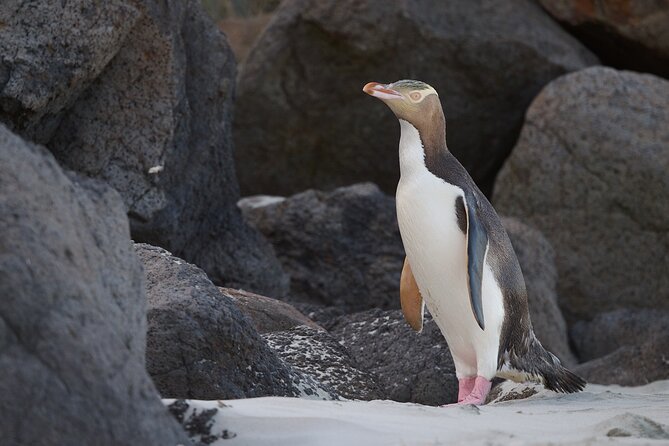
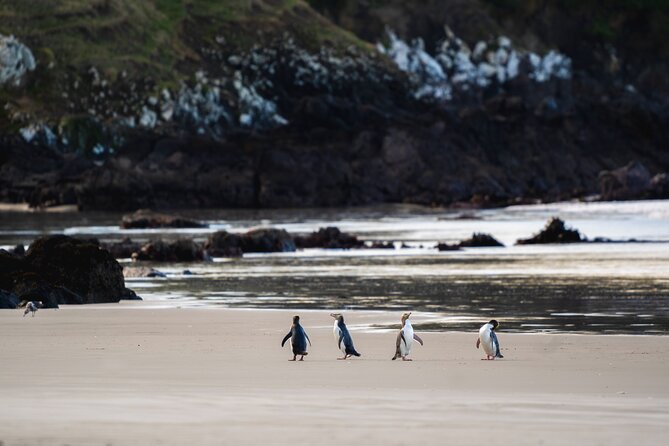
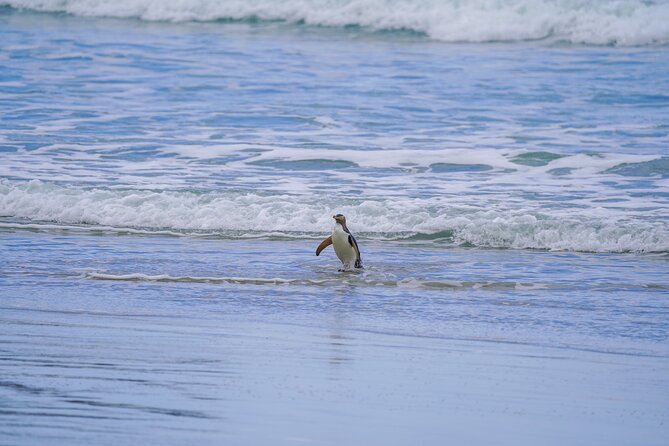
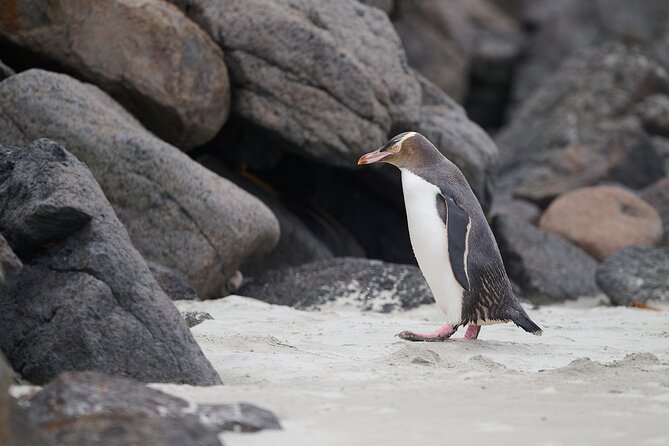
- Yellow-eyed penguins are possible: You may see the rare hoiho, sometimes from far away with binoculars. That distance protects the birds.
- Small-group guiding: Vans hold no more than 10 people, giving you room to ask questions and helping the guide spot wildlife for everyone.
- Prepare for changeable weather: Waterproof layers and walking shoes matter. Wind and rainproof jackets are supplied if needed.
- Four hours with no food stop: Bring snacks or a packed lunch. Water and chocolate chip cookies are provided onboard.
From Dunedin’s Octagon to the Otago Peninsula
The tour begins at 50 The Octagon in central Dunedin and returns there after about four hours. That central meeting point is useful if you are staying in town, arriving by public transport, or fitting the outing into a day in Dunedin.
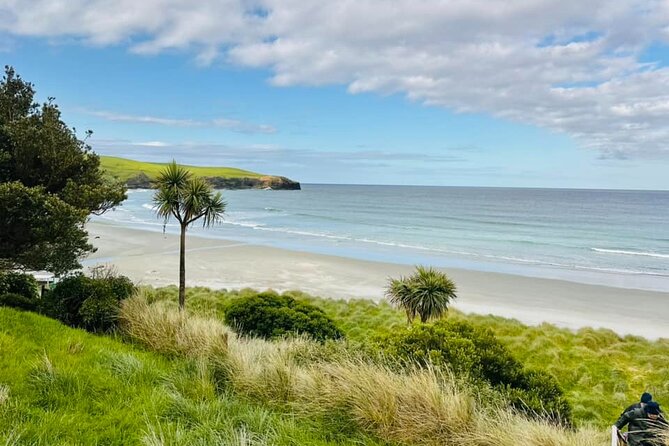
The drive toward Cape Saunders is part of the experience, not merely transport. You pass through the backcountry and inlets of the Otago Peninsula, with broad coastal views and wetland areas where you may see wading birds. The scenery changes as you leave the city behind, giving you a useful sense of how quickly Dunedin opens into open country.
I like the small van format here. A group of 10 is large enough to share the excitement when an animal appears, but small enough for the guide to answer questions without turning the outing into a lecture from the front of a bus. Several guides, including Adrian and Quinn, have been praised for adding local history, culture, ecology, and conservation to the drive.
The exact number of stops can vary with conditions and wildlife activity. You should expect a moving tour with walks and viewing points rather than a fixed collection of timed attractions.
More Wildlife Tours in Dunedin
- Dunedin: Wildlife and Penguin Tour
★ 4.6 · 239 reviews - Dunedin: Otago Peninsula with Guided Penguin Reserve Tour
★ 4.7 · 66 reviews - Dunedin: Monarch – One Hour Wildlife Cruise
★ 4.5 · 48 reviews
Cape Saunders and the secluded seal colony
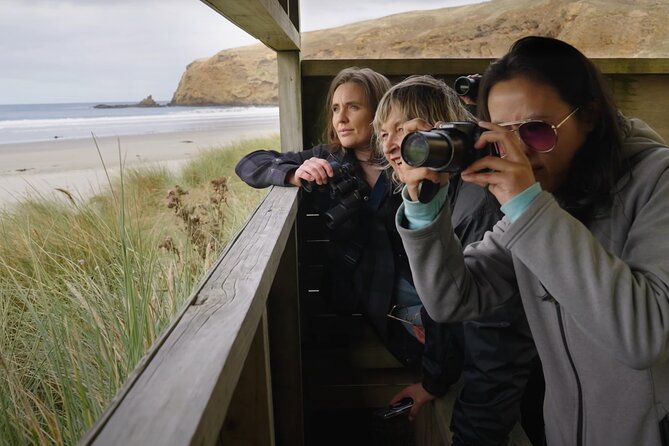
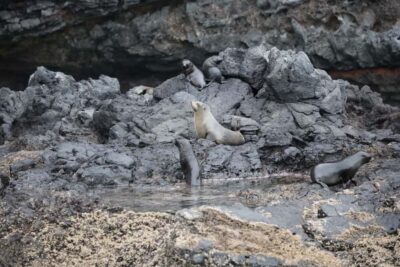
At Cape Saunders farm, the tour reaches a private area with a breeding colony of New Zealand fur seals. You view the colony from two locations overlooking the Pacific, including a hide or sheltered viewing area used to watch the seals. This private access is one of the strongest reasons to choose Clearwater over a basic peninsula sightseeing drive.
Fur seals are often the star here. You might see adults resting along the coast, young seals playing, or animals moving around the rocks and beach. The setting matters as much as the animals. You are looking across a rugged shoreline where wildlife is using the coast as it normally would, rather than gathering around a controlled enclosure.
Seabirds are part of this section too. Bring a camera, but bring patience as well. Some birds may be close enough for easy viewing, while others can be distant against the ocean. The supplied binoculars are a real help, especially when the guide points out an albatross or another bird that would otherwise blend into the horizon.
The tour includes high-quality binoculars at no extra charge. That is more useful than a token pair of compact binoculars, since seabirds and penguins can be surprisingly far from the path.
The private conservation reserve and its rare residents
After Cape Saunders, you continue to a native conservation reserve. Here, guides lead you toward important breeding areas for yellow-eyed penguins and New Zealand sea lions. This is the point where the outing shifts from general wildlife watching to a closer look at species under pressure.
The yellow-eyed penguin, or hoiho, is especially important. It is among New Zealand’s rarest penguins, and seeing one is a matter of luck rather than a promise. Some outings have produced wonderful sightings of several birds. Other times, the penguins have not appeared at all.
That uncertainty is not a flaw in the conservation approach. You are visiting a living habitat, and the birds are not brought out for your convenience. If you do see one, it may be far down the beach or returning from the sea. Binoculars let you watch without pushing close to a sensitive breeding area.
A guide may help you find the bird, explain its behavior, and put the sighting in context. Ferg has been praised for explaining the conservation work around yellow-eyed penguins, while Adrian has drawn particular praise for his long involvement in efforts to protect them. Those details can turn a brief, distant view into a meaningful wildlife moment.
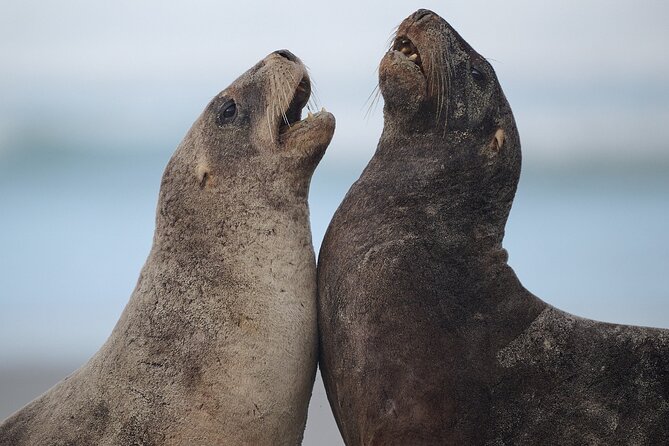
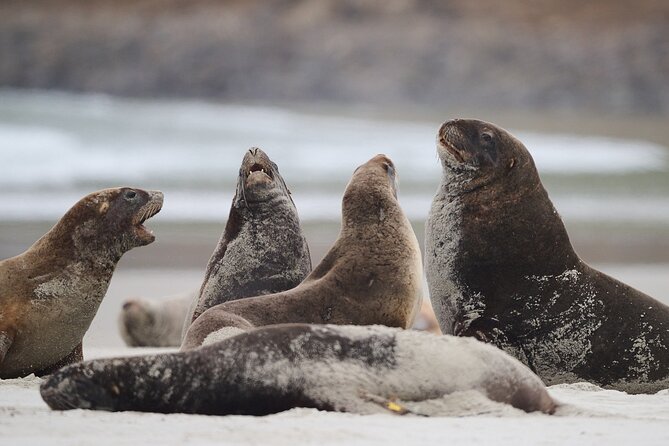
New Zealand sea lions add another strong possibility. You may see them resting on the beach, moving across the sand, or simply taking up a great deal of space. They are impressive animals, and the chance to observe them in a natural coastal setting gives this tour more weight than a quick photo stop.
Why the guides make such a difference
Wildlife tours rise or fall on the guide. Animals do not follow a timetable, so you need someone who can read the setting, notice movement, and explain what you are seeing without disturbing it.
Clearwater’s guides receive especially strong praise for their enthusiasm and conservation focus. Ben has been described as excellent at answering detailed questions. Quinn has been praised for combining humor with a strong understanding of local wildlife. Kelly is known for explaining seals, sea lions, and yellow-eyed penguins clearly, while Paula has been praised for spotting animals as they appear.
The guide also fills in the gaps when the penguins stay hidden. You can still see many birds, learn about the peninsula, and understand why the reserve is protected. That is important because a tour that promises only a checklist can feel disappointing when one species does not cooperate.
I would pay attention to the guide’s approach to wildlife. The best moments here are not about getting as close as possible. They are about watching animals behave naturally, with binoculars and a respectful distance. Several visitors specifically valued that careful attitude.
A completely different kind of day out in Dunedin:
- Dunedin: Speight’s Brewery Guided Tour with Tasting
★ 4.8 · 170 reviews - Dunedin: Scenic Railway Tour Through the Taieri Gorge
★ 4.7 · 73 reviews - Dunedin City & Otago Peninsula Scenery Day Tour
★ 4.7 · 49 reviews - Dunedin: Larnach Castle & Gardens Admission Ticket
★ 4.6 · 36 reviews
Walking conditions: scenic, but not effortless
This is not a sit-in-the-van tour from start to finish. You walk on hills, steps, stairs, sand, and uneven ground. A moderate level of fitness is required, and the terrain is not suitable for people with walking disabilities.
Good walking shoes or boots with solid tread are important. Wet or muddy conditions can make the paths harder, and sand requires more effort than a flat pavement walk. You do not need to treat the outing like a serious hike, but you should be comfortable with basic activity and several changes in surface.
Some viewing options may be available for people with limited mobility, but the full experience requires more movement. The operator states that the tour is not recommended for those with mobility issues. If you are unsure, explain your needs to the guide at the beginning rather than assuming every viewing point will be easy to reach.
Families should read the age rule carefully. The tour is not suitable for children under five, and young children may struggle to keep up. Children cannot sit on an adult’s lap for safety reasons. A five-year-old and an eight-year-old have managed the outing with warm layers and preparation, but that does not mean every small child will find the walks easy.
Weather, clothing, and what to pack
The Otago Peninsula has maritime weather, so conditions can change quickly in any season. Wind, rain, and cold can arrive even when Dunedin begins with clear skies.
Bring warm layers and waterproof clothing. Clearwater supplies wind and rainproof jackets for people who arrive underprepared, but I would treat those as backup rather than your main clothing plan. Wear trousers and shoes that can handle damp paths, sand, and mud.
The vehicle is air-conditioned, and complimentary water and cookies are provided. There are toilets at the farm and at the Octagon meeting point. There are no food stops, so bring a packed lunch or snacks if four hours without a proper meal will be a problem.
Photography is encouraged, and there should be fine opportunities along the coast. A long lens can help, but you do not need expensive equipment to enjoy the outing. The binoculars supplied onboard may be more useful than a phone camera when a penguin or albatross appears in the distance.
The value of the $139.63 price
At $139.63 per person, this is not the cheapest way to see the Otago Peninsula. You are paying for about four hours of transport from central Dunedin, a group capped at 10, private land access, guide service, binoculars, rain gear, and entry to habitats that are not generally open to the public.
The value improves if your priority is wildlife rather than a broad sightseeing circuit. A standard peninsula drive can show you the scenery, but this tour adds access to a secluded seal colony and a private conservation area. You also avoid the uncertainty of trying to locate animals on your own.
The small group is another part of the price. With 10 people or fewer, you have a better chance of hearing the guide, asking questions, and getting help with binoculars. Several outings have had only six people, even when cruise ships were in port, which makes the experience feel personal.
Still, you should not judge the price by the number of species seen. You might see seals, sea lions, many birds, and a yellow-eyed penguin. You might miss the penguins. The fair comparison is a guided conservation-focused outing with private access, not a guaranteed wildlife exhibit.
Who will enjoy this tour most?
I would recommend Clearwater to you if you care about seeing animals in natural surroundings and enjoy learning how conservation works. It is a particularly good choice if you have one half-day in Dunedin and want to use it for something more focused than a general city tour.
It suits photographers, birdwatchers, families with older children, and anyone who prefers a small group. It also works well for cruise passengers, but you should provide the name of your ship so the timing can be considered carefully.
You may prefer another activity if you need fully accessible paths, guaranteed penguin sightings, a meal stop, or a relaxed outing with very little walking. The tour is active enough that poor footwear or inadequate clothing can spoil an otherwise excellent day.
Booking, timing, and cancellation advice
The tour starts and ends at 50 The Octagon in central Dunedin. A mobile ticket is provided, and confirmation arrives at booking. It is near public transportation, which makes the meeting point fairly easy to reach.
Cruise passengers should allow enough time to get from the ship to the Octagon and back again. Tell Clearwater which ship you are arriving on. That information is important when your port schedule is tight.
Free cancellation is available up to 24 hours before the local start time. Cancellations inside 24 hours are not refunded, and late changes are not accepted. The tour requires suitable weather. If poor conditions force a cancellation, you can choose another date or receive a full refund.
Should you book Clearwater Wildlife Tours?
Yes, if you want a thoughtful, small-group wildlife outing and accept that nature makes the schedule. The strongest parts are the private habitats, excellent guides, supplied binoculars, coastal scenery, and the chance to see New Zealand fur seals, sea lions, seabirds, and the rare yellow-eyed penguin.
Book it with warm layers, sturdy shoes, food in your day bag, and realistic expectations. If the hoiho appears, you may have a memorable sighting. If it does not, the private coast, seal colony, sea lions, birdlife, and conservation stories still give you a worthwhile four hours on the Otago Peninsula.
FAQ
Where does the Clearwater Wildlife Tour start and finish?
The tour starts at 50 The Octagon in central Dunedin and ends back at the same meeting point.
How long does the tour take?
The experience lasts about four hours.
What animals might I see?
Possible sightings include yellow-eyed penguins, New Zealand fur seals, New Zealand sea lions, albatross, and other seabirds. Wildlife sightings are not guaranteed.
Are binoculars provided?
Yes. High-quality binoculars are provided at no extra charge.
Are jackets supplied?
Wind and rainproof jackets are available. You should still bring warm and waterproof clothing because conditions can change quickly.
Is the tour suitable for people with mobility issues?
No. The tour includes hills, steps, stairs, sand, and uneven ground, and it is not recommended for people with mobility issues.
Can children join the tour?
Children under five cannot join. Young children may also find the trails difficult, and children cannot sit on an adult’s lap for safety reasons.
Can I bring food?
Yes. There are no food stops, so you should bring a packed lunch or snacks if needed. Complimentary water and cookies are provided onboard.
What happens if bad weather cancels the tour?
You will be offered another date or a full refund if the operator cancels because of poor weather. You can also receive a full refund if you cancel at least 24 hours before the start time.
Just added around Dunedin
- Private Dunedin City Highlights and Otago Peninsula Day Tour★ 4.3 · 7 reviews
- Dunedin: 3 Hour Artisan Food Walking Tour★ 4.4 · 7 reviews
- Dunedin: Peninsula with Lanarch Castle gardens & Olveston★ 5.0 · 8 reviews
- Dunedin City & Coastal Views 3-Hour Small-Group Tour★ 4.9 · 23 reviews
- From Dunedin: City, Otago Peninsula & Albatross Guided Tour★ 4.7 · 35 reviews
- Dunedin: Larnach Castle & Gardens Admission Ticket★ 4.6 · 36 reviews
- Dunedin: Monarch – One Hour Wildlife Cruise★ 4.5 · 48 reviews
- Dunedin City & Otago Peninsula Scenery Day Tour★ 4.7 · 49 reviews
Wildlife & Nature Tours, compared.

Auckland Dolphin and Whale Watching Eco-Safari Cruise
Read our review →
Whale and Dolphin Watching Half-Day Eco Cruise
Read our review →
Gannet Safaris Overland tour to Cape Kidnappers Gannet Colony
Read our review →


Guided Evening Penguin Viewing Otago Peninsula, Dunedin, New Zealand
Read our review →
Browse the lists this tour appears in