
Reviewed · WILDLIFE & NATURE TOURS
Napier: Cape Kidnappers Gannet, Nature & Sightseeing Tour
Gannets turn a cliff into a living theatre. Cape Kidnappers brings you within a few feet of roughly 20,000 birds, while a local driver-guide fills the ride with Maori stories, conservation facts, and farm history. I especially like the remarkably close viewing and the fact that you reach the colony without a long hike. The main thing to consider is the rough, sometimes cramped ride, plus the colony is seasonal.
I also like the strong value at $59 for three hours, particularly because the trip crosses private land that you could not otherwise access. Guides such as Marcus, Jan, Trevor, Marty, and Garth have earned praise for making the journey itself worthwhile. Bring a warm jacket, though. The cape can be windy, and the gannets are impressive but not perfume-scented.
In This Review
- Key points at a glance
- Why Cape Kidnappers is worth your morning
- The three-hour route to the gannet colony
- Meeting 20,000 gannets above the sea
- More than birds: forest, reserves, and Maori stories
- Comfort, weather, and the practical trade-offs
- Is $59 a fair price?
- Who will enjoy this Cape Kidnappers outing?
- Should you book the gannet tour?
- FAQ
- Where does the Cape Kidnappers gannet tour meet?
- How long does the tour last?
- How much does the tour cost?
- Is hotel pickup included?
- Is walking required?
- When can I see the gannets?
- Are refreshments included?
- What should I bring?
- What language is the tour in?
- Can cruise ship passengers book this tour?
Key points at a glance
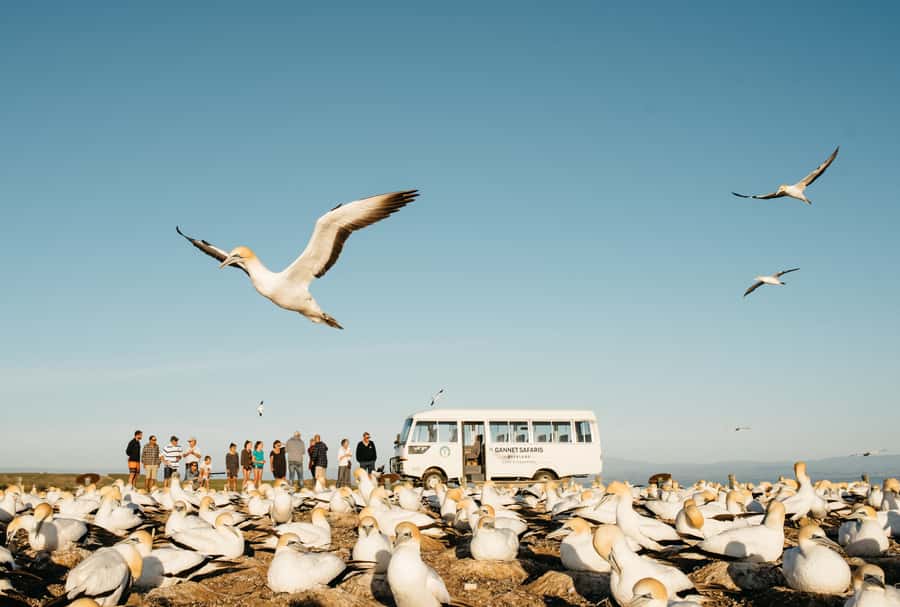
- 20,000 gannets at close range: Watch adults preen, recognize their mates, feed chicks, and return from the sea with fish.
- No required walking: An air-conditioned 4 x 4 coach takes you close to the colony, useful if steep paths are a concern.
- The ride is part of the tour: Cross private Cape Kidnappers land, see dramatic coastal scenery, and stop at a production forest and predator-proof reserve.
- Best from September to early April: September brings returning adults and nest building, while December and January offer plenty of chicks.
- Local guides add character: Commentary can include Maori legends, family connections to the land, local history, birdlife, and pest control.
- Practical value: The three-hour trip includes transport, a guide, and light refreshments, but not food or hotel pickup.
Why Cape Kidnappers is worth your morning
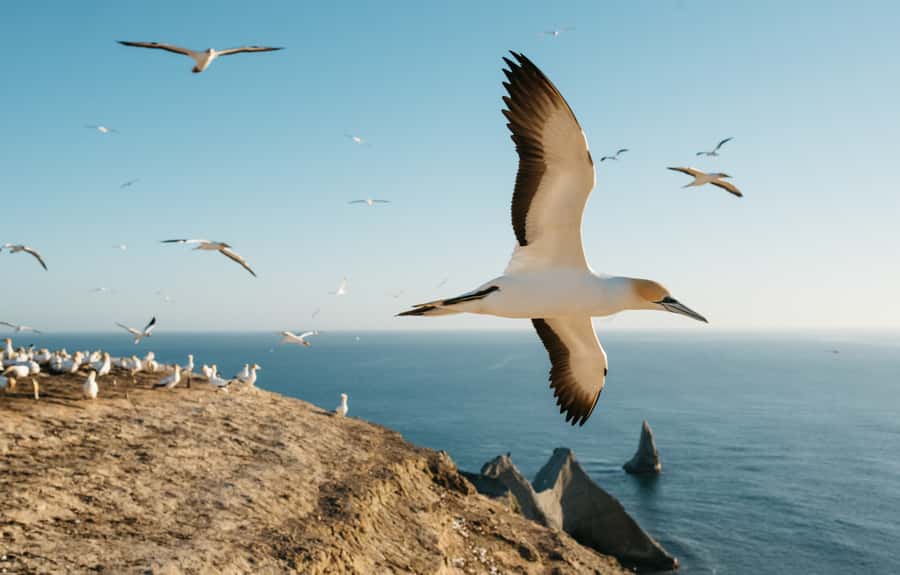
Cape Kidnappers is one of those places where the wildlife does not need help putting on a show. The gannets sit in dense rows on the cliff top, close enough for you to study their black eye markings and pale gold crowns. Adults shuffle around their nests, pair up for their recognition ritual, and preen beside their young.
Above you, birds with wingspans of about six feet swoop in from the sea. Their arrival gives the colony a constant sense of motion, while the birds on the ground keep up their own noisy domestic routine. You are not viewing a distant dot through binoculars. You are watching recognizable behavior from only a few feet away.
That closeness is the major reason to choose an organized trip. The colony sits across private land, and this road access takes you to a viewing point that would otherwise be difficult to reach. You get the spectacle without committing to a long walk or a demanding climb.
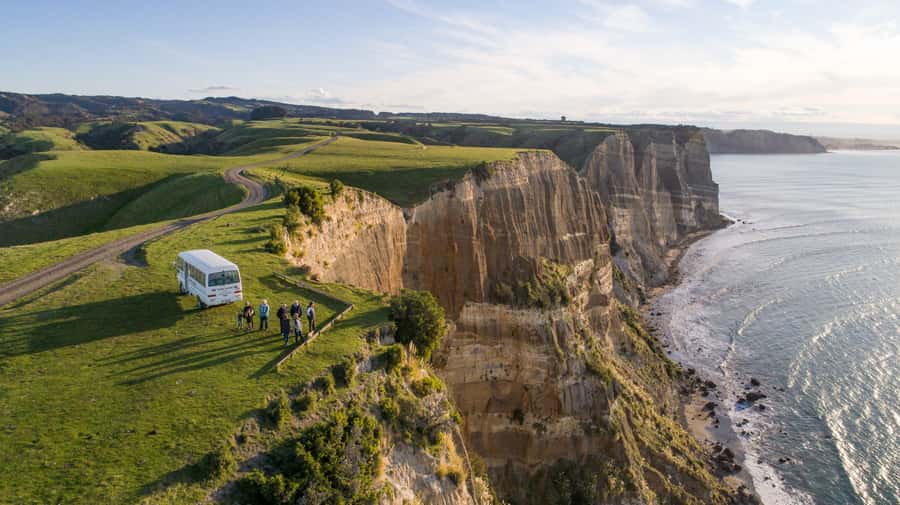
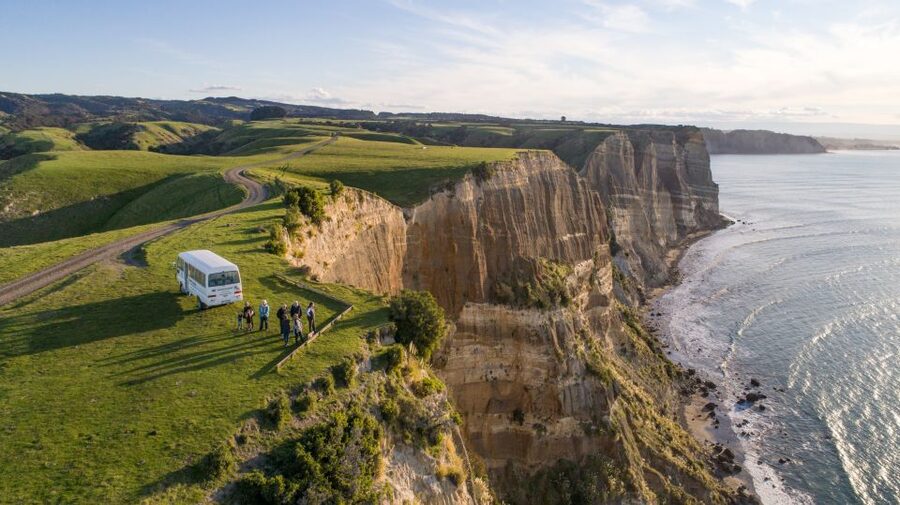
The setting adds plenty, too. The route passes through the Cape Kidnappers area, with broad coastal views and striking geological scenery. It is not just a bus ride to a bird colony. The drive gives you a look at working land, native forest, pest control work, and the wider effort to protect New Zealand wildlife.
More wildlife tours:
- Auckland Dolphin and Whale Watching Eco-Safari Cruise
★ 4.5 · 1,790 reviews - Auckland: Whale and Dolphin Watching Half-Day Eco Cruise
★ 4.5 · 1,072 reviews - Gannet Safaris Overland tour to Cape Kidnappers Gannet Colony
★ 5.0 · 942 reviews
The three-hour route to the gannet colony
Your meeting point is Gannet Safaris Overland at 396 Clifton Road in Te Awanga. Look for the Gannet Safaris sign on the roadside. Hotel pickup and drop-off are not included in the standard arrangement, so you need to make your own way to the departure point.
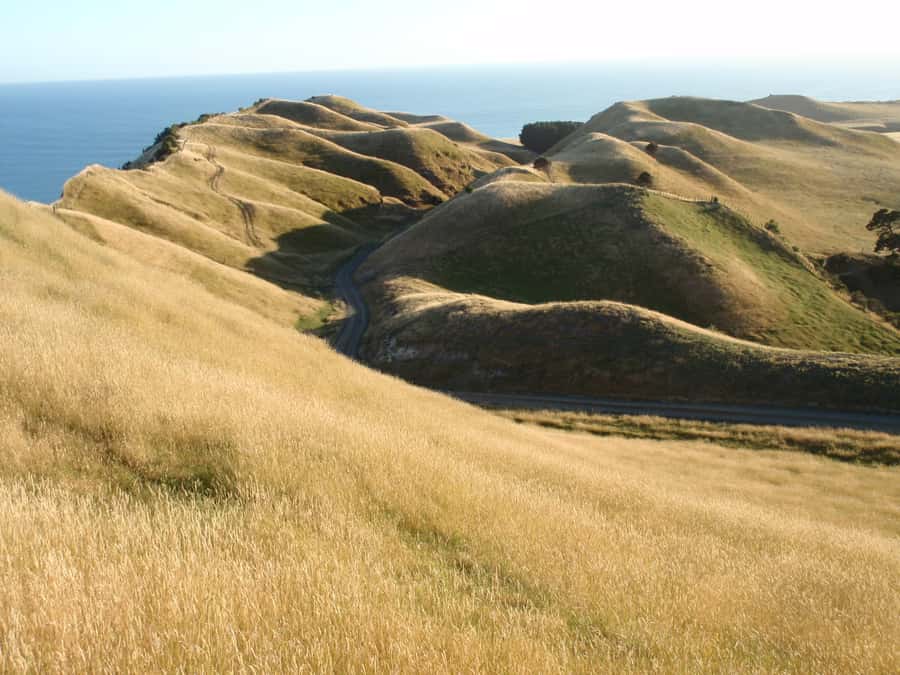
The tour uses a comfortable, air-conditioned 4 x 4 coach. The road can be bumpy, especially across the private property, and one person found the rear seats cramped with less clear commentary and more noticeable spring movement. If you are sensitive to motion or want to hear every word, sitting nearer the guide may be a sensible choice when seating permits.
The ride is not dead time. Your guide may point out local birds, explain Maori legends, and talk about the history of the farms and the cape. Some guides have personal links to the area. Jan, for example, has been praised for local stories and clear commentary, while other guides including Marcus and Trevor have made the trip entertaining as well as informative.
The exact order of stops can vary, but the route includes views of a predator-proof reserve and a native New Zealand forest. You also pass through a production forest. These stops help explain that the area is not simply a scenic backdrop. It is a place where farming, forestry, native species, and conservation sit alongside one another.
The drive may take a little patience. One person found the journey to the cape somewhat long, but also felt the guide made a major difference. That is a fair way to look at it. The vehicle gets you where you need to go, but the commentary turns the transfer into part of the experience.
Meeting 20,000 gannets above the sea

The arrival at the colony is the clear high point. You are taken close to the birds, and walking is not required if you prefer to remain near the vehicle and viewing area. That makes this a good choice for people who want a major wildlife experience without a steep or lengthy approach.
The colony is described as the largest and most accessible mainland gannet colony in the world. Its size matters. A handful of birds can be interesting, but thousands arranged in tight nesting rows create a completely different scene.
Look for the pale gold crown and strong black markings around the eyes. Watch pairs perform their recognition ritual, with posturing and movements that help them identify one another. Adults also preen, guard nest sites, and attend to their chicks.
The young birds are especially memorable from December into January, when chicks are being fed and fattened. They do not have the sleek appearance of the adults, and the busy nesting rows make the colony feel like a crowded neighborhood perched on the cliff edge.
The birds are seasonal. Adults return around September after their winter period away, then begin preparing nests. The colony remains active through early April. By late April, the young birds leave for warmer climates, so timing matters if seeing chicks is important to you.
The smell also matters. Thousands of seabirds in one place produce a noticeable odor. That is part of the real wildlife experience, not a flaw in the tour, but you should know it before arriving. The same goes for wind. A sunny day at sea level does not guarantee a warm visit at the cape.
More than birds: forest, reserves, and Maori stories
The natural setting gives the tour more depth than a simple photo stop. A visit to native New Zealand forest offers a change from the open cliffs and helps you think about the plant life that supports local bird populations.
The predator-proof reserve is another useful stop. New Zealand has long faced pressure from introduced predators, and predator control is central to protecting native birds. You do not need a technical background to appreciate the point: keeping vulnerable species safe requires ongoing work, not just a scenic reserve sign.
The guide commentary connects these details. You might hear about local pest control, farm operations, bird species, and the area’s past. One guide who grew up on a farm was especially good at linking earlier life on the property with present-day conservation.
Maori legends and local stories give the route a stronger sense of place. The best part of this kind of commentary is that it keeps the cape from becoming just another viewpoint. You learn how people understand the area, how the land has been used, and why the wildlife matters here.
The guide quality is one of the tour’s biggest strengths. Names praised in the supplied feedback include Jan, Marcus, Trevor, Marty, Garth, Mick, Tony, and Tom. You cannot choose your guide in advance from the information provided, but the repeated pattern is clear: the human side of the trip is a major part of its appeal.
A few more Napier trips worth weighing up
- Top-Rated Hawke’s Bay Wine Tour – Small Group
★ 5.0 · 256 reviews - Shore Excursion: Scenic Rafting from Napier
★ 5.0 · 179 reviews - Guided 10am Morning Art Deco Walk From Napier Art Deco Trust
★ 4.5 · 167 reviews - Napier: Afternoon Winery Tour Tasting at 3 Great Wineries
★ 4.7 · 147 reviews
Comfort, weather, and the practical trade-offs
The tour lasts three hours, which is long enough to make the drive worthwhile without taking an entire day. Transport is air-conditioned, and light refreshments are included. A hot drink and biscuit have been particularly welcome on chilly visits.
Still, comfort is not perfect for everyone. The route includes rough sections, and the bus can feel warm if the air conditioning is switched off. The rear row may have weaker sound and more bouncing. These are small drawbacks, but they matter if you expect a smooth coach ride.
Bring comfortable shoes even though walking is optional. You may want them for short stops or uneven ground, and they are more practical than sandals in a rural setting. Pack a jacket or jumper regardless of the forecast. The cape can be cold and windy, especially when you are standing still watching the colony.
Photography is one of the tour’s pleasures. The birds are close, the views are wide, and there is enough time at the colony to take more than a quick snapshot. A phone can capture the scale, but you will get the best sense of the scene by alternating between close bird portraits and wider views showing the rows of nests above the coast.
There is no food included, only light refreshments. Plan to eat before or after the tour if you need a full meal. Also remember that the standard tour does not include hotel transfers.
Cruise ship passengers need special care when booking. This tour is not available to cruise passengers through the standard arrangement. A separate cruise excursion is available directly through the operator’s own website, so do not assume the regular booking will fit a ship schedule.
Is $59 a fair price?
At $59 per person, I see this as good value for a three-hour wildlife trip. The price covers the specialist vehicle, a driver-guide, access across private land, the colony visit, and light refreshments. Most important, it provides access to a place you could not easily reach independently.
The value is not only in the time spent beside the gannets. You also receive interpretation about Maori stories, local history, forests, conservation, and birdlife. Several people found the drive itself nearly as rewarding as the colony because the guides kept the commentary lively and personal.
You are paying for access and local knowledge, not a luxury vehicle or a silent, polished ride. The coach can be bumpy, some seats are better than others, and the weather at the cape can be raw. If you want a smooth sightseeing transfer, this may feel basic. If you want a practical route into a remarkable wildlife site, the price is sensible.
The free cancellation policy allows cancellation up to 24 hours before departure for a full refund, and the reserve now, pay later option keeps your plans flexible. Check the available starting times before booking because the tour runs for three hours and the times can vary.
Who will enjoy this Cape Kidnappers outing?
I would recommend it most strongly to bird lovers, photographers, families, and anyone who wants close wildlife without a long walk. The short access from the vehicle makes it useful for people who find steep or uneven walking difficult.
It also suits visitors who enjoy learning while they travel. If you like local stories, practical conservation information, and a guide who points out more than the obvious view, the commentary adds real value.
Families can appreciate the variety. The trip includes a vehicle adventure, unusual birds, wide coastal scenery, forest, and stories about the area. Children may find the chicks and swooping adults more exciting than a formal museum visit.
You may want to think twice if you dislike bumpy roads, confined vehicle seating, strong bird odors, or changeable coastal weather. The tour is also seasonal, so it is not suitable for someone visiting after the gannets have left in late April and before they return around September.
Should you book the gannet tour?
Yes, if Cape Kidnappers fits your Hawke’s Bay plans and you want one of the region’s most distinctive wildlife experiences. The combination of private-land access, close gannet viewing, local commentary, and almost no required walking is hard to match for $59.
Book it during the active season, with December and January especially appealing if you want to see chicks. Arrive prepared for wind, bring warm clothing, and accept that the road may be bumpy. If you can do that, the sight of thousands of gannets living their noisy cliff-top lives should give you a morning you remember long after the feathers and smell have faded.
FAQ
Where does the Cape Kidnappers gannet tour meet?
The meeting point is Gannet Safaris Overland Ltd, 396 Clifton Road, Te Awanga 4172, New Zealand. Look for the Gannet Safaris sign beside the road.
How long does the tour last?
The tour lasts three hours. Check the available start times when booking.
How much does the tour cost?
The listed price is $59 per person.
Is hotel pickup included?
No. Hotel pickup and drop-off are not included in the standard tour.
Is walking required?
No. Walking is not required if you do not want to walk. The 4 x 4 coach takes you close to the gannet colony.
When can I see the gannets?
The gannets can be seen from September to early April. They return around September, chicks arrive during December and January, and the young birds leave in late April.
Are refreshments included?
Light refreshments are included. Food is not included.
What should I bring?
Bring comfortable shoes and a jacket or jumper. The cape can be windy and chilly.
What language is the tour in?
The tour is conducted in English with a live English-speaking guide.
Can cruise ship passengers book this tour?
The standard tour is not available for cruise ship passengers. A separate cruise ship excursion is available directly through the operator’s website.
Just added around Napier
- Hawkes Bay – Scenic, luncheon, wine Tour★ 4.0 · 5 reviews
- Napier Shore Excursion: City Sights and Hawke’s Bay Tour★ 3.5 · 6 reviews
- Napier Shore Excursion: Wine & Art Deco Tour★ 4.5 · 6 reviews
- Hawkes Bay: Half-Day Wine Tour with Tastings and Cheeseboard★ 5.0 · 6 reviews
- Small group – Beer, Wine, Cider and Gin Tour – 5.0 – 5.5 hours★ 5.0 · 6 reviews
- Deco City Black Cab Tours and Shuttles★ 5.0 · 8 reviews
- From Napier: Hawke’s Bay Small Group Wine Capita Tour★ 4.9 · 10 reviews
- Napier: Highlights & Tour Exploring the Best of this Region★ 4.6 · 11 reviews
Wildlife & Nature Tours, compared.

Auckland Dolphin and Whale Watching Eco-Safari Cruise
Read our review →
Whale and Dolphin Watching Half-Day Eco Cruise
Read our review →
Gannet Safaris Overland tour to Cape Kidnappers Gannet Colony
Read our review →

Clearwater Wildlife Tours (small group 10max) Otago Peninsula
Read our review →

Guided Evening Penguin Viewing Otago Peninsula, Dunedin, New Zealand
Read our review →
Browse the lists this tour appears in