
Reviewed · CITY TOURS
Rotorua Duck Boat Guided City and Lakes Tour
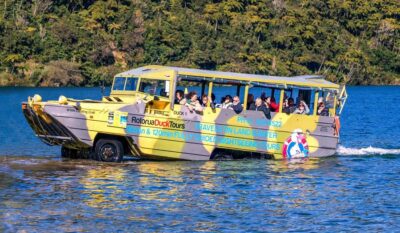
Rotorua gets much more interesting from a Duck. This 90-minute tour combines a city ride with time on Lakes Tikitapu and Okareka, giving you two things I especially like: an unusual WWII amphibious vehicle and live local commentary from guides such as Rileigh, Matt, Ollie, and Ian. At $55.23 per person, it is a reasonably priced way to see several Rotorua sights without giving up half a day.
The main consideration is comfort. The vehicle is old military machinery, not a quiet modern coach, and one review noted strong wind and a sound system that was hard to hear. Weather also matters, since the tour can be canceled in poor conditions. Still, the combination of land, water, local stories, and a little mechanical drama makes this a strong pick for families and first-time visitors.
In This Review
- Key Things to Know Before You Go
- Why This Old Army Vehicle Works So Well
- Starting Along Rotorua’s Lakefront
- Government Gardens, Sulphur Point, and the Blue Baths
- From City Streets to Lake Tikitapu
- Lake Okareka and the View Toward Mount Tarawera
- The Guides Make the Difference
- Who Will Get the Most From the Ride
- Is $55.23 a Fair Price?
- Practical Details That Matter
- Should You Book the Rotorua Duck Tour?
- FAQ
- Where does the Rotorua Duck Tour begin?
- Where does the tour end?
- How long does the tour last?
- What vehicle do you ride?
- Which lakes are included?
- What Rotorua sights can you see?
- Is food included?
- How many people can join the tour?
- Can I bring a service animal?
- What happens if the weather is poor?
Key Things to Know Before You Go
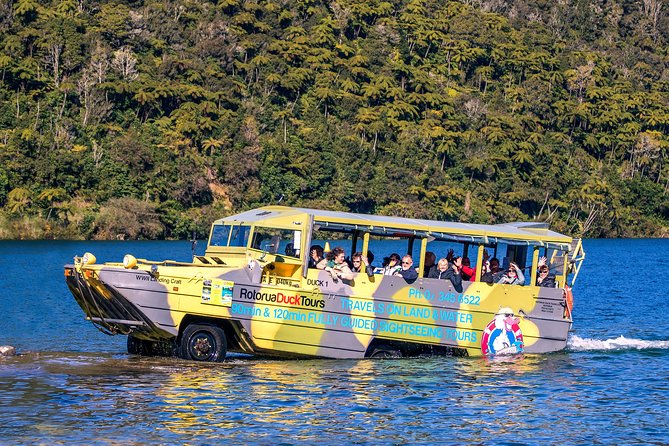
- The WWII Duck is the main event: You ride an authentic amphibious vehicle that travels on Rotorua streets and then enters the water.
- Two lakes are included: The tour cruises on Lake Tikitapu, also called Blue Lake, and Lake Okareka.
- You get a compact city overview: The route passes the Government Gardens, Sulphur Point, the Rotorua Museum, the Blue Baths, and sights linked to the 1886 eruption.
- The guide shapes the experience: Drivers including Matt, Rileigh, Ollie, Ian, Esther, and Karen are praised for humor, local facts, and clear safety information.
- It fits a busy schedule: The advertised duration is about 1 hour 30 minutes to 1 hour 45 minutes, with a maximum of 28 people.
- Weather can change the plan: Free cancellation applies up to 24 hours before departure, and poor weather may lead to a new date or full refund.
Why This Old Army Vehicle Works So Well
Rotorua has plenty of scenic lake trips and plenty of city sightseeing. The Duck combines both in one slightly eccentric package. You board at 1241 Fenton Street, near Rotorua’s central area, then settle into a vehicle that feels more like a piece of working history than ordinary tour transport.
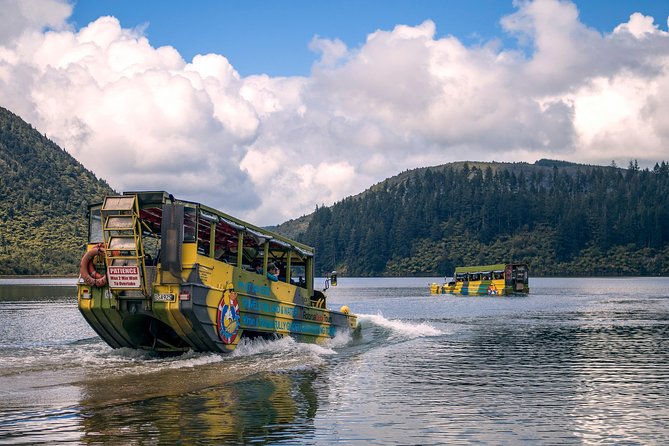
That matters because the vehicle is not just a way to get from one stop to another. The guide explains the Duck itself, including its WWII background and how it manages both road and water travel. The old machinery is part of the story, and several guides use humor to keep the information moving.
The experience is best understood as a lively orientation tour, not a specialist history excursion. You will hear about Rotorua, its lakes, its geology, plants, bird life, and local landmarks. You will not get a long stop at every sight, and the tour does not replace a full museum visit or a dedicated geothermal experience.
The vehicle holds a maximum of 28 people. That is small enough to feel organized, though it is still a group ride rather than a private outing. The compact format helps the tour keep its pace, which is useful if you have only a short window in Rotorua.
More Boat Tours in Rotorua
- Tarawera and Rotorua Lakes Eco Tour by Boat with Guide
★ 5.0 · 196 reviews - Katoa Jet Boat tour on Lake Rotorua
★ 5.0 · 112 reviews - Waimangu: Volcanic Valley Walk and Lake Rotomahana Cruise
★ 4.7 · 55 reviews
Starting Along Rotorua’s Lakefront
The tour begins with a drive around Rotorua’s lakefront and an introduction to the area’s past. This opening gives you photo chances and helps place the city beside Lake Rotorua, with Mokoia Island visible in the wider setting.
The lakefront is an important part of understanding Rotorua. The city is not simply a geothermal stop with a few pools tucked behind it. Water, volcanic activity, public gardens, old bathing facilities, and Māori history all meet around the central area.
The guide’s commentary is live, so you can ask questions or listen for details that fit your interests. The tone varies by driver. Matt is praised for humor and energy, while Ollie is singled out for information about vegetation and bird life. Ian is described as both funny and well informed about the Rotorua district.
You should keep your camera ready, but do not expect a long photography stop at every landmark. The Duck keeps moving, and views are often best treated as quick introductions rather than formal visits.
Government Gardens, Sulphur Point, and the Blue Baths
The route continues past the Government Gardens, a public park near Lake Rotorua. The gardens are tied to Rotorua’s development as a health and bathing destination, and the commentary helps explain why this area became so important.
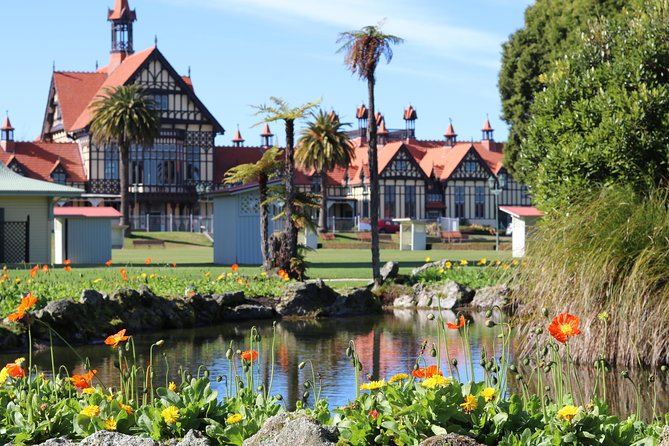
The nearby Rotorua Museum, also known as Te Whare Taonga o Te Arawa, adds another layer to the city’s story. The elegant building is a landmark in its own right, even though this tour only views it from the vehicle. If you want to explore the museum properly, plan a separate visit rather than expecting the Duck tour to cover its exhibits.
You also pass Sulphur Point, where Rotorua’s geothermal character becomes especially clear. The area is associated with natural sulphur activity, and it helps explain the distinctive smell that greets you in parts of the city. The Duck gives you context for what you are seeing, rather than presenting the city as a string of disconnected sights.
The Blue Baths, established in 1931, are another notable stop along the route. Their elegant design reflects Rotorua’s past as a place for bathing and wellness. Again, this is a drive-by viewing, so the value comes from the guide’s explanation and the way the building fits into the city’s story.
From City Streets to Lake Tikitapu
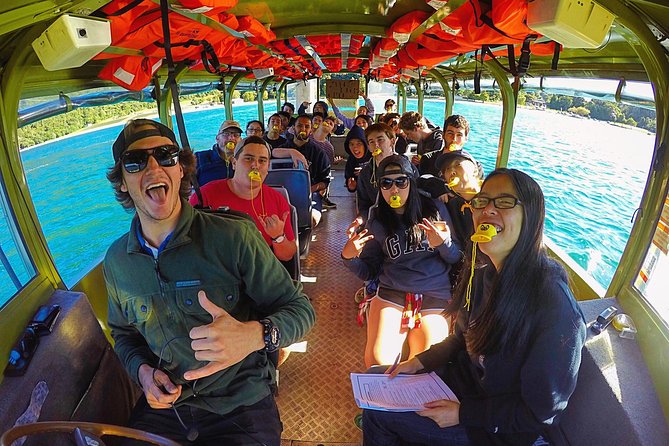
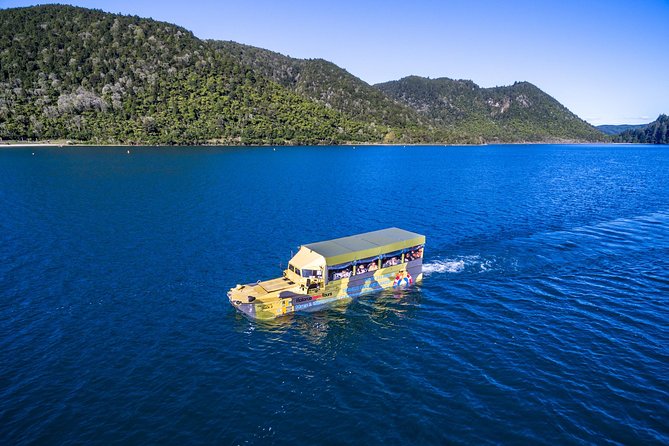
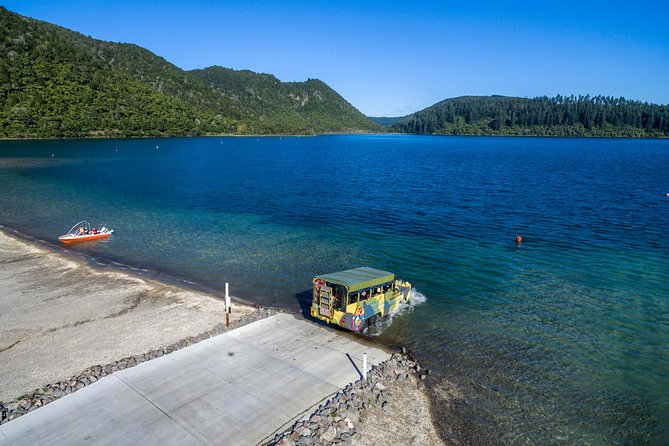
The key transition comes when the Duck leaves the road and enters Lake Tikitapu, commonly called Blue Lake. The change from driving to floating is the tour’s most memorable moment, especially for children.
This is not a high-speed boat ride. You are on the water for the views and the novelty of being in an amphibious vehicle. The Duck’s height gives you a different angle across the lake, and the water section provides a calmer break after the city drive.
The lake is one of Rotorua’s popular scenic areas, and the tour makes it possible to see it without arranging separate transport. That is where the $55.23 price begins to make sense. You are paying for the vehicle, guide, city overview, and two lake visits in one booking.
Weather can shape this part of the trip. One review describes the experience as enjoyable even in rain, but another points out that wind made the drive uncomfortable and made the onboard audio difficult to hear. If the forecast looks rough, bring suitable clothing and keep your expectations practical. The ride is open to the weather in a way a standard coach is not.
A completely different kind of day out in Rotorua:
- Rotorua Canopy Tours: 2.5Hour Native Forest Zipline Adventure
★ 5.0 · 4,563 reviews - Mitai Maori Village: Cultural Experience and Dinner Buffet
★ 4.7 · 3,575 reviews - Rotorua: Wai-O-Tapu Geothermal Park Entry Ticket
★ 4.6 · 2,601 reviews - Rotorua’s Ultimate Zipline: 6 ziplines, 400 m Tandem, Cliff Walk
★ 5.0 · 2,557 reviews
Lake Okareka and the View Toward Mount Tarawera
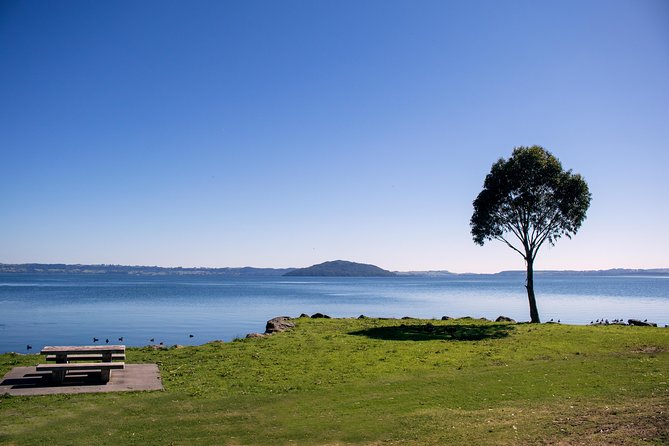
The tour continues to Lake Okareka, another of Rotorua’s volcanic lakes. The change from the central city to the lake communities gives you a broader view of the district and its setting.
A lakeside community is included along the way, and the Duck’s raised position helps with views toward Mount Tarawera. The mountain is closely tied to the 1886 eruption, one of the major historical events covered during the ride.
The tour does not turn the eruption into a full geological lecture, but it gives you a useful introduction. You hear about the event, see the surrounding volcanic setting, and gain a better sense of why Rotorua has such unusual lakes and geothermal features.
This portion is likely to appeal most to people who enjoy scenery with a story attached. You are not just looking at water and hills. The guide connects the lakes, the volcanic basin, the eruption, and the development of nearby communities.
The water sections also give the tour a pleasant rhythm. You begin with city sights, move into local history, then leave the streets behind for open views. After cruising the lakes, the Duck returns to central Rotorua and the original meeting point.
The Guides Make the Difference
The strongest feature of this tour is the driver-guide. A good guide turns an old vehicle and a standard route into a proper outing. The feedback points repeatedly to humor, local knowledge, clear safety instructions, and enthusiasm.
Rileigh receives especially warm praise for combining jokes with useful information. Matt is described as energetic and excellent with children, while Ollie adds facts about local plants and bird life. Esther is praised for keeping the ride informative and amusing, and Karen is noted for being both entertaining and well informed.
The style includes puns and dad jokes. That will suit families and anyone who prefers a relaxed tour. If you want a quiet, formal lecture, this may feel too playful. The humor is part of the product, not an occasional extra.
Guide quality can vary from one departure to another, as it does on any guided activity. The positive comments are consistent enough to suggest that the company puts real emphasis on the people behind the wheel. Still, audio quality is worth noting. One person found the radio difficult to hear, and that could affect how much you take from the commentary.
Who Will Get the Most From the Ride
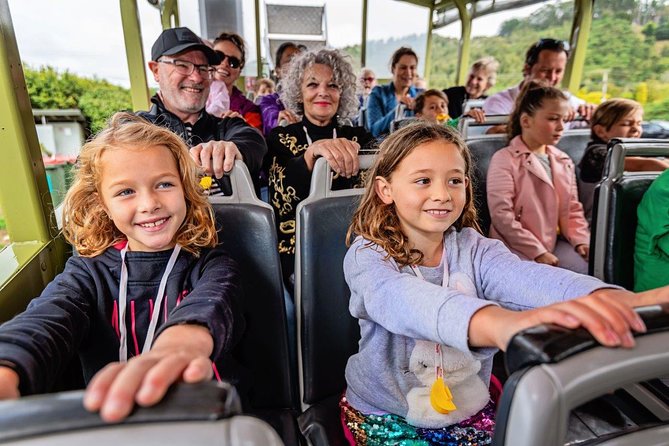
This is a very good fit for families. Children get the excitement of a vehicle entering the lake, while adults receive a quick introduction to Rotorua’s history and scenery. A four-year-old was described as loving every minute, and several comments point to the tour working especially well for younger children.
It also suits first-time visitors with limited time. In roughly an hour and a half, you see central landmarks, two lakes, a lakeside community, and views toward Mount Tarawera. You will not explore each place in depth, but you get a useful map in your head for later visits.
The tour can also work well on a rainy day if the operator runs it, though you should dress for the conditions. One person found it enjoyable in rain, while another found wind and weak audio frustrating. Weather is not a minor detail here.
People who need a long, quiet, highly detailed commentary may prefer a more focused museum, geothermal, or lake excursion. The Duck is social, funny, mechanical, and broad in scope. Its strength is variety, not depth at one single site.
Most people can participate, service animals are allowed, and the departure point is near public transport. The supplied details do not specify step-free access, seating arrangements, or exact boarding requirements, so you should confirm those points directly if they affect your plans.
Is $55.23 a Fair Price?
At $55.23 per person, the tour sits in the affordable range for a guided Rotorua activity, especially given that it includes the vehicle, driver-guide, live commentary, city sightseeing, and two lakes.
The value is strongest if you want an overview. Booking separate transport to the lakes, a city orientation, and a water excursion could take more time and cost more. The Duck also gives you something a standard sightseeing bus cannot: the fun of changing from road travel to water travel in the same vehicle.
The value is weaker if you judge tours by the amount of time spent at formal attractions. There are no food or drinks included, and the route mainly passes the city sights rather than providing long visits. You should not book this expecting entry to the Rotorua Museum, the Blue Baths, or other attractions.
I see it as a good first activity in Rotorua. It helps you decide which places deserve a longer visit later, while giving you a memorable ride at a moderate price.
Practical Details That Matter
The meeting point is Rotorua Duck Tours at 1241 Fenton Street, Rotorua 3010. The tour ends back at the same place, which makes it easy to connect with another central activity afterward.
The advertised ride lasts 90 minutes, though the full experience may run closer to 1 hour 45 minutes. Leave a little space around the booking rather than scheduling another activity immediately at the expected end time.
You receive confirmation when booking, and mobile tickets are supported. Food and drinks are not included, so plan those separately. The group limit is 28 people.
Free cancellation is available if you cancel at least 24 hours before the local start time. Changes or cancellations inside that window are not accepted for a refund. The operator may also cancel for poor weather or if the minimum number of participants is not reached, offering another date or a full refund.
Should You Book the Rotorua Duck Tour?
I would book this tour if you want a short, family-friendly introduction to Rotorua with plenty of variety. The WWII Duck, the splashdown, the two lakes, and the guides’ humor give it more personality than an ordinary city loop.
Book it early in your Rotorua stay if possible. You will get your bearings, hear about the 1886 eruption and local landmarks, and see which areas you want to revisit. Bring clothing suited to the weather, keep your camera handy, and sit where you can hear the commentary clearly.
Skip it if you want long visits at individual attractions or a quiet, polished cruise. For most people, though, the oddness is the appeal. This is a practical way to see Rotorua, and the Duck is far more memorable than another ride in a regular bus.
FAQ
Where does the Rotorua Duck Tour begin?
The tour begins at Rotorua Duck Tours, 1241 Fenton Street, Rotorua 3010, New Zealand.
Where does the tour end?
The activity ends back at the original meeting point on Fenton Street.
How long does the tour last?
The advertised tour lasts 90 minutes. The approximate total duration is listed as 1 hour 30 minutes to 1 hour 45 minutes.
What vehicle do you ride?
You ride an authentic WWII-era amphibious Duck vehicle that travels on both land and water.
Which lakes are included?
The tour includes time on Lake Tikitapu, also known as Blue Lake, and Lake Okareka.
What Rotorua sights can you see?
The route includes views of the lakefront, Government Gardens, Sulphur Point, Rotorua Museum, the Blue Baths, and places linked to the 1886 eruption. It also includes views toward Mount Tarawera.
Is food included?
No. Food and drinks are not included in the tour price.
How many people can join the tour?
The maximum group size is 28 people.
Can I bring a service animal?
Yes. Service animals are allowed.
What happens if the weather is poor?
The experience requires good weather. If the operator cancels because of poor conditions, you will be offered another date or a full refund.
Just added around Rotorua
- Te Puia: Tuku Iho Trail with Cultural Show★ 5.0 · 5 reviews
- Ultimate self-drive rail car journey★ 5.0 · 5 reviews
- Private Tour Waiotapu Geothermal Shore Excursion up to 8 passengers★ 5.0 · 6 reviews
- Rotorua: Floatplane Flight with Orakei Korako Landing★ 5.0 · 6 reviews
- Rotorua: Evening Starlight Gourmet Kayak Tour with dinner★ 5.0 · 6 reviews
- Rotorua: Glow Worm Adventure Kayak★ 5.0 · 6 reviews
- Epic Tandem Kayak Tour down the Kaituna River Waterfalls★ 5.0 · 6 reviews
- From Rotorua: Whirinaki Rainforest Guided Cultural Tour★ 5.0 · 6 reviews
City Tours, compared.
Half-day Discover Auckland City Sightseeing Tour
Read our review →


2025 Award Winning: Auckland City Highlights Half Day Tour
Read our review →
Arrival Transfer: Auckland Airport to Auckland Central City Centre
Read our review →
Browse the lists this tour appears in