
Reviewed · MAORI CULTURAL EXPERIENCES
Rotorua: Māori Cultural Performance with Dancing
Thirty minutes can carry a lot of meaning. This lively show at Whakarewarewa, The Living Māori Village, offers a quick, affordable way to see traditional Māori song and dance in Rotorua. I like the powerful haka and the chance to hear beautiful Māori singing, and I also like that the performance includes poi dancing, stick games, stories, and audience participation rather than only a staged dance routine.
The main consideration is its short length. At 30 minutes, this is a cultural introduction, not a full village visit or an all-day Māori experience. The performance itself does not include a tour or other village activities, and free seating means you should arrive early if you want a good view near the front.
In This Review
- Key points before you book
- What happens when you arrive at Whakarewarewa
- Traditional songs open the door
- The haka brings force and focus
- Poi dancing and stick games add movement
- Why the village setting matters
- Is $20 good value?
- Who will enjoy this performance most?
- A few practical tips for a better visit
- My verdict: book it for a short cultural taste
- FAQ
- How long is the Māori cultural performance?
- How much does the experience cost?
- Where do I check in?
- Is seating assigned?
- What does the performance include?
- Does the ticket include a village tour?
- Is the performance in English?
- Is the activity wheelchair accessible?
- Can I cancel for a full refund?
Key points before you book
- A focused 30-minute show: You get traditional singing, dancing, the haka, poi, stick games, and cultural explanations without committing to a long meal-and-entertainment package.
- Held at a living Māori village: The setting adds context and gives the performance a stronger connection to Rotorua’s Māori heritage.
- Free seating: Arrive early for the best chance of choosing a front-row place.
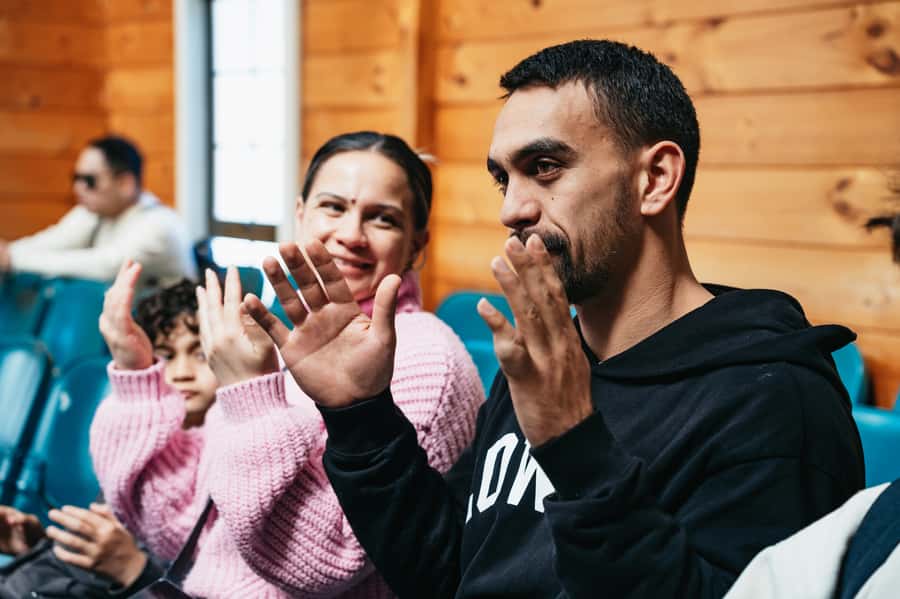
- Audience participation: You may be invited to try some of the movements, making this more engaging for families and older children.
- A $20 introduction: The price is modest for a live performance, especially if you want a short cultural stop between other Rotorua activities.
- Separate from village tours: Your ticket covers the performance and host only, not a guided village visit or additional activities.
What happens when you arrive at Whakarewarewa
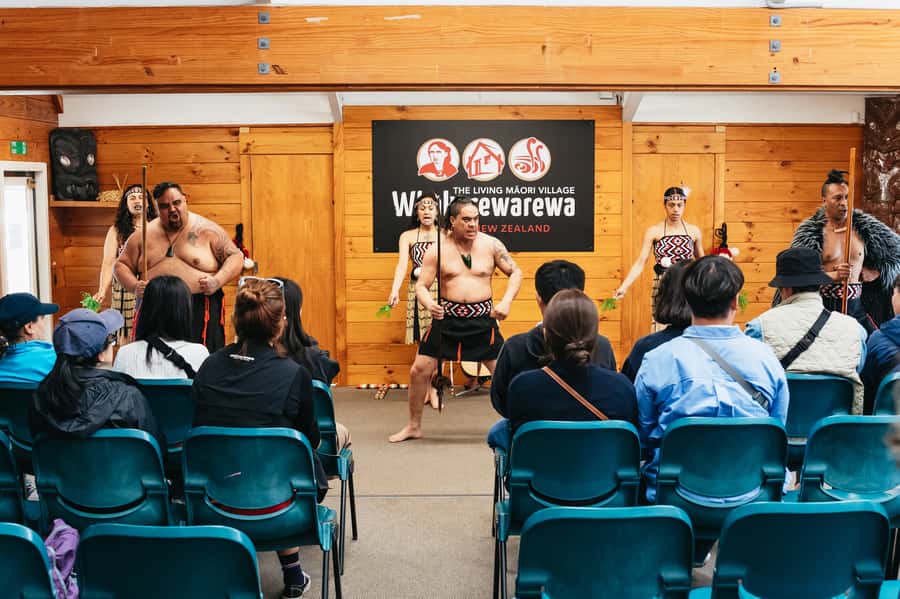
You begin at the admissions building, where you check in and receive your tickets. A host then shows you to the performance area. The process is simple, but it is worth allowing a little time to find the admissions building and get seated before the show begins.
Seating is free rather than assigned. That small detail matters. If you want to see the performers clearly, arrive early and move toward the front once you have checked in. The venue has limited seats, which can help the show feel more personal, but late arrivals may have fewer choices.
The host or greeter speaks English, and the performance is presented in English. Cultural explanations come before or around the dances, so you are not left trying to guess what each movement means. This helps turn a pleasant stage show into a useful introduction to Māori traditions.
The setting at Whakarewarewa also gives the event more weight. You are not simply watching a touring dance group in a generic theater. You are seeing a performance connected to a living Māori village, which gives the songs and dances a clear sense of place. Still, keep your expectations sensible: the ticket covers the performance, not a complete look at village life.
More Maori Cultural Experiences in Rotorua
- Mitai Maori Village: Cultural Experience and Dinner Buffet
★ 4.7 · 3,575 reviews - Cultural Experience & Seasonal Māori Cuisine at Te Pā Tū
★ 5.0 · 1,546 reviews - Mitai Maori Village Cultural Experience in Rotorua
★ 4.5 · 1,294 reviews
Traditional songs open the door
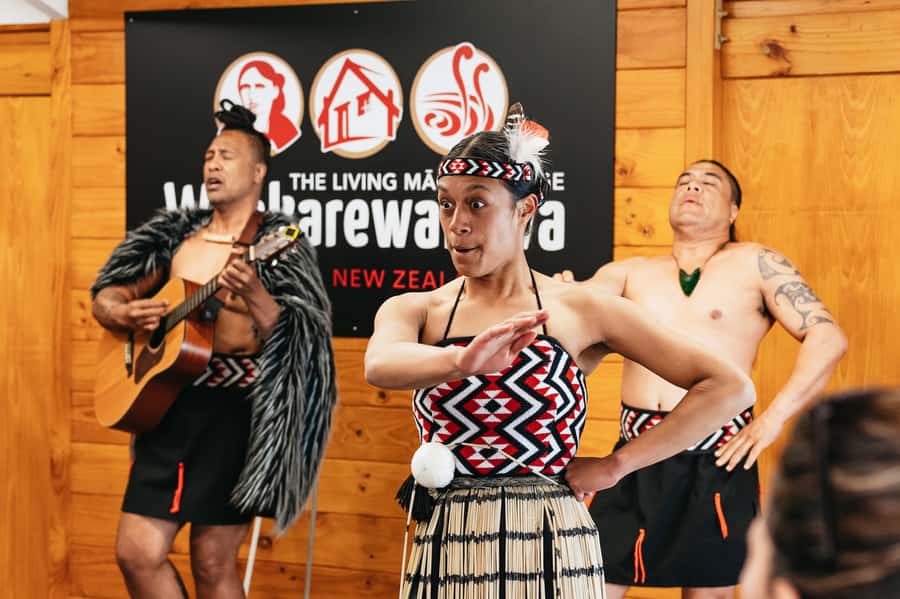
The singing is one of the strongest parts of the experience. Harmonious voices carry the traditional songs, giving the performance a gentler start before the more forceful dances appear.
One song that may be included is Pokarekare Ana. The background story provided for the song adds meaning beyond its familiar melody. This is a good example of why the explanations matter. You hear the music, but you also get a small piece of the cultural story behind it.
I like this balance. The show does not rely only on fast movements and dramatic facial expressions. It allows space for melody, feeling, and storytelling. Some people describe the singing as emotional and heartwarming, which makes sense if you pay attention to the contrast between the soft songs and the fierce haka that follows.
The songs also help younger people stay interested. Teenagers and children may not follow every cultural explanation, but live voices, clear movement, and a change in mood keep the presentation moving. Audience participation later in the show gives them a chance to take part instead of sitting quietly for the full half hour.
The haka brings force and focus
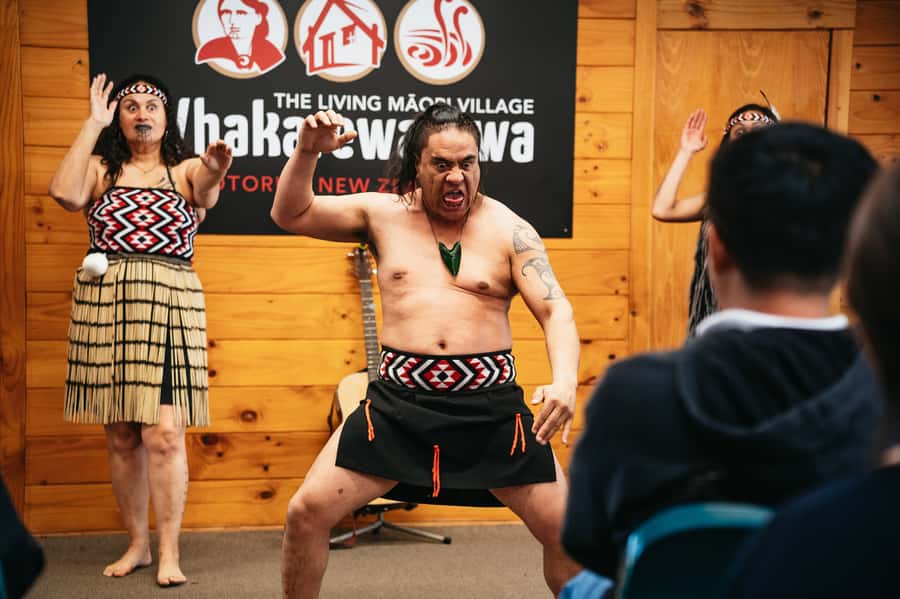
The haka is the show’s best-known feature, and it earns its place. You will see strong expressions, rhythmic movement, stamping, and powerful vocal work. The performance shows why the haka is so widely recognized, but it also places it within a broader program of Māori song and dance.
The haka should not be treated as a novelty or a quick photo opportunity. Its force comes from the performers’ focus and energy. The explanations help you understand that you are watching a meaningful cultural performance, not just a dramatic routine designed for tourists.
That said, this is still a staged presentation. It is designed to introduce you to Māori arts in a short, accessible format. If you want a detailed lesson on the many forms and uses of haka, this performance will only provide a starting point. For most people, that is exactly what makes it useful: you gain context without needing to spend several hours in a formal cultural program.
The performers’ enthusiasm is a major part of the effect. Their energy fills the short program, and the atmosphere is welcoming rather than stern. You can enjoy the visual drama while still respecting the cultural importance of what you are watching.
Poi dancing and stick games add movement
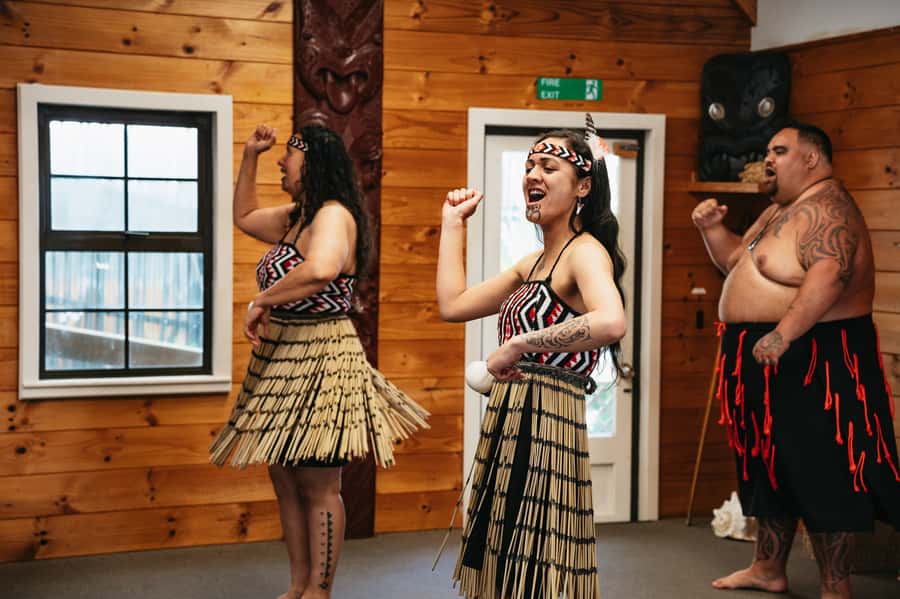
After the singing and haka, the show turns to other traditional forms. Poi dancing brings flowing movement and rhythm, with performers working in time with the music. It offers a striking contrast to the sharp physical power of the haka.
The stick games provide another change of pace. They show coordination, timing, and teamwork, and they give the program a playful edge. These sections help you see that Māori performance is not one single style. The show includes several types of movement, each with its own feel.
The short format works well here. You see enough of each element to understand how it fits into the wider program, but you do not spend too long on any one demonstration. Some people may wish the show continued, especially once the singers and dancers have built up momentum. For a first taste, though, the 30-minute length is easy to fit into a busy Rotorua day.
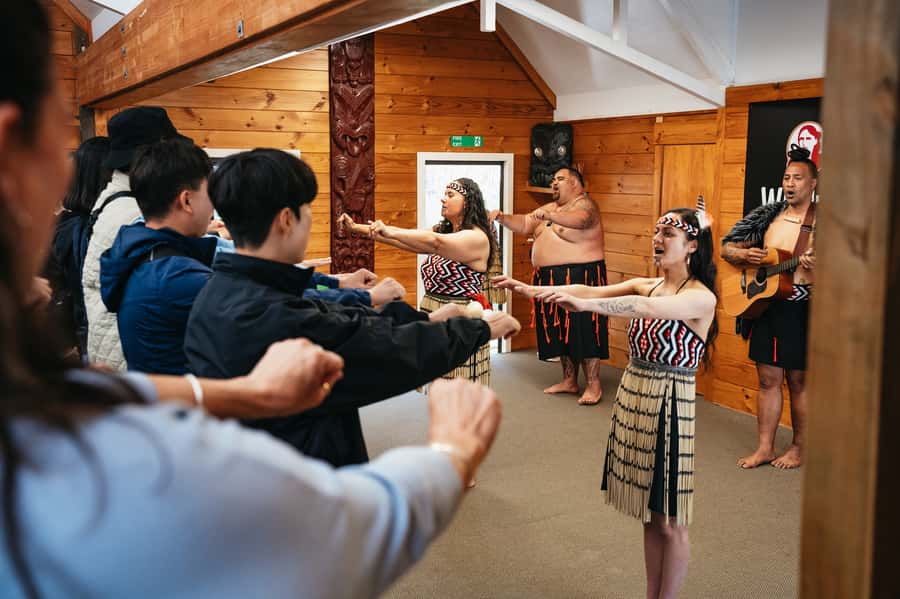
The ending includes a lively song and dance section. Audience involvement can make this final part especially fun. You may be asked to copy some of the movements, so this is not the time to worry about looking polished. The point is to join in respectfully and enjoy the rhythm.
A completely different kind of day out in Rotorua:
- Rotorua Canopy Tours: 2.5Hour Native Forest Zipline Adventure
★ 5.0 · 4,563 reviews - Rotorua: Wai-O-Tapu Geothermal Park Entry Ticket
★ 4.6 · 2,601 reviews - Rotorua’s Ultimate Zipline: 6 ziplines, 400 m Tandem, Cliff Walk
★ 5.0 · 2,557 reviews - Rotorua Rafting: Kaituna River White Water Rafting & Free Sauna
★ 5.0 · 1,952 reviews
Why the village setting matters
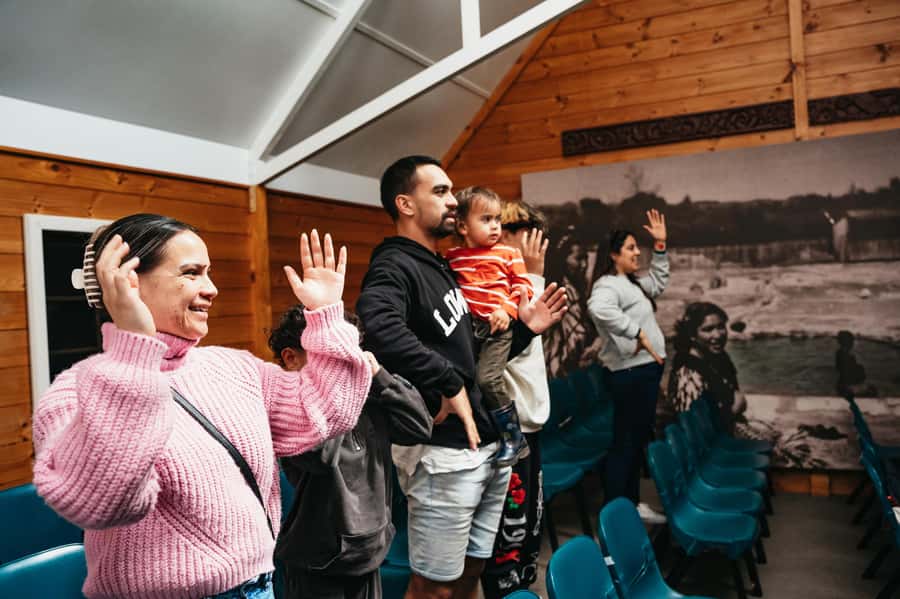
Rotorua is closely linked with Māori culture, and this performance helps you connect the city with that living tradition. The presentation takes place at Whakarewarewa, not in an unrelated entertainment venue, so the setting supports the subject.
A particularly interesting feature of the experience is the sense that the performance belongs to the community around it. The village is described as a living Māori village, and people connected with the area may join in the singing. That detail can make the event feel less like a detached theater production.
You should still separate the setting from the ticket itself. The performance does not automatically include a guided tour of the village, cooking demonstrations, or other village activities. Some visitors combine it with a separate guided visit, and that can make a fuller day, but those extras are not part of this $20 booking.
This distinction is important when comparing Rotorua activities. If you want a short cultural performance, this is well priced. If you want a complete village visit with explanations of communal life, food, buildings, and daily traditions, you need to arrange those activities separately.
Is $20 good value?
At $20 per person, the value is strong if you want a concise live performance. You receive the show and a host, with no need to commit to a dinner package or a longer cultural program.
The price is especially attractive for families, couples, and independent visitors who already have a full Rotorua schedule. You can add a meaningful cultural experience without giving up most of an afternoon. It is also a practical choice if you want to sample Māori performance before deciding if a longer village tour suits you.
The tradeoff is scope. You are paying for 30 minutes of performance, not transportation, a meal, or a full guided visit. The show gives you a window into Māori song and dance, but it cannot explain every tradition or provide the detail of a longer program.
I would also factor in the value of the setting. A short performance in a Māori village feels more relevant than a similar show with no local connection. That does not make the ticket a substitute for a full cultural tour, but it does make it a worthwhile addition to one.
Who will enjoy this performance most?
I would recommend it to you if you want:
- A short cultural activity between Rotorua attractions
- A first introduction to Māori music and dance
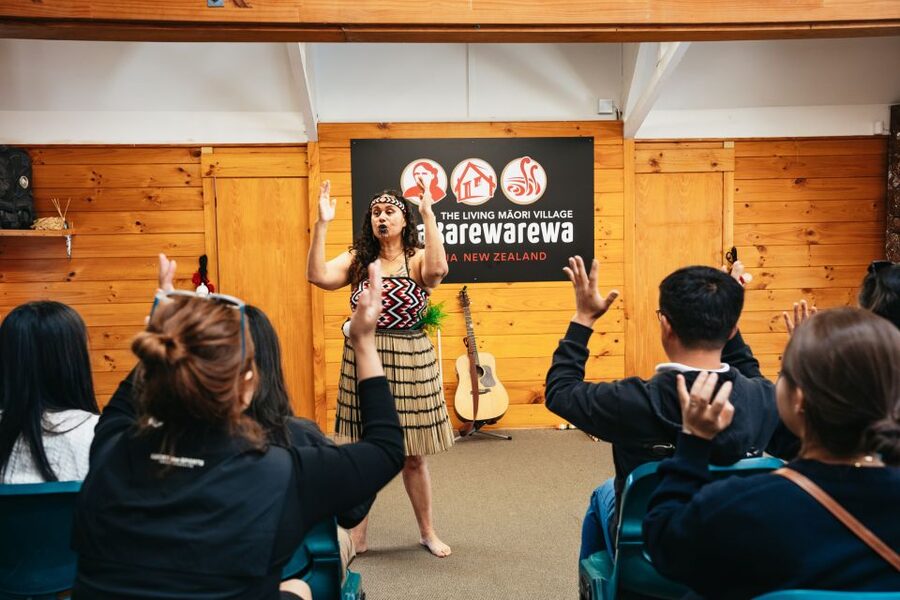
- A family-friendly show with some audience participation
- A chance to see the haka performed live
- Traditional singing, including the story behind songs such as Pokarekare Ana
- A lower-cost option without dinner or a long program
It is also a good fit for teenagers. The changing pace, strong physical movement, and invitation to copy some of the dances keep the show from feeling like a lecture.
You may want something longer if you are especially interested in Māori culture and want extended explanations, village activities, or a meal. The ticket clearly separates the performance from a tour, so check what you are booking before you pay.
People with mobility needs should also find the experience workable because it is wheelchair accessible. English is the stated language for the host and presentation.
A few practical tips for a better visit
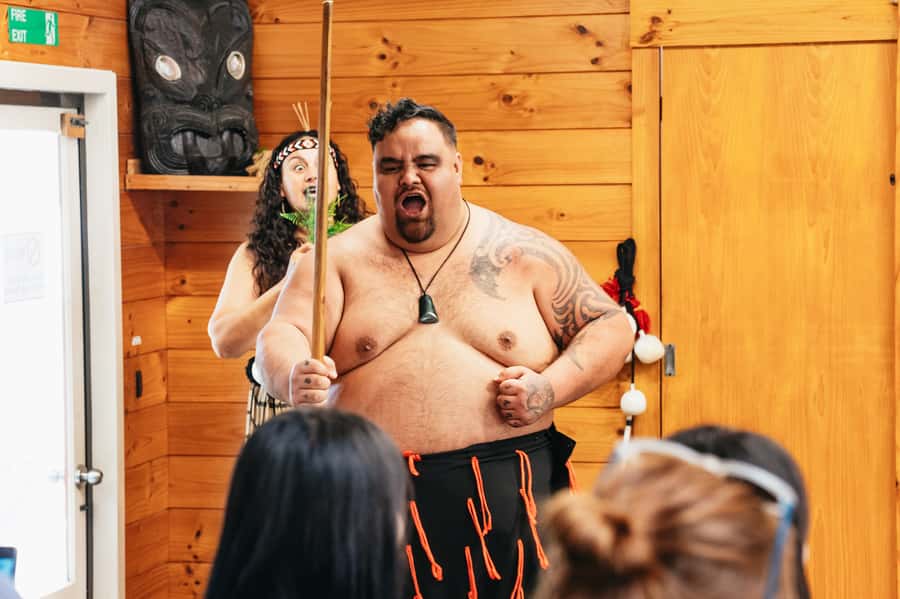
Arrive early. Seating is free, and getting in near the front improves your view of the poi work, stick games, and facial expressions during the haka.
Keep the 30-minute length in mind when planning your day. It is short enough to pair with another Rotorua activity, but you should still allow time to check in at the admissions building and be shown to the performance area.
Do not assume the ticket includes a village tour. If you want to learn about communal life, cooking, and shared resources, book or add a separate village visit. The performance works well on its own, but the two experiences serve different purposes.
If you are hoping for photographs with the performers afterward, do not count on it. That opportunity is not included in the stated program, and it has not always been available. Enjoy the performance itself rather than treating a post-show photograph as part of the deal.
Finally, use the cultural explanations as a guide for how to watch. The haka may be the image you came for, but the singing, stories, poi dancing, and stick games give you a fuller picture of the art form.
My verdict: book it for a short cultural taste
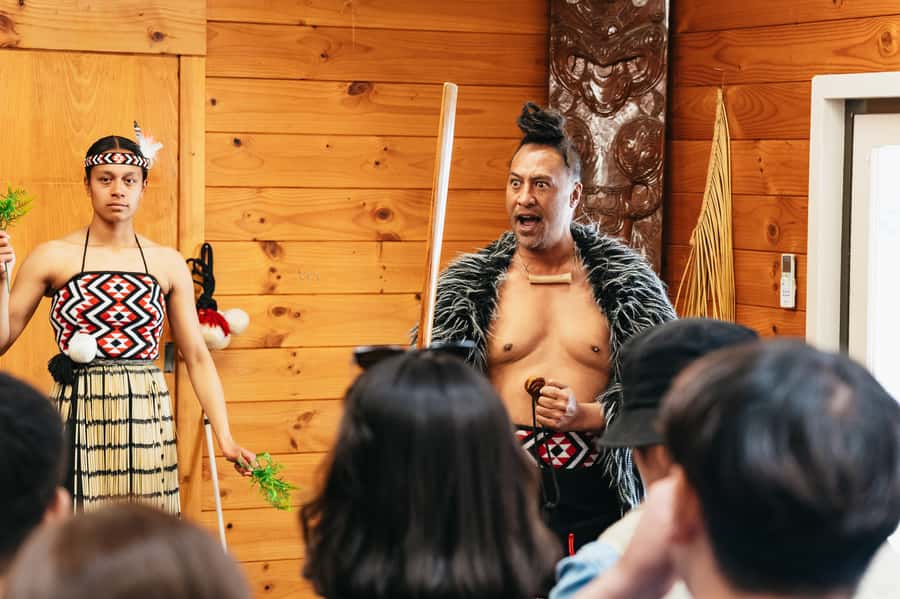
I would book this performance if I had 30 minutes and wanted a direct, affordable connection with Rotorua’s Māori heritage. The singing is a highlight, the haka supplies plenty of power, and the poi and stick games keep the program varied. Audience participation adds warmth without taking over the show.
I would not book it as my only Māori cultural experience if I wanted a detailed village visit. In that case, pair it with a separate tour or choose a longer program. For $20, though, this is a sound choice for a focused performance, especially if you arrive early and choose a good seat.
FAQ
How long is the Māori cultural performance?
The performance lasts 30 minutes.
How much does the experience cost?
The stated price is $20 per person.
Where do I check in?
Check in at the admissions building, where you receive your tickets. A host then shows you to the performance.
Is seating assigned?
No. Seating is free, so arriving early gives you a better chance of choosing a preferred place near the front.
What does the performance include?
It includes traditional Māori singing and dancing, the haka, poi dancing, stick games, cultural stories, and a host.
Does the ticket include a village tour?
No. A tour and other village activities are not included with this performance ticket.
Is the performance in English?
Yes. The host or greeter and the cultural explanations are in English.
Is the activity wheelchair accessible?
Yes. The activity is listed as wheelchair accessible.
Can I cancel for a full refund?
Yes. You can cancel up to 24 hours in advance for a full refund. You can also reserve now and pay later.
Just added around Rotorua
- Te Puia: Tuku Iho Trail with Cultural Show★ 5.0 · 5 reviews
- Ultimate self-drive rail car journey★ 5.0 · 5 reviews
- Private Tour Waiotapu Geothermal Shore Excursion up to 8 passengers★ 5.0 · 6 reviews
- Rotorua: Floatplane Flight with Orakei Korako Landing★ 5.0 · 6 reviews
- Rotorua: Evening Starlight Gourmet Kayak Tour with dinner★ 5.0 · 6 reviews
- Rotorua: Glow Worm Adventure Kayak★ 5.0 · 6 reviews
- Epic Tandem Kayak Tour down the Kaituna River Waterfalls★ 5.0 · 6 reviews
- From Rotorua: Whirinaki Rainforest Guided Cultural Tour★ 5.0 · 6 reviews
Maori Cultural Experiences, compared.
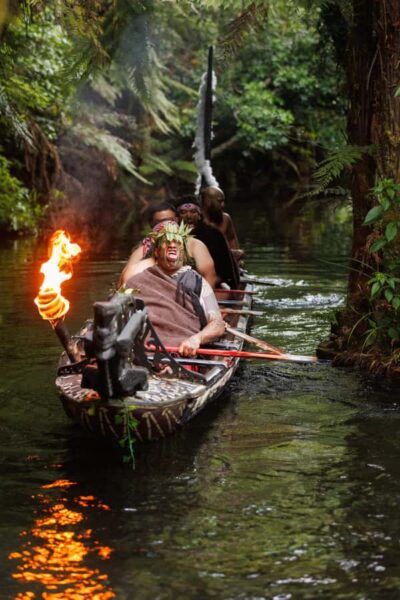
Mitai Maori Village: Cultural Experience and Dinner Buffet
Read our review →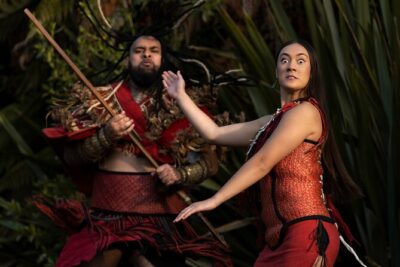
Cultural Experience & Seasonal Māori Cuisine at Te Pā Tū
Read our review →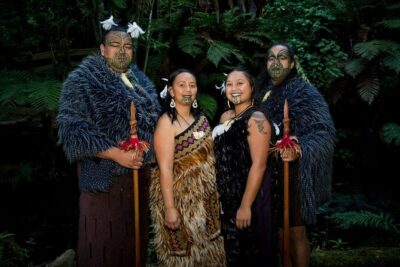
Mitai Maori Village Cultural Experience in Rotorua
Read our review →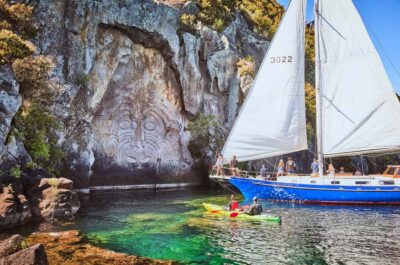
Lake Taupo: Classical Sailing to the Māori Rock Carvings
Read our review →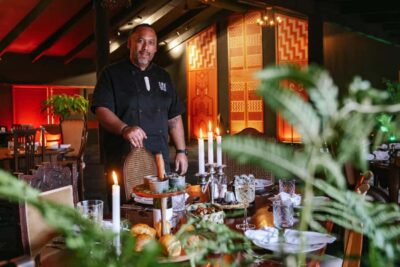
Te Pa Tu Māori Cultural Experience with Dinner
Read our review →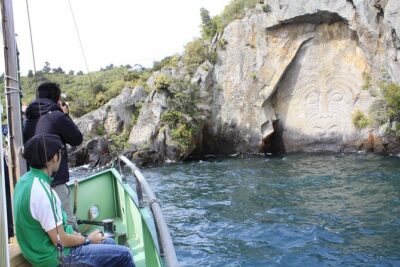
Lake Taupō Māori Rock Carvings Scenic Cruise aboard Ernest Kemp
Read our review →
Waitomo Caves & Rotorua – Te Puia Small-Group Tour from Auckland
Read our review →
Lake Taupo: Maori Rock Carvings 10.30 AM 1.5-Hour Cruise
Read our review →Browse the lists this tour appears in