
Reviewed · MAORI CULTURAL EXPERIENCES
Rotorua: Whakarewarewa Village Guided Tour
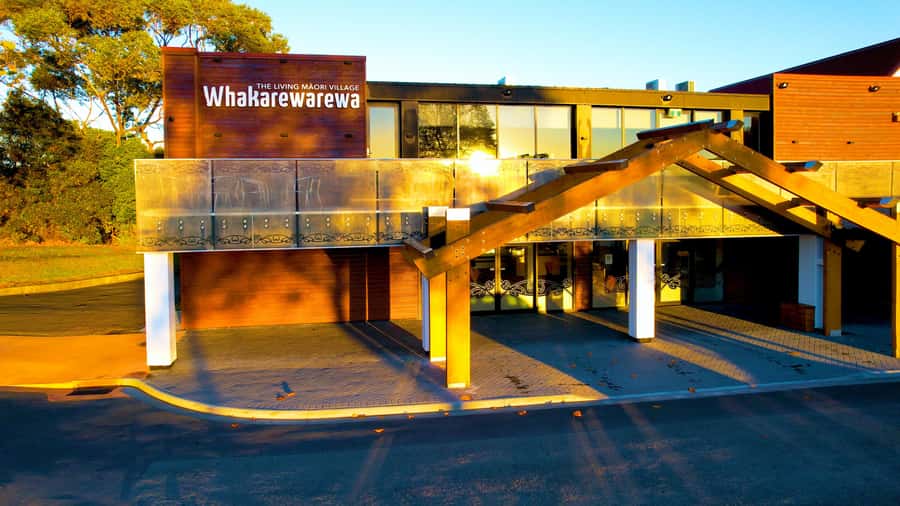
Geothermal life is part of the daily routine here. Whakarewarewa, The Living Māori Village, gives you more than a quick look at Rotorua’s steam and geysers. You walk through an active Māori community where geothermal heat has long shaped cooking, bathing, heating, family life, and local tradition. I especially like the personal connection of the guides, many of whom come from families rooted in the village, and the chance to taste corn cooked in a hot mineral pool.
I also like the way the tour links natural features with living culture. You see silica formations, steam vents, boiling pools, the Pōhutu geyser, historic churches, a World War II memorial archway, and sacred burial grounds in one compact visit. The main limitation is time: at one hour, the tour gives you a strong introduction, but it cannot cover every story or guarantee that every geothermal feature will be active or visible.
In This Review
- Key points to know before you go
- Why Whakarewarewa is different from a standard geothermal park
- Starting at the Geyser Café and admissions building
- Seeing the village through geothermal heat
- Pōhutu geyser and the geothermal valley
- Historic landmarks inside the village
- The guides make the hour work
- What the one-hour format includes, and what it leaves out
- Is $28 good value in Rotorua?
- Practical tips for a better visit
- Who should book this Whakarewarewa tour?
- Should you book it?
- FAQ
- How long does the Whakarewarewa Village Guided Tour last?
- Where does the tour start?
- How early should I arrive?
- What is included in the price?
- Is the tour conducted in English?
- Is the tour wheelchair accessible?
- Does the tour operate in bad weather?
- Can I cancel the booking for a refund?
Key points to know before you go
- A living Māori village: This is not only a geothermal park. People still use the natural heat for cooking, bathing, and warming homes.
- Family connections matter: Guides such as Daniel, Faye, Teeao, and Keighly bring personal ties and cultural pride to the walk.
- Pōhutu is viewed from lookouts: You get broad views of the famous geyser, though steam and activity levels can affect what you see.
- Sweet corn is included: Corn cooked in the mineral springs is usually served during the experience, a small but memorable taste of village life.
- The walk lasts one hour: A five-minute safety briefing comes first, followed by a guided route through Whakarewarewa.
- Plan for outdoor weather: Wear comfortable shoes and expect the tour to operate in rain, wind, or sunshine.
Why Whakarewarewa is different from a standard geothermal park
Rotorua has several places where you can see bubbling mud, steaming ground, and erupting geysers. Whakarewarewa adds something those purely scenic sites cannot: people still live with the geothermal activity as part of ordinary life.
That difference changes the way you look at the pools. A boiling spring is not simply a dramatic photo stop. It can also be part of a cooking system. A warm mineral pool is not just something to admire from a path. It can connect to bathing and household routines that have continued for generations.
Your guide explains these connections while leading you through the village. This makes the geothermal activity easier to understand and gives the setting a human scale. You are not just ticking off a geyser, a mud pool, and a steam vent. You are seeing how a community adapted to a difficult and useful environment.
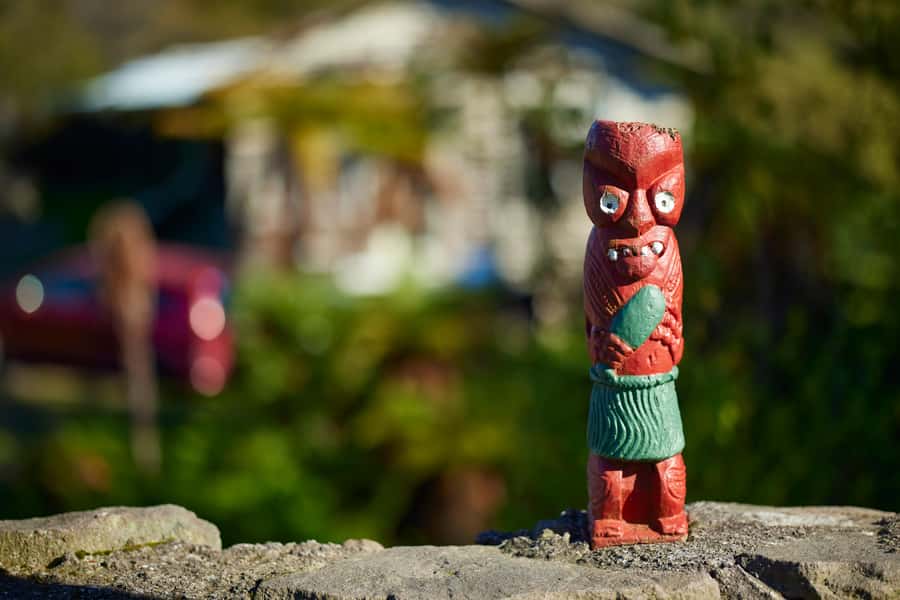
The village guides are descendants of early Māori guides who helped introduce visitors to New Zealand. That family link is important here. Guides have included Daniel, Faye, Teeao, and Keighly, and the strongest part of the experience is often the way they combine facts with stories from their own heritage and community.
Some guides use humor. Some focus more on family history and customs. Some add music or a blessing at the end. The style can vary, but the recurring strength is a sense that the guide is explaining a home, not presenting a museum display.
More Maori Cultural Experiences in Rotorua
- Mitai Maori Village: Cultural Experience and Dinner Buffet
★ 4.7 · 3,575 reviews - Cultural Experience & Seasonal Māori Cuisine at Te Pā Tū
★ 5.0 · 1,546 reviews - Mitai Maori Village Cultural Experience in Rotorua
★ 4.5 · 1,294 reviews
Starting at the Geyser Café and admissions building
The meeting point is the Geyser Café. Arrive 15 minutes before your selected starting time so you can exchange your voucher at the admissions building before the tour begins.
That extra time is useful. You do not want to be sorting out admission while the group is gathering. The café and admissions area also give you a practical place to get oriented before heading into the village.
The tour begins with a short safety briefing of about five minutes. This matters because geothermal ground can be hazardous. You will be around boiling pools, steam vents, and hot water, so follow the guide and stay on the designated route.
The tour is outdoors and runs in all weather. Rotorua weather can change quickly, so comfortable shoes and weather-ready clothing are sensible. Bring a camera, but keep your attention on the guide and the ground around you. A face mask or protective covering is listed as something to bring.
The experience is wheelchair accessible, which makes it a useful option for many visitors who want to see Whakarewarewa without committing to a long outing. The exact ease of movement can depend on weather and conditions underfoot, so you may still want to check with the admissions team if you have specific mobility needs.
Seeing the village through geothermal heat
The core of the tour is the explanation of how daily life works in a place where the ground is hot beneath your feet. You learn about cooking with bubbling pools and steam vents, bathing in therapeutic mineral waters, and using geothermal heat around the home.
The included corn is a clever part of the experience. Rather than simply hearing that food can be cooked in the springs, you may see sweetcorn taken from the hot mineral water and served to the group. Several visitors singled this out as hot, tasty, and surprisingly memorable.
It is a modest sample, not a meal. Still, it turns an abstract explanation into something you can see, smell, and taste. The corn also helps show that geothermal resources are practical, not merely scenic.
The village’s Māori way of life is explained through the idea of whānau, or family and community connections. The tour gives you an introduction to how shared resources and communal life have shaped the village. It is not a long cultural course, but it offers useful context for the buildings, meeting grounds, and customs you see along the route.
I would pay close attention when the guide discusses the village’s past and present. The value is not only in learning dates or names. It is in understanding how Māori families have continued living in a place that is both beautiful and physically demanding.
Pōhutu geyser and the geothermal valley
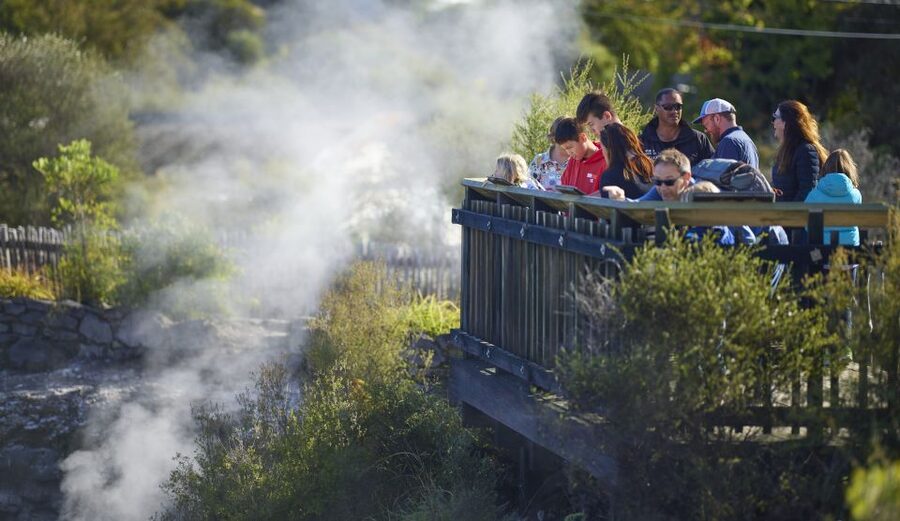
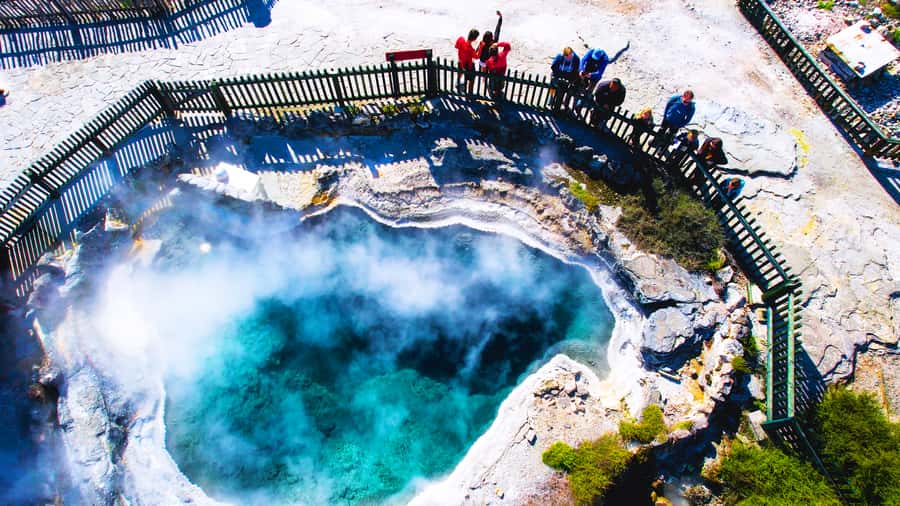
You will visit viewpoints overlooking Whakarewarewa Geothermal Valley. These lookouts provide panoramic views of geysers, including the famous Pōhutu geyser.
The views are one of the tour’s strongest scenic features. From a lookout, you can take in the broad field of steam, mineral formations, and active geothermal features without needing to rush from one small display to another.
Geyser activity is naturally unpredictable. You may see an eruption, but the tour does not promise a particular display at a precise moment. Steam can also obscure parts of the view. One useful point is that you may get a better overall perspective from a Whakarewarewa lookout than from a closer viewing area where steam blocks the geyser.
The route also includes boiling mud pools, steam vents, and bubbling pools. Do not assume every feature will look the same on every visit. One person found that boiling mud was not visible during the tour, while others enjoyed seeing the geothermal activity in action.
That variation is worth keeping in mind. If your only goal is to see the most dramatic mud pools or get as close as possible to a geyser, compare this tour with Rotorua’s other geothermal attractions. If you want scenery tied to community life and local explanation, Whakarewarewa offers a more rounded hour.
A completely different kind of day out in Rotorua:
- Rotorua Canopy Tours: 2.5Hour Native Forest Zipline Adventure
★ 5.0 · 4,563 reviews - Rotorua: Wai-O-Tapu Geothermal Park Entry Ticket
★ 4.6 · 2,601 reviews - Rotorua’s Ultimate Zipline: 6 ziplines, 400 m Tandem, Cliff Walk
★ 5.0 · 2,557 reviews - Rotorua Rafting: Kaituna River White Water Rafting & Free Sauna
★ 5.0 · 1,952 reviews
Historic landmarks inside the village
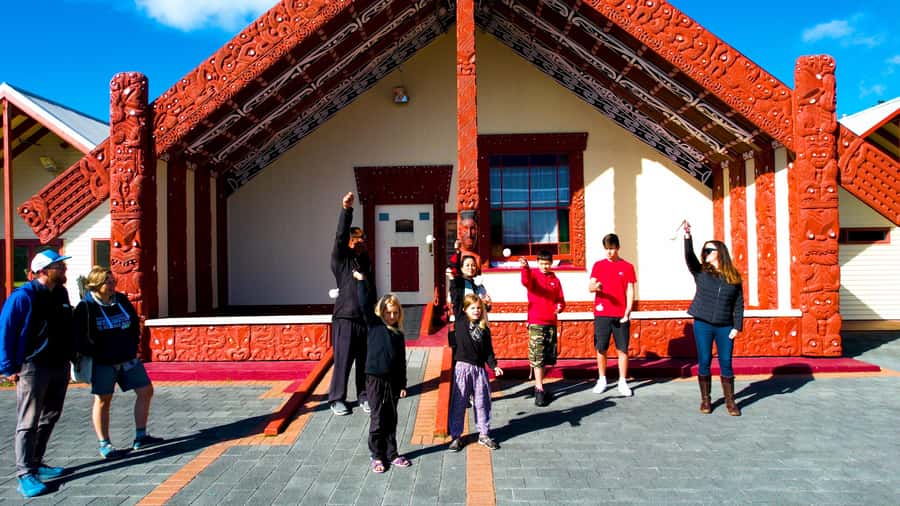
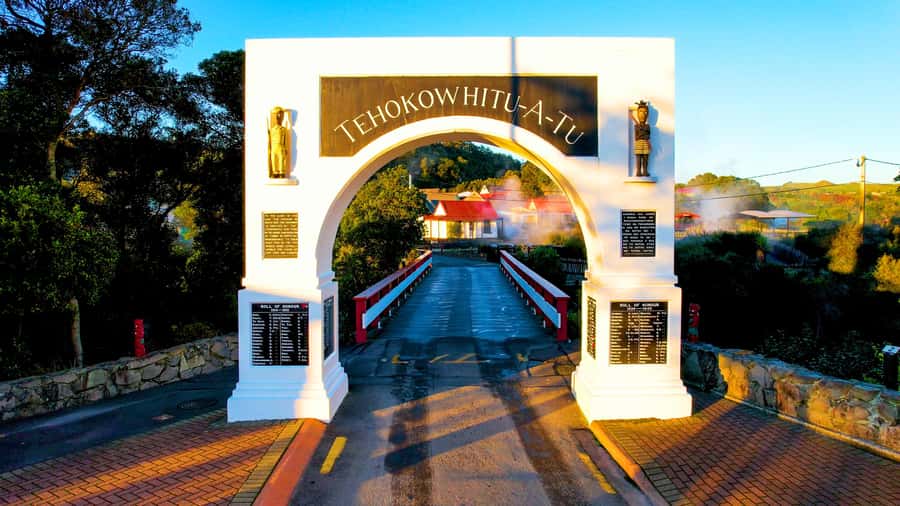
The walking route includes an active marae, the meeting grounds and focal point of Māori communities. You also see a World War II Memorial Archway, historic churches, and tapu burial grounds.
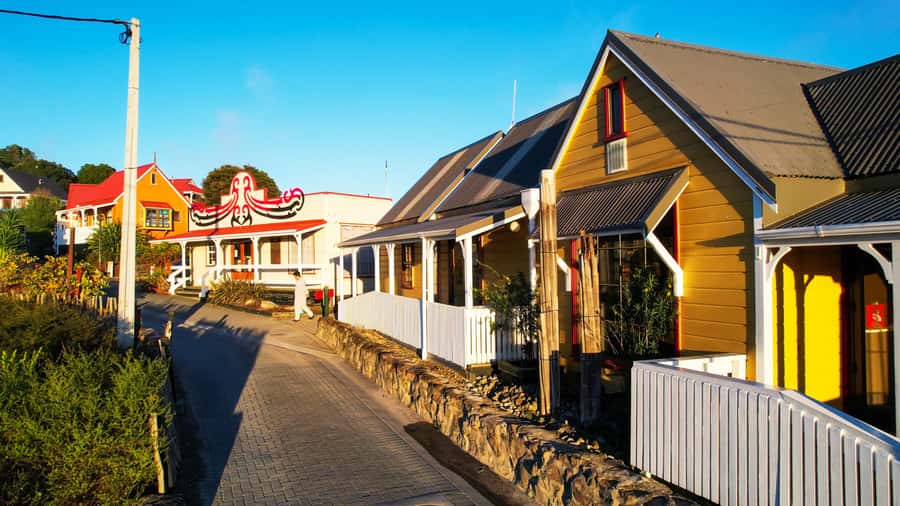
These places give the tour a sense of continuity. The village is not presented as a frozen picture of the past. It includes places connected to worship, remembrance, community gatherings, and sacred traditions.
The burial grounds require respect. Listen carefully to the guide’s instructions and treat these areas as sacred places rather than photo opportunities. The same applies to the marae. The tour gives you a chance to learn about its role, but it is still a working community setting.
The churches and memorial archway add another layer. They show how the village’s story includes Māori tradition, Christianity, local family life, and service during wartime. In one short walk, the guide connects the natural setting with the community’s changing history.
The guides make the hour work
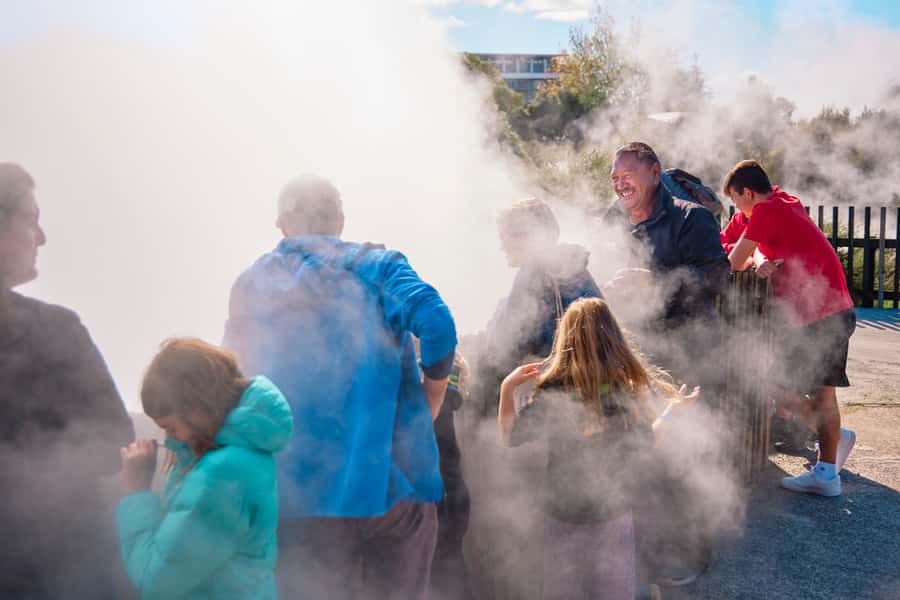
A one-hour tour can feel rushed if the guide only lists facts. Here, the guide’s delivery is a major part of the value.
Faye has been praised for her warmth, humor, and ability to answer questions from personal experience in the village. Teeao has been described as thorough and attentive to detail. Daniel is repeatedly remembered for his energy, friendliness, and clear explanations, and he may finish with a blessing or song.
Keighly has also brought a strong sense of pride in her heritage and culture, while another young guide was described as the youngest chief in his family at age 19. These details show how varied the guiding team can be and why the same tour may feel different depending on who leads it.
You should ask questions. The guides are there to explain how the village functions, why the geothermal features matter, and how Māori customs connect to the places you pass. The best moments come when the general explanation becomes a conversation.
There can be a small tradeoff. Different guides may emphasize different stories. One group may hear more about local history, another more about family life or geothermal cooking. If you are hoping for a fixed script with every subject covered, the experience may feel uneven. I see this more as a sign of a personal tour than a serious weakness, but it is worth knowing.
What the one-hour format includes, and what it leaves out
The route is designed as a compact introduction. You receive admission, the guided walk, the safety briefing, and corn cooked in the geothermal waters.
The short duration suits a busy Rotorua day. You can fit it between other activities without giving up half a day. It is also a good choice for families, older visitors, and anyone who wants cultural context without a long hike.
The downside is that one hour passes quickly. You get an overview of the village, geothermal valley, landmarks, and daily customs, but you will not explore every corner or hear every family story. If you want a longer cultural program, the provider also offers a dance performance as a separate option, based on the experience of visitors who combined the two.
Free time after the guided portion may be available to explore parts of the setting at your own pace, but the central product here is the guided hour. Do not book it expecting an unstructured afternoon inside the village.
Is $28 good value in Rotorua?
At $28 per person, this is a fairly modestly priced way to combine geothermal scenery and Māori cultural interpretation. You are paying for admission, a live English-language guide, the organized route, and a small food tasting.
The value improves if you would otherwise visit a geothermal attraction and then seek a separate cultural experience. Whakarewarewa brings both subjects together. You see the geysers and pools, then learn how the same geothermal resources affect cooking, bathing, and heating.
The price is less compelling if you only want dramatic geothermal photographs. A dedicated geothermal park may offer more time, more viewing areas, or closer access to certain features. This tour earns its price through the village setting and the guide’s personal explanation.
I would consider it especially good value for first-time visitors to Rotorua, families with older children, and people who want an introduction to Māori culture without booking a full cultural evening. The corn tasting is a nice extra, but the guide and the living community are the real reasons to come.
Practical tips for a better visit
Book a starting time that gives you breathing room before another activity. The official duration is one hour, but you still need time to reach the meeting point, exchange your voucher, and get organized.
Arrive 15 minutes early at the Geyser Café. Wear shoes that are comfortable for an outdoor walk, and bring a camera. Since the tour runs in all weather, pack a rain layer or other weather protection rather than assuming a clear Rotorua forecast.
Keep your expectations flexible around geyser eruptions and mud pools. Pōhutu may be impressive, but steam or timing can affect your view. If boiling mud is especially important to you, ask what is active when you arrive.
Listen carefully around the marae and tapu burial grounds. These are not just scenic stops. The tour works best when you approach them with the same respect you would show any active place of worship or sacred ground.
If you want more performance and music, look into adding the cultural dance show. The guided tour itself may include a blessing or song, depending on the guide, but that is not the same as booking a full performance.
Who should book this Whakarewarewa tour?
You should book if you want to understand how Māori community life and Rotorua’s geothermal activity connect. The tour suits people who prefer stories and local explanation to a simple walk past hot pools.
It is also a strong family choice. The geysers provide visual drama, the corn gives children a tangible taste of the setting, and the one-hour length is manageable. The guides’ humor and energy help keep the presentation from feeling like a lecture.
You may want another attraction instead if you need a long, highly detailed geothermal walk, guaranteed boiling mud, or close-up geyser viewing. You might also want to add a performance if music and dance are central to your interest.
Should you book it?
Yes, I would book the Whakarewarewa Village Guided Tour if you have one hour in Rotorua and want more than a collection of geothermal photographs. The strongest reasons are the family-connected guides, the chance to see a working Māori village, and the simple but effective corn tasting.
Go with realistic expectations. You may not see every feature at its most active, and the short route cannot tell the whole story. But for $28, you get a clear introduction to Māori life, geothermal cooking and bathing, local landmarks, and wide views toward Pōhutu geyser. That is a useful, human-scale way to begin understanding Rotorua.
FAQ
How long does the Whakarewarewa Village Guided Tour last?
The tour lasts one hour. It begins with a safety briefing of about five minutes.
Where does the tour start?
The meeting point is the Geyser Café. You must exchange your voucher at the admissions building before the tour begins.
How early should I arrive?
Arrive 15 minutes before the tour starts so you have time to exchange your voucher and prepare for the walk.
What is included in the price?
Admission, the guided tour, and corn cooked in the geothermal waters are included.
Is the tour conducted in English?
Yes. The tour has a live English-speaking guide.
Is the tour wheelchair accessible?
Yes, the activity is listed as wheelchair accessible.
Does the tour operate in bad weather?
Yes. The tour is outdoors and takes place in all weather conditions.
Can I cancel the booking for a refund?
You can cancel up to 24 hours in advance for a full refund. You can also reserve now and pay later to keep your plans flexible.
Just added around Rotorua
- Te Puia: Tuku Iho Trail with Cultural Show★ 5.0 · 5 reviews
- Ultimate self-drive rail car journey★ 5.0 · 5 reviews
- Private Tour Waiotapu Geothermal Shore Excursion up to 8 passengers★ 5.0 · 6 reviews
- Rotorua: Floatplane Flight with Orakei Korako Landing★ 5.0 · 6 reviews
- Rotorua: Evening Starlight Gourmet Kayak Tour with dinner★ 5.0 · 6 reviews
- Rotorua: Glow Worm Adventure Kayak★ 5.0 · 6 reviews
- Epic Tandem Kayak Tour down the Kaituna River Waterfalls★ 5.0 · 6 reviews
- From Rotorua: Whirinaki Rainforest Guided Cultural Tour★ 5.0 · 6 reviews
Maori Cultural Experiences, compared.
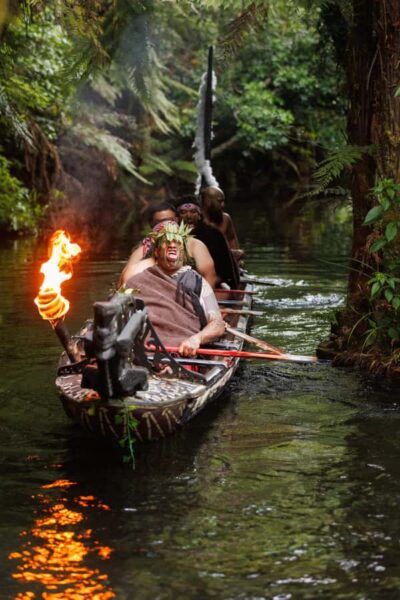
Mitai Maori Village: Cultural Experience and Dinner Buffet
Read our review →
Cultural Experience & Seasonal Māori Cuisine at Te Pā Tū
Read our review →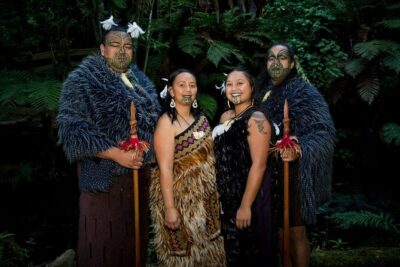
Mitai Maori Village Cultural Experience in Rotorua
Read our review →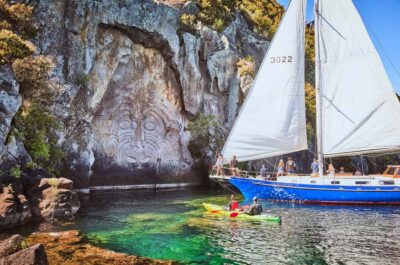
Lake Taupo: Classical Sailing to the Māori Rock Carvings
Read our review →
Te Pa Tu Māori Cultural Experience with Dinner
Read our review →
Lake Taupō Māori Rock Carvings Scenic Cruise aboard Ernest Kemp
Read our review →
Waitomo Caves & Rotorua – Te Puia Small-Group Tour from Auckland
Read our review →
Lake Taupo: Maori Rock Carvings 10.30 AM 1.5-Hour Cruise
Read our review →Browse the lists this tour appears in