
Reviewed · WILDLIFE & NATURE TOURS
Stewart Island: Wild Kiwi Experiences
Kiwi sightings begin with patience, darkness, and luck. RealNZ’s Wild Kiwi Experiences pair a pre-sunset boat trip around Stewart Island with a guided night walk in search of tokoeka, the island’s southern brown kiwi. I like the way the tour gives you two very different wildlife experiences in one evening, and I like the small-group format, limited to 10 people. The main catch is simple: kiwis are wild, so a sighting is never guaranteed.
I also like the care built into the experience. Guides manage the group quietly, use red light during the kiwi search, and share stories about Māori and European connections to the island. The boat ride is not just a transfer, either. It can produce sightings of penguins, albatrosses, seals, sea lions, and other seabirds before you even reach the forest.
At $154 per person, this is not a casual budget outing. You are paying for a specialist guide team, a boat, remote access, and a serious chance to see a kiwi in the wild. If that sighting matters to you, the price can feel fair. If you need a guaranteed animal encounter, this is not the right tour.
In This Review
- Key points at a glance
- Why Stewart Island is the right place for a kiwi search
- Meeting in Oban, not Bluff
- The pre-sunset cruise around Stewart Island
- Little Glory Cove and the torchlit forest walk
- Oneke, The Neck, and the cultural side of the evening
- What the guides add to the experience
- Is $154 good value?
- How to dress and prepare for the night
- Who will enjoy this most?
- Should you book the Stewart Island Wild Kiwi Experience?
- FAQ
- Where does the Stewart Island Wild Kiwi Experience depart from?
- How long does the experience last?
- Is a kiwi sighting guaranteed?
- How much walking is involved?
- What should I bring?
- Can children or wheelchair users join?
Key points at a glance
- Wild kiwi search after dark: Walk through native bush and beach with a guide and torch, looking for tokoeka in their natural setting.
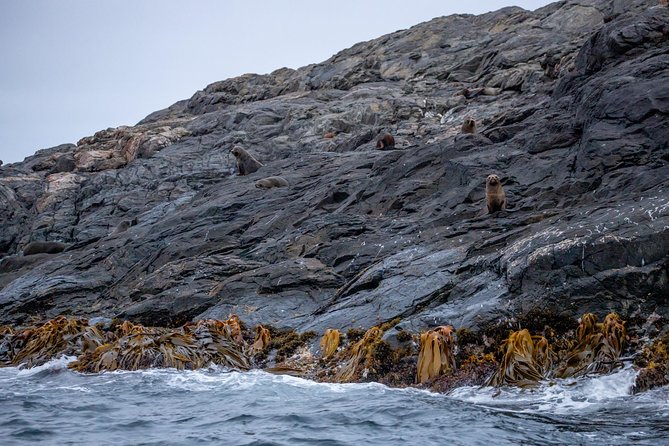
- Wildlife cruise before nightfall: Watch for little penguins, yellow-eyed penguins, Fiordland crested penguins, albatrosses, seals, and sea lions around nearby islands.
- Small group of up to 10: A limited group makes it easier for guides to position everyone for a sighting, though some groups may still feel a little close together.
- A full evening out: The four-hour trip leaves Oban before darkness and returns late, so you need accommodation arranged on Stewart Island that night.
- Real outdoor conditions: Expect uneven or muddy track, wind, possible rain, and insects. Warm layers, hiking shoes, rain gear, and insect repellent are essential.
- Conservation-minded approach: If no kiwi appears, there is no refund, but $20 per person goes to conservation work at Little Glory Cove.
Why Stewart Island is the right place for a kiwi search
Rakiura Stewart Island is one of New Zealand’s better places to look for a wild kiwi. Unlike a zoo or enclosed sanctuary, this experience takes you into the bird’s own setting, where the kiwi decides what happens next.
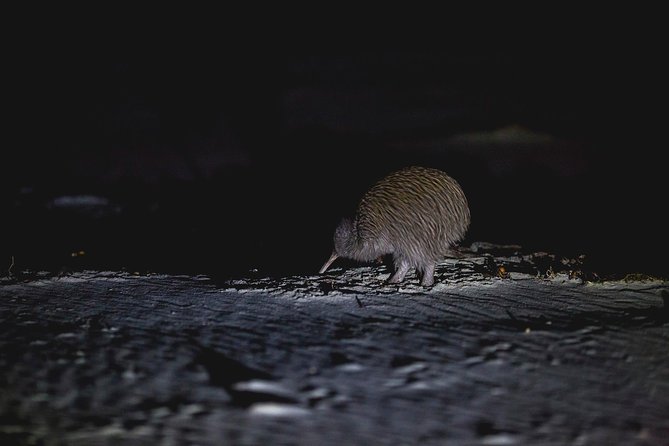
That unpredictability is part of the appeal. You may see a bird feeding close to the group for several minutes, or you may hear one and find tracks without getting a clear view. One evening produced five kiwi sightings, while another produced none. The outcome depends on weather, timing, animal behavior, and plain luck.
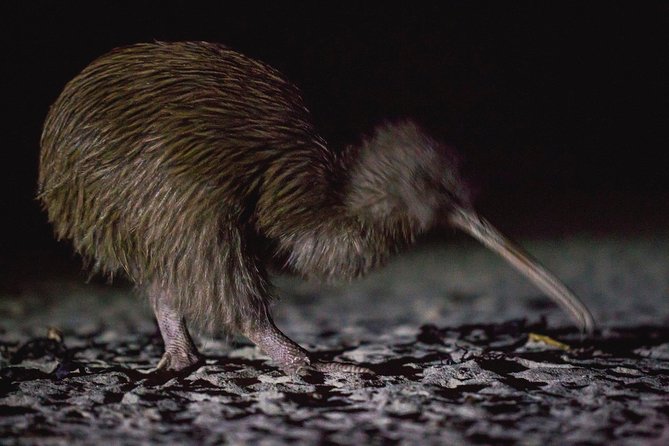
The southern brown kiwi, called tokoeka, is active at night. That makes this a very different kind of wildlife outing from a daytime walk. You are not ticking animals off a list from a viewing platform. You are moving slowly, listening carefully, and allowing the guides to read signs that you would probably miss on your own.
That is where the staff matter. Guides such as Natasha, Karen, Sarah, Jane, Jen, Grace, and Henry have been praised for their field skills, clear explanations, and calm handling of the group. The strongest part of the experience is not just spotting animals. It is learning how to notice them.
More wildlife tours in New Zealand:
- Auckland Dolphin and Whale Watching Eco-Safari Cruise
★ 4.5 · 1,790 reviews - Auckland: Whale and Dolphin Watching Half-Day Eco Cruise
★ 4.5 · 1,072 reviews - Gannet Safaris Overland tour to Cape Kidnappers Gannet Colony
★ 5.0 · 942 reviews
Meeting in Oban, not Bluff
The trip departs from the Visitor Terminal in central Oban on Stewart Island. This detail matters because Stewart Island services often involve Bluff, on the South Island mainland, and it would be easy to arrive at the wrong place.
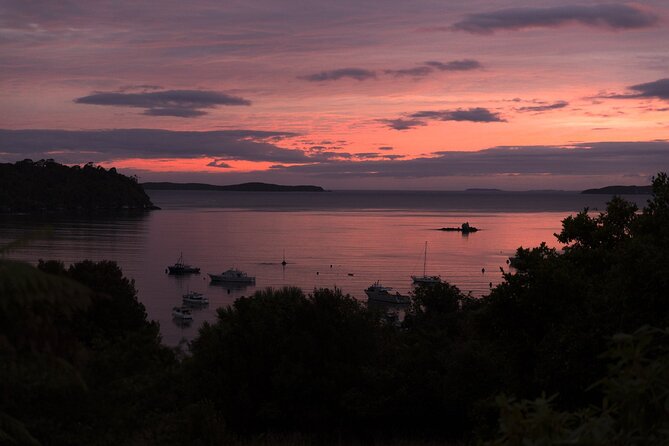
Arrive 20 minutes before departure. The experience lasts four hours, with the start time set according to the available evening schedule and the fall of night. It begins roughly one and a half hours before darkness, then continues into the late evening.
Plan your accommodation before booking. The return to Oban is late, with one detailed account placing arrival around midnight. You do not want to finish a muddy forest walk and then discover that you have no room for the night.
The group limit of 10 is a real advantage. Small numbers help the guides control noise and light, and they make it easier for everyone to get a view when a kiwi appears. Still, the group is not private. If the full party is present, you may need to wait your turn or adjust your position quietly.
The pre-sunset cruise around Stewart Island
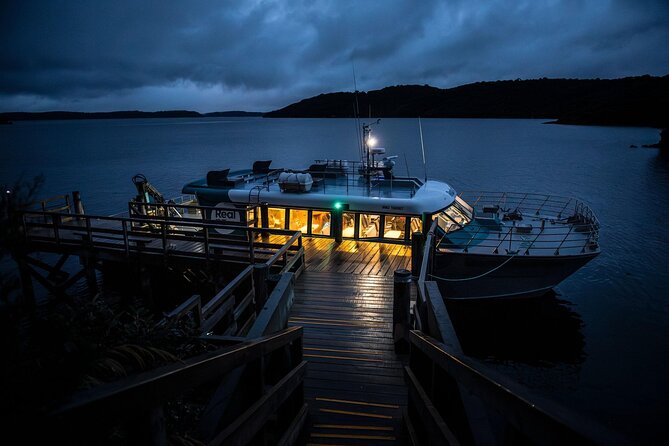
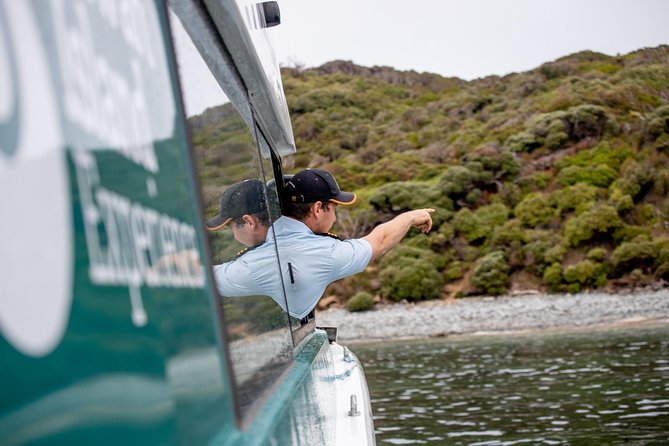
The evening starts on the water, with a scenic cruise around nearby islands and coastal areas. The route can include places such as Bench Island and Flat Island, with the exact wildlife opportunities depending on conditions and animal movements.
This boat section adds real value. You are not simply riding to a walking track. The cruise gives you an introduction to the islands, coastal wildlife, and local stories before the night search begins.
Keep watch for:
- Little penguins, also called kororā
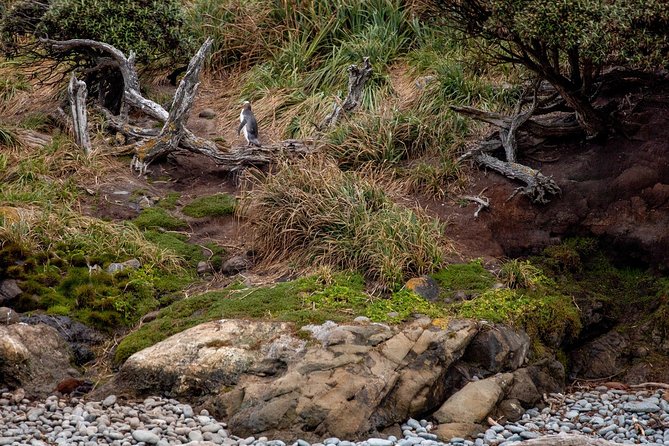
- Yellow-eyed penguins, or hoiho
- Fiordland crested penguins, known as tawaki
- Albatrosses and other seabirds
- New Zealand fur seals
- Sea lions
- Shags and petrels
Sightings are not guaranteed here either, but the range can be impressive. One outing included all three penguin types, while another produced yellow-eyed penguins, albatrosses, fur seals, sea lions, and several smaller birds.
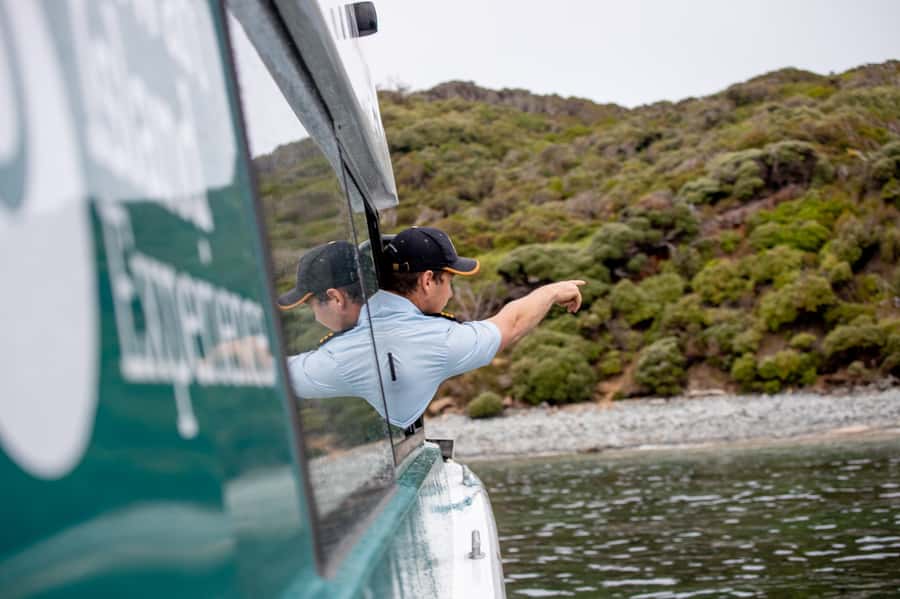
Binoculars may be handed around during the cruise, and the skipper can turn the boat so people on different sides get a useful view. That kind of practical management makes a difference. Wildlife watching from a boat can otherwise become a scramble for one side of the deck.
The boat also lets you see parts of Stewart Island that are difficult to reach independently. This is especially useful if your time on Rakiura is short. You get coastal scenery, island context, and a chance at several species before the main event on land.
The downside is weather. Departures are weather dependent, and a rough or wet evening can make the cruise less comfortable. Bring rain gear even if the forecast looks friendly. Stewart Island weather can change quickly, and the boat is exposed to wind.
Little Glory Cove and the torchlit forest walk
As dusk settles, the group reaches the area used for the kiwi search, including Little Glory Cove on the Wild Kiwi Encounter. The walk takes you through native forest and along beach areas, with total walking time of about two hours.
This is not a difficult mountain hike, but it is a genuine outdoor walk. The track may be uneven and muddy, and you need to walk independently for more than 1.5 kilometers over uneven ground. The activity is not suitable for wheelchair users or anyone who struggles with that level of walking.
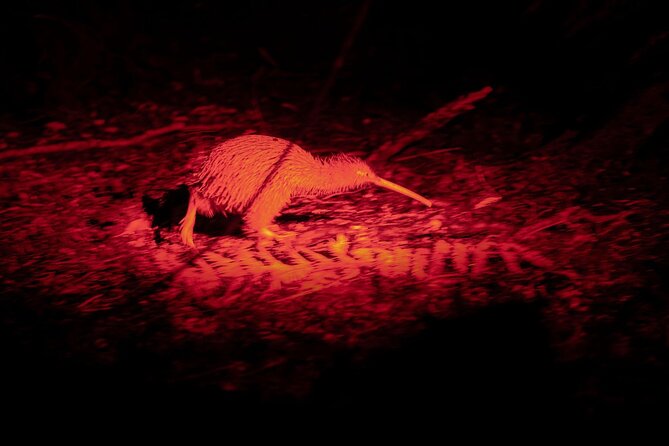
The guides use torches, with red lighting during the kiwi search. Red light helps limit disturbance and gives the group a better chance of watching the bird behave naturally. Flash photography is not allowed, and you should keep your camera put away unless the guide says it is appropriate.
One useful tip comes from the field experience of the group: noisy clothing can be a problem. Waterproof shells and some Gore-Tex garments may rustle as you move your arms or reach for a camera. Wear quiet layers when possible, and handle your equipment before the search begins. The best viewing moments can be ruined by a zipper, a bag, or an unnecessary shuffle.
The walk may feel slow at times. That is a feature, not a flaw. Kiwis are not staged for you, and the group must stay quiet. You may pause for tracks, calls, movement in the undergrowth, or a bird feeding at the edge of the path.
Several successful sightings have lasted five to 30 minutes. In one case, a kiwi came within a few feet of the group and continued feeding. When that happens, the guides work to give everyone a fair view instead of letting the first people in line dominate the moment.
A few more New Zealand trips worth weighing up
- Stewart Island: Ulva Island Guided Wilderness Walk & Cruise
★ 4.5 · 165 reviews - Stewart Island: Village and Bays Tour
★ 4.8 · 141 reviews - Milford Sound: Self-Guided Milford Track Day Walk
★ 4.5 · 114 reviews - Queenstown: Milford Sound Flight and Cruise
★ 4.8 · 111 reviews
Oneke, The Neck, and the cultural side of the evening
The Wild Kiwi and Culture Encounter focuses on Oneke, also known as The Neck. This area brings together Māori and European heritage, coastal views, and habitat for wild kiwi.
The cultural element gives the evening more shape. Rather than treating the forest as a dark place where an animal might appear, the guides explain how people have used and understood this part of the island. The stories help connect the wildlife search with the place itself.
You may also spend time in a traditional whare, where hot cocoa, tea, and coffee are served with biscuits. This is a small inclusion, but it matters after a damp walk or a chilly wait on the beach. The warm drink also provides a natural pause before the return boat.
On a clear night, the beach can become part of the experience even if the kiwi stays hidden. The southern sky, stars, and constellations are visible away from city lights. Guides may point out features such as the Southern Cross, and one outing even included a glimpse of the Aurora Australis. That kind of bonus is never promised, but it shows why the night setting is worthwhile beyond the kiwi itself.
What the guides add to the experience
The guides are the main reason I would choose this tour over trying to search alone. They explain kiwi behavior before the walk, identify signs on the ground, control the use of light, and help the group stay quiet without making the evening feel stiff.
Good guiding is especially important when the animal is hard to see. A person without field experience might walk straight past a feeding kiwi. Guides have spotted birds that were almost invisible in the bush, then positioned the group so everyone could look without crowding the animal.
The crew also adds value on the boat. Skipper Nick Marshall has been singled out for turning the vessel to give everyone a view, while guides have helped identify birds and marine animals as they appear. You are not left to guess whether the dark shape near shore is a seal, a sea lion, or something else.
The best guiding also includes restraint. The aim is not to coax a kiwi toward people or force a close approach. You watch the bird doing its own thing. That is why a short sighting can still feel meaningful.
Is $154 good value?
At $154, this is one of those activities where value depends on what you are buying it for. If you see the fee as payment for a guaranteed kiwi photograph, it is poor value because no sighting is promised and there are no refunds when the bird stays out of view.
If you see it as a four-hour conservation-minded wildlife outing, the price is easier to justify. It includes the round-trip cruise, specialist guiding, torches, hot drinks, biscuits, and access to coastal and forest areas you would have difficulty reaching alone.
The boat portion is important to the calculation. Even on an unsuccessful kiwi night, you may see penguins, seals, sea lions, albatrosses, or other seabirds. One person who missed the kiwi still described the night walk, forest sounds, smells, and marine wildlife as worth repeating.
The conservation contribution also gives the no-sighting policy a constructive side. Twenty dollars from each participant goes toward conservation work at Little Glory Cove, supporting efforts to improve the chances of future wild kiwi encounters.
For me, the strongest value comes from the combination of access and expertise. You are not paying only for transport. You are paying to reach remote wildlife areas with people who know how to look and how to keep the encounter respectful.
How to dress and prepare for the night
Treat this as a cool-weather outdoor activity, not a quick sightseeing cruise. Bring warm clothing, hiking shoes, rain gear, and insect repellent.
A windproof and waterproof jacket is particularly important. You may face spray or wind on the boat, then mud and damp vegetation on the walk. Wear footwear with a solid grip, since the track can be uneven.
A few practical choices will improve the night:
- Dress in layers so you can adjust between boat and forest.
- Choose quiet clothing for the kiwi search.
- Bring insect repellent, especially for time near forest and beach.
- Avoid flash photography completely.
- Keep your phone and camera easy to access but silent.
- Expect to stand still for periods while the guides search or wait.
You do not need to be an experienced hiker, but you do need to walk independently over uneven ground. Children under 15 cannot join, and the outing is not designed for wheelchair users.
Who will enjoy this most?
I would recommend it most strongly to wildlife enthusiasts, birdwatchers, photographers who can work without flash, and anyone who wants to see a kiwi in a natural setting. It also suits people who appreciate small groups and do not mind letting nature set the timetable.
It is a good choice for a special evening on Stewart Island because it combines several activities without feeling like a rushed checklist. You get a sunset cruise, coastal wildlife, a forest walk, local stories, and the chance to look at the night sky.
I would be more cautious if your schedule is tight. The late finish means you need a full evening and a room on Stewart Island. I would also think twice if you dislike boats, mud, cold weather, or quiet waiting.
Most importantly, accept the possibility of no kiwi. The search itself is part of the experience, but some people will still feel disappointed after paying $154 and seeing only tracks or hearing calls. If you can treat the bird as a lucky outcome rather than a product, you will have the right mindset.
Should you book the Stewart Island Wild Kiwi Experience?
I would book this tour if seeing a wild tokoeka is high on your New Zealand wish list and you can spare the full evening on Stewart Island. The mix of marine wildlife, expert field guiding, Māori and European stories, forest walking, and star-filled darkness makes it much more than a simple kiwi hunt.
Book with realistic expectations. You may see one kiwi, several, or none. You might instead remember a yellow-eyed penguin on a beach, an albatross over the water, a sea lion near the boat, or the strange thrill of walking quietly through the bush while something unseen calls nearby.
That uncertainty is the honest price of seeing wildlife on its own terms. For many people, it is also the best reason to go.
FAQ
Where does the Stewart Island Wild Kiwi Experience depart from?
It departs from the Visitor Terminal in central Oban on Stewart Island. It does not depart from Bluff.
How long does the experience last?
The activity lasts four hours. It begins about one and a half hours before nightfall and returns to Oban late in the evening.
Is a kiwi sighting guaranteed?
No. Kiwis are wild and unpredictable, so a sighting cannot be guaranteed. There are no refunds if you do not see one, but $20 per person is donated to conservation work at Little Glory Cove.
How much walking is involved?
Total walking time is about two hours. The track can be uneven and muddy, and you must be able to walk independently for more than 1.5 kilometers over uneven ground.
What should I bring?
Bring warm clothing, hiking shoes, rain gear, and insect repellent. Quiet clothing is useful during the kiwi search, and flash photography is not allowed.
Can children or wheelchair users join?
Children under 15 are not permitted. The experience is also not suitable for wheelchair users or anyone unable to walk independently over uneven ground.
Just added around New Zealand
- From Auckland: Hobbiton Movie Set Small Group Tour★ 4.1 · 5 reviews
- Auckland Museum and Highlight Sightseeing Tour★ 5.0 · 5 reviews
- Self-Guided Milford Track Day Walk from Lake Te Anau★ 5.0 · 5 reviews
- Tauranga-Hobbiton-Rotorua : Movie Set & Geysers: Private Tour★ 5.0 · 5 reviews
- Private Tour in Wellington★ 5.0 · 5 reviews
- Hawkes Bay – Scenic, luncheon, wine Tour★ 4.0 · 5 reviews
- Milford Sound Earnslaw Burn Helicopter Tour from Queenstown★ 5.0 · 5 reviews
- Riverside Electric Bike Tour★ 5.0 · 5 reviews
Wildlife & Nature Tours, compared.

Auckland Dolphin and Whale Watching Eco-Safari Cruise
Read our review →
Whale and Dolphin Watching Half-Day Eco Cruise
Read our review →
Gannet Safaris Overland tour to Cape Kidnappers Gannet Colony
Read our review →

Clearwater Wildlife Tours (small group 10max) Otago Peninsula
Read our review →

Guided Evening Penguin Viewing Otago Peninsula, Dunedin, New Zealand
Read our review →
Browse the lists this tour appears in