
Reviewed · GEOTHERMAL & HOT SPRINGS
Taupo: Orakei Korako Geothermal Park and Cave Entry Ticket
Hot earth, quiet paths, and a short ferry ride. Orakei Korako, also called Hidden Valley, gives you a close look at New Zealand geothermal activity without putting you into a large guided group. I like the freedom of the self-guided walk, and I like the small ferry crossing that turns the visit into more than a simple roadside stop.
The park is colorful, peaceful, and easy to understand thanks to clear signs along the trail. Ruatapu Cave is the rare feature that gives the visit extra weight, with a 35-meter drop to a clear hot pool. The main drawback is the number of steps and the need for moderate fitness. You also cannot count on every geyser or hot spring being especially active when you arrive.
In This Review
- Key points to know before you go
- Why Orakei Korako deserves a place near Taupo
- Starting at the visitor center
- The ferry across the water
- Walking the 2.5-kilometer thermal route
- Mud pools, hot springs, and silica terraces
- Ruatapu Cave and the Sacred Hole
- Geysers and the uncertainty of geothermal activity
- How long should you allow?
- Is the walk suitable for families?
- What to bring and what to wear
- The price and overall value
- Who should book Orakei Korako?
- Should you book this geothermal park?
- FAQ
- Where is Orakei Korako Geothermal Park?
- How do I reach the geothermal area?
- How long does the visit take?
- Is the ferry included in the ticket?
- What is Ruatapu Cave?
- Are dogs allowed at Orakei Korako?
- Is the park accessible for wheelchair users?
Key points to know before you go
- A three-minute ferry starts the visit: The geothermal area is reached from the visitor center by a short, on-demand boat ride.
- Ruatapu Cave is genuinely unusual: The cave, also known as Sacred Hole, is one of only two known thermal caves in the world.
- The walk takes about 45 to 90 minutes: The planned self-guided route is about 2.5 kilometers and includes boardwalks, signs, seats, and a fair number of steps.
- Up to 23 geysers can be active: Activity changes, so the display may be dramatic or relatively quiet on your visit.
- The setting feels calm and low-key: You set your own pace rather than moving with a large group.
- Dogs are welcome: That makes this one of the more useful geothermal stops for people touring with a dog, though children must stay with an adult.
Why Orakei Korako deserves a place near Taupo
The Taupo Volcanic Zone is full of geothermal attractions, but Orakei Korako offers a different rhythm. You do not simply park, snap a few pictures, and leave. After checking in, you cross the water and walk through a thermal valley at your own speed.
I like that combination of access and independence. The area is well marked, yet it does not feel over-managed. You can stop at a viewing point, read the explanation, wait near a steaming pool, or simply sit and watch the ground release heat.
The park is between Taupo and Rotorua, making it a practical stop during a North Island road trip. It works as a focused outing, but the ticket is valid for one day, so you have some room around your schedule. The listed price is $34 per person. That is fair value if you want time to explore rather than a brief, tightly timed viewing area.
The value comes from the range of features in one compact visit: mud pools, hot springs, geysers, silica terraces, colorful mineral formations, and the cave. You are paying for access to an unusual natural area and the ferry connection, not for an elaborate guided performance.
More Geothermal & Hot Springs in Rotorua
- Rotorua: Wai-O-Tapu Geothermal Park Entry Ticket
★ 4.6 · 2,601 reviews - Rotorua: Hells Gate Outdoor Mud Bath & Spa Experience
★ 4.6 · 398 reviews - Wai-O-Tapu Thermal Wonderland, Rotorua, New Zealand
★ 4.5 · 379 reviews
Starting at the visitor center
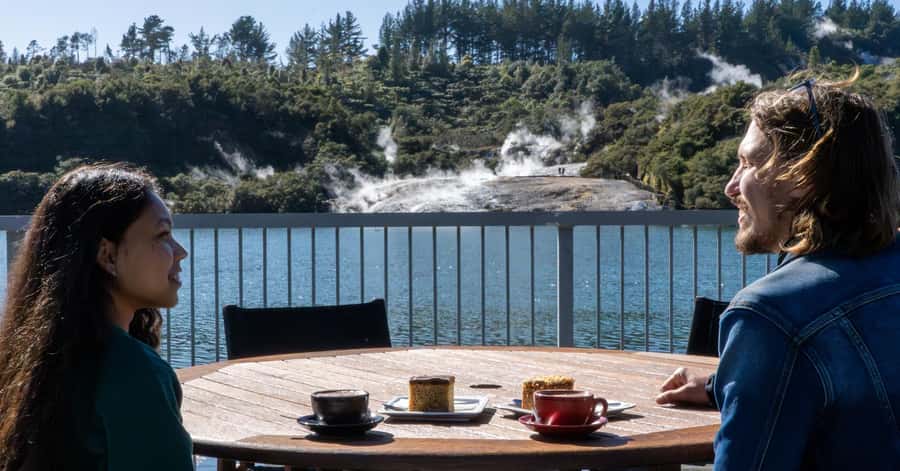
Your visit begins at the visitor center, where staff handle entry and give a short safety briefing. This is also where you can find the cafe area, with options for brunch or lunch, along with shopping.
That arrangement is useful because the visitor center is your base before and after the walk. You can use it to get organized, fill in time before the ferry, or take a break once you return. Friendly service has been a repeated strength of the experience, and the check-in process is described as straightforward.
Do not treat the cafe as a reason to spend the whole day indoors. The real attraction is across the water, and you will want comfortable shoes, water, and clothing suited to the weather before you leave the center.
The park operates in all weather. That is good news in changeable North Island conditions, but it also means you should not assume a sunny day. Rain can make the walk feel cooler and more atmospheric near the hot pools, while bright sun can bring out the colors in the mineral formations more clearly.
The ferry across the water
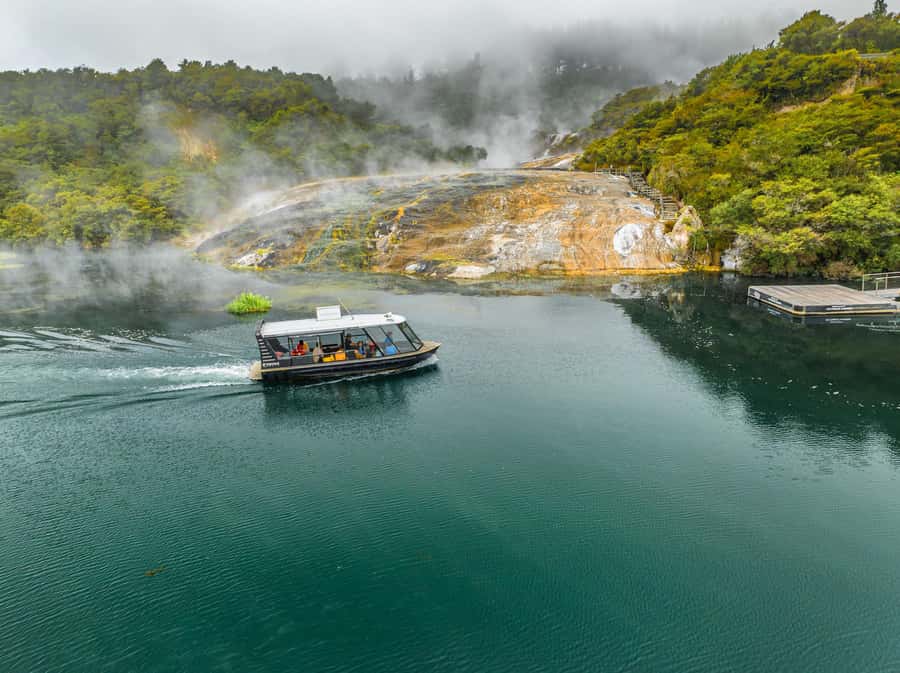
The ferry ride takes about three minutes. It is short, but it gives the visit a pleasant sense of occasion. You are not just walking from a car park to a viewing platform. You cross the water before entering the geothermal area, then return the same way after the walk.
The ferry runs on demand from 8 am each morning. In winter, the last trips leave at 4 pm. During Daylight Saving, the final trips leave at 4:30 pm. Keep those times in mind, especially if you are arriving late or hoping to linger over lunch.
Because the ride is on demand, the exact waiting time can vary. The important practical point is to leave enough time for the crossing and the walk before the final departure. A self-guided visit is flexible, but it is not a reason to ignore the closing schedule.
I like the ferry because it helps separate this stop from the road. The ride is not a sightseeing cruise, but it adds a calm opening and closing to the experience.
Walking the 2.5-kilometer thermal route
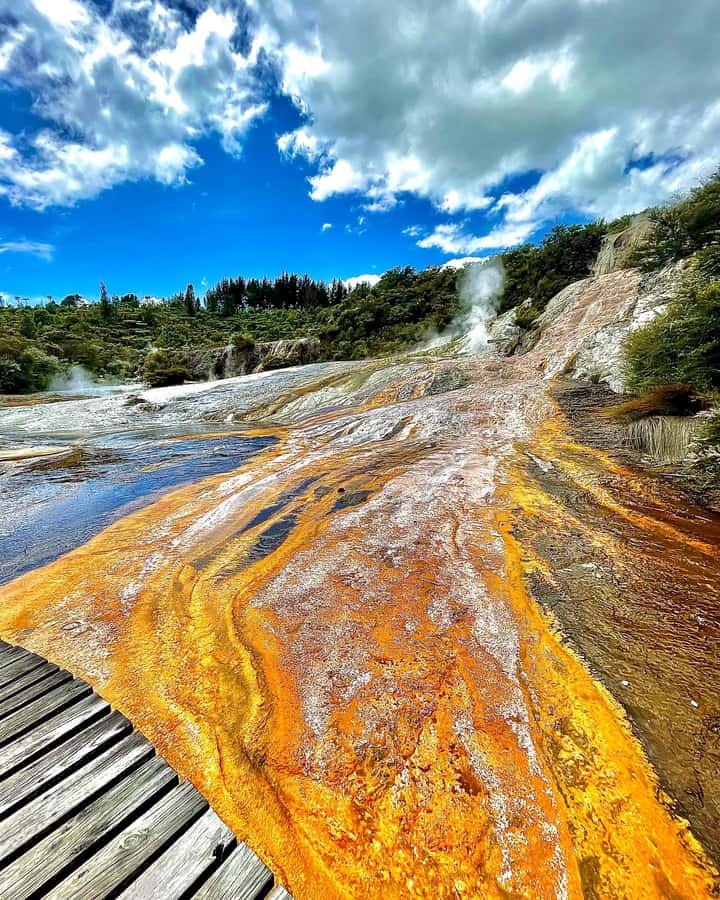
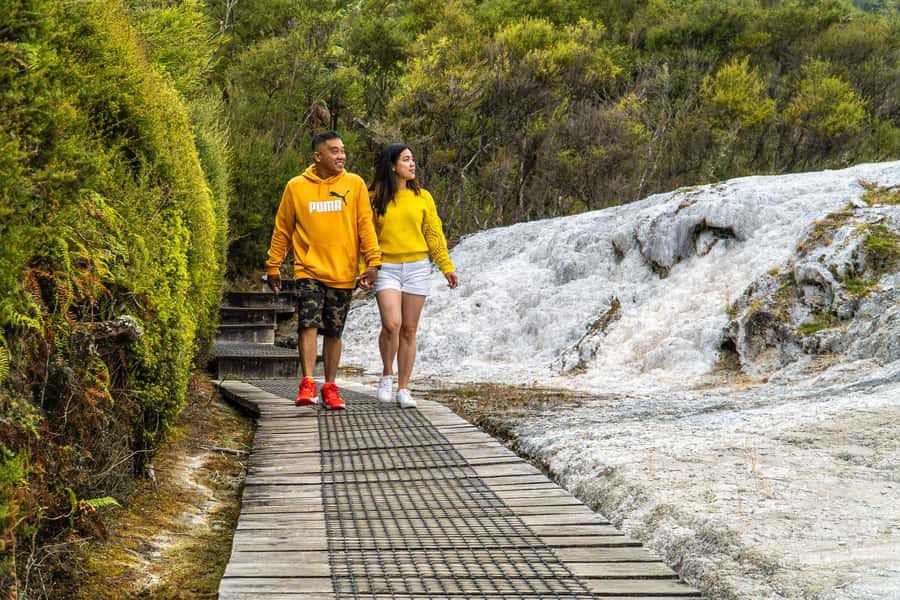
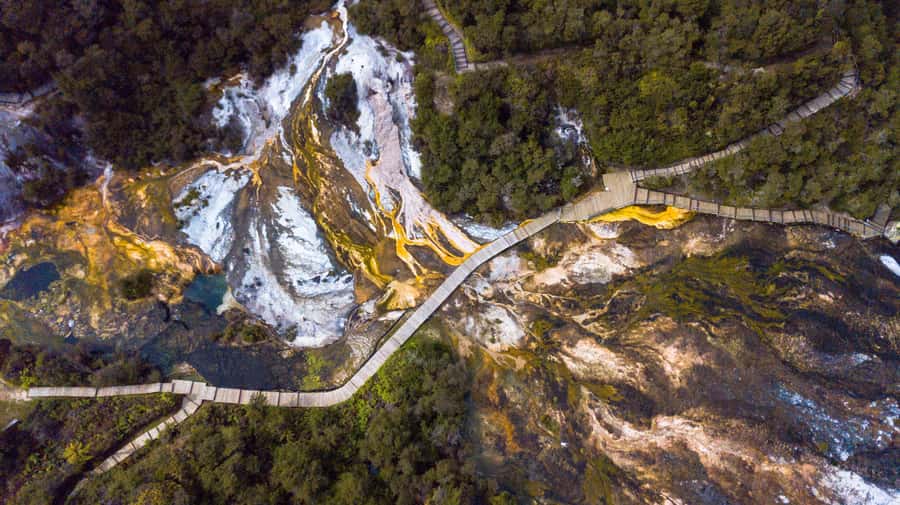
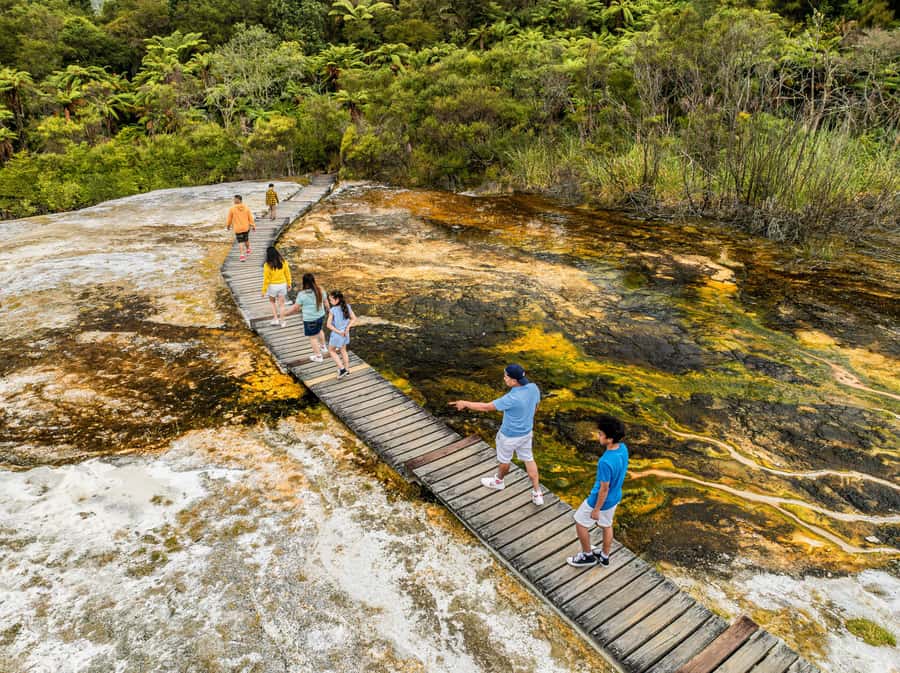
Once across the water, you follow the marked trail through the geothermal area. The walk is generally easy to follow, with boardwalks and information plaques explaining the features around you.
The route is often completed in 45 to 60 minutes by people walking briskly. Allow about 1.5 hours if you want to stop, read the signs, take pictures, and sit for a while. The full trail is about 2.5 kilometers, so it is not a huge physical challenge, but it is not completely flat or effortless.
There are a lot of steps. That point matters more than the simple word easy might suggest. You need a moderate level of fitness, and sturdy trainers or walking shoes are a much better choice than flip-flops. Bring water, especially on a warm day, because geothermal heat can make the walk feel more tiring than the distance suggests.
The good news is that there are seats along the route. You can slow down, take in the views, and let the more active parts of the park reveal themselves at their own pace. I would not rush this walk. The appeal lies in the changes from one feature to the next, not in finishing quickly.
A completely different kind of day out in Rotorua:
- Rotorua Canopy Tours: 2.5Hour Native Forest Zipline Adventure
★ 5.0 · 4,563 reviews - Mitai Maori Village: Cultural Experience and Dinner Buffet
★ 4.7 · 3,575 reviews - Rotorua’s Ultimate Zipline: 6 ziplines, 400 m Tandem, Cliff Walk
★ 5.0 · 2,557 reviews - Rotorua Rafting: Kaituna River White Water Rafting & Free Sauna
★ 5.0 · 1,952 reviews
Mud pools, hot springs, and silica terraces
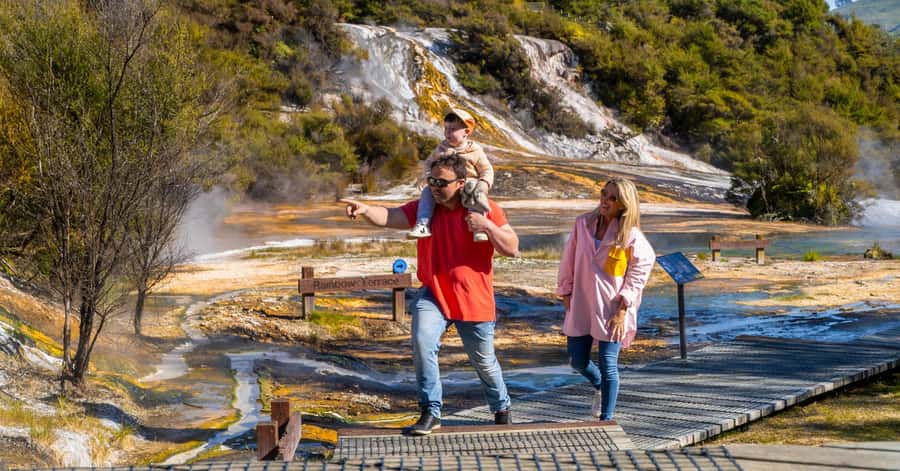
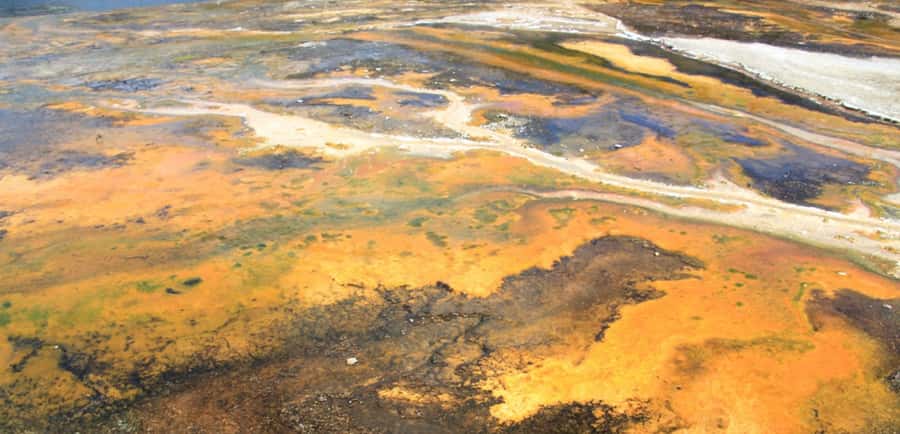
The geothermal features appear in a broad mix of colors, textures, and movement. You may see bubbling mud pools, boiling hot springs, steaming ground, mineral deposits, and silica terraces shaped by hot water over time.
The silica terraces are among the prettiest parts of the visit. Their pale and colored surfaces give the valley a different character from a simple collection of steaming vents. Light conditions affect how strong those colors appear. On a cloudy day, the formations can look more subdued, while sunlight can make them show more clearly.
The smells are part of the experience too. Geothermal areas can have a strong mineral odor, and the hot water gives the place a physical presence you cannot get from a photograph. I like that Orakei Korako brings you close to the features while keeping you on a defined route.
The signs are helpful without requiring a guide to explain every stop. You can read as much or as little as you like. That makes the park work well for families and mixed-age groups, since one person can pause at a plaque while another continues to the next viewpoint.
Ruatapu Cave and the Sacred Hole
Ruatapu Cave is the feature I would make sure not to miss. Also called Sacred Hole, it drops roughly 35 meters to a clear hot pool at the bottom.
Thermal caves are extremely rare, and this is said to be one of only two in the world. That fact gives the cave more than visual appeal. It explains why this stop feels different from the hot pools and geysers around it.
The viewing point lets you look into a deep geothermal opening rather than simply across a steaming pool. The cave has an old, almost prehistoric feel, especially when the surrounding rock and hot water catch the light. It is a good reminder that geothermal activity is not limited to surface-level bubbling and steam.
Take your time here, but stay on the marked path and follow the park’s safety instructions. This is an active thermal area, not a place for wandering off to get a closer picture.
Geysers and the uncertainty of geothermal activity
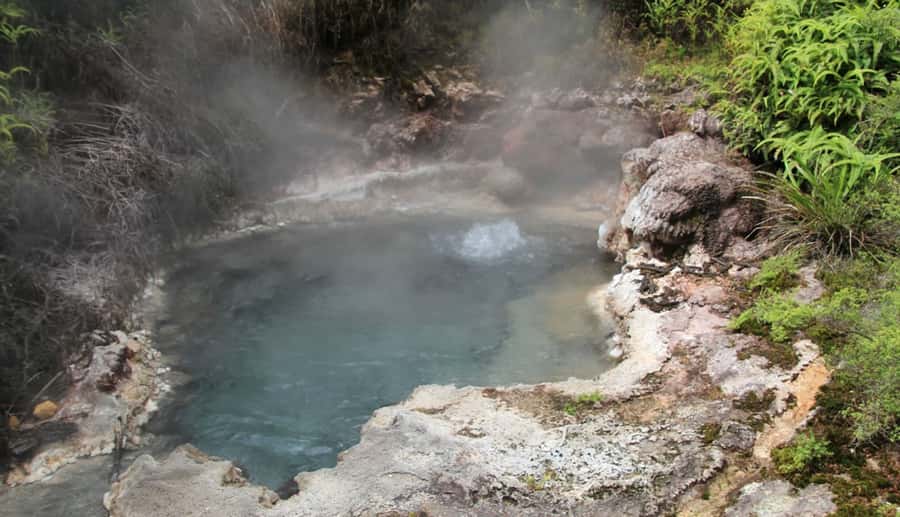
Orakei Korako is known for having up to 23 active natural spurting geysers, more than any other geothermal park in New Zealand according to the supplied information. That is a strong reason to choose this park if you want to see active geothermal movement.
Still, you should set realistic expectations. Geysers are natural features, not scheduled fountains. Activity can vary, and some people may find the park fairly quiet during their visit. One account described no thermal activity at the time, while another found the hot water pouring from the earth especially fascinating.
That contrast is important. You are buying access to a live geothermal area, not a guaranteed show. If the ground is quieter than expected, the terraces, cave, signs, and overall setting still give you plenty to see. If several features are active, the experience becomes far more dramatic.
I prefer this uncertainty to a staged presentation, but you may feel differently if you want guaranteed eruptions and a tightly timed program. Orakei Korako rewards patience more than speed.
How long should you allow?
The formal walk is listed at about 1.5 hours, but actual time depends on your pace. A quick circuit can take 45 to 60 minutes. If you pause at the signs, sit near the views, and spend time at Ruatapu Cave, you will use closer to the full suggested period.
Add time for the safety briefing, waiting for the ferry, and a possible cafe stop. You do not need to turn this into a full-day outing, but the ticket is valid for one day and gives you flexibility.
A practical plan is to arrive with enough time to cross well before the final ferry departure. In winter, be especially careful with the 4 pm last-trip time. During Daylight Saving, you have until 4:30 pm, but arriving earlier still gives you a more relaxed visit.
Is the walk suitable for families?
This can be a good family outing, especially for children who enjoy unusual natural features. The self-guided format means you can stop when needed, and the trail has seats for breaks.
Children must be accompanied by an adult, and unaccompanied minors are not allowed. The steps, heat, and marked-path rules require attention, so this is not a place where children should run ahead.
Dogs are welcome, which is a useful bonus for people traveling with a pet. You still need to keep your dog under control around the boardwalks and thermal features, and you should bring water for the walk.
The experience is not suitable for wheelchair users. The steps and trail conditions are the main concerns, so anyone with limited mobility should check carefully before booking.
What to bring and what to wear
Comfortable walking shoes are the most important item. Several people specifically favored trainers over flip-flops, and I agree. The route is not long, but steps and changing weather make proper footwear worthwhile.
Bring a water bottle, weather-appropriate clothing, and protection from rain or sun as conditions require. The park operates in all weather, so a poor forecast does not automatically cancel the visit.
A light layer is useful because the air around hot pools can feel different from the conditions at the visitor center. You should also expect strong smells in some areas. That is normal in a geothermal park, but it may surprise you if this is your first visit.
The price and overall value
At $34 per person, Orakei Korako is a sensible choice if you value independence and close access to geothermal features. The price includes entry to the thermal park and cave, the self-guided route, and return ferry rides.
You are not paying for a long guided tour or transport from Taupo. You need to make your own way to the park, and the experience itself is built around walking and reading the signs. That keeps the cost reasonable, but it also means you should choose it for the natural setting rather than for entertainment or constant commentary.
I see the strongest value in the freedom to explore at your own pace. You can spend more time at the cave, move quickly through less active areas, or pause for the views without being tied to a group. The ferry and the rare cave also give the visit more substance than a basic thermal viewing platform.
Who should book Orakei Korako?
I would recommend it to you if you want a quieter geothermal experience, enjoy walking outdoors, and like learning from signs rather than following a guide. It is also a good pick if you want to avoid being moved along in a large group.
Families, couples, independent sightseers, and people touring with dogs can all find a good fit here. The route is manageable for reasonably fit walkers, but you should be honest about the steps and bring water.
You may prefer another attraction if guaranteed geyser activity is essential, if you need step-free access, or if you want a fully guided explanation throughout. The park is self-guided, and the natural activity can be subdued on some visits.
Should you book this geothermal park?
Book Orakei Korako if you want freedom, unusual geology, and a calm ferry crossing in one stop near Taupo. The 35-meter Ruatapu Cave, silica terraces, and chance to see up to 23 geysers make the $34 ticket good value for an independent outing.
Go with comfortable shoes, allow at least an hour for the trail, and arrive well before the final ferry. If you can accept that nature does not perform on demand, this is a rewarding and refreshingly low-key way to experience New Zealand geothermal country.
FAQ
Where is Orakei Korako Geothermal Park?
Orakei Korako is in New Zealand’s North Island, in the Taupo Volcanic Zone between Taupo and Rotorua.
How do I reach the geothermal area?
You first check in at the visitor center, then take a return ferry across to the geothermal area. Each crossing takes about three minutes.
How long does the visit take?
The self-guided walk takes about 1.5 hours as planned. Some people complete it in 45 to 60 minutes, depending on how often they stop.
Is the ferry included in the ticket?
Yes. Entry includes return, on-demand ferry rides between the visitor center and the geothermal park.
What is Ruatapu Cave?
Ruatapu Cave, also called Sacred Hole, is a rare geothermal cave that drops about 35 meters to a clear hot pool. It is described as one of only two thermal caves in the world.
Are dogs allowed at Orakei Korako?
Yes, dogs are welcome at the park. Children must be accompanied by an adult, and unaccompanied minors are not allowed.
Is the park accessible for wheelchair users?
No. The experience is not suitable for wheelchair users, and visitors should have a moderate level of physical fitness because the route includes steps.
Just added around Rotorua
- Te Puia: Tuku Iho Trail with Cultural Show★ 5.0 · 5 reviews
- Ultimate self-drive rail car journey★ 5.0 · 5 reviews
- Private Tour Waiotapu Geothermal Shore Excursion up to 8 passengers★ 5.0 · 6 reviews
- Rotorua: Floatplane Flight with Orakei Korako Landing★ 5.0 · 6 reviews
- Rotorua: Evening Starlight Gourmet Kayak Tour with dinner★ 5.0 · 6 reviews
- Rotorua: Glow Worm Adventure Kayak★ 5.0 · 6 reviews
- Epic Tandem Kayak Tour down the Kaituna River Waterfalls★ 5.0 · 6 reviews
- From Rotorua: Whirinaki Rainforest Guided Cultural Tour★ 5.0 · 6 reviews
Geothermal & Hot Springs, compared.
Hobbiton & Rotorua including Wai-O-Tapu – Small Group Tour from Auckland
Read our review →
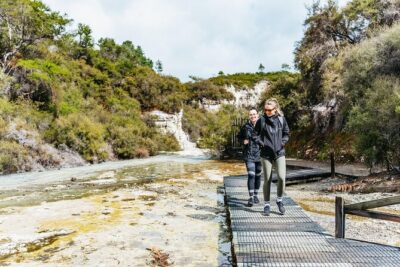
Wai-O-Tapu Thermal Wonderland, Rotorua, New Zealand
Read our review →
Polynesian Spa Pavilion Hot Pool Bathing (12+ yrs)
Read our review →
Polynesian Spa Rotorua: Deluxe Lake Spa Hot Spring Bathing
Read our review →
Wai O Tapu & Waimangu Eco Thermal Morning Tour
Read our review →Browse the lists this tour appears in