
Reviewed · GEOTHERMAL & HOT SPRINGS
Thermal Path Tour
Rotorua gets steamy fast. This four-hour Thermal Path Tour takes you beyond the city to geothermal sites that can be awkward to reach without a car. I like the small maximum of eight people and the relaxed pace set by local guide Stephen. The main drawback is time: the hot pools come near the end, and one hour there may feel short if soaking is your priority.
I also like the mix of walking, scenery, bubbling mud, and bathing rather than a tour built around one attraction. You will need supportive shoes, decent balance, and a willingness to walk up to 2 kilometers on uneven ground. This is a real outdoor outing, not a simple drive-by sightseeing trip.
In This Review
- Key points at a glance
- Why the Thermal Path Tour works well in Rotorua
- Rainbow Mountain: a short walk with a bigger view
- Kerosene Creek brings the geothermal water close
- The mud pool is Rotorua at its most theatrical
- Te Manaroa Springs shows the scale of the water below
- Waikite Valley pools provide the soft landing
- Stephen’s guiding is a major part of the value
- Price, timing, and what you receive
- Who should book the Thermal Path Tour
- My verdict: a strong choice for the real Rotorua
- FAQ
- Where does the Thermal Path Tour start?
- What time does the tour begin?
- How long does the Thermal Path Tour last?
- How many people can join the tour?
- Is transport included?
- Which places are visited?
- Can I bathe during the tour?
- What should I wear?
- What happens if the weather is poor?
Key points at a glance
- A small group capped at eight: The minivan format makes it easier to ask questions and gives the guide room to adjust the pace.
- Rainbow Mountain begins the afternoon: Expect about a 30-minute walk, crater views, and unusual geothermal plant life.
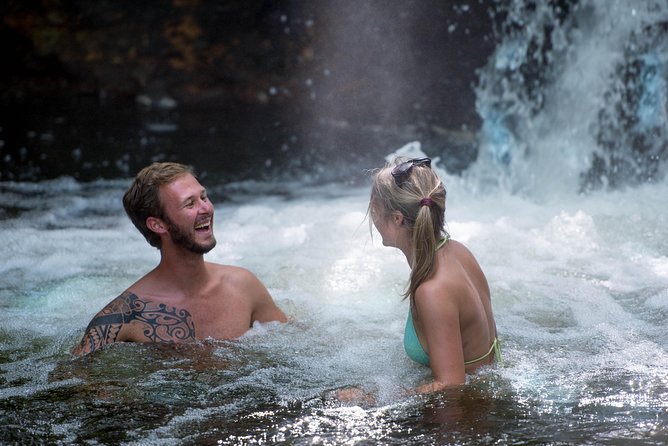
- Kerosene Creek offers a hands-on stop: You can dip your toes or enter the naturally heated river.
- The mud pool is the loudest geothermal display: Boiling mud creates a constant show of popping, bubbling, and earthy fumes.
- Te Manaroa Springs explains the power underground: A short walk at Waikite Valley leads to New Zealand’s largest discharge of boiling water.
- Waikite Valley finishes the day gently: Mineral pools provide a warm rest after the walking portions.
Why the Thermal Path Tour works well in Rotorua
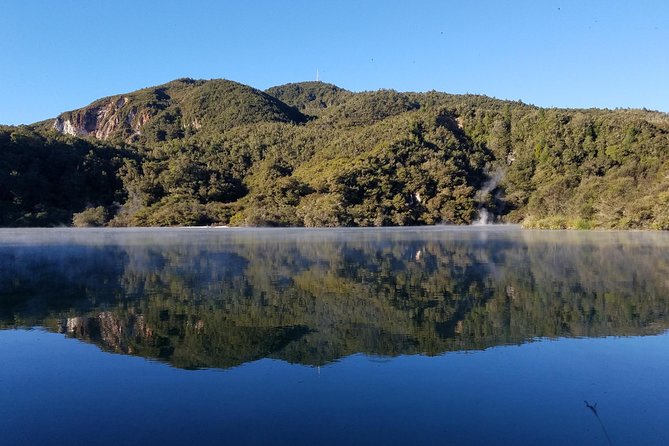
Rotorua is famous for geothermal activity, but its best experiences are spread across the wider district. You can spend a lot of time trying to work out which roads, pools, and walking tracks fit together. This tour handles the driving in an air-conditioned minivan and links several different geothermal settings in one afternoon.
That matters because the stops are not duplicates. Rainbow Mountain gives you a walk and a view. Kerosene Creek brings you close to warm running water. The mud pool supplies sound and movement. Te Manaroa Springs shows the scale of the underground water system. Waikite Valley then gives you a place to sit and soak.
I especially like that the outing does not rely only on a famous, heavily packaged attraction. The emphasis is on local places, natural features, and Stephen’s explanations of the geothermal activity, plants, birds, and New Zealand life. Several people singled out his easygoing manner, local knowledge, and careful pacing.
The tour begins at 1:15 pm from the Information Center area at 1167 Fenton Street. It returns to the same meeting point after roughly four hours. That afternoon timing can fit well after a morning activity, though you should leave enough space before the start because the tour does not include pickup from every address in Rotorua.
More Geothermal & Hot Springs in Rotorua
- Rotorua: Wai-O-Tapu Geothermal Park Entry Ticket
★ 4.6 · 2,601 reviews - Rotorua: Hells Gate Outdoor Mud Bath & Spa Experience
★ 4.6 · 398 reviews - Wai-O-Tapu Thermal Wonderland, Rotorua, New Zealand
★ 4.5 · 379 reviews
Rainbow Mountain: a short walk with a bigger view
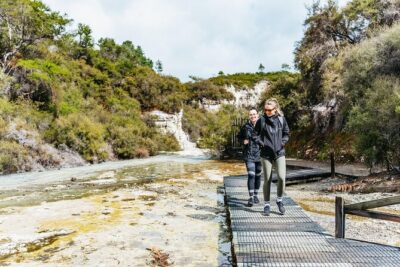
The first stop takes you out of Rotorua to Rainbow Mountain. The walk lasts about half an hour and leads through geothermal vegetation toward the crater. It is a useful opening because you are not simply stepping from a vehicle to a viewpoint. You get a first sense of how heat, minerals, and volcanic ground shape the plants around the mountain.
The route includes uneven surfaces, tree roots, rocks, and possible slippery patches. Trainers or hiking boots are a much better choice than sandals or smooth-soled shoes. The tour asks for a moderate level of fitness, but balance matters just as much as stamina.
The reward is variety. You get views from the crater area, an outdoor walk, and a look at vegetation that feels different from an ordinary forest track. If you prefer a full mountain hike, this stop will seem brief. If you want a manageable introduction before the pools and springs, the half-hour length keeps the afternoon moving.
Stephen’s commentary is part of the point here. His explanations cover more than hot water and volcanic ground. You might hear about local flora and fauna, and one unusual detail from the tour is his use of bird calls. Those small touches help turn a short walk into a more personal introduction to the area.
Kerosene Creek brings the geothermal water close
Next comes Kerosene Creek, a naturally heated river where you can dip your toes or bathe. This is a different experience from looking over a fenced thermal feature. The water is part of a flowing environment, and you have the option to decide how much contact you want.
Bring a swimsuit and a towel if you intend to enter the water. The supplied details do not state that towels or changing facilities are provided, so it is sensible to confirm those practical points before departure. If you do not want a full soak, dipping your feet still lets you experience the warmth without committing to a long bath.
The creek also requires respect. Geothermal water can look inviting, but it is not an ordinary swimming hole. Follow Stephen’s instructions, remain on formed paths, and keep your head above the water when bathing. The operator specifically warns about the risk of amoebic meningitis, a potentially fatal illness associated with geothermal waters.
This stop may be the most appealing part for people who want a natural bathing experience rather than a formal spa. It is also the part where you should take the safety guidance most seriously. Do not wander onto thin crust surfaces or approach hot fluids outside the marked route.
The mud pool is Rotorua at its most theatrical
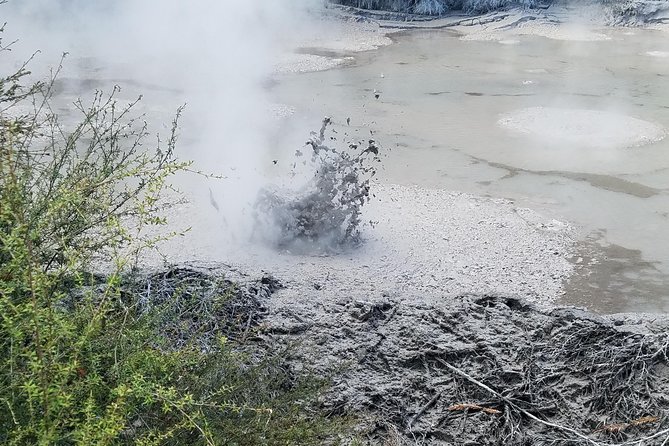
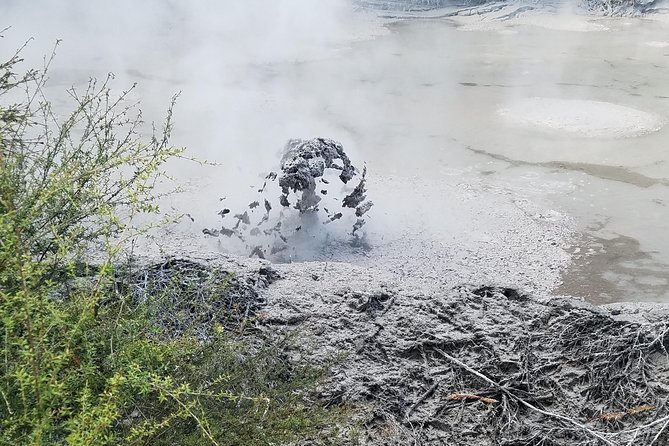
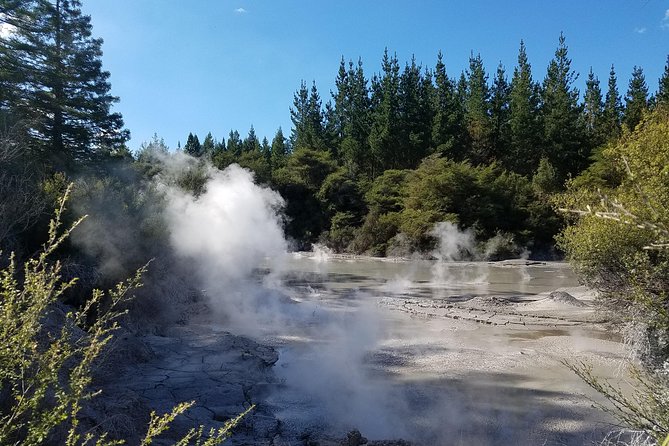
The tour then visits a large boiling mud pool, described as the best example of its kind on the route. Mud pools have a peculiar charm. They do not offer the brilliant color or smooth surface of a clear hot spring. Instead, the ground seems to breathe and churn, with bubbles rising, bursting, and sending sound across the site.
Give yourself time here. The value is not in taking one photograph and returning to the minivan. Watch the surface for a while and listen to the popping and gurgling. The activity changes from moment to moment, which makes this a stronger stop than its simple appearance might suggest.
The mud pool is also a good place for Stephen’s explanations. He covers how the geothermal system works and places the activity within the wider setting around Rotorua. You will not need to do your own research or decode signs alone.
Stay on the formed trail. The safety information is blunt for good reason: thin crust, gases such as carbon dioxide and sulphide, and hot fluids can cause severe injury or worse. This is an outdoor area with real hazards, not a themed attraction where every surface is safe to touch.
A completely different kind of day out in Rotorua:
- Rotorua Canopy Tours: 2.5Hour Native Forest Zipline Adventure
★ 5.0 · 4,563 reviews - Mitai Maori Village: Cultural Experience and Dinner Buffet
★ 4.7 · 3,575 reviews - Rotorua’s Ultimate Zipline: 6 ziplines, 400 m Tandem, Cliff Walk
★ 5.0 · 2,557 reviews - Rotorua Rafting: Kaituna River White Water Rafting & Free Sauna
★ 5.0 · 1,952 reviews
Te Manaroa Springs shows the scale of the water below
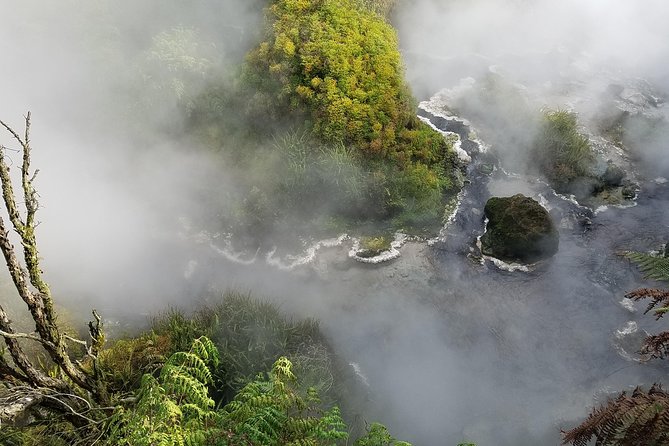
At Waikite Valley, a short walk leads to Te Manaroa Springs, described as the largest discharge of boiling water in New Zealand. This gives the tour a change of scale. Earlier, you see a creek and a mud pool. Here, you get a stronger sense of how much hot water the geothermal system can move.
The phrase living waters suits this stop. Steam, heat, sound, and moving water make the spring feel active rather than static. The short walk is another reason to wear sturdy shoes, even if you are mainly looking forward to the pools afterward.
This is one of the places where a guide adds real value. Without context, a large spring may simply look like another hot-water feature. Stephen’s explanations about the workings of the thermal area help you connect the separate stops into one story.
The walk is short, but the wider tour includes up to 2 kilometers on foot. If you have trouble with uneven ground or balance, tell the operator before booking or contact them for a clearer assessment. The supplied information calls for good physical fitness and balance from all participants.
Waikite Valley pools provide the soft landing
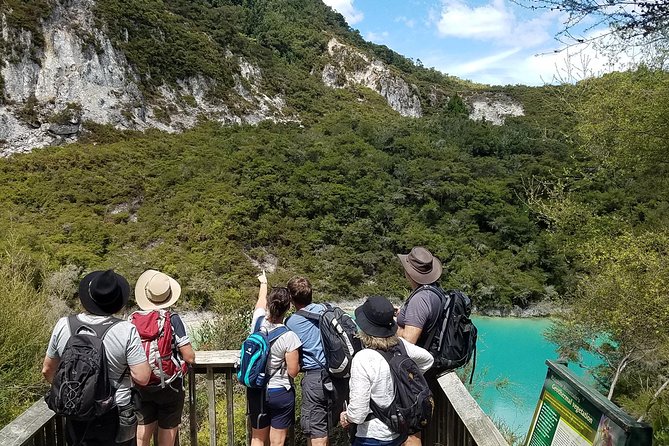
The final major stop is Waikite Valley Thermal Pools, where you can relax in mineral hot pools. After the walking and standing, this is a smart way to finish. The water is described as silky smooth, and the bathing time gives the afternoon a calm ending rather than sending you straight from one geothermal site back into town.
The soaking period is also the one point where the schedule may feel tight. One person wanted more time in the hot springs, and that is easy to understand. If you measure value mainly by bathing time, a dedicated spa visit may suit you better. If you want the springs as part of a wider half-day outing, the time is more balanced.
Keep your head above the water here as well. The safety warning applies to geothermal bathing, not just Kerosene Creek. You should also follow any instructions given on site and avoid treating the pools as a place for risky underwater swimming.
The pools are best viewed as the finish to a varied route. You are paying for transport, guiding, access fees, several natural sites, and a soak, not four uninterrupted hours in warm water.
Stephen’s guiding is a major part of the value
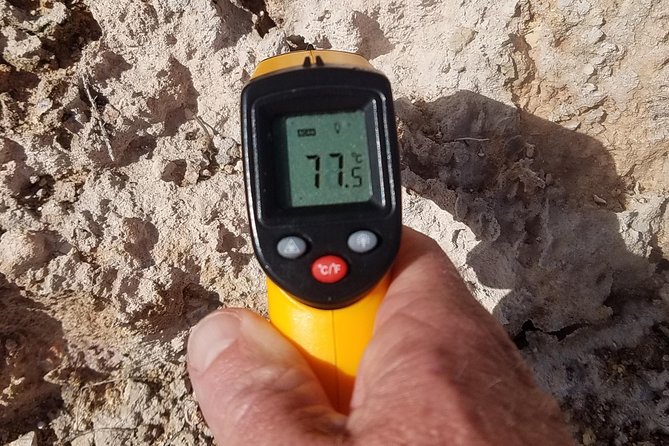
The strongest praise for this experience centers on Stephen. His style comes across as friendly, informed, and relaxed rather than formal. He explains geothermal features, local history, plants, animals, and the New Zealand setting in a way that keeps the afternoon personal.
That matters most at places where the physical sight alone may not tell you much. A mud pool can look like brown sludge. A spring can look like steaming water. With context, you begin to understand the heat, gases, discharge, and plant life that make each place different.
He also appears attentive to the pace of the group. One couple specifically appreciated that he adjusted the outing for people who were not as agile as they once were. That does not remove the need for fitness or balance, but it suggests you will not be rushed through every stop without a chance to look around.
The small group helps here. With no more than eight people, you have a better chance to hear explanations, ask questions, and avoid the anonymous feel of a large coach tour. It also makes the air-conditioned minivan practical rather than merely convenient.
Price, timing, and what you receive
At $93.09 per person, the tour is not the cheapest way to see geothermal sights, but the price covers a useful bundle: an air-conditioned minivan, a local guide, designated pickup and drop-off, entrance fees, and taxes. There are no listed extras that you must add to the advertised cost.
I see the value mainly in the time saved. You do not need to find each site, work out the driving route, search for parking, or research which pools are worth visiting. The tour also lets you combine places that would be harder to link without your own transport.
The four-hour length is enough for a clear introduction, but it requires a little discipline. Rainbow Mountain, Kerosene Creek, the mud pool, Te Manaroa Springs, and Waikite pools all compete for the afternoon. You will see a range of sites, not spend a long time at each one.
The tour is generally booked well ahead, with an average booking time of 41 days. That is useful planning information if your Rotorua dates are fixed. Confirmation is sent within 48 hours, subject to availability.
Who should book the Thermal Path Tour
I would choose this for you if you want several geothermal settings in one outing and prefer explanations to a self-guided visit. It is also a good match if you do not have a rental car, want a small group, or like the idea of ending with a soak.
You will probably enjoy it most if you appreciate natural places that are a little rough around the edges. The route includes formed paths, but it is not an entirely smooth sightseeing circuit. Good shoes and sensible clothing matter, since the tour operates in most weather conditions.
This is less suitable if you want a long spa session, dislike walking on uneven ground, or need a fully accessible route. It may also feel busy if you prefer to spend half a day at one site rather than sample several.
Free cancellation is available up to 24 hours before the 1:15 pm start for a full refund. Changes or cancellations inside that window are not refunded, and poor weather may lead to a new date or a full refund.
My verdict: a strong choice for the real Rotorua
I would recommend the Thermal Path Tour to anyone who wants Rotorua’s geothermal character without spending the day planning transport. Its best qualities are the small group, the range of stops, the natural bathing, and Stephen’s warm, useful guidance.
Book it if you want mud, steam, walking, local stories, and a relaxing finish in one compact afternoon. Skip it if the hot pools are your only goal, because the bathing time is limited. For most people, though, the mix gives you a better sense of Rotorua than a single thermal pool visit, and the $93.09 cost is fair for the transport, access, and personal guiding included.
FAQ
Where does the Thermal Path Tour start?
It starts at 1167 Fenton Street, Rotorua 3010, New Zealand, at the Information Center meeting point.
What time does the tour begin?
The scheduled start time is 1:15 pm.
How long does the Thermal Path Tour last?
The tour lasts approximately four hours and finishes back at the starting meeting point.
How many people can join the tour?
The maximum group size is eight people.
Is transport included?
Yes. Transport is provided in an air-conditioned minivan, with pickup and drop-off at designated meeting points.
Which places are visited?
The route includes Rainbow Mountain, Kerosene Creek, a large boiling mud pool, Te Manaroa Springs at Waikite Valley, and Waikite Valley Thermal Pools.
Can I bathe during the tour?
Yes. You can dip your toes or bathe at Kerosene Creek, and the tour finishes with time in mineral hot pools at Waikite Valley.
What should I wear?
Dress for outdoor conditions and wear supportive footwear such as trainers or hiking boots. The tour can include up to 2 kilometers of walking over uneven ground.
What happens if the weather is poor?
The tour operates in most weather conditions, but if it is canceled because of poor weather, you will be offered another date or a full refund.
Just added around Rotorua
- Te Puia: Tuku Iho Trail with Cultural Show★ 5.0 · 5 reviews
- Ultimate self-drive rail car journey★ 5.0 · 5 reviews
- Private Tour Waiotapu Geothermal Shore Excursion up to 8 passengers★ 5.0 · 6 reviews
- Rotorua: Floatplane Flight with Orakei Korako Landing★ 5.0 · 6 reviews
- Rotorua: Evening Starlight Gourmet Kayak Tour with dinner★ 5.0 · 6 reviews
- Rotorua: Glow Worm Adventure Kayak★ 5.0 · 6 reviews
- Epic Tandem Kayak Tour down the Kaituna River Waterfalls★ 5.0 · 6 reviews
- From Rotorua: Whirinaki Rainforest Guided Cultural Tour★ 5.0 · 6 reviews
Geothermal & Hot Springs, compared.
Hobbiton & Rotorua including Wai-O-Tapu – Small Group Tour from Auckland
Read our review →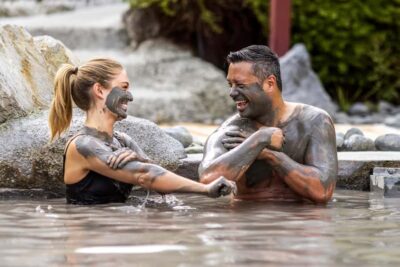
Wai-O-Tapu Thermal Wonderland, Rotorua, New Zealand
Read our review →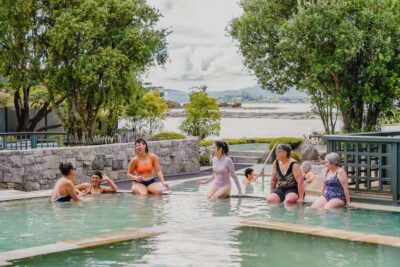
Polynesian Spa Pavilion Hot Pool Bathing (12+ yrs)
Read our review →
Polynesian Spa Rotorua: Deluxe Lake Spa Hot Spring Bathing
Read our review →
Wai O Tapu & Waimangu Eco Thermal Morning Tour
Read our review →Browse the lists this tour appears in