
Reviewed · SELF-GUIDED TOURS
Rotorua Railcruising: Self-Drive Rail Car with Audio Guide
Slow travel has its rewards. Rotorua Railcruising puts you behind the controls of a small petrol-electric rail car, giving you open views, a gentle ride, and a close look at an old railway route. I like the freedom of driving your own car and the comfort of covered seating with blankets on cool days. I also like the audio guide, which adds useful context about the railway and the local area.
The main thing to understand is the pace. This is a quiet two-hour outing at speeds of up to 20 km/h, not a fast amusement ride. If you want action, dramatic stops, or a long list of sights, you may find the trip a little thin. If you enjoy unusual transport, local stories, and time outdoors, it offers a pleasant change from Rotorua’s busier attractions.
In This Review
- Key points to know before you book
- What Rotorua Railcruising actually is
- Beginning at Ngongotaha or Mamaku Railway Station
- Driving the rail car at 20 km/h
- Lake Rotorua, Mount Tarawera, and the changing views
- The audio guide and the railway story
- Reaching the destination and turning the cars around
- Comfort in cool, wet, or windy weather
- Is $44 good value for two hours?
- Who should book it, and who should skip it?
- My verdict on Rotorua Railcruising
- FAQ
- How long does Rotorua Railcruising last?
- How fast does the rail car travel?
- Where does the experience begin?
- Is the rail car self-drive?
- Is an audio guide included?
- What is provided for bad weather?
- Is Rotorua Railcruising suitable for wheelchair users or people with motion sickness?
Key points to know before you book
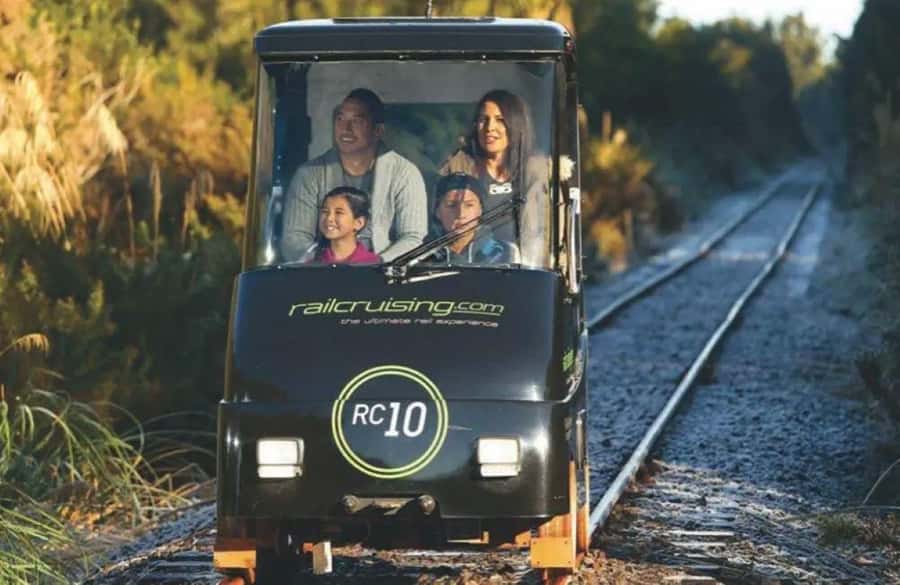
- You drive your own petrol-electric rail car: The hands-on element makes this more than a standard train ride, though the pace remains gentle.
- Two starting stations are possible: Your journey begins at either Ngongotaha Station or Mamaku Railway Station, depending on the operating arrangement.
- Lake Rotorua and Mount Tarawera can appear along the route: The views are a major reason to bring a camera, but the exact quality depends on weather and visibility.
- The ride lasts two hours: That includes the outward journey, the turning procedure at the destination, and the return trip.
- Covered seating helps in unsettled weather: Waterproof clear side windows and blankets make the experience more comfortable on rainy, windy, or cool days.
- The experience works best for history-minded families and couples: It is gentle and distinctive, but not suited to wheelchair users or people prone to motion sickness.
What Rotorua Railcruising actually is
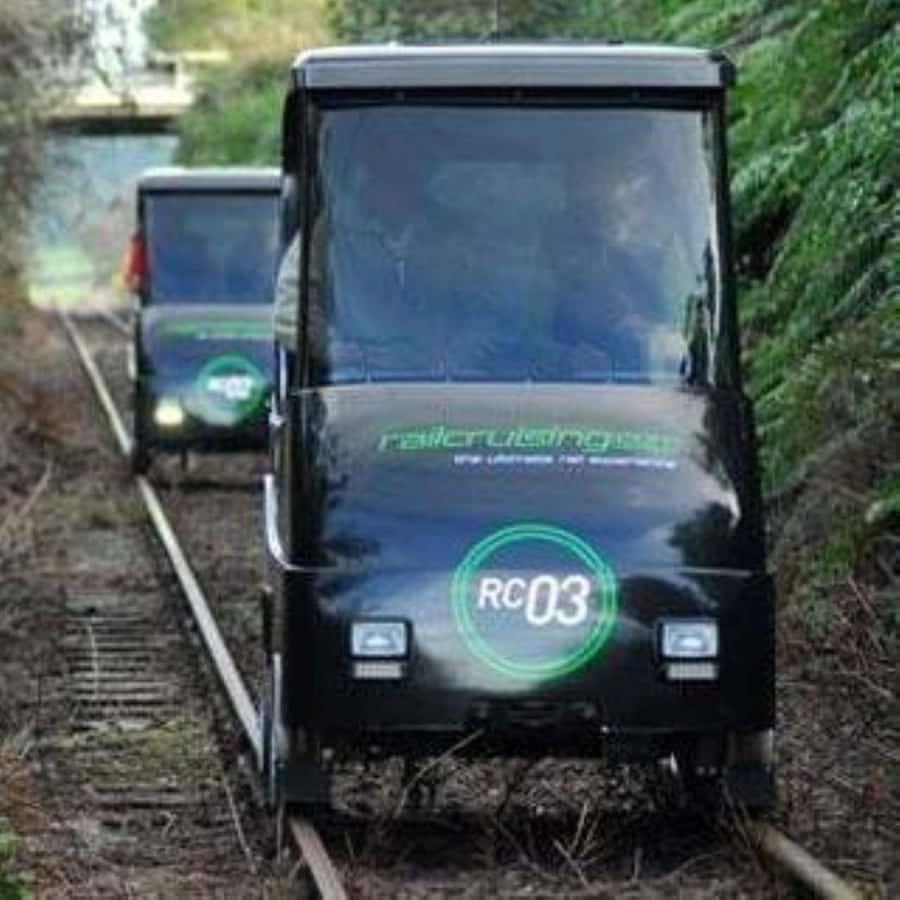
Rotorua Railcruising uses small hybrid rail cars that run along the historic Rotorua Railway. Instead of sitting in a carriage while someone else handles the controls, you take charge of your own car and guide it along the track at a top speed of about 20 km/h.
That sounds more thrilling than it feels. The fun comes from the novelty and the sense of control, not speed. You are not racing down the line. You are moving slowly enough to take in the surroundings, listen to the commentary, and enjoy the simple oddness of driving a vehicle that belongs on rails.
The cars have covered seating, with clear waterproof side windows available for rainy or windy weather. Blankets are provided for cooler days. This is practical New Zealand planning: the weather can change, and the experience is designed to continue in less-than-perfect conditions.
The private-group format is another useful feature. You are not being packed into a large tour coach or standard train carriage. The outing feels more personal, although the information provided does not specify the exact number of people in each rail car or group.
More self-guided tours in Rotorua:
- Volcanic Valley Self Guided Walking and Hiking at Waimangu
★ 4.5 · 248 reviews - Half-Day Self-Guided Mountain Bike Journey through Whakarewarewa Redwood Forest
★ 5.0 · 124 reviews - Whaka Geothermal Trails Self-Guided Tour
★ 3.5 · 44 reviews
Beginning at Ngongotaha or Mamaku Railway Station
The trip begins at either Ngongotaha Station or Mamaku Railway Station. Since the starting point can vary, check your booking details carefully before setting out. The two stations frame the experience differently, but both serve as gateways to the old railway route.
At the station, you get settled into your rail car and receive the basic instructions needed for the self-drive portion. You should arrive with a charged smartphone, since the audio tour is part of the experience and your phone is listed among the recommended items to bring.
The staff are an important part of the outing. Two men, one at each end of the route, have been praised for being friendly and informative. Their presence helps with the practical side of the ride and gives the experience a human touch. The audio guide handles much of the historical explanation, but the staff add useful personality and help the journey feel cared for rather than automated.
Before departure, take a moment to adjust your clothing and gather your camera, drinks, and sunscreen. You have a roof and clear side protection, but this remains an outdoor activity. Weather-appropriate clothing is more useful than dressing for a normal indoor train ride.
Driving the rail car at 20 km/h
Once you set off, the rail car moves at a calm top speed of 20 km/h. That slow pace is central to the experience. You have time to look in several directions, take photographs, and follow the audio commentary without feeling rushed.
I like that the views are largely unobstructed. You are not looking through rows of train windows or over the heads of other passengers. The open sightlines make the ride feel more connected to the surrounding countryside, even though the cars are protected by a roof and clear side panels.
The driving itself is likely to be the biggest novelty. You are not simply being transported from one station to another. You are taking part in the movement of the vehicle, which gives the journey a gentle sense of adventure. Still, keep your expectations in check. The experience does not offer high-speed thrills, sharp action, or a theme-park atmosphere.
That distinction matters if you are choosing this for children. Young children who enjoy vehicles, buttons, and the idea of steering may have a good time. Children expecting a high-octane rail ride could lose interest. The best match is a child who can appreciate a slow, unusual machine and the story behind it.
Lake Rotorua, Mount Tarawera, and the changing views
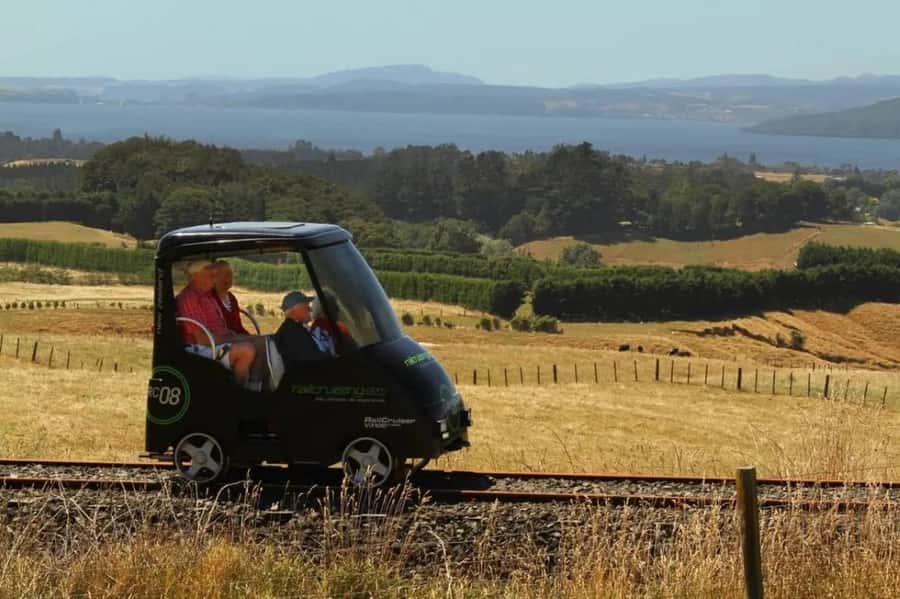
The route provides views that can include Lake Rotorua and Mount Tarawera. These are the visual rewards of the journey, and they give you a reason to keep your camera ready rather than putting it away after departure.
The outing is not built around a series of formal sightseeing stops. Instead, the scenery unfolds while the rail car continues along the track. That means the value depends partly on your mood and the weather. On a clear day, the views can give the trip its strongest moments. On a grey or wet day, you will probably pay more attention to the railway story and the novelty of the ride itself.
You should also allow for the fact that not every minute delivers a major view. One useful criticism of the experience is that it may not offer enough visual highlights for people who want a packed sightseeing schedule. This is a railway excursion, not a grand panorama tour with frequent photo stops.
The upside is that the quiet sections have their own charm. You can watch the countryside pass without constantly preparing to jump out for the next attraction. For me, that slower rhythm is part of the appeal. You are giving the route time to reveal itself instead of treating it as a quick photo opportunity.
A few more Rotorua trips worth weighing up
- Explore Auckland: Self Guided Audio Tour
★ 4.5 · 12 reviews - Discover Picton: Self-Guided Audio Tour
★ 3.0 · 8 reviews - Discover Akaroa: Self Guided Audio Tour
★ 4.0 · 6 reviews
The audio guide and the railway story
The audio guide explains the history of the Rotorua Railway and the local area. It gives the ride a purpose beyond simply moving along the track. Without it, the experience could feel like a scenic mechanical novelty. With it, you get some understanding of why the railway exists and how it connects to the region.
The commentary has been described as informative and generally good, though there can be some static depending on your location. That is worth knowing before you book. The audio is a useful layer, but it may not sound like a polished studio production at every point along the route.
The focus on the man who built the railway may appeal strongly to people interested in local engineering and railway history. If that subject does not hold your attention, the middle part of the ride may feel less exciting. I would treat the audio as an important bonus, not the sole reason to book.
Bring a charged smartphone and keep the volume at a comfortable level. You also need to remain aware of the surroundings and any instructions from staff, so this is not the time to become completely absorbed in your phone.
Reaching the destination and turning the cars around
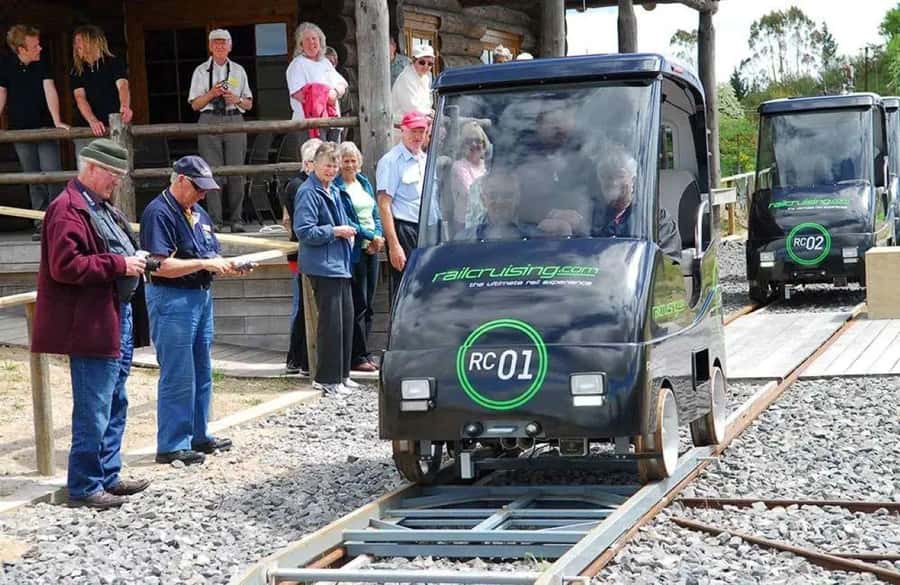
At the destination, you watch the rail cars get turned around for the return journey. This is a distinctive part of the outing because it shows you how the small vehicles are handled on the railway.
The turn is not a major attraction in the usual sightseeing sense, but it adds a practical piece of railway operation to the experience. You see that the journey is not simply a straight run with an invisible turnaround somewhere out of sight. The machinery and staff work are part of what you came to experience.
This pause also breaks up the two-hour ride. You get a change of rhythm before heading back along the line. The return journey gives you another chance to notice views you missed on the way out, although the trip remains a continuous rail outing rather than a stop-heavy tour.
If you book a one-way version, a complimentary shuttle is included. The standard experience described here is a two-hour outing, but the shuttle detail may matter if your chosen arrangement involves starting at one station and finishing at another. Confirm the exact format at booking so you know where to leave your vehicle.
Comfort in cool, wet, or windy weather
The covered seating is a simple but important feature. Rotorua weather does not always cooperate with outdoor plans, and the clear waterproof side windows provide protection when rain or wind arrives.
Blankets are available for cooler days. You should still bring weather-appropriate clothing rather than relying entirely on the supplied blankets. Sunscreen is also recommended, which tells you that bright conditions are part of the planning equation too.
You can bring drinks, and tea, coffee, and Milo are available at Mamaku Station. That small refreshment option adds comfort, especially if you are taking your time before or after the ride. The information provided does not state that food is included, so bring anything substantial you may want during the outing.
The cars are designed for viewing, but this is not a fully enclosed luxury vehicle. You should expect some exposure to outdoor conditions, even with the windows and roof. Dress for a real day outside, not an indoor museum visit.
Is $44 good value for two hours?
At $44 per person, Rotorua Railcruising sits in the category of paid experiences where the value depends on how much you enjoy the format. You are paying for the rail car, the ability to drive it yourself, the audio tour, staff support, weather protection, and access to a piece of railway heritage that is not part of an ordinary train excursion.
I think the price is fair if you value unusual transport and a private-group setting. The self-drive element gives you something you cannot get from a normal scenic train. The experience also offers a slower, more personal way to see the area than a standard sightseeing transfer.
The value is weaker if you measure every dollar by the number of famous sights you see. The ride lasts two hours, but it does not promise a long list of stops or constant dramatic scenery. Some of your time is spent simply moving along the line, listening, and watching.
That is not a flaw by itself. It is a question of fit. I would choose it for a couple looking for an offbeat Rotorua activity, a family with children who like machines, or anyone interested in New Zealand railway stories. I would spend the money elsewhere if I wanted a fast-paced attraction or a broad tour of the region.
Who should book it, and who should skip it?
You are a good match for this experience if you enjoy:
- Small-scale transport and railway history
- Gentle outdoor activities
- Driving something unusual
- Scenic views without a crowded carriage
- A private-group format
- Local stories delivered through an audio guide
You may want to skip it if you need constant action, frequent stops, or a strong entertainment program. The ride is intentionally calm, and the most exciting part is the unusual rail car itself.
It is not suitable for wheelchair users, according to the stated restrictions. It is also not recommended for people with motion sickness. Even at a modest speed, rail movement can bother some people, so consider your own comfort before booking.
The experience can work for children, but you should explain the pace in advance. Call it a slow rail adventure rather than a fast train ride. That simple expectation-setting may make the difference between a memorable outing and two long hours for a restless child.
Booking remains flexible with free cancellation up to 24 hours before the activity for a full refund, and you can reserve now and pay later. Those terms are useful if the weather forecast is uncertain, though you should still check the available starting time and station details before committing.
My verdict on Rotorua Railcruising
Rotorua Railcruising is a niche experience, and that is exactly why it appeals. You get to drive a petrol-electric rail car, follow an old railway route, hear local history, and take in views that may include Lake Rotorua and Mount Tarawera.
I like the friendly staff, the unobstructed views, and the practical protection from cool or wet weather. I also appreciate that the experience does not pretend to be something it is not. It is slow, quiet, and a little quirky.
You should book it if you want a distinctive two-hour outing and enjoy the idea of railway heritage brought to life through your own small rail car. Skip it if you want speed, a full sightseeing itinerary, or a constant stream of major attractions. At $44 per person, it offers good value for the right audience, but the right audience is looking for character, not adrenaline.
FAQ
How long does Rotorua Railcruising last?
The experience lasts two hours. This includes the rail journey, the turnaround at the destination, and the return trip.
How fast does the rail car travel?
The rail cars travel at speeds of up to 20 km/h. The experience is designed as a gentle ride, not a high-speed attraction.
Where does the experience begin?
The journey begins at either Ngongotaha Station or Mamaku Railway Station. Check your booking information for the correct starting point.
Is the rail car self-drive?
Yes. You ride in your own petrol-electric rail car and drive it along the railway route.
Is an audio guide included?
Yes. An audio tour covering the history of the Rotorua Railway and the local area is included.
What is provided for bad weather?
The cars have covered seating, waterproof clear side windows for rainy or windy days, and blankets for cooler weather.
Is Rotorua Railcruising suitable for wheelchair users or people with motion sickness?
No. The experience is not suitable for wheelchair users or people with motion sickness.
Just added around Rotorua
- Te Puia: Tuku Iho Trail with Cultural Show★ 5.0 · 5 reviews
- Ultimate self-drive rail car journey★ 5.0 · 5 reviews
- Private Tour Waiotapu Geothermal Shore Excursion up to 8 passengers★ 5.0 · 6 reviews
- Rotorua: Floatplane Flight with Orakei Korako Landing★ 5.0 · 6 reviews
- Rotorua: Evening Starlight Gourmet Kayak Tour with dinner★ 5.0 · 6 reviews
- Rotorua: Glow Worm Adventure Kayak★ 5.0 · 6 reviews
- Epic Tandem Kayak Tour down the Kaituna River Waterfalls★ 5.0 · 6 reviews
- From Rotorua: Whirinaki Rainforest Guided Cultural Tour★ 5.0 · 6 reviews
Self-Guided Tours, compared.
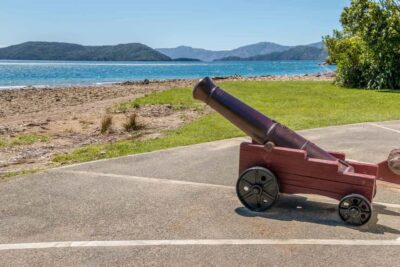
Queen Charlotte Track: Cruise & Self-Guided Hike from Picton
Read our review →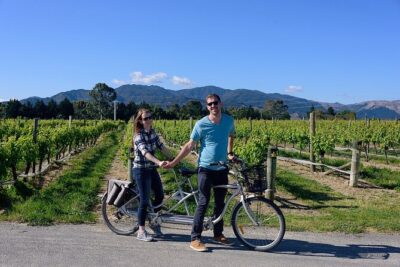
Self-Guided Wine Tours by Bike with Lorelle & Greg
Read our review →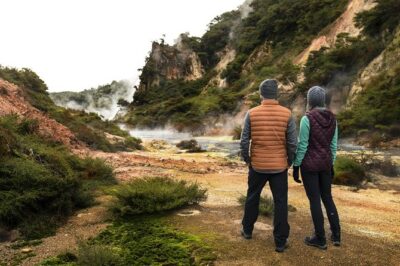
Volcanic Valley Self Guided Walking and Hiking at Waimangu
Read our review →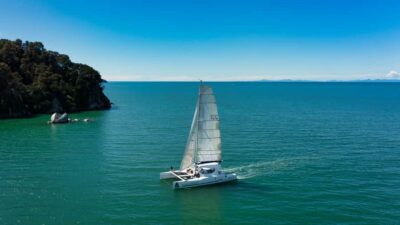
Abel Tasman National Park: Sailing and Self-Guided Walk
Read our review →
Marlborough: Full-Day Self-Guided Biking Wine Tour
Read our review →
Self-Guided Biking Wine Tour (full day) in the Marlborough Region.
Read our review →
Browse the lists this tour appears in