
Reviewed · WILDLIFE & NATURE TOURS
Dunedin Wildlife Cruise-Albatross, seals and harbour
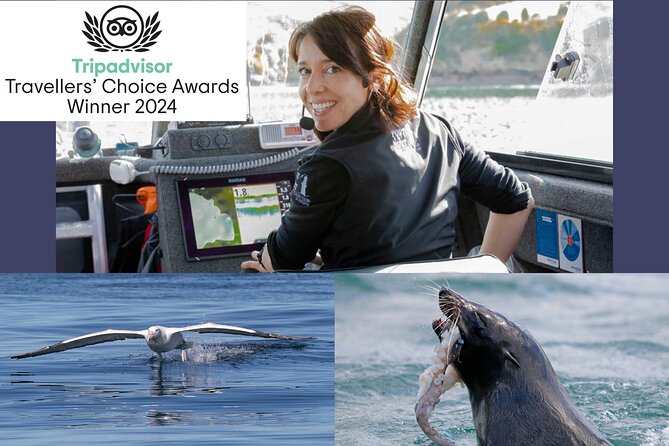
Wildlife can be remarkably close to Dunedin. This small-boat cruise through Otago Harbour takes you toward the Otago Peninsula and Taiaroa Head, where you might see albatross, fur seals, sea lions, penguins, shags, dolphins, and other seabirds. I like the small group of no more than 14 people, and I like that Rachel, the skipper and guide, handles the boat while explaining the wildlife, local industry, and harbour history. The main catch is simple: this is a wild place, and rough weather or uncooperative animals can limit what you see.
I also appreciate the practical touches. Binoculars, warm jackets, restrooms, and wildlife information sheets are included, so you do not need to arrive as a seasoned birdwatcher. At $105.50 per person, the price is reasonable for a specialist cruise of up to two hours, though you should check the currency carefully when booking and compare it with the direct price.
In This Review
- Key points to know before you go
- Why this small cruise works so well
- Port Chalmers or Portobello: choose your starting point carefully
- Otago Harbour: working water, old wrecks, and seabirds
- Otago Peninsula: the main wildlife search
- Taiaroa Head: the albatross highlight
- What you might see, and what you should not expect
- Rachel’s guiding style and the onboard atmosphere
- Price, timing, and practical value
- Who should book this Dunedin cruise?
- Should you book it?
- FAQ
- How long does the Dunedin wildlife cruise last?
- Where does the cruise depart from?
- What wildlife might I see?
- Are wildlife sightings guaranteed?
- Are binoculars provided?
- Are warm jackets provided?
- Is there a restroom on the boat?
- Is the cruise suitable for people with mobility problems?
- What happens if bad weather cancels the cruise?
Key points to know before you go
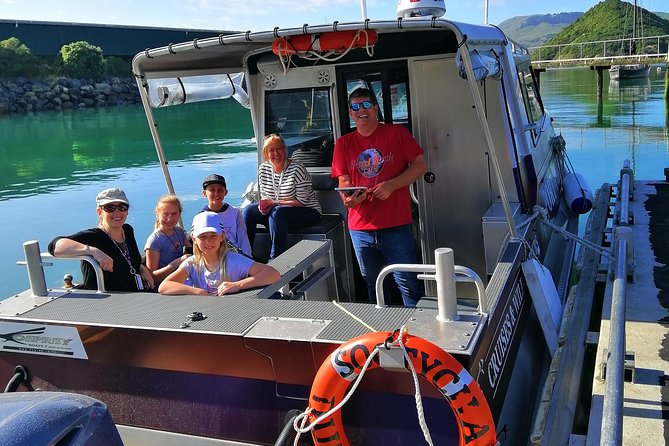
- Small boat, maximum 14 people: You get a closer-to-the-water view than on a large sightseeing vessel, with less crowding around the rail.
- Two departure points: You can board at Port Chalmers or Portobello, with Port Chalmers just a five to ten minute easy walk from the cruise terminal building.
- Wildlife is close, but never guaranteed: Albatross, seals, sea lions, penguins, seabirds, and even Hector’s dolphins have been seen, but conditions and animal behaviour vary.
- Rachel is both skipper and guide: Her sharp eye for distant birds and her detailed commentary are central to the experience.
- Bring warm, weatherproof clothing: The boat has indoor and outdoor seating, but sea spray and rough water are possible.
- Allow up to two hours: The cruise lasts about 90 to 120 minutes, making it a manageable outing for families and cruise passengers.
Why this small cruise works so well
The appeal here is not just the chance to tick off an albatross. It is the combination of a compact boat, a guide with local experience, and a setting where wildlife and working harbour scenes share the same water.
A larger vessel can give you more room, but a small boat usually gives you a more immediate view. Several sightings have taken place very close to the boat, including albatross and giant petrels only a few feet away. That low position on the water can make the encounter feel personal, though it also means you are more exposed to spray and movement.
The boat has indoor and outdoor seating. That matters in Dunedin, where a sunny departure can still turn cool on the water. Warm jackets are supplied, along with binoculars, so you can move between comfort and better viewing without carrying much equipment.
The group limit of 14 people is another real advantage. You are less likely to fight for a place at the rail, and Rachel can keep the commentary conversational. This is especially helpful if you want to ask about bird identification or understand why a particular species is gathered in one part of the harbour.
Rachel is a solo operator who pilots, docks, and narrates the trip. Her years of experience show in the way she searches for wildlife and responds to changing conditions. She has been praised for spotting birds at a distance, finding the best areas for seals and albatross, and explaining the species in a way that works for serious birdwatchers and complete beginners.
I would not book this purely as a guaranteed animal-spotting trip. Book it as a chance to spend time in one of New Zealand’s best wildlife areas, with good odds of seeing something memorable and plenty to look at even when the animals keep their distance.
More Boat Tours in Dunedin
- Dunedin: Monarch – One Hour Wildlife Cruise
★ 4.5 · 48 reviews - Otago Peninsula Wildlife Cruise with Monarch
★ 4.5 · 227 reviews - Albatross, seals, and sea birds-Wildlife Cruise
★ 5.0 · 189 reviews
Port Chalmers or Portobello: choose your starting point carefully
The cruise can leave from Port Chalmers or Portobello. The best choice depends on your day plan, especially if you arrive by cruise ship.
From the cruise terminal building at Port Chalmers, the meeting point is a flat, easy five to ten minute walk. The operator does not provide a transfer from the cruise building, so allow enough time to leave the ship, walk to the boat, and check the exact meeting instructions.
The Port Chalmers departure is also described as a slightly shorter option, which can suit families with younger children or anyone fitting the cruise into a tight schedule. The overall experience runs for roughly 90 minutes to two hours, so confirm the departure point and timing before you book.
Portobello may be more convenient if you are already exploring the Otago Peninsula by car or local transport. It also places you closer to the peninsula’s wildlife areas from the outset. I would choose the departure point that fits your wider Dunedin plans rather than assuming one is automatically better.
The meeting instructions matter. Rachel has helped passengers who booked the wrong pickup location and then provided detailed directions or changed the departure point when possible. Still, it is wiser to get this right before the day of the cruise, particularly when you have a ship departure or another timed activity afterward.
Otago Harbour: working water, old wrecks, and seabirds
The cruise begins with more than wildlife. Otago Harbour is a working waterway, and the trip includes views of harbour heritage, industry, shipwrecks, and changing coastal scenery.
That wider setting gives the animal sightings some context. You are not simply being taken from one viewing point to another. You are watching seabirds move around a harbour used by people, ships, and marine life. Rachel’s commentary covers the area’s history and industry as well as the animals, which helps turn passing structures and shorelines into part of the story.
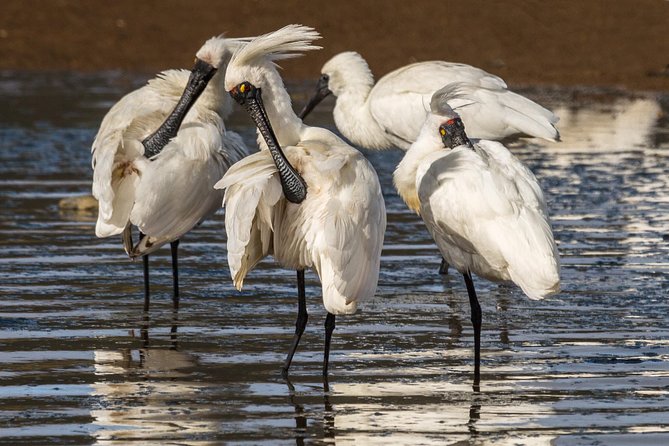
The harbour is also where you may begin to spot shags, black-backed gulls, black swans, and other birds. The included binoculars are useful here, particularly when an animal appears beyond comfortable camera range.
The viewing conditions can change quickly. On calm water, the low boat offers excellent proximity. On a choppy day, you may need to stay inside more often, and birds can be harder to identify. One outing produced Hector’s dolphins despite rough seas, while another had plenty of birds but no close albatross. That is the nature of this activity, not a flaw in the route.
Otago Peninsula: the main wildlife search
As the boat reaches the Otago Peninsula, the focus shifts more clearly to wildlife. The area is known for ocean birds, seals, sea lions, penguins, and albatross, and the cruise gives you a chance to see them from the water rather than only from land-based viewpoints.
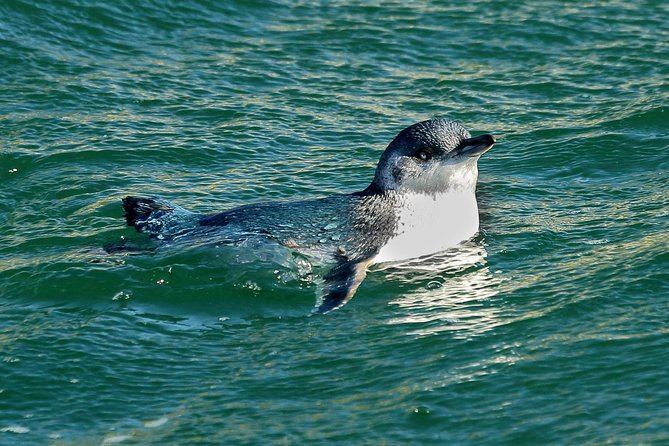
You might see fur seals resting or playing in the water. Sea lions may appear near the boat, sometimes impressively large and close. A small blue penguin has also been spotted, along with seal pups and several kinds of seabirds.
The guide’s role is important here. Wildlife can be easy to miss when you do not know what to look for. Rachel has been praised for noticing birds at long range and directing attention toward them before they disappear. Her wildlife information sheets, handed out after the trip, help you match what you saw with the correct species.
For families, the cruise has a useful length. It is long enough to feel like a proper excursion but short enough to work as a break in a busy day. Children may appreciate the boat ride itself, while the checklist gives them something concrete to follow as the trip unfolds.
For birdwatchers, the outing offers more than the headline species. You may add shags, gulls, petrels, swans, penguins, and several albatross species to your list. One particularly fortunate trip included four types of albatross. That is not something you should expect every time, but it shows the range possible in the area.
More Wildlife Tours in Dunedin
- Dunedin: Wildlife and Penguin Tour
★ 4.6 · 239 reviews - Dunedin: Otago Peninsula with Guided Penguin Reserve Tour
★ 4.7 · 66 reviews - From Dunedin: City, Otago Peninsula & Albatross Guided Tour
★ 4.7 · 35 reviews - Clearwater Wildlife Tours (small group 10max) Otago Peninsula
★ 5.0 · 531 reviews
Taiaroa Head: the albatross highlight
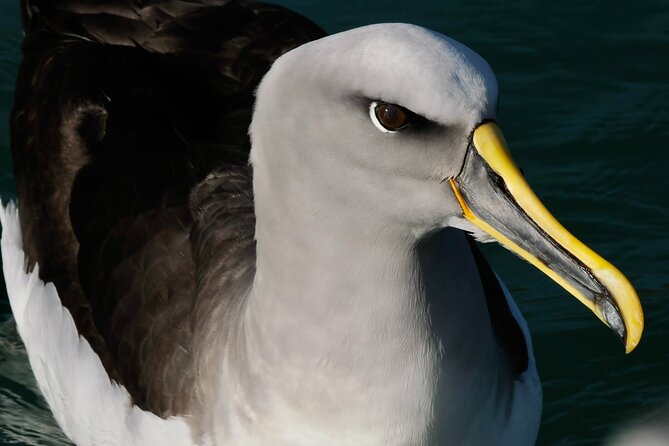
Taiaroa Head is the cruise’s signature stop. This headland is associated with albatross, seals, seabirds, and a lighthouse, and the boat gives you a water-level view of the area.
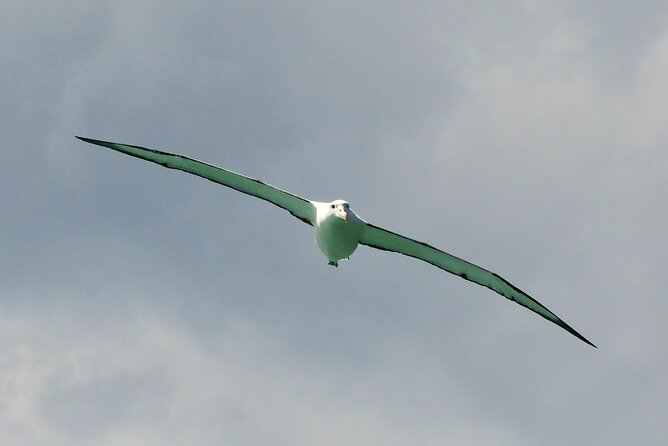
The Northern Royal Albatross is the star sighting. These are large birds, and watching one glide above the boat can be extraordinary. The most memorable encounters have involved several albatross passing close overhead or sitting near the boat while courting. Such close behaviour is unusual, so consider it a fortunate bonus rather than part of the guarantee.
You may see albatross in flight, on the water, or at a greater distance near the headland. Binoculars help, but the guide’s instructions are just as valuable. A bird that looks like a speck to you may become identifiable once Rachel explains its flight pattern or points out its position.
Taiaroa Head is also worthwhile if the albatross stay away. The lighthouse, sea cliffs, ocean birds, and open-water views create a strong setting, and the commentary adds useful detail. One outing produced stunning scenery despite less cooperative wildlife, which is a good reminder to judge the cruise as a whole rather than by one species.
What you might see, and what you should not expect
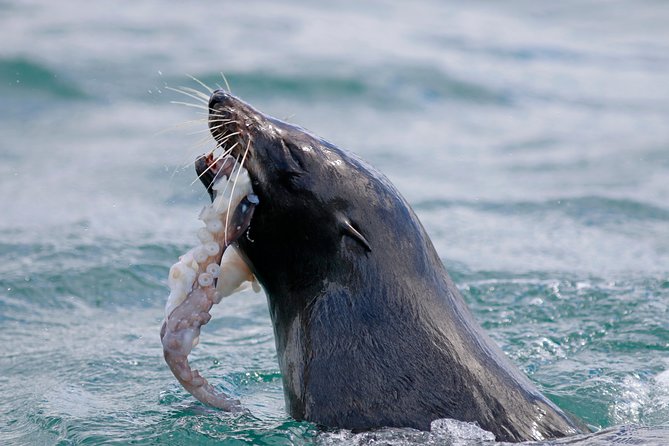
This is a wildlife cruise, not a zoo visit. The animals are free to move, hide, fly away, or remain underwater. That makes a close sighting more special, but it also means no responsible operator can promise albatross, penguins, seals, or dolphins on every departure.
The most frequently noted possibilities include:
- Albatross, including Northern Royal Albatross
- Fur seals and sea lions
- Small blue penguins
- Hector’s dolphins
- Shags, petrels, gulls, and black swans
- Seal pups and other coastal birds
Weather matters twice. Strong wind can make the trip unsafe, leading to cancellation, a new date, or a full refund. Even when the cruise runs, rough seas can reduce visibility and make it harder to approach or watch wildlife.
Dress warmly, including a waterproof outer layer. Sea spray is possible, and a jacket supplied on board may not replace clothing you feel comfortable wearing for the whole day. If you are prone to motion sickness, the possibility of choppy water is worth considering before booking.
Rachel’s guiding style and the onboard atmosphere
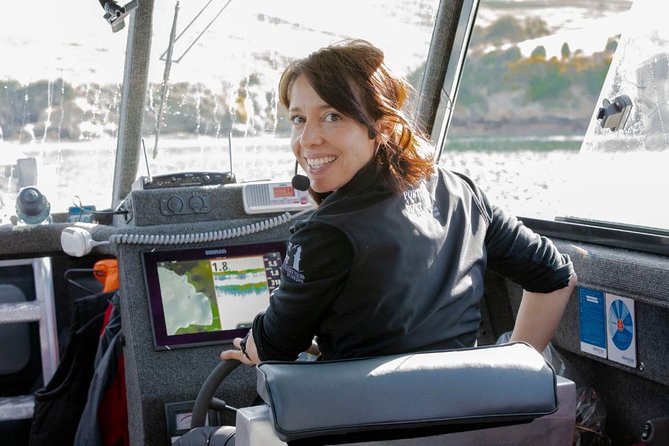
The experience depends heavily on Rachel. She is not simply reading facts while someone else pilots the boat. She manages the vessel, watches for wildlife, answers questions, and keeps the group informed.
Her commentary covers animal behaviour, bird identification, local history, and harbour industry. That broad approach suits mixed groups, especially when one person is a keen birder and another has only a passing interest in wildlife.
I also like the personal touches reported from the cruise, including homemade oatmeal cookies on one outing and a pictorial checklist of birds and animals seen. The cookies are not advertised as an inclusion, so do not count on them, but the checklist is a useful feature that helps you remember the trip.
The small group creates a friendly feel, though it also means the experience is closely tied to one guide’s style and the boat’s capacity. If you prefer a large vessel with many facilities and a more anonymous atmosphere, this may feel too intimate. If you want direct access to the guide and a better chance of seeing what she spots, the format is a strong fit.
Price, timing, and practical value
At $105.50 per person, this is not a throwaway harbour ride. It is priced as a specialist wildlife outing, and the value comes from the small group, two-hour maximum duration, local guiding, supplied binoculars, jackets, restroom, and the chance to approach wildlife from a low boat.
The value is best when you care about the quality of the viewing rather than simply spending the least possible. A close albatross, sea lion, or dolphin sighting can make the price feel worthwhile. On a poor-weather day with limited wildlife, the scenery and commentary still provide something, but you may feel the cost more sharply.
Check the currency before confirming payment. One booking experience resulted in a much higher charge than expected because the platform displayed the price in US dollars rather than New Zealand dollars. Compare the available price with booking direct through Port To Port Cruises and Wildlife Tours Ltd.
Departures are available in the late morning, early afternoon, and late afternoon. That spread lets you fit the cruise around sightseeing or a cruise-ship schedule, but leave a buffer. Wildlife trips can run close to two hours, and the walk from the Port Chalmers terminal takes five to ten minutes.
Free cancellation is available up to 24 hours before the start time. If poor weather or insufficient numbers cancel the cruise, you are offered another date or a full refund. Last-minute changes are not accepted within 24 hours.
Who should book this Dunedin cruise?
I would recommend it to anyone who wants a personal wildlife outing without committing to a full-day excursion. It is especially suitable for:
- First-time visitors to Dunedin who want to combine scenery and wildlife
- Families looking for a relatively short activity
- Birdwatchers who value local spotting skills
- Cruise passengers who can manage the short walk from Port Chalmers
- Visitors who prefer small businesses and small groups
- People who enjoy learning about the setting, not just photographing animals
You should think twice if you need guaranteed sightings, dislike boat movement, or have significant mobility problems. You must be able to step down about 300 millimetres into the vessel, and the operator does not recommend the cruise for people with major mobility limitations.
The trip can work for most people, but the weather is the great variable. A calm, clear day may bring close wildlife and easy photography. A grey or rough day may still be worthwhile, but you should be ready for fewer sightings and more time watching from inside.
Should you book it?
Yes, if you want a small, personal wildlife cruise and can accept that nature sets the schedule. Rachel’s local eye, the low boat, and the chance to see albatross and seals close to Dunedin make this a strong choice for a two-hour outing.
Book it with warm clothing, flexible expectations, and careful attention to the departure point and currency. If your day depends on a guaranteed result, choose a land-based attraction instead. If you want a genuine chance to see wild animals in a beautiful harbour setting, this cruise offers good value and a memorable way to meet the Otago Peninsula.
FAQ
How long does the Dunedin wildlife cruise last?
The cruise lasts approximately 90 minutes to two hours.
Where does the cruise depart from?
You can depart from Port Chalmers or Portobello. From the Port Chalmers cruise terminal building, the boat is a five to ten minute easy walk away.
What wildlife might I see?
Possible sightings include albatross, fur seals, sea lions, small blue penguins, Hector’s dolphins, shags, petrels, gulls, black swans, seal pups, and other seabirds.
Are wildlife sightings guaranteed?
No. Wildlife is wild and sightings vary with weather, sea conditions, and animal behaviour.
Are binoculars provided?
Yes. Binoculars are included for use during the cruise.
Are warm jackets provided?
Yes. Warm jackets are provided, although you should still dress warmly because sea spray is possible.
Is there a restroom on the boat?
Yes. The boat is equipped with a restroom.
Is the cruise suitable for people with mobility problems?
The operator does not recommend it for people with significant mobility problems. You must be able to step down approximately 300 millimetres into the vessel.
What happens if bad weather cancels the cruise?
If poor weather makes the cruise unsafe, you are offered a different date or a full refund. The same options apply if the minimum number of participants is not reached.
Just added around Dunedin
- Private Dunedin City Highlights and Otago Peninsula Day Tour★ 4.3 · 7 reviews
- Dunedin: 3 Hour Artisan Food Walking Tour★ 4.4 · 7 reviews
- Dunedin: Peninsula with Lanarch Castle gardens & Olveston★ 5.0 · 8 reviews
- Dunedin City & Coastal Views 3-Hour Small-Group Tour★ 4.9 · 23 reviews
- From Dunedin: City, Otago Peninsula & Albatross Guided Tour★ 4.7 · 35 reviews
- Dunedin: Larnach Castle & Gardens Admission Ticket★ 4.6 · 36 reviews
- Dunedin: Monarch – One Hour Wildlife Cruise★ 4.5 · 48 reviews
- Dunedin City & Otago Peninsula Scenery Day Tour★ 4.7 · 49 reviews
Wildlife & Nature Tours, compared.

Auckland Dolphin and Whale Watching Eco-Safari Cruise
Read our review →
Whale and Dolphin Watching Half-Day Eco Cruise
Read our review →
Gannet Safaris Overland tour to Cape Kidnappers Gannet Colony
Read our review →

Clearwater Wildlife Tours (small group 10max) Otago Peninsula
Read our review →

Guided Evening Penguin Viewing Otago Peninsula, Dunedin, New Zealand
Read our review →
Browse the lists this tour appears in