
Reviewed · 2-HOUR EXPERIENCES
Tarawera and Lakes 2-Hour Duck Eco Tour
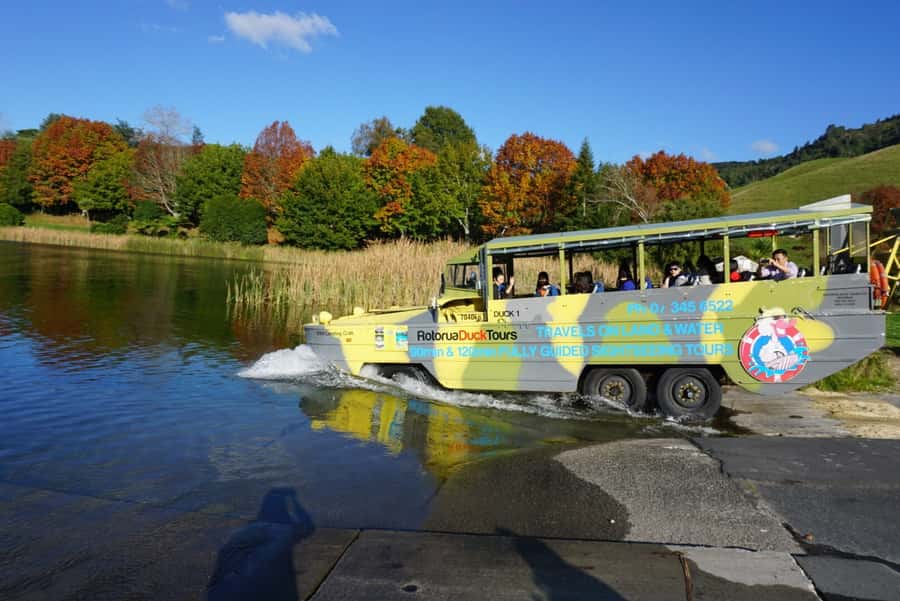
The road suddenly turns into water. That is the charm of Rotorua Duck Tours, a two-hour ride in a genuine WWII amphibious Duck that carries you from Rotorua to four striking lakes. You get a moving lesson in volcanic geology, Maori stories, migration, and local ecology while the vehicle lurches from road to lake.
I like the three splashdowns, especially the first plunge into Lake Okareka and the later entry onto Lake Tarawera. I also like the lively guiding. Guides including Esther, Ollie, Shelley, Marcus, and others have earned praise for mixing facts with jokes. The main caution is that the open-sided vehicle can feel cold in wind and rain, and one guide may talk more than another.
In This Review
- Key points to know before you book
- Why this unusual Rotorua tour works
- The first splash at Lake Okareka
- Mount Tarawera and the road toward its volcanic domes
- Lake Tarawera delivers the best scenery
- Viewing the sacred Green Lake
- The final splash at Blue Lake
- The commentary is the real guidebook
- What the open Duck feels like in bad weather
- Is $65 good value for two hours?
- Who will enjoy this most?
- Practical advice for a smoother ride
- Should you book the Tarawera and Lakes Duck Tour?
- FAQ
- How long does the Tarawera and Lakes Duck Tour last?
- Where does the tour begin?
- Which lakes does the tour visit?
- How many lakes does the Duck splash into?
- Is the tour suitable for children and older passengers?
- What language is the tour conducted in?
Key points to know before you book
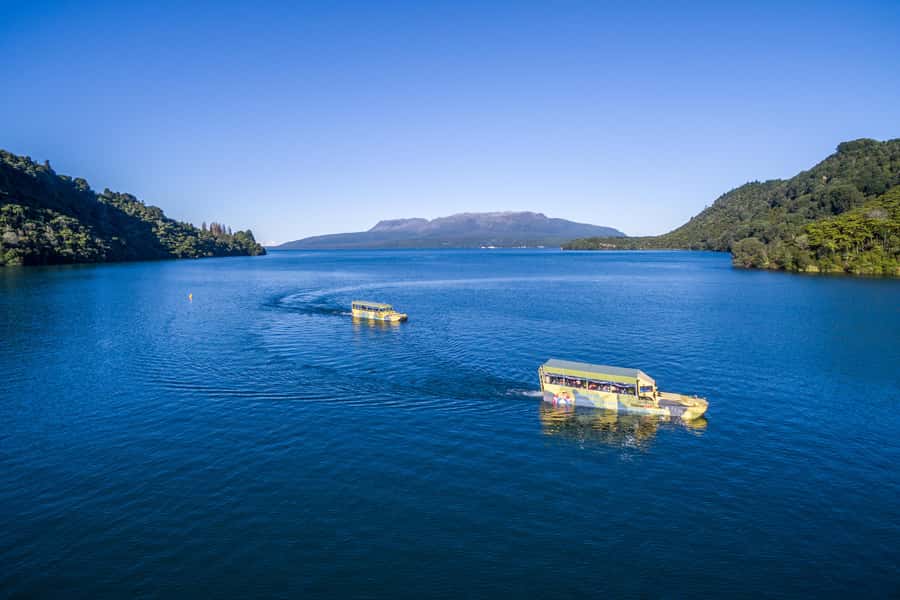
- A real WWII amphibious vehicle: You stay seated as the Duck rolls from the road directly into the water.
- Four Rotorua lakes in two hours: You visit Lake Okareka, Lake Tarawera, Lake Rotokakahi, and Lake Tikitapu.
- Three water entries: You splash onto Lake Okareka, Lake Tarawera, and Lake Tikitapu.
- Mount Tarawera is the star: The volcanic domes provide the most memorable backdrop, especially from Lake Tarawera.
- History comes with plenty of humor: The guide covers the 1886 eruption, Maori migration, geothermal activity, and local culture.
- Prepare for open-air conditions: Roll-down sides help in rain, but warm clothing remains a smart choice.
Why this unusual Rotorua tour works
Rotorua has no shortage of geothermal parks, Maori cultural shows, and lake excursions. This tour combines several of those themes in one compact outing, then adds a vehicle that is itself part of the attraction.
The Duck is a genuine WWII amphibious landing craft made in 1942. You are not simply riding a sightseeing bus to a lake, then switching to a boat. You remain in the same vehicle as it drives through Rotorua, heads toward the lakes district, and splashes into the water.
That transition is the big moment. The Duck rolls down a ramp or shoreline entry, reaches the water, and floats without you leaving your seat. It is simple, noisy fun, but it also gives the tour a clear sense of occasion. Adults enjoy the machinery and history. Children get the sort of transportation story they will repeat later.
The tour begins at 1241 Fenton Street in central Rotorua. Hotel transport is not included, so you need to make your own way to the meeting point and arrive on time. The trip lasts two hours, which makes it easy to fit into a day that also includes a geothermal attraction or another Rotorua activity.
A few more Rotorua trips worth weighing up
- Milford Sound: 2-Hour Small Boat Scenic Cruise
★ 4.8 · 2,561 reviews - 2-Hour Milford Sound Scenic Cruise
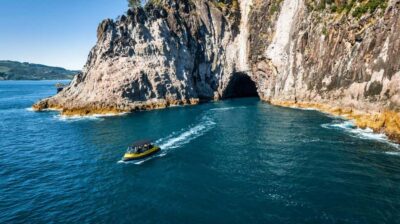
★ 5.0 · 1,520 reviews - Whitianga: 2-Hour Cathedral Cove and Volcanic Coast Cruise
★ 4.8 · 816 reviews
The first splash at Lake Okareka
The first lake is Lake Okareka, where the Duck makes its opening splashdown into sheltered water. This is a useful introduction because you can get used to the unusual sensation before the vehicle reaches the larger and more dramatic Lake Tarawera.
The water here is described as calm and sheltered, so the first entry is more about the novelty of becoming amphibious than about a rough ride. I would pay attention to the guide at this point. The commentary begins putting Rotorua’s lake district into context, rather than treating the splash as a stunt with no connection to the place.
From inside the Duck, you see the shoreline at a low angle. That gives the ride a different feel from a standard coach tour. You are close to the water, but you also retain the odd view of a large military vehicle functioning as a boat.
Do not expect a long stop where you get out and walk around Lake Okareka. The attraction is the route and the commentary, not independent time at each lake. If you want a quiet lakeside picnic or a long photo session, this is not the right format.
Mount Tarawera and the road toward its volcanic domes
After Lake Okareka, the Duck continues through the Rotorua lakes district by road. The scenery becomes increasingly tied to Mount Tarawera, whose volcanic domes form the visual centre of the trip.
The guide explains the 1886 eruption of Mount Tarawera, one of the defining events in the area’s past. The commentary also connects the eruption with Maori stories, local settlement, geothermal activity, and the way volcanic forces shaped the lakes and land around Rotorua.
This part matters because the tour does more than point out attractive views. The mountain is not just a dramatic backdrop. Its eruption changed lives, reshaped the ground, and remains central to the stories told about this region.
The balance between factual information and comedy is one of the tour’s strongest features. Guides have been praised for being funny, friendly, and clear. Shelley was remembered for her humor, while Esther was praised for both driving and guiding. Ollie was described as friendly and well informed, and Marcus received credit for an informative, hilarious commentary.
That style will suit you if you like learning in an informal setting. If you prefer a quiet ride with only occasional narration, you may find the commentary too constant. One customer found a new guide talked too much, while another found the comedic delivery tiring. The guide makes a real difference, and the tone will not suit every listener.
Lake Tarawera delivers the best scenery
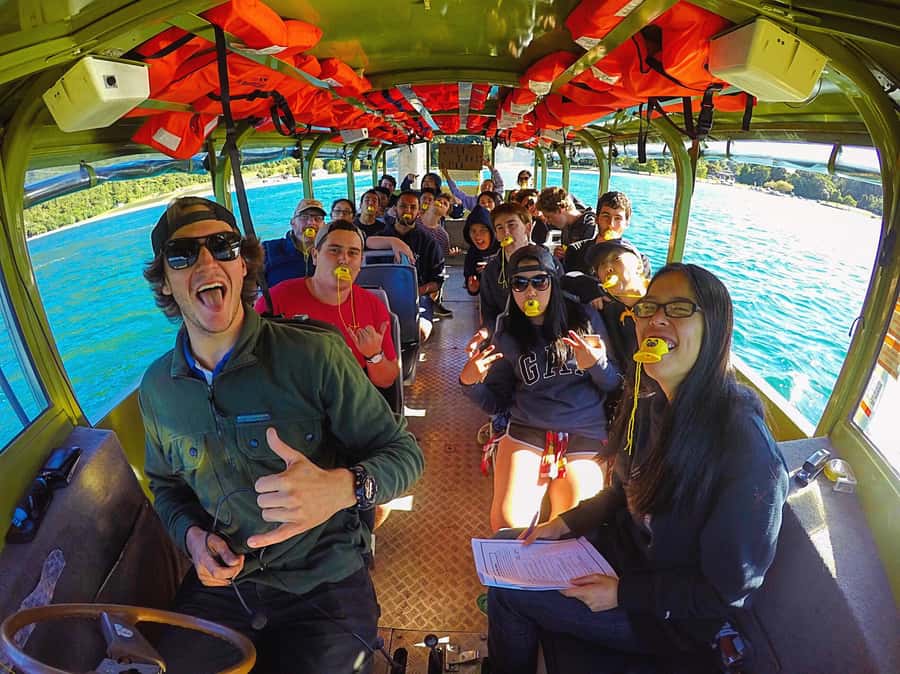
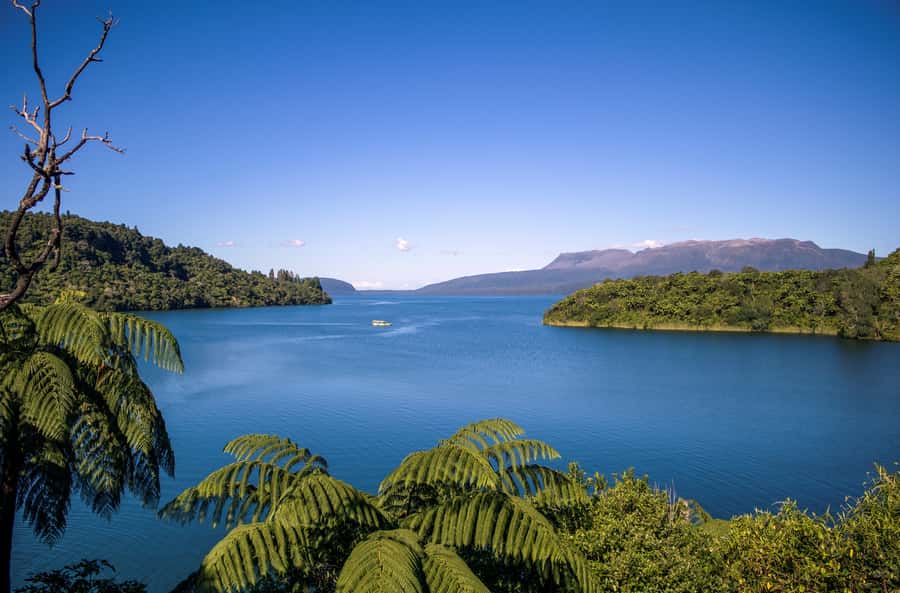
The Duck’s main destination is Lake Tarawera, at the base of Mount Tarawera. This is where the tour earns much of its price.
Once the vehicle splashes into the lake, you see the volcanic domes from the water rather than from a roadside lookout. That viewpoint changes the scale of the mountain and makes the relationship between the lake and volcano easier to understand.
Lake Tarawera is also the point where the tour feels most like an outing rather than a clever vehicle demonstration. You have traveled out from Rotorua, crossed the road and water in one machine, and reached a setting with strong cultural and geological meaning.
The ride on the lake is not presented as a separate boating excursion, so you should not expect a long cruise with swimming, fishing, or a shore stop. Instead, you get a guided pass through the area, with the mountain and water doing most of the visual work.
I would keep your camera ready here, but also listen. The view is excellent, yet the story of the eruption and the Maori traditions connected with the region give the scene more weight. The guide’s explanation helps turn a pretty lake into a place you can understand.
A completely different kind of day out in Rotorua:
- Rotorua Canopy Tours: 2.5Hour Native Forest Zipline Adventure
★ 5.0 · 4,563 reviews - Mitai Maori Village: Cultural Experience and Dinner Buffet
★ 4.7 · 3,575 reviews - Rotorua: Wai-O-Tapu Geothermal Park Entry Ticket
★ 4.6 · 2,601 reviews - Rotorua’s Ultimate Zipline: 6 ziplines, 400 m Tandem, Cliff Walk
★ 5.0 · 2,557 reviews
Viewing the sacred Green Lake
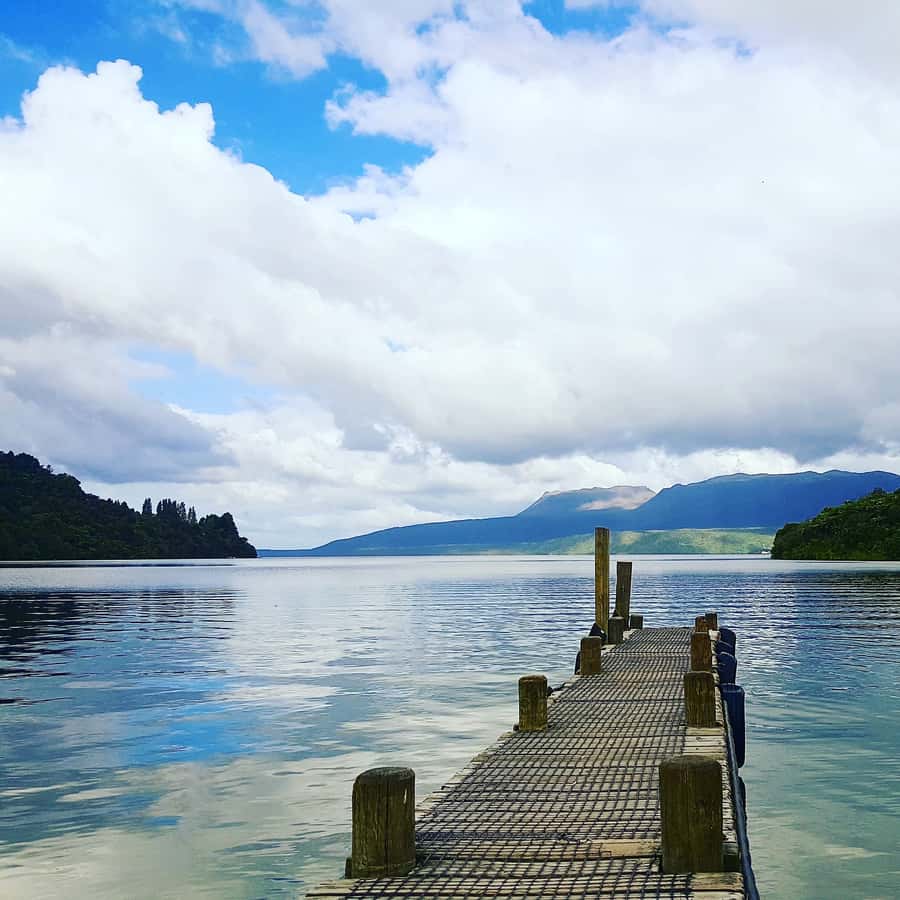
On the return journey, the Duck passes Lake Rotokakahi, also called the Green Lake. This lake is sacred, and the tour treats it as a place to view and learn about rather than a normal swimming stop.
The supplied route describes Rotokakahi as the fourth lake visit, but not one of the three splashdowns. That distinction is useful. You see all four lakes, but the Duck enters the water at Lake Okareka, Lake Tarawera, and Lake Tikitapu.
Lake Rotokakahi adds an important cultural layer to the trip. Rotorua’s lake district is not simply a collection of scenic water bodies for recreation. Some places carry special meaning, and the guide’s commentary helps you recognize that difference.
Because the tour does not advertise an independent stop at the Green Lake, you will likely view it from the vehicle rather than walk to the shore. That is fine for a broad introduction, but you should not book this experience if your main goal is extended time beside every lake.
The final splash at Blue Lake
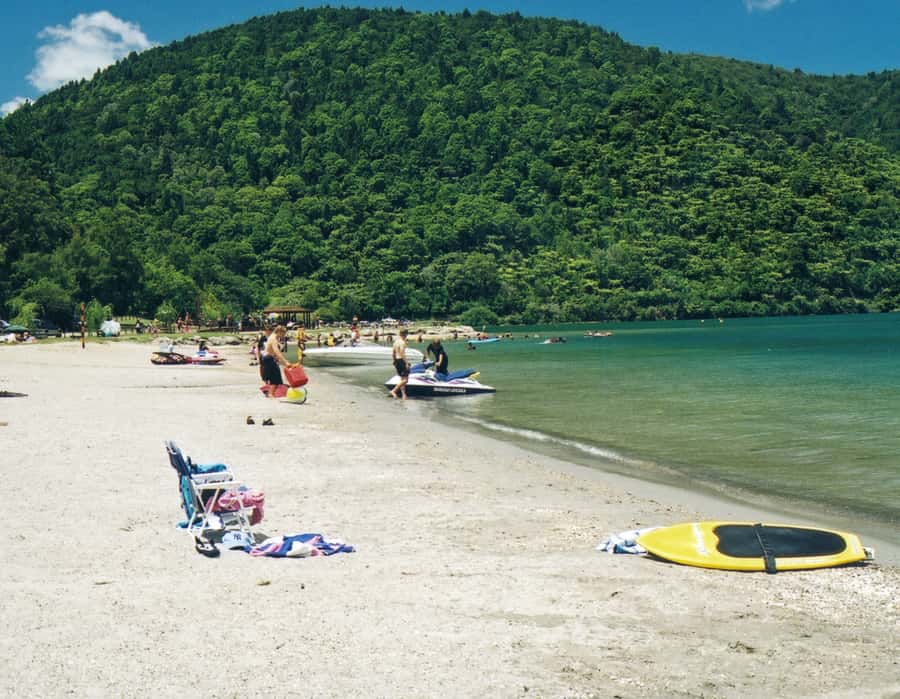
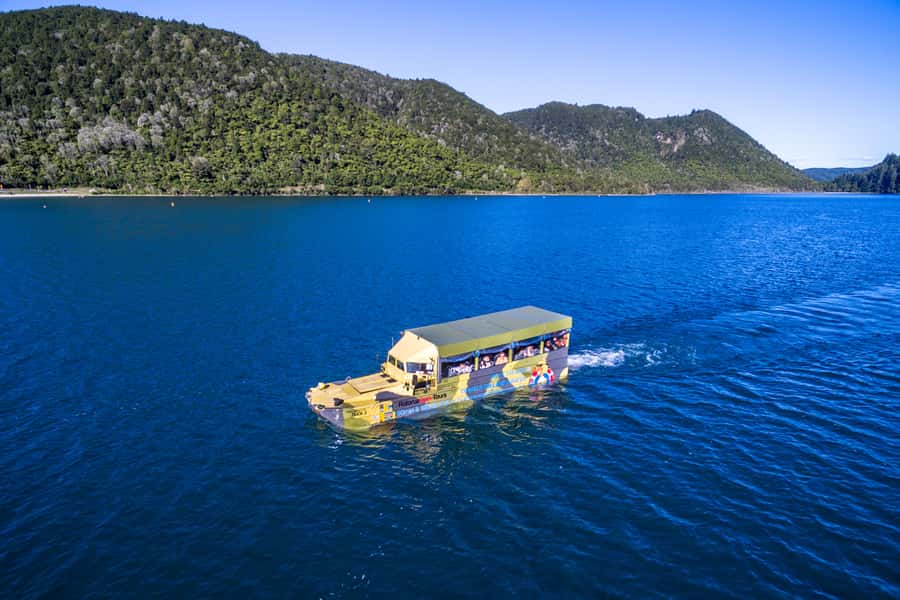
The last water entry is at Lake Tikitapu, better known as the Blue Lake. After the larger setting of Lake Tarawera and the sacred character of Rotokakahi, Tikitapu gives the tour a final burst of color and fun.
The Blue Lake is a particularly good place for the Duck’s final splash because the vehicle’s novelty is still fresh enough to feel entertaining, even after the first two entries. You stay in your seat, hear the water around the vehicle, and get another view of the lake from the amphibious craft.
This is also a good reminder that the tour is designed for families and mixed ages. You do not need to be a geology enthusiast to enjoy the ride. The Duck calls, the water entries, and the unusual vehicle keep younger passengers interested while the guide supplies material for adults.
The included duck quacker adds to the silliness. It is a small touch, but it fits the tour’s tone. The experience does not pretend to be a solemn museum visit. It uses fun to make the area’s stories easier to remember.
The commentary is the real guidebook
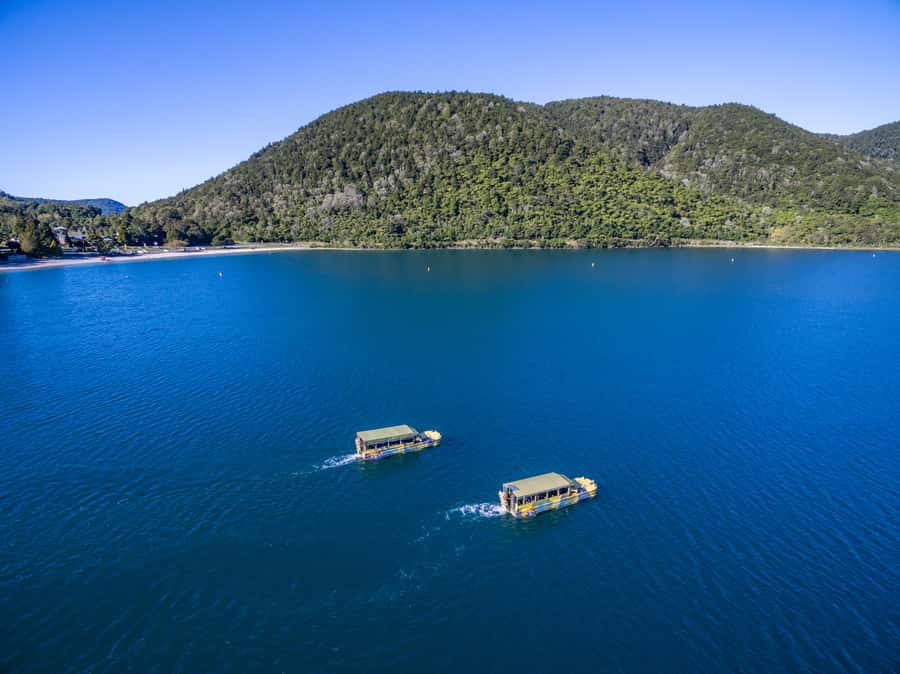
The vehicle gets you onto the tour, but the live English commentary gives it substance. You hear about volcanic activity, Maori migration to New Zealand, local cultural traditions, ecology, and Rotorua’s geothermal character.
That range is valuable during a short tour. You do not get a full scholarly account of each subject, but you do get a connected explanation of why Rotorua looks and feels the way it does. The guide links the lakes to the volcanoes, the volcanoes to the eruption, and the region’s history to the people who lived here.
The best guides appear to keep the information moving with jokes and stories. Several guides have been praised for making the two hours entertaining without losing the factual content. One particularly useful description called the history interesting without being boring, which is exactly what you want from a family sightseeing ride.
Still, the humor is subjective. Some people love groan-worthy jokes and playful duck calls. Others may find the comic delivery repetitive. I would choose this tour for its friendly, talkative style, not for silence or a restrained lecture.
What the open Duck feels like in bad weather
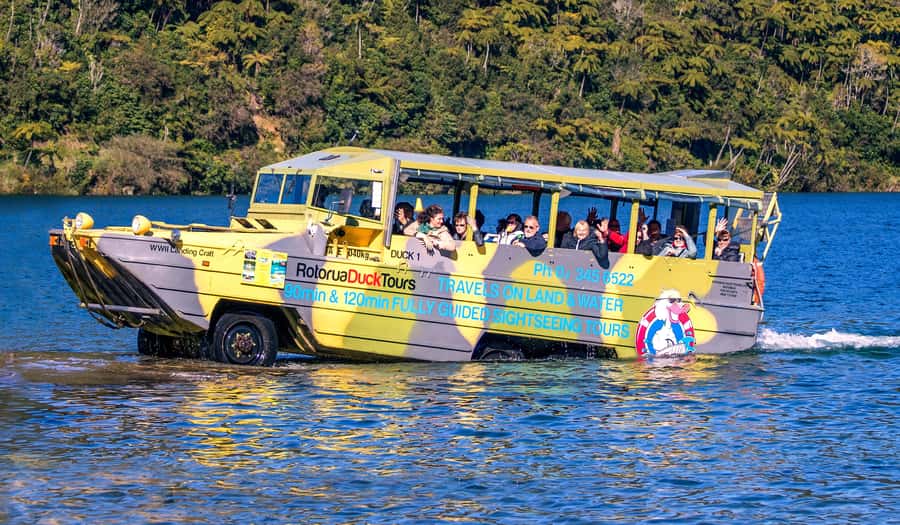
The Duck has open windows, so the ride can feel cold when the wind picks up. Blankets are provided on colder days, but you should still wear warm layers and comfortable shoes.
The vehicle operates in all weather. Clear roll-down sides help keep rain out, which means a wet forecast does not automatically cancel the experience. Even so, rain can affect your enjoyment of the views, and one otherwise positive comment specifically wished for better weather.
Cold weather is not only a comfort issue. It can make it harder to concentrate on the commentary and less pleasant to take photographs. I would bring a warm jacket even on a mild-looking day, especially if you plan to sit near an open side.
The tour can be memorable in dramatic weather, but thunder and lightning are a different matter for your personal comfort. The experience is built to run in changing conditions, not to guarantee sunshine.
Is $65 good value for two hours?
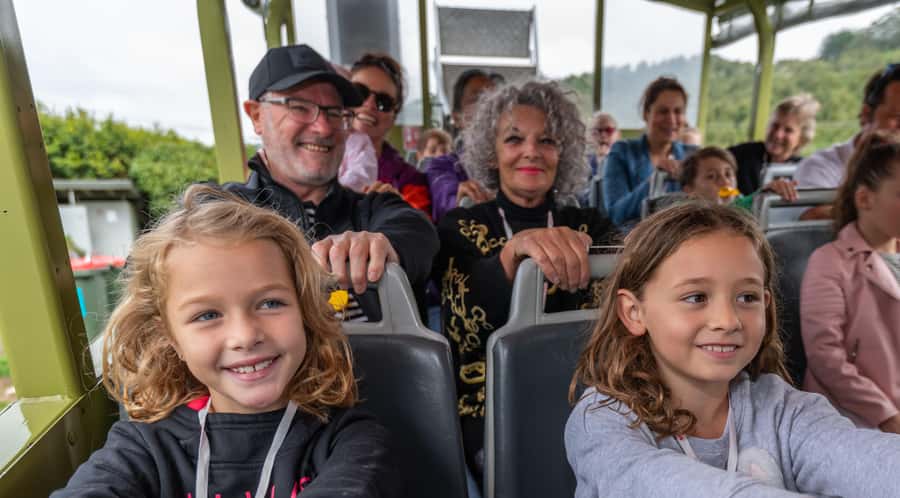
At $65 per person, this is not the cheapest way to look at Rotorua’s lakes. Its value comes from combining transport, guiding, history, scenery, and three splashdowns in a single two-hour outing.
A normal road trip around the lakes might give you more freedom to stop, but it would not give you the amphibious vehicle or a live explanation throughout the route. A separate boat ride might offer more time on one lake, but it would not cover four lakes or include the same road-to-water novelty.
I think the price is fair if you want a broad introduction to the Rotorua lakes district and appreciate unusual transport. It is less convincing if you already have a car, plan to spend a full day exploring the lakes independently, or mainly want a peaceful boat cruise.
The tour also saves you from planning how the lakes, volcano, and cultural stories fit together. You can sit back, hear the explanation, and let the Duck handle the route. For a first visit to Rotorua, that convenience adds real value.
Who will enjoy this most?
I would recommend the tour to families, first-time Rotorua visitors, and anyone who likes history delivered with a sense of humor. It is also a good choice if you want to see several lakes but have only two hours available.
The ride suits people who enjoy a novelty. A genuine 1942 WWII amphibious vehicle is a rare way to see New Zealand scenery, and the machine itself gives the outing a story before the guide even begins.
You should think twice if you dislike open-air vehicles, get cold easily, or need a strict return time. One customer liked the tour but wished it had returned on schedule because of later plans. Allow some flexibility after the two-hour duration rather than booking another activity immediately afterward.
The trip is suitable for all ages according to the activity information, but every passenger should be ready for weather, vehicle movement, and a lively spoken presentation.
Practical advice for a smoother ride
Wear comfortable shoes and dress warmer than you think you need. The roll-down sides help in rain, but wind can still reach you through the open windows.
Arrive at 1241 Fenton Street on time. Hotel pickup and drop-off are not included, so plan your route to the meeting point before the departure time.
If you want the best views, keep your camera accessible rather than buried in a bag. Mount Tarawera and the water entries are the moments most likely to create memorable photographs, though weather and your seat position will affect the view.
Keep your expectations clear. This is a guided overview, not a full-day exploration of each lake. You will see four lakes, splash onto three, hear plenty of local context, and return to Rotorua in the same unusual vehicle.
Cancellation is flexible if your plans change: you can cancel up to 24 hours ahead for a full refund, and a reserve-now, pay-later option is available. Starting times vary, so check availability when choosing your date.
Should you book the Tarawera and Lakes Duck Tour?
Book it if you want one lively, efficient introduction to Rotorua’s lakes, especially if the thought of riding a real WWII amphibious Duck makes you smile. The Lake Tarawera views, the Mount Tarawera story, and the three water entries give the two hours a clear sense of adventure.
Skip it if you want extended stops, a quiet boat ride, or complete control over your schedule. The open vehicle can be chilly, the weather may limit the views, and the guide’s energetic humor will not suit everyone.
For most families and first-time visitors, I see this as a strong-value Rotorua activity. It is informative without feeling like a classroom, playful without being empty entertainment, and unusual enough to remain memorable after the lake scenery fades.
FAQ
How long does the Tarawera and Lakes Duck Tour last?
The fully guided tour lasts two hours.
Where does the tour begin?
The meeting point is 1241 Fenton Street in Rotorua, New Zealand. Hotel pickup and drop-off are not included.
Which lakes does the tour visit?
The route visits Lake Okareka, Lake Tarawera, Lake Rotokakahi, also called the Green Lake, and Lake Tikitapu, also called the Blue Lake.
How many lakes does the Duck splash into?
The Duck splashes onto three lakes: Lake Okareka, Lake Tarawera, and Lake Tikitapu. Lake Rotokakahi is viewed during the route.
Is the tour suitable for children and older passengers?
The activity is described as suitable for all ages and is designed for families. You should still prepare for an open-sided vehicle, possible wind, rain, and cooler temperatures.
What language is the tour conducted in?
The tour has a live English-speaking guide and English commentary.
Just added around Rotorua
- Te Puia: Tuku Iho Trail with Cultural Show★ 5.0 · 5 reviews
- Ultimate self-drive rail car journey★ 5.0 · 5 reviews
- Private Tour Waiotapu Geothermal Shore Excursion up to 8 passengers★ 5.0 · 6 reviews
- Rotorua: Floatplane Flight with Orakei Korako Landing★ 5.0 · 6 reviews
- Rotorua: Evening Starlight Gourmet Kayak Tour with dinner★ 5.0 · 6 reviews
- Rotorua: Glow Worm Adventure Kayak★ 5.0 · 6 reviews
- Epic Tandem Kayak Tour down the Kaituna River Waterfalls★ 5.0 · 6 reviews
- From Rotorua: Whirinaki Rainforest Guided Cultural Tour★ 5.0 · 6 reviews
2-Hour Experiences, compared.
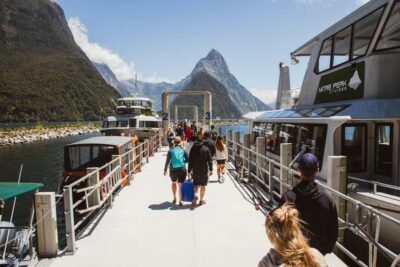
Milford Sound: 2-Hour Small Boat Scenic Cruise
Read our review →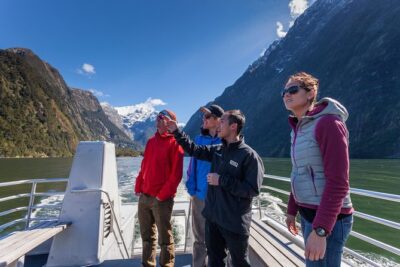
2-Hour Cathedral Cove and Volcanic Coast Cruise
Read our review →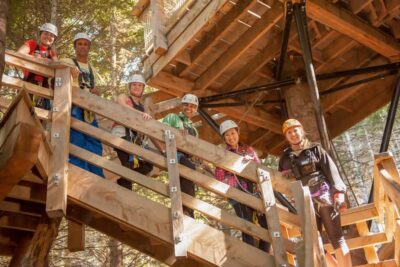
2 Hour Cathedral Cove and Volcanic Coast Cruise with Shade Canopy
Read our review →
America’s Cup 2-Hour Sailing Experience Waitemata Harbour
Read our review →
Small Group Daytime 2-Hour Eco Wildlife Tour at Zealandia
Read our review →Browse the lists this tour appears in