
Reviewed · WILDLIFE & NATURE TOURS
Seal Coast Safari – Exclusive access to Wellington’s secret coast
Wild Wellington begins beyond the city.
The Seal Coast Safari combines a native botanic garden, a rugged 4WD ride across private farmland, and Wellington’s only fur seal colony. I especially like the small groups of up to 10 people and the chance to reach a coast that most visitors, and many locals, never see. The main consideration is the rough, steep drive to the shore, with tight curves that can be uncomfortable if you have neck problems or dislike bumpy roads.
I also like the flexible morning and afternoon departures, plus hotel and cruise-ship pickup. At $121.01 per person, this is not a cheap city outing, but the price covers about three and a half hours of transport, guiding, private station access, wildlife viewing, refreshments, and several very different Wellington settings.
In This Review
- Five things to know before you book
- From Wellington streets to Otari’s native forest
- Crossing Terawhiti Station by Mercedes 4WD
- Cape Terawhiti and the leaning lighthouse
- How much time do you get with the seals?
- The guides make the ride worthwhile
- Pickup, cruise timing, and the $121.01 price
- Who should choose this safari?
- Should you book the Seal Coast Safari?
- FAQ
- How long does the Seal Coast Safari take?
- What is the price of the Seal Coast Safari?
- Does the tour offer morning and afternoon departures?
- Is pickup available from Wellington hotels?
- Can cruise-ship passengers join the tour?
- How many people can join the tour?
- What vehicle is used?
- What places does the tour visit?
- Are refreshments included?
- Can I cancel for a refund?
Five things to know before you book
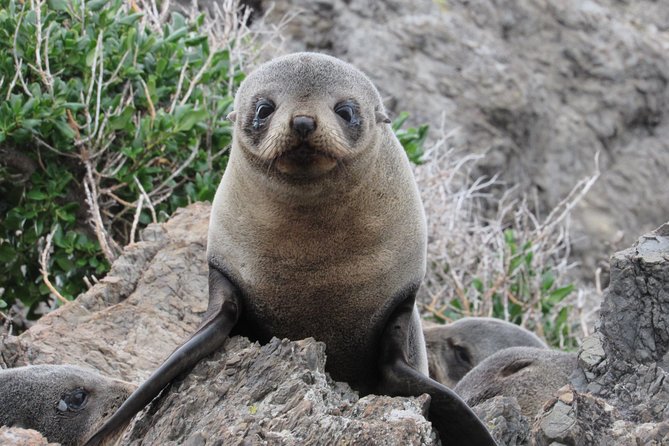
- The seals live beside the leaning lighthouse: Karori Rock Lighthouse, built in 1915, gives the coast a memorable landmark as well as a wildlife focus.
- The private farm road is part of the adventure: Terawhiti Station provides access to ridges, wind turbines, livestock, and broad views over Cook Strait.
- You get more than a seal stop: Otari-Wilton’s Bush adds native trees, birds, and Wellington’s plant story to the half-day outing.
- Small groups make a difference: The Mercedes 4WD vans carry no more than 10 people, so commentary and questions feel more personal.
- The beach stop can feel short: One account described about 30 minutes with the seals, so bring your camera and be ready when you arrive.
- Weather matters: Poor conditions can cancel the tour, with a different date or full refund offered.
From Wellington streets to Otari’s native forest
The tour starts with pickup, either from your hotel or directly from a cruise ship. That is useful in Wellington, where a half-day outing can become stressful if you are trying to find an unfamiliar meeting point between ship arrival and departure.
The first stop is Otari-Wilton’s Bush Native Botanic Garden. This is a 100-hectare area of ancient and regenerating forest, and it is New Zealand’s only botanical garden devoted entirely to native plants. You spend about 30 minutes here, with admission included.
Do not think of this as filler before the seals. It gives you a quick introduction to the plants and birds that shape the rest of the outing. Guides have pointed out native trees, kākā, and kererū here, helping you notice details you might otherwise miss during the drive.
The stop is brief, so you should not expect a long botanical tour or a full walk through the gardens. Its value is in setting the scene. You begin with New Zealand’s native bush, then move through working farmland, and finally reach the open coast. That sequence makes the region feel like a connected place rather than a string of unrelated stops.
Guides such as Grant, Hamish, Sara, Blue, and Chewy have been praised for mixing Wellington history with information about plants, birds, and conservation. The exact guide varies, but the company clearly puts a lot of weight on local commentary rather than simply driving you from point to point.
More wildlife tours in Wellington:
- Wellington: Half Day Seal Coast Safari
★ 4.9 · 245 reviews - Small Group Daytime 2-Hour Eco Wildlife Tour at Zealandia
★ 5.0 · 223 reviews - Zealandia Small Group Eco Wildlife Night Tour
★ 5.0 · 127 reviews
Crossing Terawhiti Station by Mercedes 4WD
After the botanic garden, the van heads through Wellington’s suburbs toward the south coast. The memorable change comes when you leave the public road and enter Terawhiti Station, one of New Zealand’s oldest and largest stations.
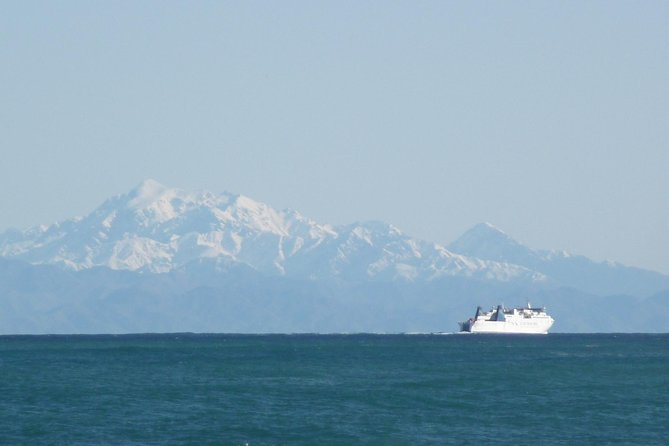
This private access is one of the tour’s strongest features. You pass through working farmland, with cows and sheep nearby, and climb through open country where wind turbines and wide Cook Strait views become part of the trip. On a clear day, you can see the South Island across the water.
The drive takes roughly an hour and a half, including the approach to the coast. It is not a smooth sightseeing transfer. The route includes steep and curving roads, and the descent toward sea level is a genuine 4WD experience. One guide was praised for handling the roads safely, while another passenger offered a useful warning: you need to be comfortable with sharp curves.
I would not recommend trying to recreate this drive in a standard rental car. The road conditions and private access make the guided vehicle a major part of the value. You can look out the window, take photographs at suitable stops, and listen to the guide instead of worrying about navigation or road surface.
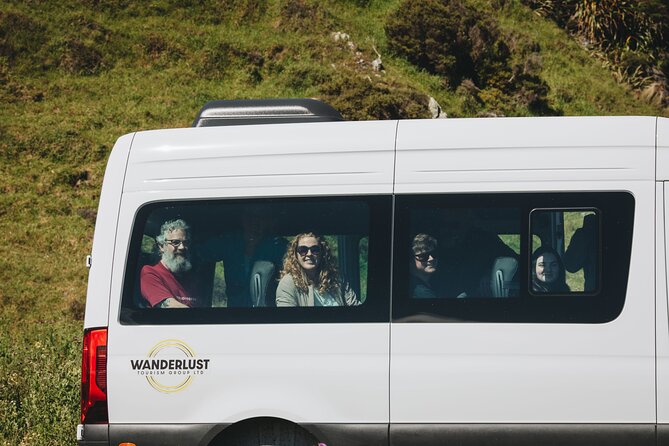
The new Mercedes 4WD vans add comfort without removing the sense of adventure. They are described as comfortable and rugged, which is the right combination for this route. A normal sightseeing coach would not provide the same access, and a smaller vehicle would not offer the same ease for a group.
The farm crossing also gives you a glimpse of a working side of Wellington that is easy to miss. This is not a manicured scenic overlook. It is private farmland with livestock, tracks, ridges, wind turbines, and changing views. That makes the journey feel more like an outing into the region than a standard city excursion.
Cape Terawhiti and the leaning lighthouse
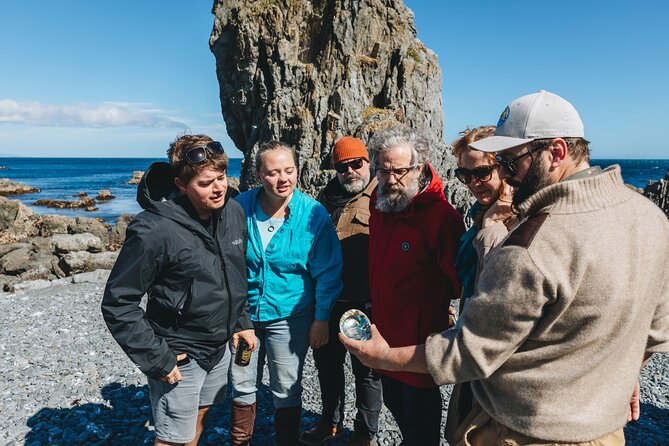
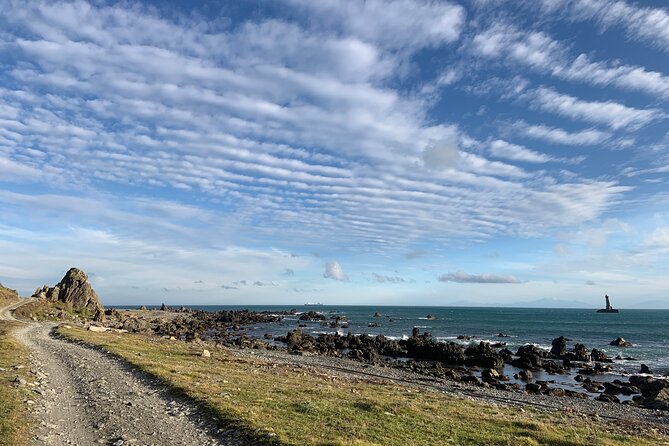
As the vehicle descends toward sea level, Karori Rock Lighthouse comes into view. Locals often call it the leaning lighthouse, and it is an unusual sight on this isolated stretch of coast.
The lighthouse was built in 1915 after the sinking of the SS Penguin. You do not simply stop for a quick photograph and turn around. The lighthouse helps explain why this exposed coast needed a navigational marker, while the rocky shore provides the setting for the fur seal colony.
The Cape Terawhiti portion lasts about an hour. That includes time near the shore, views of the lighthouse, and the main wildlife encounter. The coast is raw and open, not developed for mass sightseeing. There are no rows of shops or large visitor facilities competing with the sea and rocks.
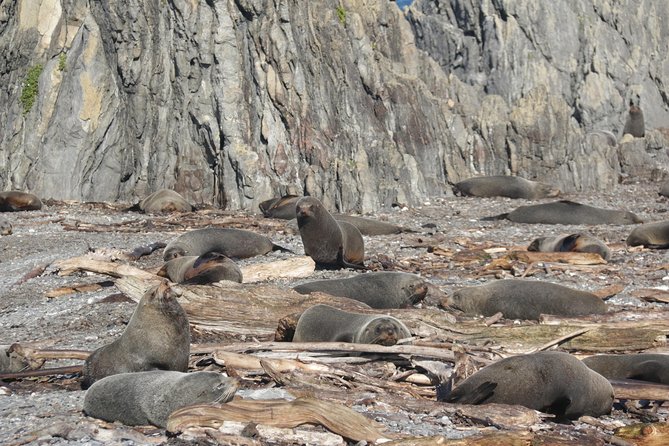
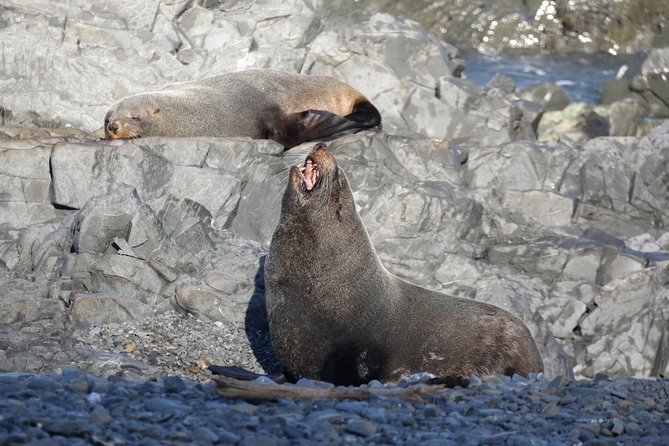
The seals rest on the rocky shoreline in their natural setting. You may see them lying in the sun, moving among the rocks, or simply ignoring the visitors. That last part is a good sign. The point is not a staged animal encounter, but the chance to observe wild New Zealand fur seals behaving normally.
Bring a camera with a useful zoom if you have one, though several people describe getting close enough for strong photographs and video. Keep your attention on the guide’s instructions about how to approach and say hello. Wildlife viewing is better when the animals are left undisturbed.
Refreshments are provided, including tea, coffee, and snacks. These are small touches, but they matter at an exposed coastal stop. One person reported that a hot drink was not available on their visit, so the service may occasionally miss the mark. It is sensible to bring your own water as a backup, especially on a warm day.
How much time do you get with the seals?
The total tour lasts about three hours and 30 minutes, but the seal viewing is only one part of that time. One account specifically noted about 30 minutes on the beach with the seals. That is worth keeping in mind if your main goal is wildlife photography.
The short beach visit is not necessarily a flaw. The tour has to allow for pickup, the botanic garden, the farm crossing, the coastal drive, and return transport. It also avoids turning a wild colony into an all-day stop.
Still, if you want to sit for hours watching seals, this may feel rushed. If you want a well-rounded half-day that includes wildlife, native forest, farm country, and coast, the timing makes more sense.
Conditions can also shape the experience. A clear day may give you South Island views and bright coastal photographs. Wind, cloud, or rain can change the mood and make the shore less comfortable. The operator requires good weather and offers a new date or full refund if poor conditions force cancellation.
A few more Wellington trips worth weighing up
- Star Safari Stargazing Experience, Martinborough
★ 5.0 · 6 reviews - Auckland Dolphin and Whale Watching Eco-Safari Cruise
★ 4.5 · 1,790 reviews - Waiatoto River Safari
★ 5.0 · 127 reviews - Akaroa: 4WD Safari and Guided Sea-Kayaking Experience
★ 4.8 · 120 reviews
The guides make the ride worthwhile
The strongest part of this experience is the guiding. The route would still be scenic without commentary, but it would lose much of its meaning.
Grant has been praised for his explanations of Wellington’s past, native flora, birds, and the farm route. Sara brings local knowledge of the station and its operations, while Hamish has been singled out for both his driving and his ability to spot wildlife at Otari. Other guides named in feedback include Marc, Blue, Chewy, and WiiWii.
You may get a guide with a lively sense of humor, or one who focuses more on natural history and conservation. Either way, the company says its guides are local nature lovers, and that comes through in the comments about their enthusiasm and safe driving.
The tour is also linked with the Capital Kiwi conservation project. That gives the outing a wider conservation connection, especially after seeing native bush and birds at Otari. You are not just ticking off a seal sighting. You are getting a short introduction to Wellington’s plants, wildlife, farming, coastal ecology, and efforts to protect native species.
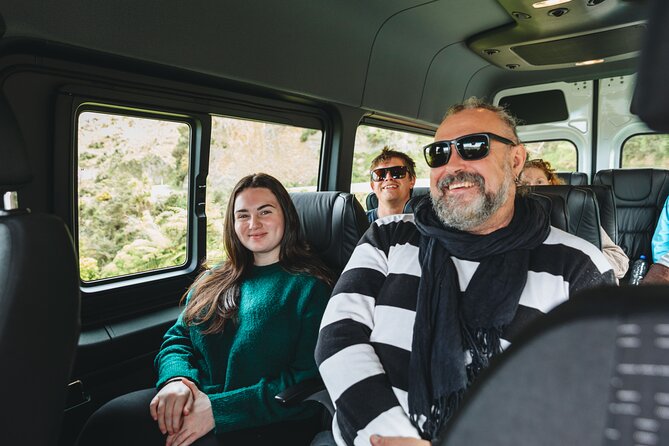
The small group size helps. With a maximum of 10 people, you can ask questions without shouting across a crowded coach. Guides can also adjust their commentary to the group, pointing out an animal or view that might otherwise pass unnoticed.
Pickup, cruise timing, and the $121.01 price
The tour offers hotel pickup and drop-off, and it has direct cruise-ship pickup. That is especially valuable if you are in Wellington for one day from a ship. The operator says it has never missed a cruise drop-off, and the excursion is designed to return you in time.
Several cruise passengers found the pickup and return simple, including people who booked this independently rather than through their cruise line. One useful option is to arrange a city drop-off instead of returning to the ship, then continue with shopping or another Wellington activity. Confirm the exact arrangement when booking, since your departure time still matters.
At $121.01 per person, I would judge the cost against the access rather than against a basic city tour. You are paying for a small vehicle, a driver-guide, private farmland entry, a remote coast, a botanic garden admission, snacks, and hotel or ship transport.
The value is strongest when you want variety. In three and a half hours, you see native forest, a working station, wind turbines, Cook Strait, a historic lighthouse, and fur seals. If you only want a quick photograph of seals, the price may feel high. If you would otherwise need to arrange a rental car and figure out the private farm route yourself, the guided format makes much more sense.
Free cancellation is available up to 24 hours before the start time. Changes or cancellations inside that window are not refunded, and weather cancellations are handled with a new date or full refund.
Who should choose this safari?
I would choose this tour if you want to get beyond central Wellington without giving up half a day to complicated transport. It suits nature lovers, first-time visitors, cruise passengers, couples, families, and anyone who prefers a small group to a large coach.
It is also a good choice if you enjoy variety. The seals are the headline, but the native garden and private farm drive are essential parts of the experience. You will appreciate the trip more if you treat the route as a full regional outing.
The tour is less suitable if you have serious neck problems, strongly dislike steep and curvy roads, or need a long, guaranteed period at the seal colony. Most people can take part, but the road conditions deserve honest attention.
Wear comfortable clothes for changing weather and keep your camera ready before reaching the shore. The best views may appear during the farm crossing, not only at the lighthouse. If you are visiting by cruise ship, choose the departure that leaves a sensible margin before sailing.
Should you book the Seal Coast Safari?
Book it if you want a practical way to see Wellington’s wilder side, with excellent guides, private farmland access, and a real fur seal colony rather than a polished attraction. The combination of Otari’s native bush, Terawhiti Station, Cook Strait views, and Karori Rock Lighthouse gives you much more than a single wildlife stop.
Skip it if your priority is a long beach stay, a flat road, or complete control over your schedule. For most people who can handle a rugged 4WD ride, the price is fair for the access and the range of places covered in one half-day. The seals are memorable, but the bigger reward is seeing how quickly Wellington changes from city streets to working farm, native forest, and wild coast.
FAQ
How long does the Seal Coast Safari take?
The tour lasts approximately three hours and 30 minutes.
What is the price of the Seal Coast Safari?
The listed price is $121.01 per person.
Does the tour offer morning and afternoon departures?
Yes. You can choose a morning or afternoon tour to fit your schedule.
Is pickup available from Wellington hotels?
Yes. Hotel pickup and drop-off are available.
Can cruise-ship passengers join the tour?
Yes. Direct pickup and drop-off from cruise ships are available, and the operator has experience returning passengers in time.
How many people can join the tour?
The maximum group size is 10 people.
What vehicle is used?
The tour uses Mercedes 4WD vans designed for comfort on the rugged farm and coastal roads.
What places does the tour visit?
The route includes Otari-Wilton’s Bush Native Botanic Garden, Terawhiti Station, and Cape Terawhiti near the Karori Rock, or leaning, lighthouse.
Are refreshments included?
Yes. Tea, coffee, and snacks are provided.
Can I cancel for a refund?
You can cancel at least 24 hours before the start time for a full refund. Cancellations or changes made less than 24 hours before the tour are not refunded. If poor weather cancels the experience, you are offered another date or a full refund.
Just added around Wellington
- Private Tour in Wellington★ 5.0 · 5 reviews
- Wellington: Wētā Workshop Creative Classes Experience Ticket★ 4.7 · 5 reviews
- Exclusive Wellington Sightseeing Private Tour★ 4.0 · 5 reviews
- Wellington Jewish Heritage sightseeing tour with a kosher lunch★ 5.0 · 5 reviews
- Wellington: Lord of the Rings Half-Day Guided Tour inc Weta★ 5.0 · 5 reviews
- Wellington 90 minute Harbour Cruise★ 5.0 · 6 reviews
- Wellington: Wild Skyline Guided Hiking Tour, Transfers + Lunch★ 5.0 · 6 reviews
- Wellington: Lord of the Rings Filming Locations Tour★ 4.0 · 6 reviews
Wildlife & Nature Tours, compared.

Auckland Dolphin and Whale Watching Eco-Safari Cruise
Read our review →
Whale and Dolphin Watching Half-Day Eco Cruise
Read our review →
Gannet Safaris Overland tour to Cape Kidnappers Gannet Colony
Read our review →

Clearwater Wildlife Tours (small group 10max) Otago Peninsula
Read our review →

Guided Evening Penguin Viewing Otago Peninsula, Dunedin, New Zealand
Read our review →
Browse the lists this tour appears in