
Reviewed · WILDLIFE & NATURE TOURS
Wellington: Half Day Seal Coast Safari
Seals are only part of the adventure. This 210-minute trip gives you rare access to private Terawhiti farmland, then carries you from native forest and wind turbines to Wellington’s rugged south coast. I especially like the mix of Otari-Wilton’s Bush and the remote seal colony, plus the small group size of no more than 10 people.
I also like that the tour works well without a rental car. Pick-up is available from central Wellington and the cruise terminal, and the guides add local stories, Māori references, conservation facts, and plenty of practical commentary. The main drawback is the rough ride over farm tracks, and $116 per person may feel high if you only want a quick look at seals.
In This Review
- Key points at a glance
- Why this Wellington tour is different
- Starting at Otari-Wilton’s Bush
- Crossing Terawhiti Station by 4WD
- Wind turbines, kiwi, and a working coast
- Descending to the leaning lighthouse
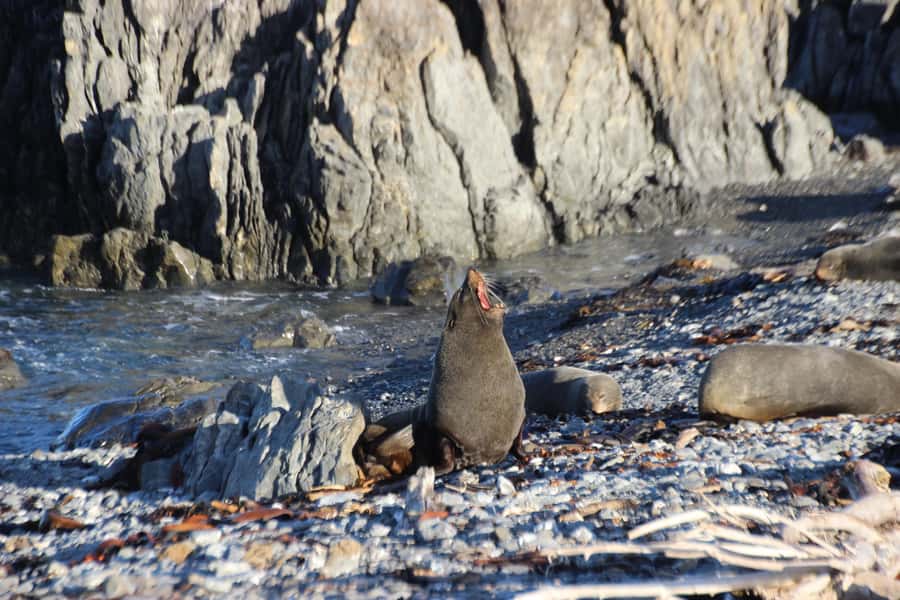
- Meeting the fur seals at Tongue Point
- The return journey and the value of the route
- Is $116 per person good value?
- Weather, comfort, and what to bring
- Who will enjoy this safari most?
- Should you book the Wellington Seal Coast Safari?
- FAQ
- How long does the Seal Coast Safari last?
- How much does the tour cost?
- Where does the tour pick up in Wellington?
- Can cruise ship passengers join the tour?
- How many people are in each group?
- What language is the tour conducted in?
- Will I definitely see fur seals?
- What should I bring?
- Is much walking required?
- Does the safari operate in bad weather?
- Can I cancel or change my booking?
Key points at a glance
- Native forest before the coast: Walk across Otari-Wilton’s Bush skybridge and learn about New Zealand’s original plant life.
- Private access to Terawhiti Station: The 4WD route crosses working farmland that you cannot normally reach independently.
- Big Cook Strait views: From the ridge, you may see the South Island and the snow-capped Kaikoura Ranges.
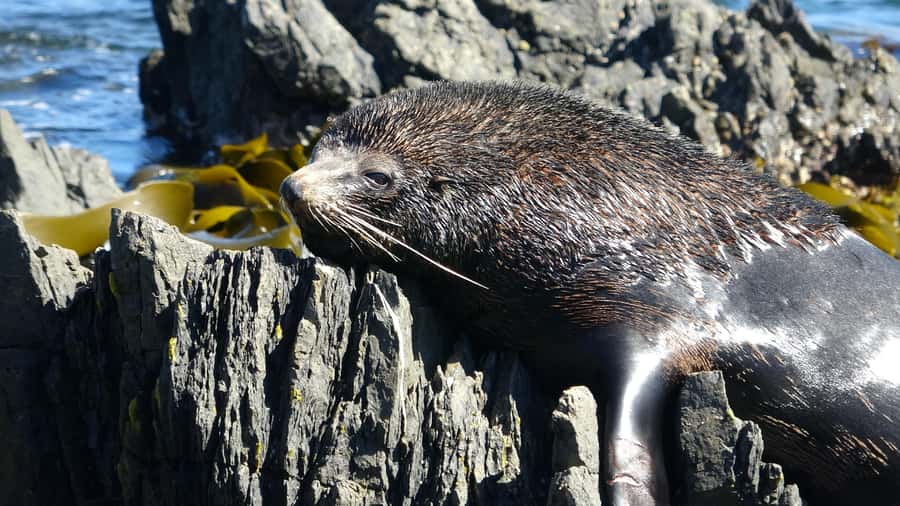
- Wild fur seals at Tongue Point: Watch New Zealand fur seals sunbathe, play, and swim from a safe distance.
- A real all-weather outing: Rain and fog can reduce the views, but the safari still runs and the commentary remains worthwhile.
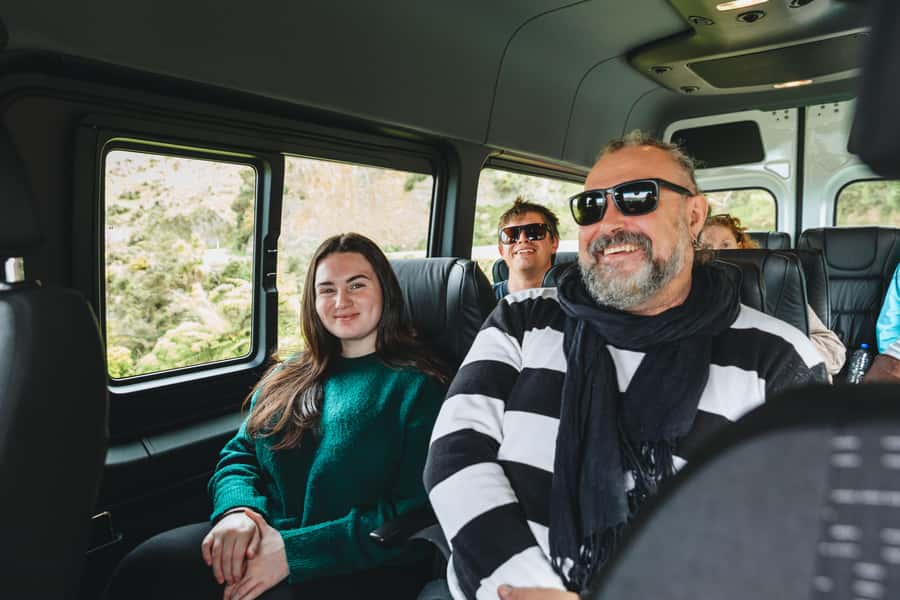
- Small, comfortable transport: Mercedes 4WD vans carry up to 10 people, with central pick-up and light refreshments included.
Why this Wellington tour is different
Wellington has plenty of museums, cafés, and waterfront walks. This safari takes you somewhere most independent visitors will not reach easily: the far south coast beyond the city hills. The attraction is not just the seals. It is the change of scenery along the way.
In less than four hours, you move through native bush, suburban Wellington, a working sheep and cattle station, a wind farm, rough coastal tracks, and a seal colony. That variety makes the outing feel much larger than a simple wildlife stop.
The route also has a useful local focus. Your guide explains native plants, birds, farming, renewable energy, Māori connections, conservation work, and Wellington’s famously wild weather. Guides named Sarah, Grant, Chewy, Marc, Andy, Blue, Gina, Natalie, and others have earned praise for their storytelling and driving. The exact guide changes, but the pattern is clear: this is a commentary-led trip, not a silent transfer to a beach.
More wildlife tours in Wellington:
- Seal Coast Safari – Exclusive access to Wellington’s secret coast
★ 5.0 · 294 reviews - Small Group Daytime 2-Hour Eco Wildlife Tour at Zealandia
★ 5.0 · 223 reviews - Zealandia Small Group Eco Wildlife Night Tour
★ 5.0 · 127 reviews
Starting at Otari-Wilton’s Bush
The first major stop is Otari-Wilton’s Bush, a 100-hectare area of ancient and regenerating forest. It is also New Zealand’s only botanical garden devoted entirely to native plants, and it has been given a six-star Garden of International Significance rating by the New Zealand Gardens Trust.
That sounds formal, but the value is simple. The gardens give you a quick introduction to what New Zealand looked like before large-scale settlement changed the vegetation. Your guide uses the walk to explain native flora and fauna, along with the difficult fight many species have faced to survive.
The skybridge is the highlight here. You cross above the forest canopy, gaining a different view from the usual ground-level garden path. The walk is short, and only minimal walking is required overall, so you do not need to be a serious hiker.
You might see native birds such as tūī, kākā, kākāriki, kererū, and occasionally kārearea. Sightings are never guaranteed, but the return of several species to the Wellington area gives the stop real purpose. The tour connects these birds with local restoration work rather than treating them as decorative extras.
This part is especially useful if you have just arrived in New Zealand and want help reading the natural world. Plants that might otherwise blur into a wall of green begin to have names and uses. One guide, Natalie, was praised for adding medicinal plant information and Māori culture to the forest visit.
Crossing Terawhiti Station by 4WD
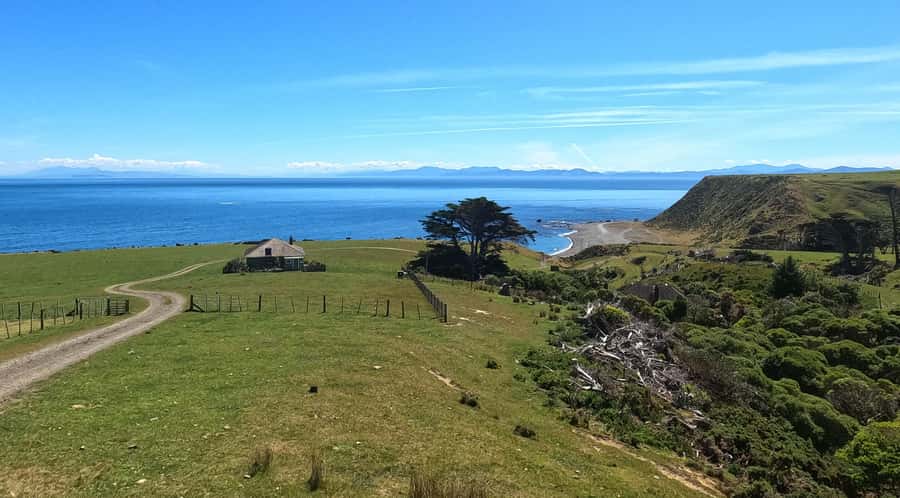
After Otari-Wilton’s Bush, the van heads toward the south coast. The key turn comes when you leave the public road and enter private access through Terawhiti Station, one of New Zealand’s oldest and largest stations.
This is where the Mercedes 4WD earns its keep. You may see sheep, cows, and goats as the van climbs over the farm roads. The route is not polished sightseeing infrastructure. It is working countryside, and the tracks can be bumpy.
That roughness is both a feature and a warning. If you enjoy off-road travel, the jolting ride adds character. If you prefer smooth roads, you should know that the vehicle will shake around on parts of the journey. One rider specifically noted that the 4WD handled the farm tracks and beach access well, but also made clear that the terrain is rough.
At the high points, the reward is huge open scenery over the Cook Strait. On a clear day, you may see across to New Zealand’s South Island and the Kaikoura Ranges, including snow on the distant peaks. These views are highly dependent on weather. Wellington can be sunny in town and gray, rainy, or foggy on the coast.
Do not make the mistake of judging the trip only by the forecast in central Wellington. The tour operates in all weather, and poor conditions may lead to route changes. Heavy rain and fog have still produced enjoyable outings when the guide’s commentary kept the journey interesting, but you should bring warm clothing and accept that the grand views may disappear.
Wind turbines, kiwi, and a working coast
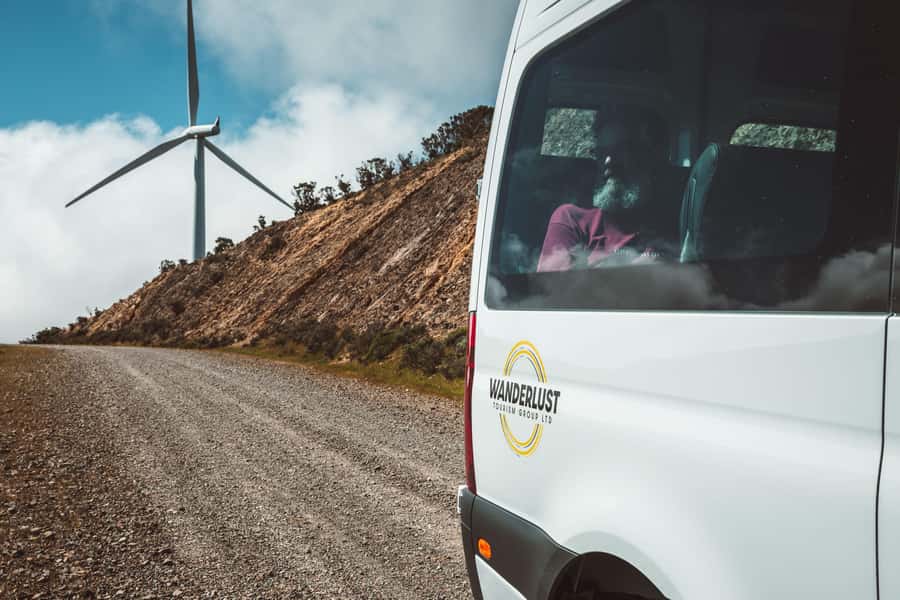
The ridge road follows the route created for Project West Wind, a large wind farm that produces enough electricity to power homes across the Wellington region. The turbines give the hills a memorable human-made feature, but the guide also explains why they matter to the farm operation.
Terawhiti is a challenging place to run livestock. Wind, exposed ridges, and steep ground make daily work difficult. The relationship between the wind farm and the station adds an unusual layer to the story: energy production and farming share the same harsh terrain.
The hills are also connected with the Capital Kiwi project, which has reintroduced wild kiwi after roughly 100 years without the birds being heard or seen there. You should not expect a kiwi sighting during this short safari. The value is learning that conservation is happening in the hills you are crossing, not in some distant national park.
This section helps explain why the route feels special. You are not simply being driven to a wildlife viewpoint. You are passing through a working area where farming, energy production, native species recovery, and old transport routes overlap.
A few more Wellington trips worth weighing up
- Star Safari Stargazing Experience, Martinborough
★ 5.0 · 6 reviews - Auckland Dolphin and Whale Watching Eco-Safari Cruise
★ 4.5 · 1,790 reviews - Waiatoto River Safari
★ 5.0 · 127 reviews - Akaroa: 4WD Safari and Guided Sea-Kayaking Experience
★ 4.8 · 120 reviews
Descending to the leaning lighthouse
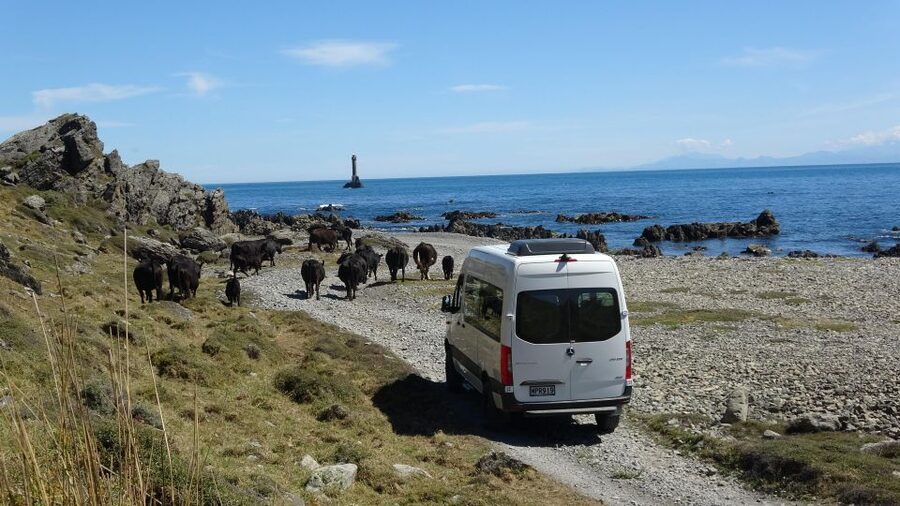
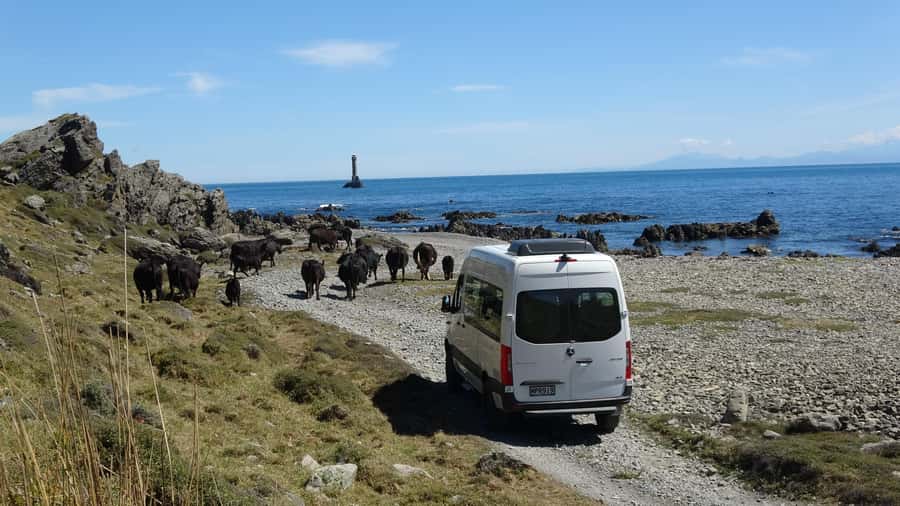
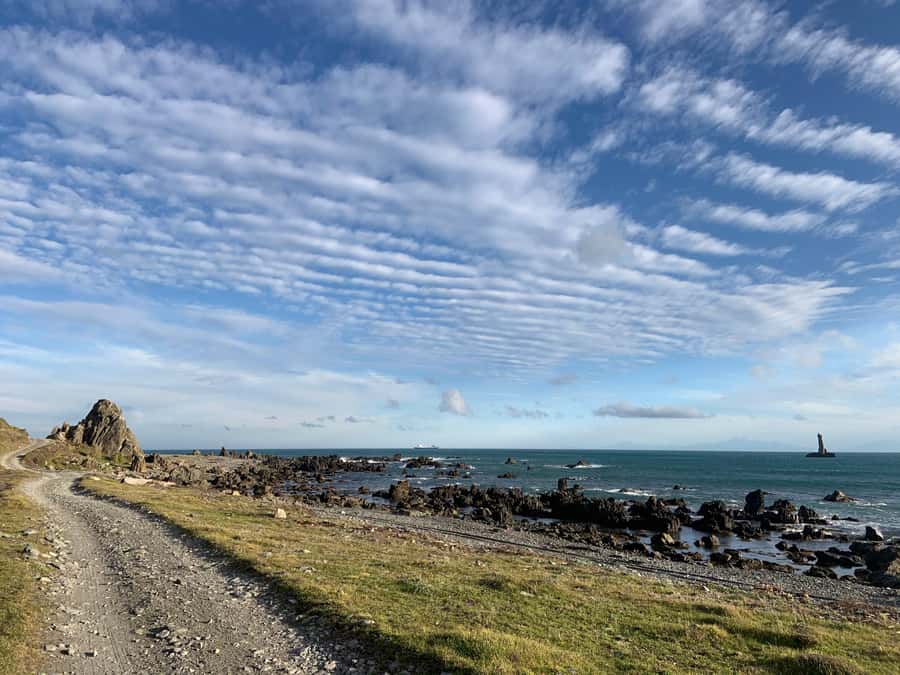
As the van drops toward sea level, look for Karori Rock Lighthouse, often called the leaning lighthouse. It was one of New Zealand’s first automated lighthouses, and it really does lean.
The lighthouse is part of the visual build-up to the coast. You see it in the distance before the route reaches the rocky and sandy track toward Tongue Point. The tour information does not promise a dedicated lighthouse visit, so think of it as a landmark you view along the approach rather than a separate attraction with a long stop.
The road becomes more rugged here. This is another place where sturdy footwear matters. You do not need extensive hiking ability, but comfortable shoes are a sensible choice for walking along the beach and uneven coastal ground.
Meeting the fur seals at Tongue Point
The seals are the main event, and the setting makes them memorable. At Tongue Point, New Zealand fur seals rest on the shore, swim offshore, and jostle around in their natural environment. You are not watching animals in an enclosure or from a staged feeding platform.
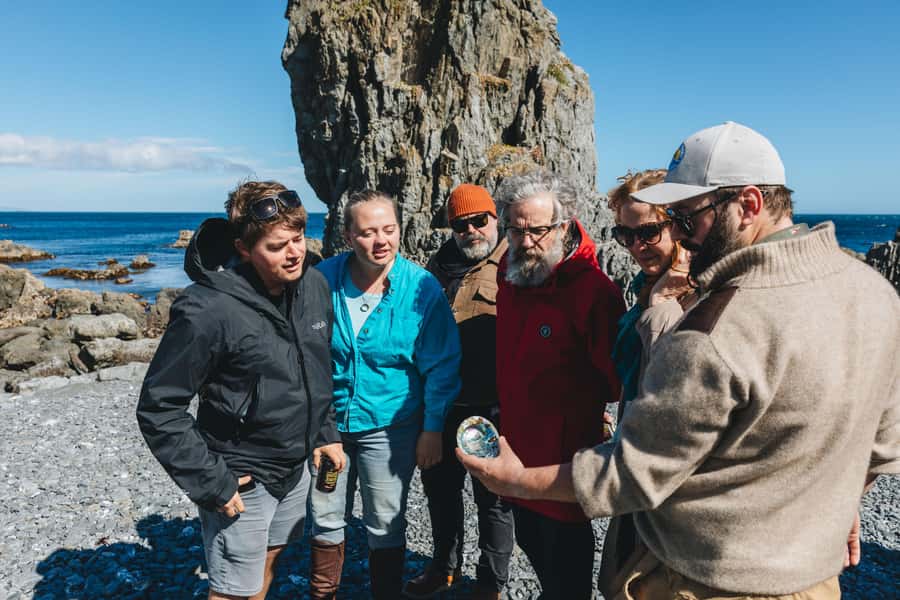
Your guide keeps the group at a safe distance for both people and seals. One experience placed the viewing distance at roughly 10 to 15 metres, though the animals’ position will change. Bring a camera, but do not expect a close-contact encounter. The point is to observe natural behavior without disturbing the colony.
You may see seals sleeping in the sun, playing, or slipping into the water. Their charm is obvious, but the guide’s explanation of population recovery and conservation gives the stop more substance. New Zealand fur seals have returned in larger numbers after a long period of pressure, and seeing them here makes those conservation efforts tangible.
The beach can feel wonderfully remote. One outing had the shore effectively to itself apart from the seals. That solitude is a major part of the value. You get time to watch, take photographs, and listen to the water instead of being pushed through a crowded wildlife exhibit.
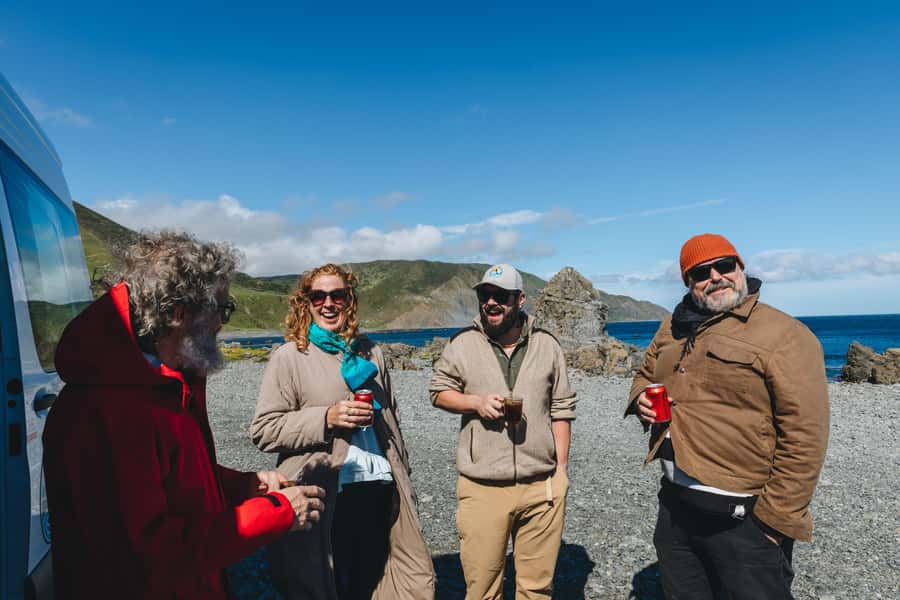
Light refreshments are served here, and several people have singled out the simple pleasure of tea or coffee on a remote beach with seals nearby. One guide, Emily, was praised for making a good coffee, while Hamish reportedly waited out atrocious weather with coffee before conditions improved. These are small touches, but they matter when the coast is cold or wet.
You should resist the urge to approach a seal for a better photograph. Keeping back is not just a rule for convenience. It protects the animals and keeps the encounter calm.
The return journey and the value of the route
The return follows farmland and fault lines, with many of the same wide views appearing again in reverse. Because this is a half-day outing, you do not spend hours at the coast. Instead, the tour gives you a compact look at several sides of Wellington.
The guide often keeps the commentary going on the way back. This is where a good guide can turn repeated scenery into useful context. You may hear more about the station, local history, roads, weather, conservation, and the geography around Wellington.
The group size helps. With a maximum of 10 people, the van feels more personal than a large coach. Guides have been praised for taking photographs, answering many questions, adjusting when needed, and driving carefully on the winding roads. Cruise passengers also benefit from a planned return to central Wellington, though you should provide the cruise port as your pick-up point and allow sensible time before departure.
The transport is another reason this tour works well for people without a car. The south coast route is not an easy casual excursion from the city, and private farmland access is central to the experience. You are paying not only for the seal stop, but also for the vehicle, access, local interpretation, and the time required to reach a remote coast.
Is $116 per person good value?
At $116 per person, this is not a bargain sightseeing loop. The price makes more sense if you value access and interpretation.
You receive a 210-minute guided outing, central or cruise-terminal pick-up, transport in a small 4WD vehicle, private access through Terawhiti Station, the Otari-Wilton’s Bush visit, coastal scenery, and light refreshments. You also avoid renting a vehicle and trying to navigate unfamiliar farm roads and rough coastal tracks.
The weak point is that the farm drive may feel incidental if your only goal is to see seals. One person felt the tour was really three parts, with the farm mainly serving as the route to the coast. That is a fair criticism. You should book this as a full nature and scenery experience, not as a cheap seal shuttle.
The strong point is the combination. A normal city tour will not take you from native forest to wind turbines, then over private farmland to a fur seal colony. For someone interested in ecology, local culture, rural New Zealand, and unusual access, the cost is easier to justify.
Weather, comfort, and what to bring
Wellington weather can change quickly, and the south coast is exposed. Bring warm layers even in summer, plus sunscreen and sunglasses for clear days. Comfortable shoes are required for the short walks and uneven beach conditions.
The safari runs in all weather, but weather and other conditions can cause route changes. Rain does not automatically ruin the outing. Several people found the trip worthwhile in poor conditions because the guides remained informative and the seals were still present. Still, if you are booking mainly for South Island views, a clear day gives you a better chance of seeing the distant mountains.
Large bags and luggage are not allowed. That matters for cruise passengers, who should arrange storage elsewhere before pick-up. Wheelchair users cannot join this experience, and the rough tracks make it unsuitable for anyone who needs fully smooth, step-free transport.
The walking requirement is low. You should be comfortable getting in and out of a 4WD van, walking through the bush area, and moving over rocky or sandy ground at the coast.
Who will enjoy this safari most?
I would recommend it to you if you want nature beyond Wellington’s central sights and do not have a car. It is also a strong choice for photographers, bird enthusiasts, families with older children, cruise passengers, and anyone curious about how conservation and working farmland share the same space.
It suits people who like a guide’s stories. The best part is not only seeing the seals, but understanding the plants, birds, farm, wind farm, lighthouse, and coast as connected pieces of the region.
I would be more cautious if you dislike bumpy roads, need guaranteed sunshine, or want a long, quiet walk. The ride is active rather than plush, the weather can obscure the scenery, and the seal viewing time is only one part of the half-day schedule.
Should you book the Wellington Seal Coast Safari?
Book it if you want a compact but varied Wellington outing with genuine access to places you are unlikely to reach alone. The seals are the headline, but the native forest, Terawhiti Station, wind farm, ridge views, and guide commentary make the trip worthwhile.
Skip it if $116 feels too steep for a tour whose main goal is simply seeing fur seals, or if rough farm roads will spoil your day. For everyone else, especially people without a rental car, this is one of the more distinctive ways to see Wellington’s wild edge.
Free cancellation is available up to 24 hours before departure, and confirmed bookings can be moved to another day without charge when the operator receives at least 24 hours notice. That flexibility is useful in a city where the weather can change the character of the coast.
FAQ
How long does the Seal Coast Safari last?
The experience lasts 210 minutes, or three and a half hours.
How much does the tour cost?
The price is $116 per person.
Where does the tour pick up in Wellington?
Pick-up is available from central city locations and the Wellington cruise terminal. Listed central points include Bunny Street, Wakefield Street, Grey Street and Featherston Street, Mercure Abel Tasman, Naumi Studio, Te Papa, and TRYP by Wyndham. You should provide your preferred pick-up point when booking.
Can cruise ship passengers join the tour?
Yes. Cruise passengers should select Wellington Cruise Ship Port as their pick-up location so the van collects them directly from the port.
How many people are in each group?
The tour is limited to 10 participants.
What language is the tour conducted in?
The live tour guide speaks English, and the tour is offered in English.
Will I definitely see fur seals?
The tour visits a fur seal colony at Tongue Point, where you can observe seals in their natural environment. Wildlife sightings can vary, so a sighting cannot be treated as an absolute guarantee.
What should I bring?
Bring comfortable shoes, a camera, sunscreen, sunglasses, and warm clothing. Large bags and luggage are not permitted.
Is much walking required?
Only minimal walking is required, including the visit to Otari-Wilton’s Bush and the walk near the seal colony. The tour is not suitable for wheelchair users.
Does the safari operate in bad weather?
Yes, the safari runs in all weather. Weather and other conditions can lead to route changes, and poor weather may limit views across the Cook Strait and toward the South Island.
Can I cancel or change my booking?
You can cancel up to 24 hours in advance for a full refund. A confirmed booking can also be transferred to another day at no charge if the supplier receives at least 24 hours notice.
Just added around Wellington
- Private Tour in Wellington★ 5.0 · 5 reviews
- Wellington: Wētā Workshop Creative Classes Experience Ticket★ 4.7 · 5 reviews
- Exclusive Wellington Sightseeing Private Tour★ 4.0 · 5 reviews
- Wellington Jewish Heritage sightseeing tour with a kosher lunch★ 5.0 · 5 reviews
- Wellington: Lord of the Rings Half-Day Guided Tour inc Weta★ 5.0 · 5 reviews
- Wellington 90 minute Harbour Cruise★ 5.0 · 6 reviews
- Wellington: Wild Skyline Guided Hiking Tour, Transfers + Lunch★ 5.0 · 6 reviews
- Wellington: Lord of the Rings Filming Locations Tour★ 4.0 · 6 reviews
Wildlife & Nature Tours, compared.

Auckland Dolphin and Whale Watching Eco-Safari Cruise
Read our review →
Whale and Dolphin Watching Half-Day Eco Cruise
Read our review →
Gannet Safaris Overland tour to Cape Kidnappers Gannet Colony
Read our review →

Clearwater Wildlife Tours (small group 10max) Otago Peninsula
Read our review →

Guided Evening Penguin Viewing Otago Peninsula, Dunedin, New Zealand
Read our review →
Browse the lists this tour appears in