
Reviewed · WILDLIFE & NATURE TOURS
Zealandia Small Group Eco Wildlife Night Tour
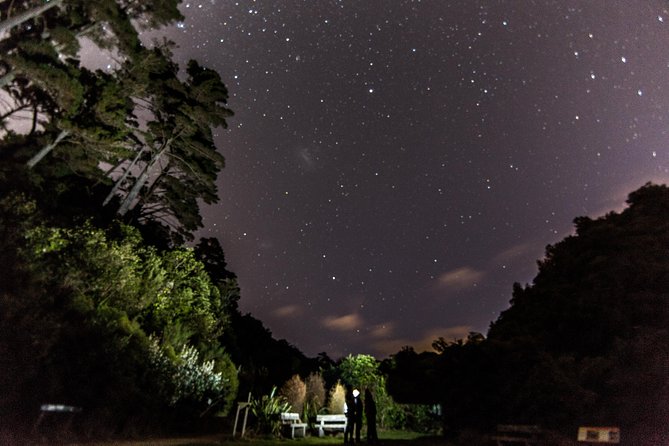
The forest changes after sunset. Zealandia’s night tour pairs an interactive look at New Zealand’s lost wildlife with a guided walk through a predator-proof sanctuary, where kiwi, tuatara, weta, frogs, eels, and glowworms may appear in the beam of a red torch. I like the life-size moa and Haast’s eagle models, which make the country’s vanished birdlife easy to understand, and I like the small group, capped at 12 people, which gives you a fair chance to hear the guide and spot animals.
The strongest reason to book is the chance to see a kiwi active at night. Some groups have seen one, three, four, or even five, along with tuatara and other nocturnal creatures. But this is a protected sanctuary, not a zoo, so no sighting is promised. A cold, wet evening can also make the 2.5-hour walk feel long, especially if you find low-light walking tiring.
In This Review
- Key points to know before you book
- Why Zealandia works best after dark
- The exhibition sets up the story
- From daylight into the Sanctuary Valley
- What you might see in the dark
- The guides make or break the evening
- How much value you get for $74.47
- Getting there and preparing for the weather
- Who will enjoy this night tour most
- Booking, cancellation, and the final decision
- FAQ
- How long is the Zealandia night tour?
- Where does the tour start and finish?
- Is hotel pickup included?
- What animals might I see?
- Are torches provided?
- What should I wear?
- Is the tour suitable for children?
- Can I cancel for a full refund?
Key points to know before you book
- Kiwi sightings are possible but never guaranteed: Guides and spotters work hard, yet the birds remain wild and shy.
- The tour begins indoors: You first visit Zealandia: The Exhibition, with extinct moa and Haast’s eagle models and a light-and-sound presentation.
- The night walk is genuinely active: Expect about two hours of walking in darkness, sometimes on muddy paths.
- Small groups improve the experience: The maximum is 12 people, with a guide and often a volunteer assistant helping find wildlife.
- Red torches are supplied: You should still bring sturdy shoes, warm layers, and a waterproof jacket.
- Your ticket may offer extra value: The tour price is about $74.47 per person, and the ticket includes free access to the sanctuary the following day, according to tour information shared with visitors.
Why Zealandia works best after dark
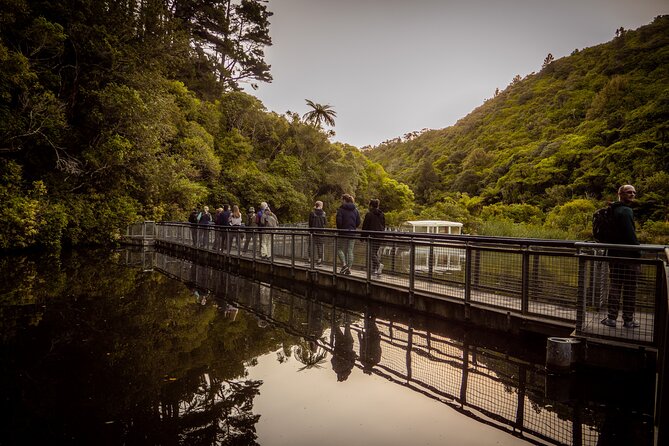
Zealandia Te Mara a Tane is only about 10 minutes from central Wellington, but the setting feels far removed from the city. The sanctuary covers 550 acres, or 225 hectares, inside a predator-proof fence. That fence is central to the experience: it creates a safe place for native species that struggle in ordinary forests.
At night, the purpose of the sanctuary becomes clearer. You are not walking through a display where animals are placed for easy viewing. You are listening, waiting, and following small clues. A call in the trees, a rustle beside the path, or a pair of eyes in the torchlight can suddenly turn the walk into a wildlife search.
The experience has a strong conservation message, but it does not stop at a lecture. You see what protection can make possible. Takahe, kaka, tuatara, frogs, and kiwi can live in a setting designed around their needs. The sanctuary’s long-term vision reaches 500 years, which gives the project an unusually ambitious sense of purpose.
More wildlife tours in Wellington:
- Seal Coast Safari – Exclusive access to Wellington’s secret coast
★ 5.0 · 294 reviews - Wellington: Half Day Seal Coast Safari
★ 4.9 · 245 reviews - Small Group Daytime 2-Hour Eco Wildlife Tour at Zealandia
★ 5.0 · 223 reviews
The exhibition sets up the story
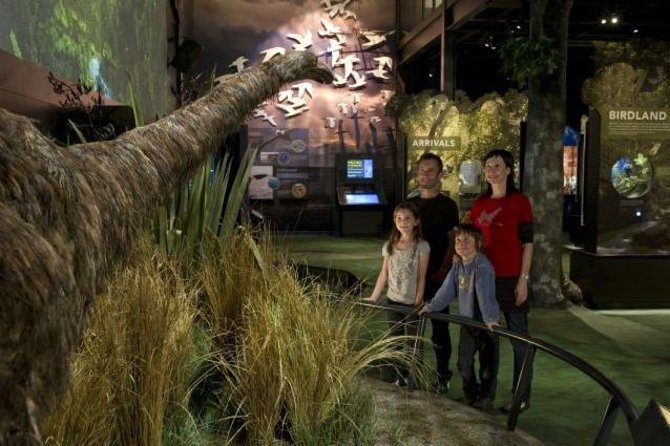
The tour begins inside the visitor centre with a short film and an introduction to Zealandia’s interactive exhibition. This is a useful start, especially if you know little about New Zealand’s native animals or the ecological changes that followed human settlement.
The main attraction is the lifelike model of the moa, a giant flightless bird that once lived in New Zealand. Beside it, the Haast’s eagle model shows the predator that hunted large birds such as moa. These displays make the scale of the lost species clear in a way that pictures alone cannot.
A light-and-sound show then moves through at least 1,000 years of environmental change. This gives the walk a clear context. You are not simply trying to tick off a kiwi sighting. You are seeing a conservation project shaped by the loss of native species and the effort to protect those that remain.
I would give the exhibition your full attention, even if your main goal is a kiwi. The indoor section explains why the sanctuary matters, and it makes sightings later in the evening feel more meaningful.
From daylight into the Sanctuary Valley
After the exhibition, your guide leads the group toward the Sanctuary Valley. Depending on the time of year and the tour schedule, you may begin while there is still some daylight. That gradual change is part of the charm. Bird calls are easier to pick out at first, then the valley grows quiet and the red torch beams become the main points of light.
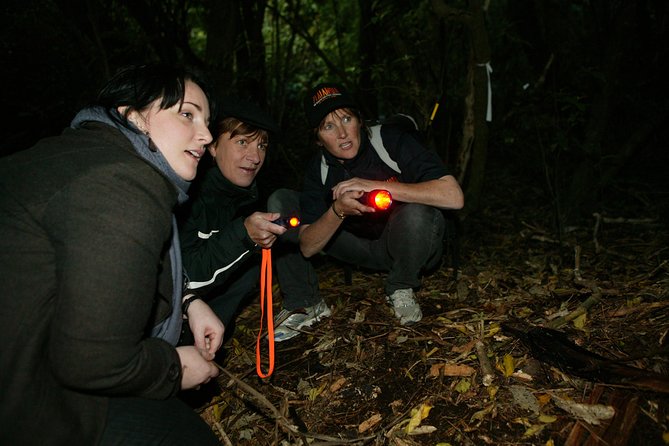
Torches are supplied, and the red light is intended to reduce disturbance to the animals. You should not use a camera flash. One flash can frighten a kiwi and spoil the moment for everyone, so follow the guide’s instructions closely.
The group usually moves at a careful pace, with regular stops to listen and look. Guides may use a radio receiver, and a second guide or volunteer can act as a spotter. That extra pair of sharp eyes matters. Some of the animals are small, still, and remarkably well camouflaged.
Expect a real walk rather than a short stroll from one viewing platform to another. The route can be muddy, and some visitors have found the length challenging in cold wind or rain. The guide generally allows time for slower walkers, but you should be comfortable walking for about two hours in low light.
What you might see in the dark
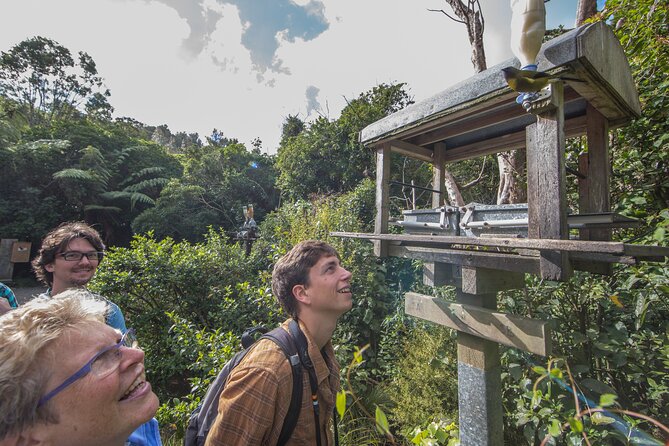
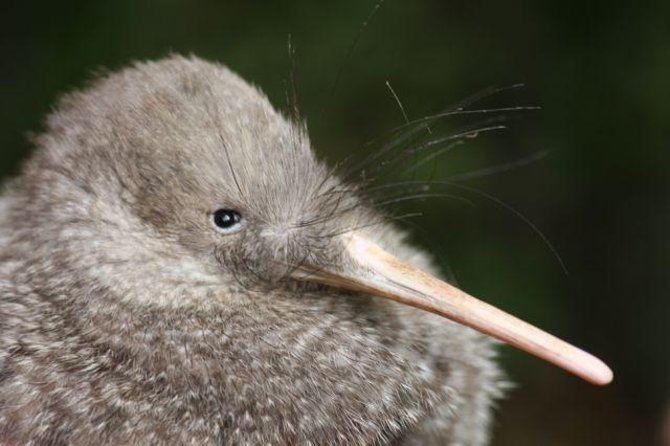
The kiwi is the prize sighting, and the night tour gives you one of the best chances to see one active in the sanctuary. Several groups have seen multiple kiwi, including a young bird, and some have watched one moving less than a metre away along a drainage ditch. Another lucky group saw a kiwi on the grass near the start of the walk.
Still, you need the right expectation. A kiwi may stay hidden, and the guide cannot produce one on demand. The strongest tours make the search enjoyable even when the main bird does not appear. You might spend time watching a tuatara, a weta, a frog, or a glowworm, each offering a different glimpse of nighttime life.
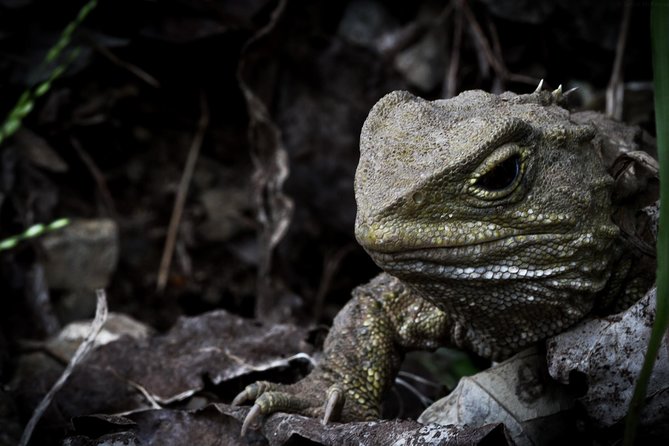
Tuatara are a particular highlight. Some walks have produced several, with one group counting around 10. These reptiles are living links to an ancient branch of animal life, and seeing one moving quietly through the sanctuary is far more memorable than simply reading about it indoors.
Weta, New Zealand’s large native insects, are another common find. They can look startling in the torchlight, especially if you are not used to their size. The guides may also point out glowworms, fish, eels, lizards, and native birds.
Sightings recorded during the tours have included kaka, takahe, shags, ducks, Hamilton frogs, Maud Island frogs, and calls from morepork. You might hear more animals than you see. That is not a failure. In a dark native forest, bird calls and rustling undergrowth are part of the encounter.
A few more Wellington trips worth weighing up
- Oamaru: Penguins Evening Viewing Ticket
★ 4.5 · 682 reviews - Guided Evening Penguin Viewing Otago Peninsula, Dunedin, New Zealand
★ 5.0 · 471 reviews - Te Puia: Te Pō Indigenous Evening Experience – Haka + Dinner
★ 4.7 · 350 reviews - Tauranga: Evening Glowworm Kayak Tour
★ 5.0 · 311 reviews
The guides make or break the evening
The guide does more than lead the route. A good guide explains the animals, controls the pace, sets honest expectations, and knows when to stop talking so the group can listen.
Guides named in the tour feedback include Rebecca, Autumn, Claire, Mary, and Will. Claire was praised for her friendly, informed approach, while one visitor called another guide a kiwi whisperer after five kiwi were found. The names matter less than the pattern: the staff bring real enthusiasm to the work, and volunteer assistants often help locate animals.
I especially value the way the guides explain that sightings are never guaranteed. That honesty protects the experience from becoming a promise it cannot keep. It also encourages you to notice the wider sanctuary rather than spending the entire evening asking only about kiwi.
The best moments often come from the guide’s reaction when something appears. A small movement in the undergrowth may be invisible to you at first. Then the guide points, the group grows quiet, and everyone gets a chance to look.
How much value you get for $74.47
At about $74.47 per person, this is not the cheapest evening activity in Wellington. The price makes more sense when you consider what is included: entry to Zealandia at night, the exhibition, a guided walk, and supplied torches. The group size is limited to 12, which is a meaningful advantage for wildlife spotting.
You are also paying for access to a conservation area that requires protection and careful management. The money supports an environmental project rather than a standard sightseeing circuit. If you care about native wildlife, that adds real value.
The ticket may include free access to the sanctuary the following day. This is an important detail to check when planning your schedule. Several visitors wished they had known in advance, since a daytime return would allow you to see the valley in different light and give the evening ticket more value.
The price is easiest to justify if you want an authentic wildlife experience and accept that the result is uncertain. If you need guaranteed animal sightings, this may feel expensive. If you see the sanctuary itself as the main attraction, with a kiwi as a possible bonus, it becomes a stronger buy.
The tour has a 4.8 rating from 127 reviews, with 97 percent recommending it. Those numbers fit the experience: the wildlife encounters can be exceptional, and the conservation setting gives the evening more substance than a simple city attraction.
Getting there and preparing for the weather
The meeting point is 53 Waiapu Road in Karori, Wellington 6012. Zealandia is near public transportation, but the evening tour finishes back at the same meeting point and does not include hotel pickup or drop-off.
For the trip to the sanctuary at night, the operator recommends arranging a taxi through your hotel concierge or calling Wellington Combined Taxis at (04) 384 44 44. Guides have also helped order return taxis, which is useful if you do not want to rely on finding a ride after the walk.
Arrive 15 minutes before the start time. The tour operates in all weather conditions, so clothing is not a minor detail. Wear sturdy footwear, bring extra layers, and carry a waterproof jacket. Cold weather has been the main complaint, particularly during winter evenings, when wind and damp paths can make the final part feel longer.
The supplied torches are a help, but they do not replace suitable clothing or shoes. You should also be ready for mud and uneven walking conditions. The tour is not recommended if you have limited mobility or difficulty walking for two hours in low light.
The minimum age is 12. Most people who meet that age requirement can participate, but the low-light setting and walking length still matter more than age alone.
Who will enjoy this night tour most
I would recommend this experience to anyone with a real interest in New Zealand wildlife, conservation, or unusual natural history. It suits people who enjoy patient observation and do not need every minute filled with action.
Families with older children can enjoy it, provided everyone is ready for the cold, darkness, and walking. The exhibition gives younger visitors something visual to grasp, while the night search adds a sense of adventure.
Birdwatchers and wildlife photographers should note that photography is not the central point. The darkness, movement restrictions, and no-flash rule make this more about watching than taking pictures. Bring a camera only if you are happy to leave it mostly unused.
I would think twice if you dislike night walks, get cold quickly, or expect a guaranteed kiwi. A four-star experience described the tour as too long during a cold, windy July evening, especially during extended stops for smaller creatures. That is a fair warning. The same length that allows patient searching can feel excessive in poor weather.
Booking, cancellation, and the final decision
The tour offers free cancellation with a full refund if you cancel at least 24 hours before the local start time. Changes or cancellations inside that window are not accepted for a refund. If poor weather forces Zealandia to cancel, you are offered another date or a full refund.
I would book this tour if seeing New Zealand wildlife in a protected setting matters more to you than a guaranteed result. The exhibition gives you a useful introduction, the small group keeps the walk personal, and the chance of seeing kiwi, tuatara, weta, frogs, or glowworms is very real.
Pack for cold rain, arrange your taxi early, and return the next day if that extra entry is available with your ticket. If you can accept that nature sets the schedule, this is one of the most worthwhile evening activities in Wellington.
FAQ
How long is the Zealandia night tour?
The experience lasts approximately 2 hours and 30 minutes, including the exhibition and the guided walk through Sanctuary Valley.
Where does the tour start and finish?
It starts at Zealandia Te Mara a Tane, 53 Waiapu Road, Karori, Wellington 6012. The tour ends back at the same meeting point.
Is hotel pickup included?
No. Hotel pickup and drop-off are not included. You need to arrange your own transport, and a taxi is recommended for the evening journey.
What animals might I see?
Possible sightings include kiwi, tuatara, weta, kaka, takahe, frogs, glowworms, eels, lizards, shags, ducks, and other nocturnal wildlife. Sightings are not guaranteed because the animals are wild.
Are torches provided?
Yes. Torches or flashlights are supplied, including red-light torches intended to reduce disturbance to wildlife.
What should I wear?
Wear sturdy footwear, extra layers, and a waterproof jacket. The tour operates in all weather conditions, and paths may be muddy.
Is the tour suitable for children?
The minimum age is 12 years. Participants should also be comfortable walking for about two hours in low-light conditions.
Can I cancel for a full refund?
Yes, if you cancel at least 24 hours before the experience starts. Cancellations or changes made less than 24 hours before the start time are not refunded. If Zealandia cancels because of poor weather, you can choose another date or receive a full refund.
Just added around Wellington
- Private Tour in Wellington★ 5.0 · 5 reviews
- Wellington: Wētā Workshop Creative Classes Experience Ticket★ 4.7 · 5 reviews
- Exclusive Wellington Sightseeing Private Tour★ 4.0 · 5 reviews
- Wellington Jewish Heritage sightseeing tour with a kosher lunch★ 5.0 · 5 reviews
- Wellington: Lord of the Rings Half-Day Guided Tour inc Weta★ 5.0 · 5 reviews
- Wellington 90 minute Harbour Cruise★ 5.0 · 6 reviews
- Wellington: Wild Skyline Guided Hiking Tour, Transfers + Lunch★ 5.0 · 6 reviews
- Wellington: Lord of the Rings Filming Locations Tour★ 4.0 · 6 reviews
Wildlife & Nature Tours, compared.

Auckland Dolphin and Whale Watching Eco-Safari Cruise
Read our review →
Whale and Dolphin Watching Half-Day Eco Cruise
Read our review →
Gannet Safaris Overland tour to Cape Kidnappers Gannet Colony
Read our review →

Clearwater Wildlife Tours (small group 10max) Otago Peninsula
Read our review →

Guided Evening Penguin Viewing Otago Peninsula, Dunedin, New Zealand
Read our review →
Browse the lists this tour appears in